The best coffee carafes do a simple job brilliantly: they hold brewed coffee at the right temperature, pour it without dribbling down the side, and sit comfortably in your hand while you do it. When a carafe works well you barely notice it. When it works badly, you notice it every morning, in drips on the counter, coffee that goes cold in twenty minutes, and a lid that never sits straight.
A coffee carafe is not a coffee maker. The maker brews; the carafe holds and serves. Some brewers come with one built in, but a standalone carafe gives you a choice the bundled one never does: glass for watching the brew, steel for keeping it hot, ceramic for the table. This guide compares the best coffee carafes for home use in 2026 by heat retention, pouring, capacity, cleaning, and fit.
Key Takeaways
- Glass carafes show the coffee and pour cleanly, but lose heat fast and usually need a warming plate.
- Thermal steel carafes keep coffee hot for hours without a hot plate, so it never cooks and turns bitter.
- Ceramic carafes hold heat well and look best on the table, though they are heavier.
- Match the carafe to your brewer first: a pour-over dripper needs a carafe it can sit on.
- Buy for the amount you brew on a normal morning, not the biggest pot you can imagine.
What a Coffee Carafe Actually Is
A carafe is a serving vessel with a spout, a handle, and a lid, made to hold brewed coffee between brewing and drinking. You meet one under a drip coffee maker, where it catches the brew, and under a pour-over dripper, where the dripper sits on the rim and the coffee drips straight into the vessel below. Our guide to the best pour-over coffee makers looks at those drippers in detail, and the carafe is half of that system. The third place is the table itself, where a thermal carafe carries a full pot from the kitchen and keeps it hot while everyone helps themselves.
A coffee pot is the closest synonym, and shops use the two words interchangeably. A pot is the older, broader word, often meaning the whole brewing vessel, while a carafe is the narrower word for a serving vessel with a proper pouring spout and a lid that stays on while you pour. If you are replacing the jug that came with your drip machine, you are shopping for a carafe.
The Main Types of Coffee Carafe
Four materials cover almost every carafe worth buying, and each one trades something away. The right choice depends on whether you value heat, looks, weight, or price most, and on how you brew.
Glass Carafes
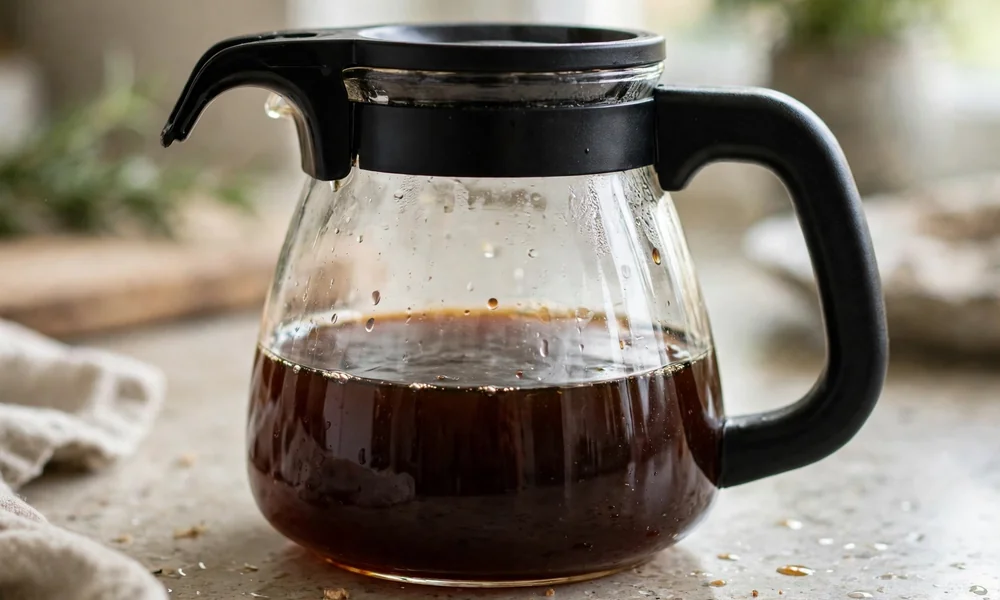
Glass is the classic carafe material and still the best one for watching the brew: you can see the level at a glance and tell at once whether the pot is full. It pours well when the spout is shaped properly, takes no flavour from the coffee, and cleans easily because you can see every spot you missed. The weakness is heat: glass loses warmth quickly, which is why drip machines park them on a warming plate that can scorch coffee left sitting on it. Glass is also the most fragile of the four.
Thermal Stainless Steel Carafes
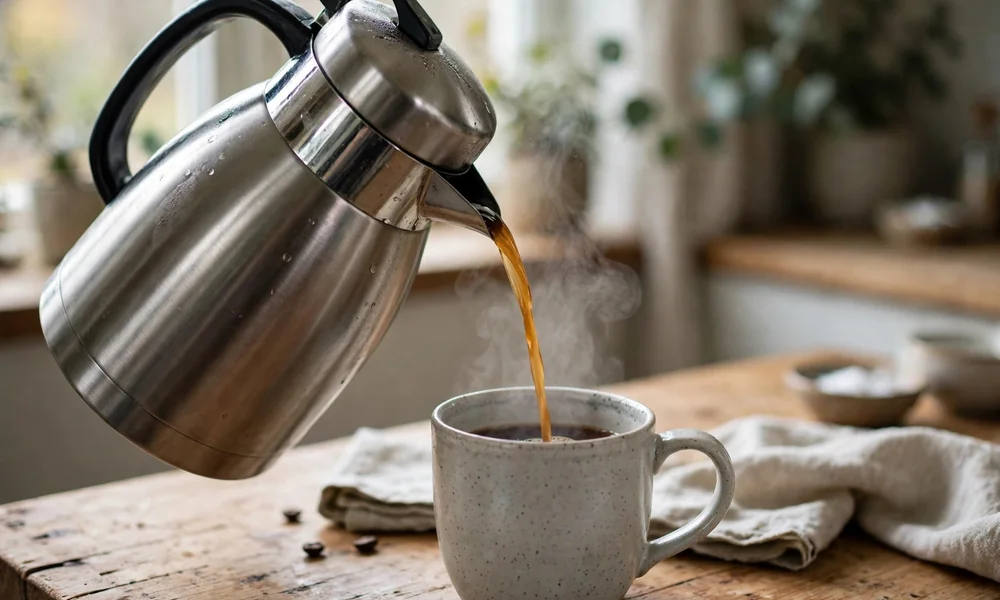
A thermal carafe is a double-walled, vacuum-insulated steel vessel, and the best choice for anyone who brews a pot and drinks it slowly. Coffee stays hot for two to four hours with no warming plate, so it never cooks or turns bitter. The trade-off is that you cannot see inside, so you judge the level by weight. A good one has a lid you can open with one thumb and a spout that pours without dribbling.
Ceramic Carafes
Ceramic carafes are the table pieces: heavy, handsome, and good at holding a steady temperature for the hour a meal lasts. They pour with a satisfying weight and come in colours and glazes glass and steel never will. They are heavy, can chip, and most need hand washing. Buy ceramic if the carafe lives on the breakfast table.
Plastic and Tritan Carafes
Plastic carafes, usually made from Tritan or a similar BPA-free plastic, are the light, cheap, hard-to-break option, suiting caravans, boats, and offices. They lose warmth faster than steel or ceramic and can pick up stains over time. Buy plastic only when breakage is the main worry.
Coffee Carafes Compared
This table puts the four types side by side.
| Carafe type | Best for | Keeps coffee hot | Pouring | Care |
|---|---|---|---|---|
| Glass | Brew-and-drink mornings, pour-over brewing | 30 to 45 minutes without a hot plate | Clean when the spout is well shaped | Easy to clean, fragile |
| Thermal stainless steel | Slow mornings, households, taking coffee to the table | 2 to 4 hours, no hot plate needed | Best with a thumb-press lid | Hand wash, very durable |
| Ceramic | Serving at the table, guests | About an hour, thick walls help | Steady and weighty, wide spouts vary | Hand wash, can chip |
| Plastic or Tritan | Travel, offices, homes with children | 20 to 30 minutes | Light and easy, spouts vary | Dishwasher safe, can stain |
How to Choose the Right Carafe
Start with the brewer, because compatibility decides more than any feature list. A replacement carafe for a drip machine has to fit under the machine, clear the drip basket, and sit flat on the warming plate, so measure the height and footprint before you order. A pour-over carafe has to take the dripper on its rim, so check the rim diameter against the dripper you own.
Capacity comes next, and it is where most people overshoot. A coffee cup on a box is usually a small five-ounce measure, not a full mug, so a twelve-cup carafe holds about six proper mugs. Count the mugs your household drinks on a normal morning, then buy that size: four to six cups for one or two people, eight to twelve for a family.
The spout and the lid separate a good carafe from a frustrating one. A narrow spout with a small lip gives a thin, controlled stream and stops cleanly when you tip back, while a wide, flat spout pours fast and dribbles down the side. Read reviews that mention pouring, and be wary of any carafe whose reviews keep saying the same word: dribble. The best lids stay on while you pour, open with one thumb, and come apart for cleaning, because coffee oils build up in the pouring channel and turn stale. Our guide to coffee filters that brew a cleaner cup is worth a look too, because a fresh filter and a clean carafe do more for flavour than any upgrade to the machine.
Finally, check the handle and the cleaning. The handle should fit a full hand and sit far enough from the body that your knuckles clear the hot glass or steel, and a wide mouth you can fit a brush into beats any non-stick claim. If you brew pour-over, our guide to the best gooseneck electric kettles covers the slow pour that makes the carafe underneath it worth having.
Getting the Most From Your Carafe
Preheat the carafe by swirling in hot water for a minute and tipping it out, which buys you ten or fifteen minutes of heat for free. Serve promptly and keep the lid on between pours, because every minute with the lid off is heat escaping and every minute on a hot plate is coffee cooking. If you use a glass carafe on a drip machine, take it off the plate once brewing finishes rather than leaving the pot to stew.
Clean it properly and it will last for years. Rinse after every use, wash with hot soapy water daily, and deep clean weekly, because coffee oils go rancid and rancid oil is what makes an old carafe taste stale. A soak with bicarbonate of soda lifts the brown film from glass. Never put a glass carafe on a direct flame unless the maker says it is safe, and never plunge a hot glass carafe into cold water.
What to Avoid
Avoid the cheapest carafe on the shelf: the cheapest glass is thin and chips easily, the cheapest steel has a lid that leaks, and the cheapest spouts dribble from the first pour. The middle of the range is where the pouring, lids, and handles start to work properly. Avoid a carafe with no spare parts if it is a replacement for a machine you plan to keep, because a carafe whose lid you cannot replace is one you throw away whole. And buy for the normal morning, not the biggest one you can imagine.

Before You Buy Checklist
- Measure your brewer: height under the basket, footprint on the plate, and rim size for a pour-over dripper.
- Count real mugs, not box cups: buy the size your household drinks on a normal morning.
- Check the spout in reviews: look for the word dribble and walk away if it keeps appearing.
- Test the lid in your mind: one hand to open, stays on while pouring, comes apart for cleaning.
- Hold the handle test: big enough for a full hand, knuckles clear of the hot body, balanced when full.
- Plan the cleaning: a wide mouth or a brush that reaches, and a weekly deep clean you will actually do.
Frequently Asked Questions
What is the difference between a coffee carafe and a coffee pot?
They overlap, and shops use the words interchangeably. A carafe usually means a serving vessel with a pouring spout and a lid, made to hold brewed coffee and pour it cleanly, while a coffee pot is the broader, older word. If you are replacing the jug under a drip machine, you are shopping for a carafe.
How long does coffee stay hot in a thermal carafe?
A good vacuum-insulated steel carafe keeps coffee properly hot for two to four hours. Preheat it with hot water first and keep the lid shut between pours. Glass, by comparison, loses its heat in about half an hour without a warming plate.
Can I put a glass carafe on the hob?
Only if the maker says so. Most glass carafes are made for a warming plate, not a direct flame or an electric hob, and putting one on a hob can crack it or scorch the coffee. A thermal carafe should never go on a hob. To reheat coffee, warm it gently in a pan or brew a fresh pot.
Why does my carafe dribble when I pour?
Dribbling comes from the spout shape: a wide, flat, or poorly lipped spout lets coffee run back along the outside instead of breaking cleanly into the cup. Pouring slowly and tipping back sharply at the end helps, but a carafe that dribbles from new will always dribble. A narrow spout with a small lip is the fix.
How do I clean a thermal carafe I cannot see inside?
Fill it with hot water and a spoonful of bicarbonate of soda, or drop in a denture-cleaning tablet, leave it for an hour, then rinse and dry it with the lid off. A long bottle brush reaches the shoulder and the base. Do this weekly and the coffee will stop tasting stale.
What size carafe should I buy?
Count the mugs your household drinks on a normal morning and remember a box cup is about five ounces, roughly half a proper mug. A four to six cup carafe suits one or two people, and an eight to twelve cup carafe suits a family. Buy for the normal morning, not the biggest one you can imagine.
Bottom Line
The best coffee carafes disappear into the routine: they hold the coffee at the right heat, pour it without a mess, and clean up without a fight. Glass wins for pour-over, thermal steel wins for slow mornings, and ceramic wins for the table. Measure your brewer, count your mugs, check the spout and the lid, and buy the size you actually use.