
A balance bike is often the first real bike a child ever owns, and it is also one of the simplest. There are no pedals, no chain and no training wheels to lean on. A toddler sits on the seat, pushes along with their feet, and learns the one skill that matters most on two wheels: balance. That simplicity is exactly why so many parents start here, usually between the ages of eighteen months and four years, before moving on to a pedal bike.
Choosing well matters more than it first appears. A bike that is too heavy or too tall can turn those first rides into a struggle, while the right one feels natural almost straight away. The best balance bikes for toddlers in 2026 are light enough to steer, low enough to touch the ground with flat feet, and sturdy enough for daily use. This guide explains what to look for and which types suit different children best.
Key Takeaways
- Seat height matters more than wheel size: your toddler should sit with both feet flat on the ground and knees slightly bent.
- A good toddler balance bike weighs under four kilograms, so a small child can lift, steer and stop it without help.
- Wooden bikes look lovely and feel solid, while metal and composite frames are usually lighter and easier to adjust.
- Air tyres grip better on grass and gravel, while foam tyres never puncture and need no pumping at all.
- Start on flat, smooth ground, keep sessions short, and always use a well-fitting helmet from the very first ride.
How We Judged
We judged balance bikes the way a parent would in real life, not by reading a specification sheet alone. Weight came first, because a heavy bike is hard for a toddler to control and even harder to carry home when little legs get tired. Next came fit: the lowest seat height, the range of adjustment, and whether a child with short legs could reach the ground comfortably. We also looked at steering, because a limited turning circle stops the handlebars from jack-knifing and helps prevent sudden falls.
Build quality, tyres and brakes were the other main tests. A good frame should feel rigid without rattling, the wheels should spin freely, and the grips should stay put in small hands. We gave credit to air tyres for grip and to foam tyres for zero maintenance, and checked whether a hand brake was usable, although many toddlers simply drag their feet to stop. Finally, we considered value: a balance bike is usually used for one to two years, so it should be durable enough to hand down without costing a fortune.

Best Overall
The best overall balance bike for most toddlers is a light metal-framed model with twelve-inch wheels, air tyres and a low, adjustable seat. It suits children from around two to four years old, works on pavements and park paths alike, and is easy for a parent to carry when the ride ends early. The frame keeps the weight down to around three and a half kilograms, which makes a real difference when a child is learning to steer and to pick the bike up after a wobble.
What sets this type apart is how forgiving it feels. The air tyres smooth out small bumps, the steering limiter stops the front wheel from turning too far, and the seat and handlebars adjust as your child grows. Look for a padded seat, comfortable grips and a footrest, so your toddler can lift their feet and glide once they gain confidence. It costs more than the cheapest options, but it is the type most families use every day and pass on in good condition.
Best Wooden Balance Bike
A wooden balance bike is the classic choice, and it remains a lovely one. The birch or beech frame feels warm and solid, the design is simple and timeless, and there is no metal to rust if the bike is left outside for an afternoon. Many parents choose wood because it looks beautiful in the home as well as in the park, and because the natural material feels calmer and less toy-like than bright plastic.
Wood does have trade-offs. It is usually heavier than a metal frame, often by half a kilogram or more, and the seat height may adjust in fixed steps rather than sliding smoothly. Even so, for a child who rides mainly on smooth paths and indoors, a well-made wooden bike is a joy to use. Choose one with sealed wood, sturdy wheels and a comfortable seat, and check that the steering turns freely. For families who value craftsmanship and a traditional feel, wood is hard to beat.
Best Lightweight Balance Bike
If your toddler is small for their age, or just starting out at eighteen months, weight is everything. The best lightweight balance bikes use aluminium or a strong composite frame to bring the total weight close to three kilograms, and that lightness changes how the bike feels in small hands. Steering becomes easier, lifting the bike over a kerb becomes possible, and a tired child can still push it along rather than dragging it behind them.
Lightweight does not have to mean flimsy. The best models still use proper bearings, a solid fork and tyres that grip, and often include a steering limiter and a low step-through frame. Foam tyres are common here: they keep the weight down and remove punctures from the list of worries. The trade-off is a firmer ride on rough ground, so this type suits smooth pavements, playgrounds and indoor floors best.
Best for Tall Toddlers
Tall toddlers outgrow a standard twelve-inch balance bike quickly, and a bike that is too small forces them to crouch, which makes balancing harder rather than easier. The best option for a taller child is a fourteen-inch model with a higher maximum seat height and a longer frame, which gives more room between the seat and the handlebars. This extra space lets a child aged three or four ride comfortably without their knees hitting the bars.
When shopping for a taller toddler, measure their inside leg rather than guessing from their age. Seat height should be about two to three centimetres below that measurement, so their feet rest flat on the ground. A fourteen-inch bike also rolls more easily over bumps and covers ground faster, which suits confident riders ready to glide. Some models add a hand brake at this size, which is useful once a child is moving faster.
Best Budget Balance Bike
A budget balance bike can be a sensible buy, especially if you are not sure how much your toddler will take to riding. The best affordable models keep the essentials right: a light steel or composite frame, a seat that adjusts, twelve-inch wheels and grips that do not slip. They may use foam tyres and a simpler finish, but they still teach balance just as well as a more expensive bike.
Where budget bikes differ is in the details. The bearings may be simpler, the paint may chip sooner, and the seat adjustment may be less smooth. None of that matters much for a first bike used a few times a week, but check it in person if you can: spin the wheels, wiggle the handlebars and sit your child on the seat to check the fit. Avoid the very cheapest bikes with wobbly forks or sharp edges, and choose a known, well-reviewed model instead.
What to Look for When Choosing
Size. Fit is the first and most important check. Measure your toddler wearing shoes, and compare their inside leg with the bike’s lowest seat height. Both feet should touch the ground flat, with knees slightly bent. Twelve-inch wheels suit most two- and three-year-olds; fourteen-inch wheels suit taller three- and four-year-olds.
Weight. Aim for under four kilograms if you can, and under three and a half for a younger or smaller child. You can test this easily: lift the bike with one hand. If it feels heavy to you, it will feel very heavy to a toddler. A light bike is easier to steer, easier to stop and far easier to carry home. For a broader view of how two-wheeled options for children compare, see our guide to the best and worst bicycles of 2026.
Seat height. Look for a seat that adjusts easily and offers a good range, ideally at least ten centimetres from lowest to highest. A quick-release clamp makes adjustments simple, while a bolted seat is more secure but slower to change. Check that the seat is padded and not too wide, so a child can move freely and put their feet down quickly.
Tyres. Air tyres give the best grip and the smoothest ride, especially on grass and uneven paths, but they can puncture and need occasional pumping. Foam tyres never puncture, need no maintenance and are lighter, but they feel firmer and grip less well on wet surfaces. For smooth pavements, foam is fine; for mixed terrain, air tyres are worth the upkeep. Families weighing other ride-on choices may also find our look at electric scooters for kids useful.
Brakes. Many balance bikes have no brake at all, and that is fine for a two-year-old who stops by dragging their feet. A rear hand brake becomes useful from around age three, when children ride faster. If you choose a bike with a brake, check that the lever is small enough for little hands to reach and squeeze.

Teaching Tips, Safety and Mistakes to Avoid
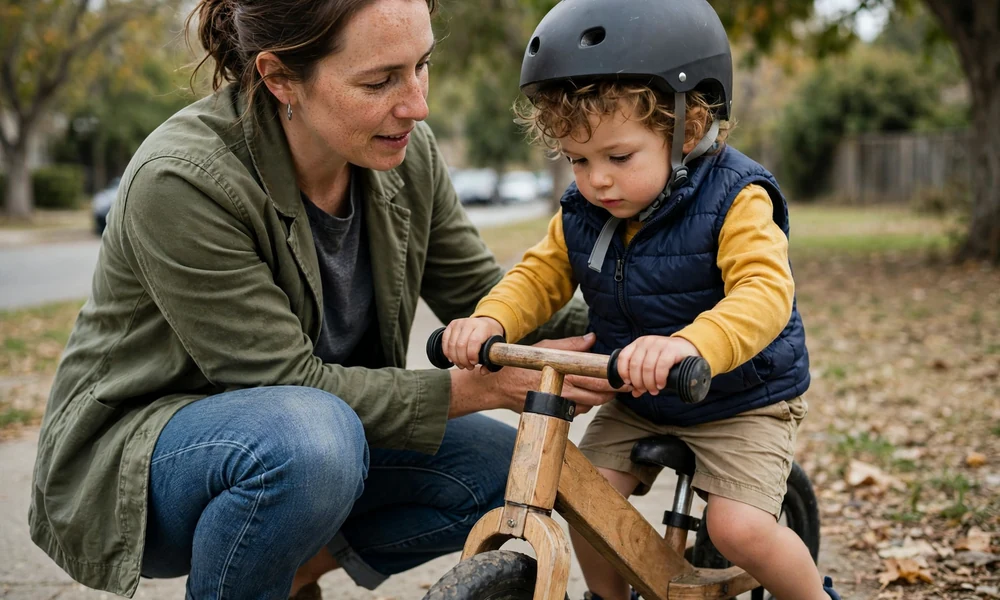
Start somewhere flat, smooth and free of traffic, such as a quiet pavement, a playground or an empty car park. Lower the seat so your child’s feet are flat on the ground, and let them walk the bike along at first, sitting on the seat and pushing with their feet. Do not hold the bike upright for them, and do not push them along: the whole point is for them to learn balance by themselves. Instead, walk beside them, offer encouragement, and let them discover how steering and leaning work together.
Keep the first sessions short, around ten to fifteen minutes, and stop while it is still fun. Toddlers learn quickly but tire fast, and a frustrated child will not want to try again tomorrow. Celebrate small wins, like a first glide with feet lifted. Some toddlers glide within a week; others take months of gentle practice.
Safety is simple but non-negotiable. A helmet should be worn every time, even for a short ride on the pavement, and it should fit snugly without wobbling. Closed-toe shoes protect little feet. Avoid busy roads, steep slopes and wet surfaces until your child can steer and stop reliably. Check the bike regularly: tighten the handlebars and seat, check the tyres, and make sure nothing is loose before each ride.
The most common mistake is buying a bike your child will grow into rather than one that fits now. A too-big bike feels scary, and a scared child stops riding. Another is choosing by colour instead of by fit and weight, which matters far more in daily use. If your toddler is already eyeing a pedal bike, our guide to electric bikes for kids explains what changes when motors and pedals enter the picture.
With the right bike and a little patience, most toddlers move from cautious walking to confident gliding, and then to a pedal bike without ever needing training wheels. Choose for fit, keep it light, keep sessions short, and enjoy watching those first wobbly rides turn into real freedom.


