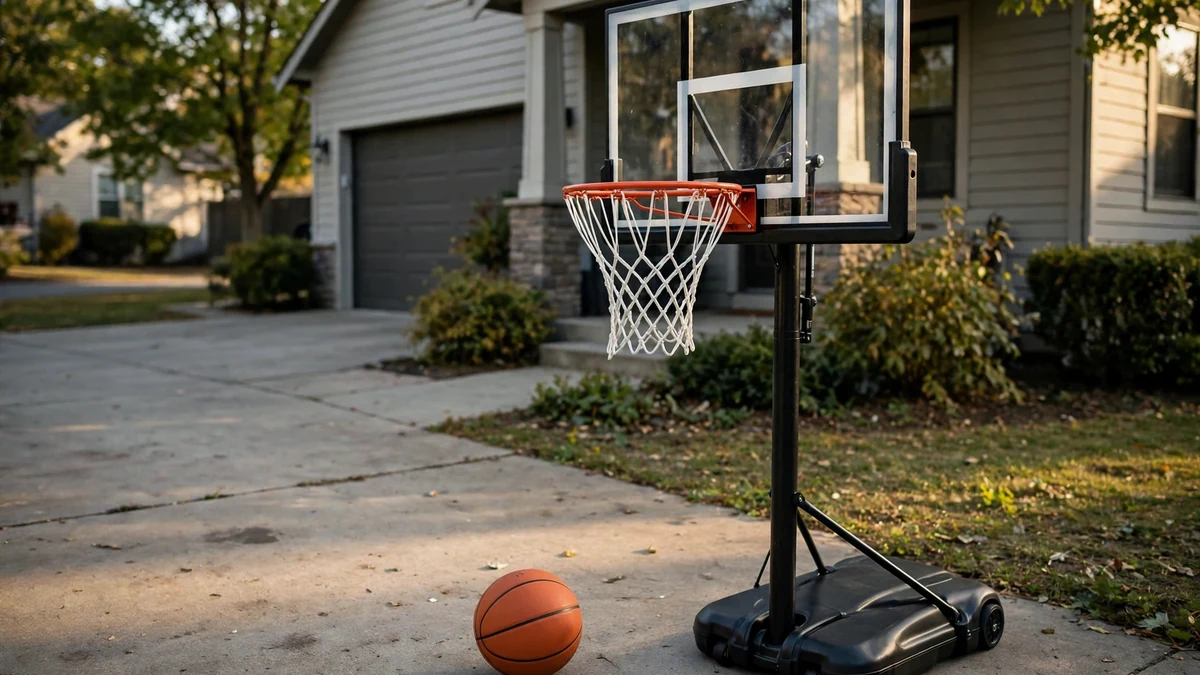
A basketball hoop is one of the simplest pieces of sports equipment a home can have, and one of the easiest to buy badly. A good hoop stands steady through every shot, gives a true bounce off the backboard, and survives years of sun, rain and hard play without wobbling or rusting. A bad hoop sways on every shot, tips in a strong wind, and wears out long before the first season is out. The best basketball hoops of 2026 are not the most expensive ones. They are the hoops that fit the space, suit the players, and keep working year after year without fuss.
What Makes a Hoop Good
The first thing to judge is stability. A hoop that shakes when the ball hits the rim is no fun to play on, and a hoop that tips over is dangerous. Stability comes from the base and the pole. A portable hoop needs a wide, heavy base filled with water or sand, and an in-ground hoop needs a solid concrete footing and a thick steel pole. The pole should be steel, not thin tubing, and the joints should feel tight with no play. Push the rim firmly before buying: if the whole hoop sways, the game will always feel cheap.
The second thing is the backboard, which decides how the ball comes off the glass. Tempered glass gives the truest, liveliest bounce, closest to the boards used in gyms. Acrylic is lighter and cheaper, and it bounces well enough for most home games, though it can scratch and cloud over time. Polycarbonate is the toughest of the three and the best choice where the hoop will take hard knocks, but its bounce is the deadest. Size matters too: a 54-inch board feels like a real court, while a 44-inch board suits a small driveway.
The Four Main Types of Hoop
Portable hoops are the most popular choice for most homes. They stand on a wheeled base filled with water or sand, so they can be moved around the driveway and stored out of the way when needed. They need no digging and no concrete, and they can be set up in an afternoon. The trade-off is stability: even a well-filled base will never be as rock solid as a hoop set in concrete, and a big portable hoop can still tip in a storm.
In-ground hoops are bolted or cemented into the ground, and they are the best choice for anyone with a permanent court who wants the most solid feel. The pole goes into a concrete footing, so the hoop does not move at all, even under a hard dunk or a strong wind. The bounce off the board is truer, and the whole setup feels like a gym hoop. The trade-off is permanence: digging and pouring concrete is a weekend job, and the hoop cannot move with the family.
Wall-mounted and garage-mounted hoops bolt straight onto a wall or above a garage door. They take up no floor space at all, which makes them ideal for a small driveway or a narrow side court. A good wall mount is very solid, since it is fixed to the structure of the house, and it costs less than a full portable system. The trade-off is that the playing area is fixed by the wall, and the mounting must be done properly into solid brick or timber, not just plasterboard.
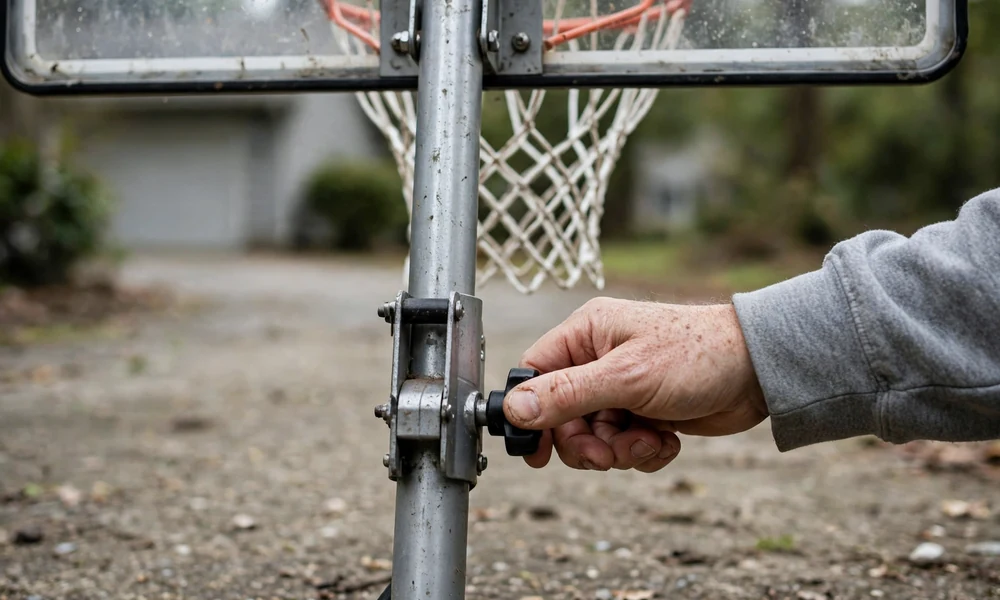
Youth and adjustable hoops are built for growing players. They start low, sometimes as low as five feet, and crank or slide up to the full ten feet as children grow. The best ones adjust smoothly with a crank handle or a simple lever, so the height can change between games without tools. They are lighter and cheaper than full-size hoops, and they are the smartest first hoop for a young family. A hoop that grows with the child gets years of use instead of being outgrown in a single summer.

How to Choose the Right Height
Height is the setting that decides whether a hoop gets used or ignored. The official rim height is ten feet, and that is the right height for adults and serious teenage players. For younger children, though, ten feet is simply too high: they will heave the ball with both hands, develop bad habits, and lose interest fast. Younger players are happiest around seven or eight feet. The right height is the one where the player can shoot with proper form, a smooth arc and a follow-through, rather than throwing the ball as hard as possible.
The Best Basketball Hoops of 2026
The best portable hoop for most families this year is a mid-priced model with a 54-inch acrylic backboard, a sturdy steel pole and a wide base that holds plenty of water or sand. It rolls easily on its wheels, and it stands firm once filled. The rim is a solid steel ring with a proper spring breakaway, so it gives a little on a dunk instead of bending. It adjusts from around seven and a half feet to ten feet with a smooth crank, which means children and adults can share it.
The best in-ground hoop of 2026 is a heavy-duty model with a tempered glass backboard, a thick square steel pole and a bolt-down anchor set in concrete. It feels like a gym hoop from the first shot: no wobble, a true bounce, and a rim that stays level season after season. The glass board is the star, giving the liveliest rebound of any home hoop, and the pole is powder-coated to resist rust.
The best hoop for a small space is a wall-mounted model with a compact backboard and a strong steel bracket that bolts above a garage door. It takes up no floor space at all, costs far less than a portable system, and is surprisingly solid once fixed to a sound wall. The backboard is smaller than a full-size board, but the bounce is honest, and the rim is a proper breakaway ring rather than a toy.
The best hoop for young players is a lightweight adjustable model that starts low and grows with the child. It is easy to move, simple to adjust without tools, and built with a smaller backboard that suits shorter shots. The base is stable enough for gentle play, and the whole hoop can be wheeled into a garage or shed when the game is over. Safety matters most here: the base should always be filled, the hoop should never be climbed on, and an adult should check the bolts now and then.
The best premium hoop of 2026 is a top-end in-ground system with a large tempered glass board, a heavy steel pole and a pro-style breakaway rim. It is the closest thing to a gym hoop that can be bought for a home, and it shows in every shot: the board is dead level, the bounce is true, and the whole structure feels immovable. It costs more than the other picks here, and it needs a proper concrete footing, but it will outlast cheaper hoops by years.

What Else You Need
A hoop on its own is only half the kit. The ball matters as much as the hoop, and it must suit the surface: an outdoor ball has a tougher cover that survives concrete, while an indoor ball is softer and grips a wooden floor better. A ball that is the right size for the player is essential, since a full-size ball is too big for small hands. A pump and a needle keep the ball at the right pressure, because a soft ball bounces badly and a hard ball stings the hands.
Common Mistakes to Avoid
The biggest mistake is buying a hoop that is too small for the space or too flimsy for the players. A tiny backboard on a big driveway feels like a toy, and a light pole will wobble on every shot. The second mistake is leaving a portable base empty or half-filled: a hoop with an empty base is a tipping hazard, and a gust of wind can send it over onto a car or a child. Always fill the base fully, with sand if the hoop will stay put, since sand is heavier than water and does not freeze or leak. The third mistake is bad placement: never put a hoop where a missed shot can fly into a road, a window or a neighbour’s garden.
Another common mistake is neglecting the hoop once it is up. Bolts loosen with vibration, nets fray and tear, and rims can rust if they are left wet and dirty. Checking the bolts every month takes a minute, and a fresh net costs very little but makes the hoop feel new again. Storing a portable hoop in strong sun all summer will fade the backboard and dry out the seals, so wheeling it into shade or a garage in the worst heat helps it last.
How Basketball Fits a Quiet Weekend
Basketball is one of the few sports that fits neatly into a spare half hour. There is no booking to make and no team to organise, just a ball, a hoop and a driveway. That ease is part of the appeal, and it is why a home hoop sits so well beside other relaxed weekend pastimes. A few shots in the morning pair naturally with a calm afternoon indoors, and many players keep a relaxed game afterwards as their way to wind down once the ball is put away.
The hobby also builds the kind of hand-eye coordination that carries into other games. The steady aim and soft touch of a free throw have a lot in common with the controlled swing of a golf club or the clean hit of a tennis serve, and players often find they pick up those games faster than expected. Readers who enjoy that kind of precision will find plenty to like in the best golf bags and the best tennis rackets for beginners guides, which cover the same idea from a different angle: the right gear, matched to the player, makes the whole game more fun. And for the family that likes a full afternoon of sport, the best baseball bats guide rounds out the set, with the same advice running through it: buy gear that fits the player, not the shelf.
The Verdict
The best basketball hoop of 2026 is the one that fits the space and the players who will use it. For most families that means a mid-priced portable hoop with a 54-inch board, a solid steel pole and a properly filled base: steady, adjustable and easy to move. For the household with a permanent court, a heavy in-ground hoop with a glass backboard is the better tool. For a tight driveway, a wall-mounted hoop turns a small space into a real court. Whatever the choice, fill the base, set the height to suit the shooter, check the bolts now and then and look after the net.


