A clarinet is a delicate instrument made of wood, thin metal keys and cork, and it spends most of its life inside its case. The case is not an afterthought. It is the thing that keeps the clarinet safe on the bus, in the car boot, in a school corridor and on a crowded stage. A good case holds every joint snugly, keeps the keys from pressing against each other, and still leaves room for reeds, a mouthpiece, cork grease and a cleaning cloth. A bad case lets the instrument rattle, crushes the keys against the lid, and turns a small knock into a repair bill. The best clarinet cases of 2026 are the ones that protect the instrument, carry comfortably, and keep working year after year without fuss.

What Makes a Case Good
The first thing to judge is the fit inside. A good case holds each joint of the clarinet in its own shaped compartment, so the upper joint, lower joint, bell and barrel cannot touch each other or move around. The lining should be soft and snug, with no hard edges pressing on the keys. If the instrument slides when the case is tipped, the fit is wrong. A case that fits well protects the clarinet when the outside takes a knock, because the padding absorbs the shock before it reaches the wood or the keys.
The second thing is the shell itself. A hard shell resists crushing and keeps its shape when something heavy is stacked on top of it, while a soft bag is lighter and easier to carry but offers far less protection against a sharp knock. The best cases find a balance: a firm shell that is still light enough to carry all day, strong corners, and a handle that feels secure. The latches or zip should open and close smoothly and stay shut when the case is dropped or bumped. That reliability is what turns a decent case into one worth trusting.
The Four Main Types of Case
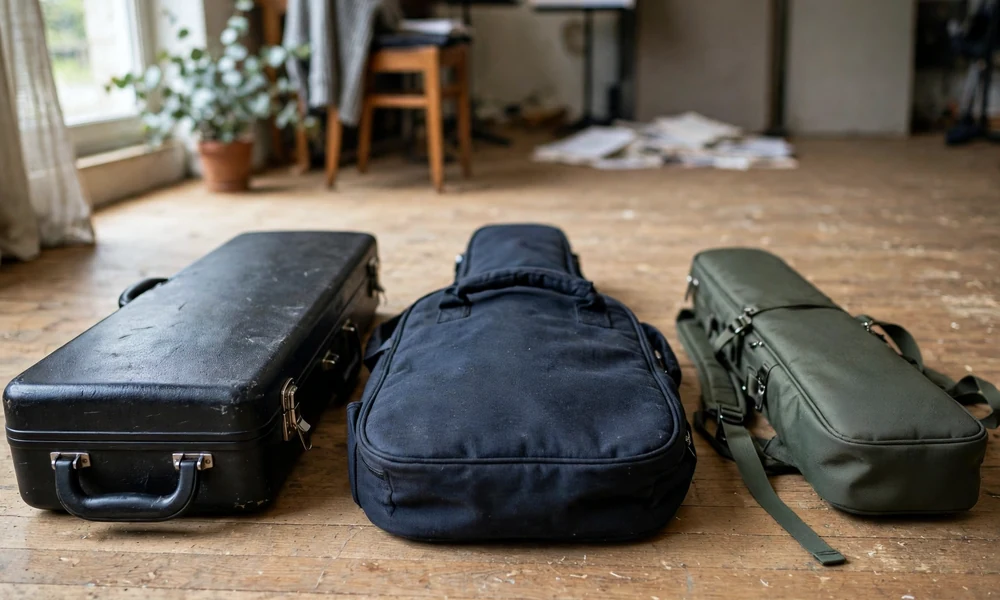
Hard-shell cases are the classic choice most clarinet players know best. They have a rigid outer shell, a moulded or foam interior shaped to the instrument, and latches that lock the lid firmly in place. Hard cases give the strongest protection against drops, knocks and crushing, and they are the choice for school players, orchestral musicians and anyone who travels with a valuable wooden clarinet. They ask for a little more weight in exchange for that safety, but they reward it with real peace of mind.
Soft gig bags use padded fabric instead of a rigid shell. They are light, flexible and easy to carry, and they usually have backpack straps and large outside pockets for music and accessories. A gig bag is the choice for a player who walks to rehearsal, cycles, or takes the bus, and who wants the lightest possible load. The trade-off is protection: a soft bag will not save a clarinet from a hard drop or a heavy weight on top of it.
Backpack-style cases sit between the two. They have a firm but light frame, padded shoulder straps, and a slim shape that sits close to the back. They carry like a rucksack, which makes them the smartest choice for players who walk a long way to lessons or who need both hands free. A backpack case costs little more than a basic hard case, but it is far easier to carry on a long walk or a crowded train.
Double and triple cases are built for players who own more than one clarinet, such as a B flat and an A clarinet, or a clarinet and a bass clarinet mouthpiece set. They hold two or three instruments in separate fitted compartments, with room for extra barrels, mouthpieces and reeds. They are heavier and larger than a single case, but they replace two separate cases with one well-organised bag, suiting the professional who needs a full set of instruments at every rehearsal.
How to Choose the Right Size
Size is the detail most buyers get wrong, because clarinets are not all the same length. A standard B flat clarinet fits most cases, but a bass clarinet, an E flat clarinet or a clarinet with an extra barrel needs a case made for it. Before buying, measure the instrument when it is taken apart, and check the case maker’s list of instruments it fits. A case that is too small will crush the keys or stop the lid closing, while a case that is too large lets the joints slide and knock together.
Weight matters almost as much as size. A heavy wooden case can tire the shoulder on a long walk, while a very light case may have thin padding that does little in a fall. The best cases keep the weight down by using modern materials, such as strong plastics and light foam, instead of heavy plywood. Lift the case with the instrument inside before you buy, if you can. If it feels heavy in the shop, it will feel heavier after a mile, and a case that is a burden gets left behind.
The Best Clarinet Cases of 2026
The best hard case for most players this year is a mid-priced moulded case with a strong shell, a soft fitted lining and a roomy accessory pocket. It holds the clarinet firmly, closes with solid latches, and survives being knocked in a car boot or a school corridor. The handle is comfortable, the weight is reasonable, and the pocket holds reeds, a mouthpiece, cork grease and a cloth without crowding the instrument. For a school player, a club player or a relaxed orchestral player, this is the pick that makes the most sense.
The best soft gig bag of 2026 is a well-padded bag with thick foam, strong zips and comfortable backpack straps. It weighs very little, fits easily under a seat or in a locker, and has outside pockets big enough for sheet music and a water bottle. The padding is thick enough to protect the clarinet from everyday bumps, and the straps spread the weight so the bag feels light. It is the bag for the player who walks or cycles to rehearsal several times a week and wants the lightest load possible.
The best backpack case is a slim, light case with a firm frame, padded straps and a rain cover tucked into a pocket. It carries like a rucksack, keeps the clarinet close to the body, and leaves both hands free for a music stand and a bag of music. The interior is shaped to hold the instrument still, and the outside pocket holds reeds and accessories where they are easy to reach. It is not the case for the roughest journeys, but it turns a long walk into an easy one, and that is worth more than extra padding.
The best double case of 2026 is a well-planned case with two separate fitted compartments, one for a B flat clarinet and one for an A clarinet, plus slots for extra barrels and mouthpieces. Each instrument is held firmly apart from the other, so the keys cannot touch, and the case still closes flat and carries comfortably. It suits the advanced player or professional who needs both clarinets at every rehearsal.
The best budget case is a simple hard-shell case sold with a student clarinet or on its own for very little money. It has a moulded interior, working latches and enough room for the basics, and it protects a beginner instrument far better than a thin cloth bag. It is not the lightest case, but it does the one job that matters: it keeps the clarinet safe.

What Else You Need
A case on its own is only half the kit. Reeds matter as much as the case, and they should be kept in a reed holder or a small reed case so they stay flat and dry: reeds left loose in a pocket will warp and chip. A cleaning cloth or swab keeps moisture out of the bore after playing, which protects the wood and the pads. Cork grease keeps the joints turning smoothly, and a small screwdriver helps with a loose key screw. A music stand, a tuner and a metronome complete the kit. None of this costs much, and all of it makes playing far more enjoyable.
Common Mistakes to Avoid
The biggest mistake is buying a case that does not fit the instrument. A case made for a different model will let the joints move, and that movement bends keys and chips wood. The second mistake is overfilling the accessory pocket, which presses reeds and mouthpieces against the lid and can crack a mouthpiece. The third is leaving the case in a hot car or a damp room, which warps the wood and damages the pads. A clarinet should be swabbed and put away dry, and the case stored somewhere cool and dry. A little care goes a long way: a well-kept clarinet will play well for decades.
Another common mistake is trusting a single latch or a worn zip. A latch that springs open on its own can spill the instrument onto the floor, and a zip that sticks can trap the clarinet inside when it is needed. Check the latches and zips every time the case is used, and replace a case whose fastenings no longer hold. Storing a case with heavy books on top will crush the shell over time, so it should be kept upright or flat with nothing heavy on it.
How a Clarinet Case Fits a Musical Life
A good case is part of a player’s daily routine, not just a box for the instrument. The morning starts with opening the case, checking the reeds, greasing the corks and putting the clarinet together, and the evening ends with swabbing it out and putting it away in the same order. That routine is part of the pleasure of playing, and it is why a case that opens smoothly and keeps everything in its place feels so good to use. Many players keep a best clarinets guide close by when they are thinking about their next instrument, because the case and the clarinet belong together.
The habit of looking after an instrument carries into other instruments too. The care that keeps a clarinet safe, a clean case, dry reeds and gentle handling, is the same care that keeps a brass or string instrument in good shape. Readers who enjoy that kind of careful ownership will find plenty to like in the best trumpets and the best cellos guides, which cover the same idea from a different angle: the right case, matched to the instrument, makes the whole musical life easier and more enjoyable.
The Verdict
The best clarinet case of 2026 is the one that fits the clarinet it holds. For most players that means a mid-priced moulded hard case: strong, light enough to carry, and fitted so nothing inside can move. For the player who walks everywhere, a well-padded gig bag or a slim backpack case is the better tool. For the professional with two clarinets, a good double case is the most organised choice of all. Whatever the choice, check the fit, test the latches, keep the reeds safe and look after the wood. A case chosen this way will still be protecting the clarinet years from now.