
Best Bath Sponges 2026
A bath sponge is a small purchase that changes an ordinary wash into something better. The right one turns a little body wash into rich lather, reaches the skin gently, and rinses clean in seconds. The wrong one sheds bits in the bath, stays damp for days, and starts to smell within a week.
Most people grab whatever sponge is nearest the till and never think about it again. Yet the differences between sponge types are real: firmness, lather, drying time, and how long each one lasts. These are the best bath sponges of 2026, chosen for comfort, hygiene, and value.
Key Takeaways
- Natural sea sponges are the softest choice, and they suit sensitive skin and children best.
- Cellulose sponges lather fast and dry quickly, which makes them the easiest everyday option.
- Loofahs and exfoliating sponges scrub harder, so use them once or twice a week rather than every day.
- A sponge that cannot dry out between uses will smell, so hang it where air can reach it.
- Replace a bath sponge every four to eight weeks, sooner if it tears, thins, or smells after rinsing.
Bath Sponges 2026 at a Glance
| Best for | Sponge type | Feel | Standout strength |
|---|---|---|---|
| Best overall | Natural sea sponge | Very soft | Gentle, absorbent, and long lasting |
| Best for lather | Cellulose sponge | Soft | Rich foam from very little wash |
| Best for exfoliating | Natural loofah | Firm | Scrubs rough skin smooth |
| Best for sensitive skin | Konjac sponge | Very soft | Kind to redness and dry patches |
| Best for travel | Mesh pouf | Soft | Light, fast drying, and cheap to replace |
| Best for a deep clean | Silicone sponge | Flexible | Dries fast and never holds odours |
What a Bath Sponge Is Really For
A bath sponge does three jobs at once. First, it spreads body wash evenly over the skin instead of letting it slide straight down the drain. Second, it lifts away sweat, sunscreen, and the day’s grime with far less effort than a bare hand. Third, it turns washing into a small daily pleasure, because warm water and soft lather simply feel better than a cold flannel.
Most people choose a sponge the wrong way round. They pick the prettiest colour or the cheapest multipack, then wonder why it falls apart or never dries. Think about your skin first, and only then about the price: sensitive skin needs softness, rough elbows and heels need texture, and a shared family bathroom needs a sponge that dries fast.
It also helps to know what a sponge is not. It is not a replacement for washing properly, and it is not a tool for scrubbing hard every day. Used gently with a good wash, it does the work for you. If you are still choosing the wash itself, our guide to the best body washes for every skin type in 2026 explains the formulas first, so you can match the sponge to the wash.
The Main Types of Bath Sponge
Bath sponges fall into a handful of types, and each suits a different kind of skin and routine. The right choice depends less on taste than on how much exfoliation you want and how quickly the sponge needs to dry.
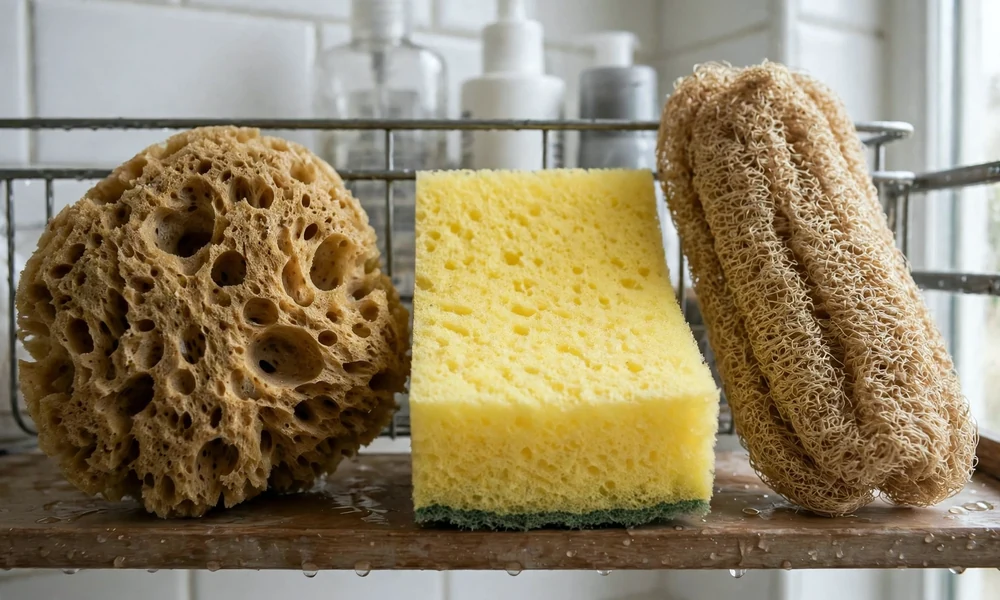
The natural sea sponge is the classic choice and the softest one here. Harvested from the sea, it is full of fine pores that hold water and release it slowly, so it stays warm and gentle against the skin. It suits babies, children, and anyone whose skin flushes easily. Rinse it well and it can last for months.
The cellulose sponge is the workhorse of the bathroom. Made from wood pulp, it soaks up water fast, whips a small drop of body wash into thick lather, and dries quicker than a sea sponge. Its weakness is durability: it thins and tears sooner, so expect to replace it every month or so.

The natural loofah is the firmest option, cut from the dried fruit of the loofah plant. It scrubs away rough skin on elbows, knees, and heels, and it is the best choice when ordinary sponges feel too gentle. Use it once or twice a week, never on sunburned or broken skin, and let it dry fully between uses.
The mesh pouf is the light, airy ball of netting sold in every bathroom aisle. It makes the most lather of any sponge here, dries in hours, and costs very little, which makes it the best travel sponge. Its weakness is hygiene: the many layers trap moisture, so replace a pouf every four weeks without fail.
The konjac sponge is a small, pillow-soft sponge made from the konjac root, and it is the kindest choice for faces and sensitive skin. It feels almost like jelly when wet and cleans without any scrubbing at all. Keep one for the face and a separate, larger sponge for the body.
The silicone sponge is the modern outlier. It does not absorb water at all, so it dries in minutes and never develops the musty smell that ends other sponges. It makes less lather and feels less traditional, but for anyone who has thrown away one smelly sponge too many, it is the practical answer.
Lather, Water, and How a Sponge Feels
Lather is where sponges earn their keep. A good sponge turns a pea-sized drop of body wash into enough foam for a whole arm, because its pores trap air as you squeeze. A poor sponge swallows the wash and gives back almost nothing, so you use twice as much and still feel under-washed.
Feel matters just as much. Press the sponge against the inside of your wrist before you buy it if you can: that skin is close to the sensitivity of your face and chest. If it feels scratchy there, it will feel scratchy everywhere. A sponge should glide, not drag, and it should spring back when you squeeze it rather than staying flat.
Bath Sponges and Sensitive Skin
Sensitive skin needs the softest sponge you can find, used with the lightest touch. A natural sea sponge or a konjac sponge cleans without friction, which matters when skin is dry, red, or prone to eczema. Skip the loofah entirely until the skin has calmed, and never use an exfoliating sponge on a rash or sunburn.
Pressure is the hidden variable. Even a soft sponge will irritate skin if you press hard and scrub in circles for minutes. Let the sponge do the work: wet it, add a little wash, and sweep it once over each area. If you want a firmer tool for rough patches only, our guide to the best bath brushes for a proper scrub in 2026 covers long-handled brushes that reach the back without pressing hard on tender skin.
Hygiene: Cleaning, Drying, and Replacing
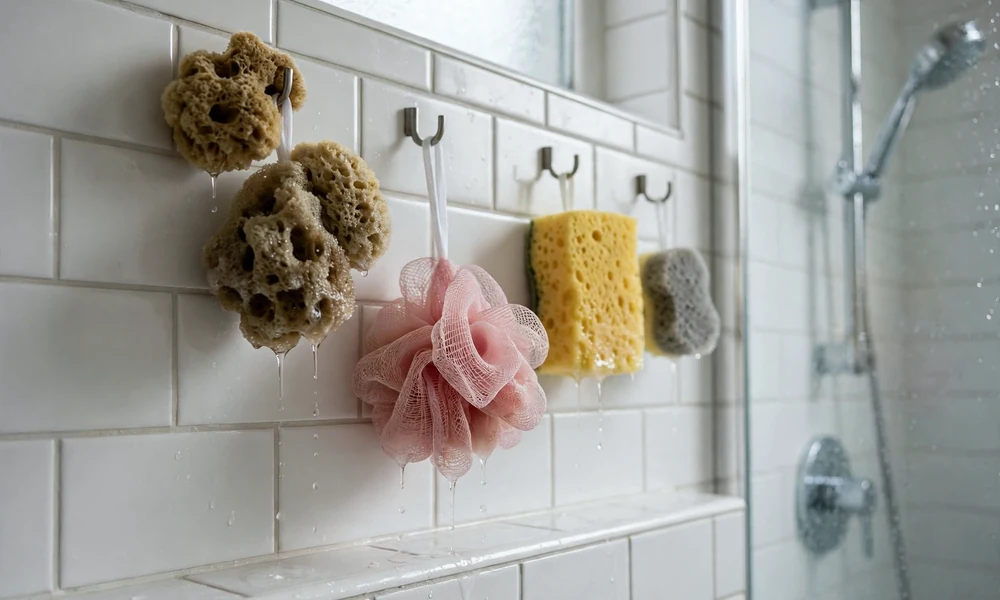
A bath sponge lives wet, warm, and full of dead skin, which is exactly what bacteria like. The single most important habit is drying: squeeze the sponge out after every use, then hang it where air moves around it. A sponge left in a puddle at the bottom of the bath will smell within days, however good it was when new.
Clean the sponge itself once a week. Soak it for five minutes in warm water with a splash of white vinegar or a drop of antibacterial wash, then rinse it thoroughly and squeeze it dry. Never share a bath sponge: each person should have their own, just as each person has their own toothbrush.
Know when to let go. Replace a sponge every four to eight weeks, and sooner if it tears, thins in the middle, or keeps a smell after a good rinse. A cheap sponge replaced on time is far more hygienic than an expensive one kept for six months.
Storage: Keeping a Sponge Dry Between Uses
Where a sponge lives matters as much as what it is made of. A hook on the wall or a wire rack beats a shelf, because air can reach every side. Suction hooks work well on tiles, and a small mesh bag hung from the shower rail dries faster than any closed container.
Keep the sponge out of the shower spray when it is not in use, and never store it in a sealed plastic bag or a lidded box. Trapped moisture is what turns a fresh sponge musty. If your bathroom has no good hanging spot, our guide to the best shower caddies for small bathrooms in 2026 covers racks with hooks and drainage that keep sponges aired and within reach.
Common Mistakes to Avoid
The most common mistake is scrubbing hard every day with a firm sponge, which strips the skin and leaves it dry and sore. The second is leaving the sponge in the bath or in a puddle, so it never dries. The third is sharing one sponge across the household. The fourth is keeping a sponge for months because it still looks fine, long after it has stopped being clean. Finally, do not use a bath sponge on the face unless it is a konjac or a dedicated facial sponge: body sponges are too firm and too full of body wash for facial skin.
Before You Buy: A Short Checklist
- Match the firmness to your skin: soft for sensitive skin, firm only for rough patches.
- Check the size in your hand, since a sponge too big is clumsy and one too small takes forever.
- Look for a hanging loop or a shape that sits well on a hook, so it can dry properly.
- Buy two, so one can dry fully while the other is in use.
- Check how it smells when wet, and return it if it carries a chemical tang.
- Plan to replace it in four to eight weeks, and put the date in your calendar.
Frequently Asked Questions
How often should I replace a bath sponge? Every four to eight weeks for most sponges, and every four weeks for a mesh pouf. Replace it sooner if it tears, thins, or smells after rinsing.
Are natural sea sponges better than synthetic ones? They are softer and last longer when cared for, and they suit sensitive skin best. Synthetic sponges lather faster and dry quicker, so the best choice depends on your skin.
Can I use a bath sponge on my face? Only a konjac sponge or a sponge made for the face. Body sponges are too firm and carry too much body wash for facial skin.
How do I stop my bath sponge from smelling? Squeeze it out after every use, hang it where air can reach it, and soak it weekly in warm water with a splash of vinegar.
Is a loofah the same as a bath sponge? A loofah is one type of bath sponge, the firm exfoliating kind, cut from a dried plant. It scrubs harder than a sea or cellulose sponge, so use it once or twice a week.
The Bottom Line
The best bath sponge of 2026 is the one that suits your skin, lathers well with a little wash, and dries properly between uses. A natural sea sponge is the safest all-round choice, a cellulose sponge is the easiest everyday one, and a loofah is the right tool when rough skin needs a proper scrub.
Start with softness, not price. Choose the sponge your skin will be happy with, hang it where it can dry, rinse it weekly, and replace it on time. A small habit, repeated daily, is what turns an ordinary wash into the best part of the morning.


