
The best bike bells in 2026 are the ones that keep rides safe with a single, clear ring: loud enough to be heard over traffic and conversation, quick enough to sound without taking your hand off the bars, and pleasant enough that people step aside instead of flinching. A good bike bell is a small piece of safety kit with an outsized job. It warns walkers on a shared path, alerts drivers at a blind junction, and tells other riders you are coming up behind them. A bad bell is too quiet to matter, too awkward to reach, or so harsh that people freeze instead of moving. This guide compares the bike bells that earn their place in 2026, explains what makes one bell safer than another, and helps you choose the right bell for the way you actually ride.
Bike Bells Are Not Lights, Locks or Pumps
One distinction matters before you buy anything. A bike bell is audible safety gear: it warns people with sound. A bike light is visible safety gear: it makes you seen after dark. A lock protects your bike when you are not riding it, and a pump keeps your tyres at the right pressure. They are neighbours on the same bike, but they do different jobs, and confusing them is how people buy the wrong accessory. Our guide to the best and worst bike lights of 2026 covers the device that keeps you visible at night, while this guide is about the device that keeps you heard in the daytime. Lights help drivers see you; bells help everyone around you hear you coming.
The lock and the pump sit even further from the bell’s job. A good lock, covered in our guide to why a good bike lock is worth the weight, guards your bike while it is parked, and the bike pumps that inflate fast without the fuss keep your tyres ready before a ride. Neither of them helps you in the moment a pedestrian steps into your path. A bell does, and it is the only piece of kit on your handlebars whose whole purpose is to be noticed by other people in time.
Key Takeaways
- A clear, bright ring carries further than a dull thud: brass and steel domes are heard sooner than plastic ones.
- The bell must sit under your thumb without moving your hand: if you have to reach for it, you will not use it in time.
- Match the loudness to your riding: quiet paths need a polite ring, busy streets need a bell that cuts through traffic noise.
- Check the clamp before you buy: it must fit your handlebar diameter and leave room for your brakes, gears and lights.
- Test the bell on the bike, not in the shop: a bell that sounds fine in your hand can buzz or rattle once it is clamped to the bars.
Why a Bell Keeps Rides Safe
Most cycling collisions that a bell could have prevented are not high-speed crashes. They are slow, ordinary moments: a walker turning around on a shared path, a dog running across the trail, a rider ahead slowing without signalling, a driver pulling out of a driveway while looking the other way. In each case, a few seconds of warning would have changed the outcome, and a bell is the only warning that arrives that fast. It does not ask the other person to see you, read your signals, or understand your intentions. It simply says, in a sound everyone recognises, that a bike is coming.
How a Bike Bell Actually Works
Almost every bike bell works the same way: a small striker hits a metal dome, and the dome rings. The sound comes from the dome’s shape, size and material, and from how freely it can vibrate. A large, thin brass dome rings long and bright. A small, thick steel dome pings short and sharp. A plastic dome thuds dully, because plastic absorbs the vibration instead of sustaining it. The striker matters too: a spring-loaded thumb lever gives a consistent strike every time, while a rotating ringer that you spin with your thumb gives a continuous trill that carries further.

The Main Types of Bike Bell Compared
Most bike bells fall into four types, and each suits a different kind of riding. The table below compares them at a glance, and the notes that follow explain when each one earns its place.
| Bell type | Best for | Strength | Weakness |
|---|---|---|---|
| Classic dome bell | City riding, shared paths | Bright, familiar ring; cheap | Single ring only |
| Ping or trigger bell | Commuting, road riding | Loud, instant, one-thumb use | Harsher sound |
| Rotary ringer bell | Busy paths, touring | Long trill; carries far | Needs a spinning thumb motion |
| Electric horn bell | Fast e-bikes, heavy traffic | Very loud; cuts through noise | Needs batteries; heavier |
The classic dome bell is the best first buy for most riders. It is the sound everyone recognises: a bright, friendly ding that says a bicycle is coming, without sounding like an alarm. Brass domes ring longest and warmest, steel domes ring slightly sharper, and both are far better than plastic. A classic dome bell costs very little, weighs almost nothing, and fits nearly any handlebar. If you ride mostly on shared paths and quiet streets, it is all you need.
The ping or trigger bell is the commuter’s choice. Instead of a lever you flick once, it has a spring-loaded trigger that strikes the dome hard the moment you press it, giving a loud, sharp ping that cuts through traffic noise and headphones. It is faster to use than a dome bell, because your thumb never leaves its resting place, and it is louder, which matters on a busy road where a polite ding disappears under engines and wind. The sound is harsher, so it suits the road better than a quiet shared path.

Choosing the Right Loudness
Loudness is not a single number. A bell that is perfect on a quiet park path can be inaudible on a busy road, and a bell that is right for the road can be startling on a path full of children and dogs. Think about where you ride most. On shared paths, you want a bright, friendly ring that people hear early and understand instantly. On roads, you want volume and sharpness that cut through wind and engines. On trails, you want a bell that warns walkers around blind corners before you appear.
Fitting the Bell to Your Handlebars
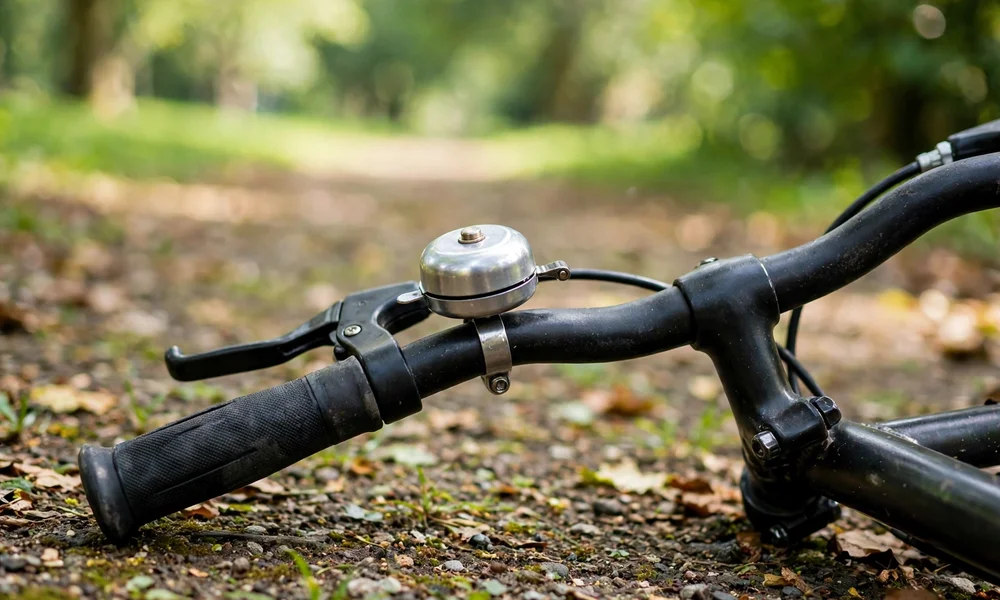
Fitting is a five-minute job that decides whether the bell gets used. Start by finding the spot where your thumb rests naturally when you are riding with your hands on the grips. That is where the bell belongs. On flat handlebars, that is usually just inside the grip, on top of the bar. On drop handlebars, it is usually near the top of the hood, where your thumb can reach it without shifting your hand. The bell should be reachable without looking down and without loosening your grip.
Looking After Your Bell
A bike bell needs almost no care, but a little keeps it ringing clearly for years. Wipe the dome after wet rides, because road grime and rain dull the ring over time. Check the clamp every few months, because vibration loosens bolts slowly, and a loose bell buzzes instead of ringing. A drop of light oil on the striker pivot once a year keeps the action smooth, and it stops the lever from sticking after a wet winter. If the dome is dented, the ring will change: a small dent usually only shortens the ring, but a large dent can silence it, and a dented dome is a sign the bell should be replaced.
Mistakes That Make a Bell Useless
The most common mistake is fitting the bell where you cannot reach it. A bell mounted on the far side of the handlebars, or buried behind a light and a phone mount, is a decoration, not safety kit. If you have to look down or move your hand to ring it, you will not ring it in the moment that matters. The second mistake is buying a bell that is too quiet for your riding. A tiny, pretty bell looks good on a city bike and disappears on a busy road, and a bell nobody hears is worse than no bell at all, because it gives you false confidence.
Checklist: Before You Buy a Bike Bell
- Check the sound: a bright, clear ring carries further than a dull thud.
- Check the reach: your thumb should find the lever without moving your hand.
- Check the clamp: it must fit your handlebar diameter and leave room for brakes and gears.
- Check the loudness for your riding: polite for paths, louder for busy roads.
- Check the build: a brass or steel dome outlasts and out-rings a plastic one.
- Check it on the bike: ring it hard after fitting and listen for buzzing or rattling.
Frequently Asked Questions
Are bike bells legally required?
It depends on where you ride. Many countries and some cities require a bell on a bicycle, and others only recommend one. Check the rules where you ride, and fit a bell either way: the law is the least important reason to have one, because the safety benefit applies everywhere.
What is the loudest type of bike bell?
Electric horn bells are the loudest, followed by trigger bells with a large steel dome. A classic brass dome bell is quieter but friendlier, and it is loud enough for shared paths and quiet streets. Choose loudness for where you ride most, not for the loudest bell on the shelf.
Where should I mount my bike bell?
Mount it where your thumb rests naturally, usually just inside the grip on flat bars or near the top of the hood on drop bars. It should be reachable without looking down and without loosening your grip on the handlebars.
Will a bell scare pedestrians?
A bell rung early and politely rarely scares anyone. A bell rung late and loudly can startle people, which is why you should ring from ten metres or more and give people time to react. A friendly ring is a warning, not a demand.
Can I fit a bell on drop handlebars?
Yes. Most bells fit drop bars with the right clamp or spacer, mounted near the top of the brake hood where your thumb can reach it. Check the bar diameter at the mounting point, because it is thinner near the hoods than at the centre of the bar.
How do I stop my bell from rattling?
Rattling usually means a loose clamp or a bell touching another part of the bike. Tighten the clamp, move the bell slightly away from the brake lever or light, and check that the dome is not dented. A drop of oil on the striker pivot can also quiet a buzzing mechanism.
The Bottom Line
The bike bells that keep rides safe in 2026 share the same qualities: a bright, clear ring that carries, a lever your thumb finds without thinking, and a clamp that holds the bell steady on your bars. A classic brass dome bell is the right first choice for most riders, with a louder trigger bell for busy roads and an electric horn for fast e-bikes. Fit it where your thumb rests, ring it early, and the smallest piece of kit on your bike will do one of the biggest safety jobs.


