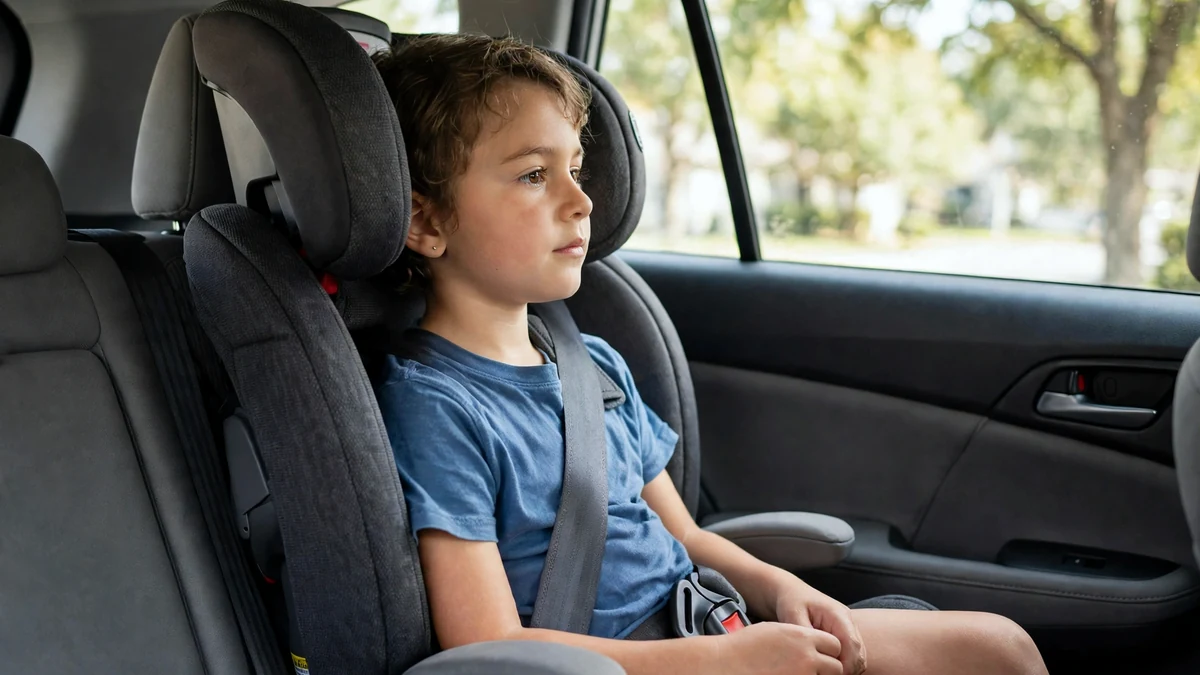
A booster seat is a small thing that does a big job. A car seat belt is designed for an adult body, and on a child it sits in all the wrong places: too high on the stomach, too close to the neck, and too loose across the hips. A booster lifts the child up so the belt can do its work properly, holding the strong bones of the pelvis and the middle of the shoulder instead of soft tissue. The best booster seats of 2026 are not the flashiest ones, and they are not the ones with the longest list of extras. They are the seats that fit the child, fit the car, and make it easy to get the belt right every single time, even on a rushed school morning.
What Makes a Booster Seat Good
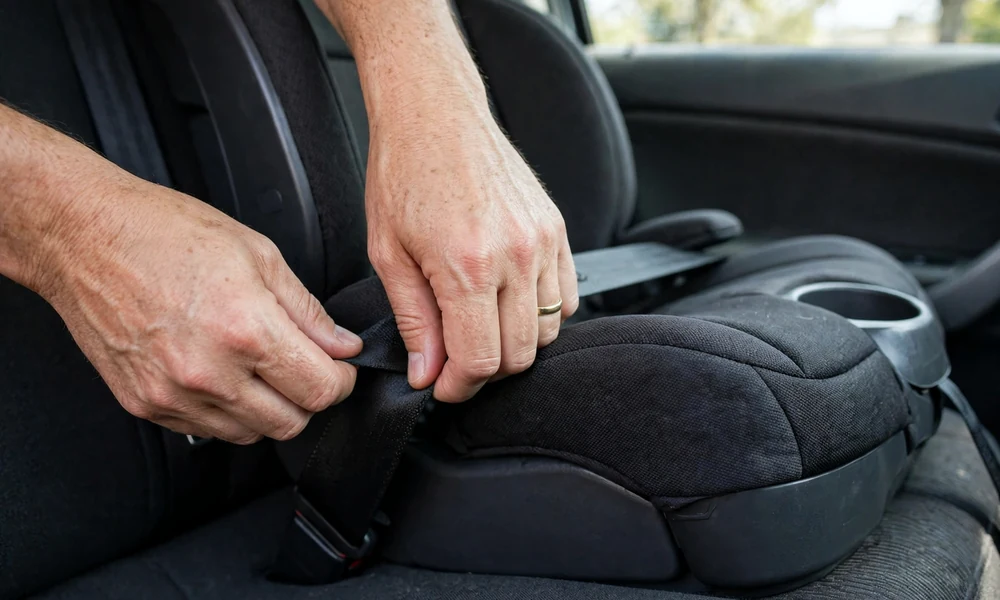
The first thing to judge is belt fit. A good booster guides the lap belt low and flat across the tops of the thighs, not up on the stomach, and it holds the shoulder belt across the centre of the chest and shoulder, not against the neck and not slipping off the arm. The belt guides should be easy to thread and clearly shaped, so there is no guessing about which slot the belt goes through. If the belt rides up or the child has to hold it away from their neck, the seat is not doing its job, no matter how comfortable it looks.
The second thing is how the seat fits the child. A high-back booster should support the head and neck, with a headrest that adjusts as the child grows and side wings that keep a sleeping child from flopping sideways. The seat should be wide enough for the hips without squeezing, and deep enough that the child can sit with their back flat against it and their knees bending naturally at the edge. A seat that is too narrow or too short will be uncomfortable on a long drive, and an uncomfortable child is a child who wriggles out of position.
The Two Main Types of Booster Seat
High-back boosters are the right choice for most children moving out of a forward-facing car seat. They give head and neck support, which matters in cars without tall headrests and on long journeys when a child falls asleep. The back also helps position the shoulder belt correctly, and the side wings add a layer of protection in a side impact. A high-back booster is bulkier to move between cars, but for everyday use it is the safer and more comfortable option, and it is the one most parents should start with.
Backless boosters are a simple cushion that lifts the child just enough for the belt to fit. They are light, cheap and easy to carry, which makes them handy for taxis, grandparents and holiday cars. They do not offer head support, so they only work well when the car itself has a tall headrest behind the child, and they give no help with sleeping posture. For an older child who is nearly tall enough for the belt alone, a backless booster is a sensible second seat. For a younger child, the high-back version is the better buy.

When Is a Child Ready for a Booster?
A child should move to a booster only when they have outgrown their forward-facing car seat, usually around four years old and at least eighteen kilograms, and when they can sit still for a whole journey without unbuckling or leaning out of the belt. The five-step test is the honest check: the child sits with their back flat against the vehicle seat, their knees bend at the edge, the lap belt sits low on the hips, the shoulder belt crosses the middle of the shoulder, and they can stay like that for the entire trip. If any step fails, they still need the booster, and if they cannot sit still, they are not ready for one yet.
The Best Booster Seats of 2026
The best high-back booster for most families this year is a mid-priced seat with a wide weight range, an adjustable headrest and clear red belt guides that make correct fitting obvious at a glance. It is light enough to move between cars without a struggle, the fabric cover comes off for washing, and the seat stays stable on both flat and sculpted car seats. It suits children from around four to twelve years old, and it is the seat that makes the daily school run simplest, because the belt lands in the right place without fiddling.
The best booster for long journeys is a deeper, more padded high-back model with a reclining back and generous side wings. It keeps a sleeping child upright and supported, the headrest adjusts in small steps so the shoulder belt stays centred as the child grows, and the armrests are low enough not to push the lap belt up. It costs a little more and weighs a little more, but on a motorway trip the comfort is worth it, and the child arrives calm instead of stiff and grumpy.
The best backless booster of 2026 is a slim, lightweight cushion with a non-slip base and a belt-positioning clip that holds the lap belt low on the hips. It weighs almost nothing, fits easily in a suitcase or a grandparent’s boot, and costs far less than a high-back seat. It is the right pick for an older child who only needs a small lift, and for any family that needs a spare seat for lifts and taxis. It is not a first seat for a young child, but as a second seat it is hard to fault.
The best booster for three across the back seat is a narrow high-back model designed to sit snugly beside two other seats without the buckles becoming unreachable. It has a slim base, no wide armrests to get in the way, and belt guides that stay clear of the neighbouring seat. Families with three children in the back row know how hard this is to get right, and this seat solves it without forcing anyone into the front. Measure the back seat first, but if the width works, this is the one to buy.
The best budget booster is a simple high-back seat that does the essentials well and skips the extras. It has a height-adjustable headrest, straightforward belt guides and a washable cover, and it meets the same safety standards as seats costing twice as much. The padding is thinner and the adjustments are less refined, but the belt fit is correct, and correct belt fit is what matters most. For a family watching the cost, this seat proves that safety does not have to be expensive.
What Else You Need
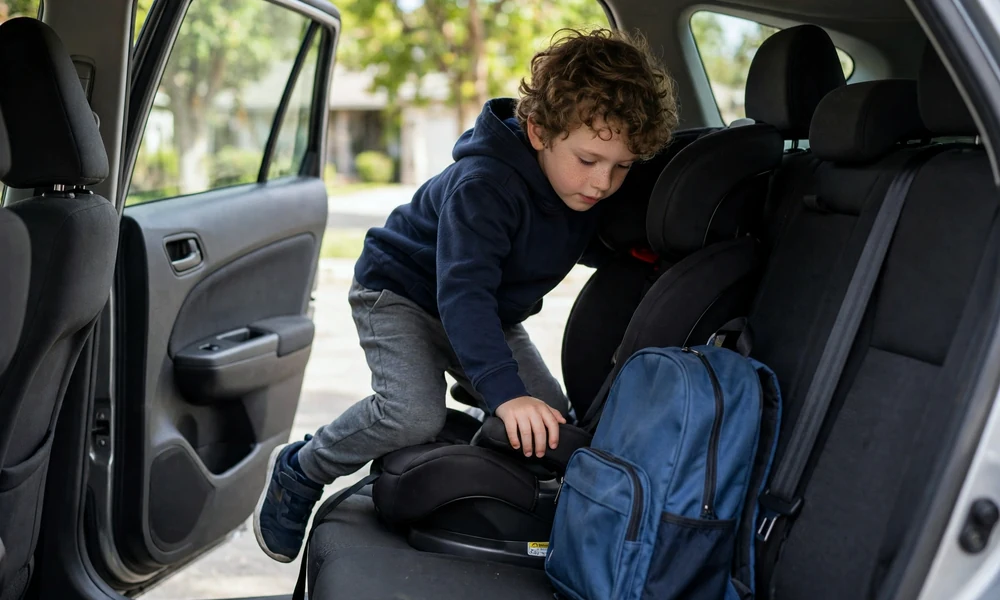
A booster on its own is only half the set-up. The car matters too: the vehicle seat must have a headrest tall enough to support the child’s head when a backless booster is used, and the seat belt must be long enough to reach around the booster and buckle without strain. A seat protector mat stops the booster from marking leather or fabric, and a small organiser keeps books and snacks within reach so the child is not leaning across the car. A spare cover is worth having too, because a washed cover takes time to dry and a booster without its cover is a booster that stays at home. None of this costs much, and all of it makes the booster work better in real life.
Common Mistakes to Avoid
The biggest mistake is moving a child to a booster too early. A booster does not hold a child in place the way a five-point harness does, so a child who cannot sit still is not safe in one. The second mistake is letting the lap belt ride up onto the stomach, which happens when the belt is threaded through the wrong guide or the child sits on the belt. The third is using a booster in the front seat, where the airbag is designed for an adult and the child sits too close to it. The back seat is the safest place for a child in a booster, every time.
Another common mistake is keeping a booster that has been in a crash, even a small one. A seat that looks fine can have hidden cracks in its shell, and a second-hand seat with no history is a gamble. Check the expiry date moulded into the plastic, because old plastic weakens with heat and sunlight, and replace the seat if the cover is torn or the belt guides are cracked. A booster is not a buy-once-forever item: it needs checking as the child grows and replacing when it no longer fits or has been damaged.
How Booster Seats Fit Family Life
A booster seat is one stage in a longer journey through child car safety, and it helps to see where it sits. The stage before it is the forward-facing seat with its own harness, which holds a smaller child snugly and does the work the belt cannot yet do. Readers who are still at that stage will find the best baby car seats guide useful, because it covers the seats that come before a booster and the signs that a child is ready to move on. The stage after the booster is the adult belt alone, and rushing that step is the mistake most parents make. The wider best vs worst car seats comparison puts the whole journey in one place, from first seat to last, so the booster stage makes sense in context.
Family cars carry more than children, and the same care that goes into a booster seat applies to everything else in the back. A dog travelling loose in a car is a danger to itself and to the children beside it, and it needs its own restraint just as a child does. Readers who travel with a pet as well as children should look at the best dog car seats guide, which covers harnesses and carriers that keep a dog secure without getting in the way of the booster. A calm, well-organised back seat is safer for everyone in it, two-legged and four-legged alike.
The Verdict
The best booster seat of 2026 is the one that puts the belt in the right place on your child, in your car, every time. For most families that means a mid-priced high-back booster with an adjustable headrest and clear belt guides. For long trips, a deeper padded model is worth the extra money, and for older children a slim backless booster is the practical second seat. Wait until the child is ready, check the belt fit on every journey, keep the child in the back seat, and replace the seat after any crash. Teach the child to check the belt themselves as they get older, so the habit stays with them long after the booster is gone. A booster chosen this way is a small, simple thing, and it does one of the most important jobs in the car.


