A playhouse is one of the few toys that becomes a place. A child does not just play with it; they move into it, name it, and fill it with whatever matters that week. A good playhouse earns that loyalty. It stands solid in the rain, it has room to grow into, and it turns an ordinary garden into somewhere worth going outside for. A bad one wobbles, leaks, and ends up leaning against the fence within a year. The best playhouses of 2026 are not the biggest ones, and they are not the ones with the most extras bolted on. They are the ones that are built well, sized honestly, and still standing and loved three summers later.
What Makes a Playhouse Good
The first thing to judge is how solid it feels. A good playhouse does not flex when a child leans on the wall, and its floor does not bounce underfoot. The panels should fit tightly, the corners should be braced, and the whole structure should sit square on the ground without rocking. Push the walls gently, stand inside and shift your weight, and listen for creaks. A playhouse that feels flimsy in the shop will feel worse after a wet winter, and a wobbly playhouse is one children stop trusting. Sturdiness is the foundation of everything else, and it matters more than colour, shape or brand.
The second thing is the roof. A playhouse lives outside, and its roof decides whether it survives the seasons or rots from the top down. A good roof has a real slope so rain runs off, an overhang so water does not drip down the walls, and a covering that keeps the timber dry. A flat roof that ponds water will sag and leak within a year. Check the joints where the roof meets the walls, because that is where damp gets in first. A dry playhouse smells of wood; a damp one smells of mildew, and children will not play in it for long.
The Main Types of Playhouse
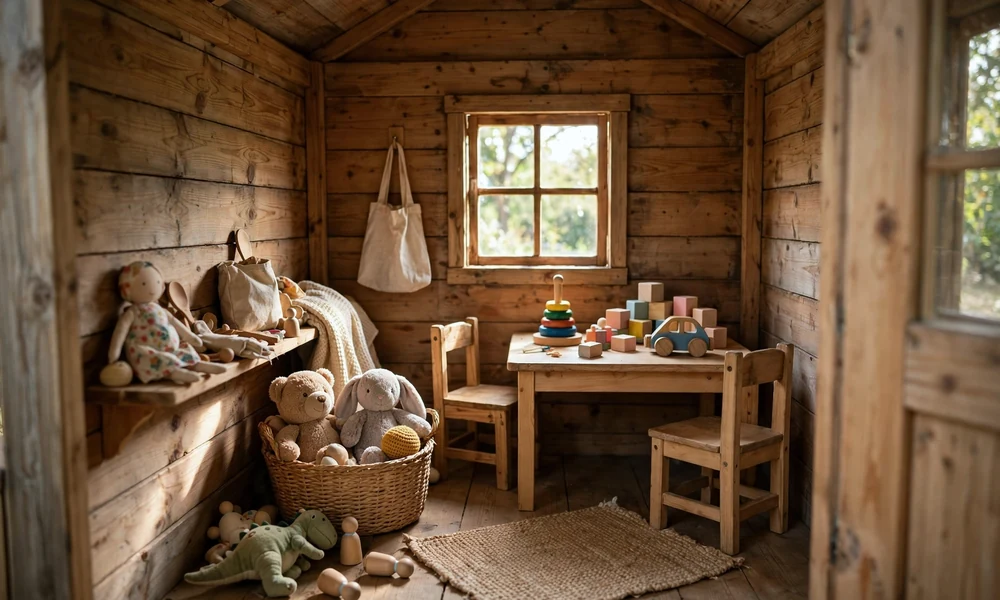
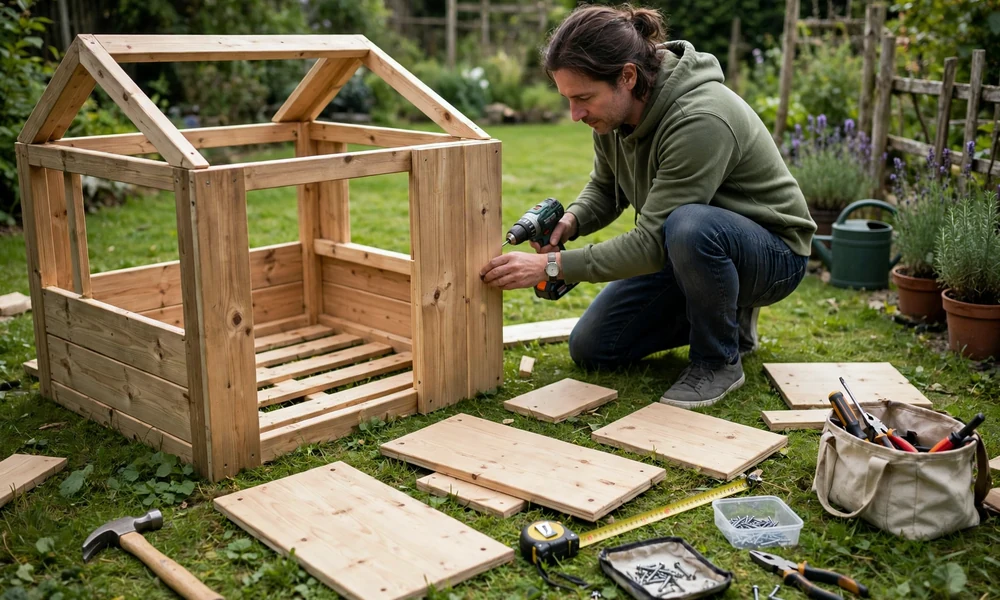
Wooden playhouses are the classic choice, and for most gardens they are the best one. Timber looks right in a garden, it feels warm and solid, and a well-built wooden playhouse can last five years or more with a coat of preservative now and then. Wood breathes, so the inside stays cooler in summer, and it can be painted, repaired and customised as children grow. The trade-off is weight and assembly: wooden playhouses arrive as heavy panels, take a few hours to build, and need a flat, level base. For a permanent garden feature that becomes part of the family, wood is hard to beat.
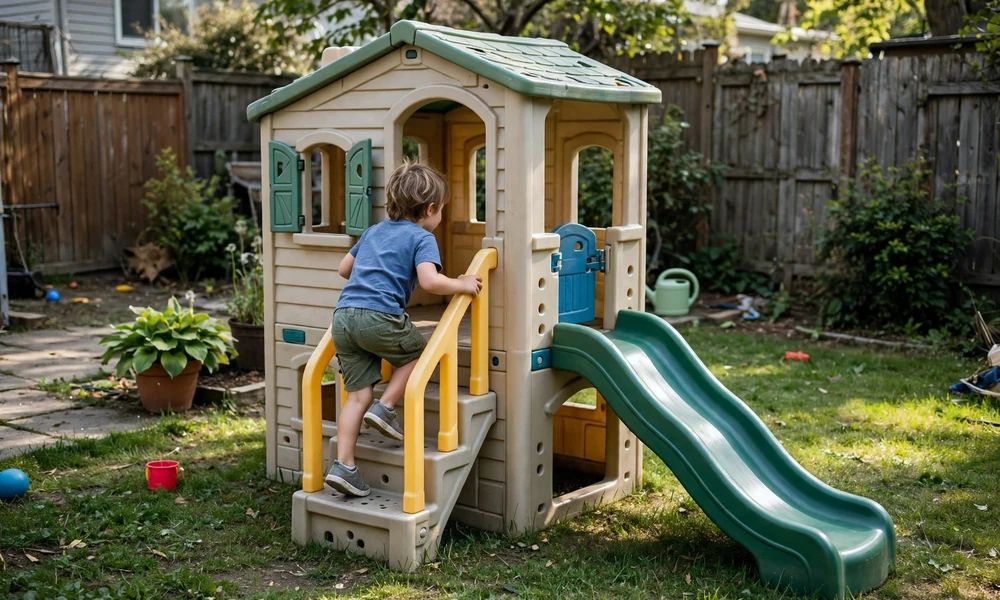
Plastic playhouses are the practical choice for younger children and smaller gardens. They are light, they never rot, and they wipe clean after muddy hands and spilled juice. Most slot together quickly with no tools, and they can be moved around the garden or taken down for winter. The best ones use thick, UV-stable plastic that does not fade or go brittle in the sun, with rounded moulded edges and a solid floor. Cheap plastic feels hollow and flexes, but for toddlers a sturdy plastic playhouse is often the smartest buy.
Fabric and pop-up playhouses are the indoor option. They fold flat into a bag, spring up in seconds, and turn a living room into a den, a shop or a castle. They cost very little, weigh almost nothing, and are perfect for flats, rainy days and younger children who are not ready for a garden house. The trade-off is durability: fabric tears, poles bend, and a pop-up playhouse will not survive rough play or the garden for long. As a second playhouse indoors they are excellent value; as the only playhouse, they are too flimsy.
Two-storey and climbing playhouses are the big garden centrepieces, with a raised house, a ladder or steps, and often a slide or a swing underneath. They give children a lookout, a den and a climbing frame in one structure, and they are the playhouses that get used every single day. They need more space, a bigger budget, a soft landing surface and proper anchoring, because a tall structure catches the wind. For a large garden and children old enough to climb safely, a two-storey playhouse is the one that becomes the heart of the garden.
How to Choose the Right Size
Size is the mistake most buyers make, and it is almost always the same mistake: buying too small. A playhouse that looks generous in the shop can feel cramped once two or three children are inside with their toys. The right size fits the children as they will be in two years, not as they are today, with room for a friend and a box of toys. Check headroom at the door as well as in the middle: a low doorway means bumps and tears. A playhouse for two children needs at least a metre and a half of floor in each direction, and one for three or four needs a good deal more.
The garden matters just as much as the children. Measure the spot before you buy, and leave space around the playhouse for the door to open, for children to run around it, and for an adult to get in and help when needed. A playhouse squeezed into a corner becomes a dead end that children stop using. Keep it visible from the house, and put it on level ground with a proper base: paving slabs, decking or a level patch of lawn. A playhouse on sloping ground will lean, its door will stick, and its floor will rot where water collects underneath.
The Best Playhouses of 2026
The best wooden playhouse of 2026 is a mid-sized timber house with a proper pitched roof, a solid floor and a door that opens and closes smoothly. It is big enough for two or three children and their toys, small enough to fit a normal garden, and built from thick panels rather than thin boards that warp. The timber is pressure-treated against rot, the windows are glazed with safe clear panels, and the roof has a real overhang. It takes an afternoon to build with two adults, and once it is up it feels like a permanent little house.
The best plastic playhouse of 2026 is a sturdy moulded house with a slide and a small climbing step built in. It suits children aged two to six, and families who want something up in an hour, easy to clean and safe to move. The plastic is thick and UV-stable, so it keeps its colour through the summer, and the edges are rounded and smooth. It has opening windows, a freely swinging door, and room for two small children to play house. It is not the playhouse for older children, but for the pre-school years it is hard to fault.
The best playhouse for toddlers is a low, soft-edged house with a wide doorway and no steps to fall from. Toddlers need a playhouse they can crawl into safely, stand up in without bumping their heads, and see out of so they do not feel shut in. The best toddler playhouses have bright colours, a washable floor and nothing small enough to come loose. They are light enough to move between garden and living room, where toddlers want their house. A good toddler playhouse is less a building and more a cosy den, and that is exactly what a two-year-old wants.
The best two-storey playhouse of 2026 is a raised wooden house with a proper ladder, a slide and a sheltered space underneath. It is the playhouse for a big garden and children aged four and up who want somewhere to climb, hide and look out from. The platform is high enough to feel exciting and low enough to be safe, the rails are solid and close together, and the whole structure is anchored to the ground. It needs more assembly and a soft landing surface, but it is the playhouse children ask to go out to every day.
What Else You Need
The small building toys matter too, because the games that start in the playhouse often carry on inside it. A child who builds a little house out of bricks on the playhouse table is practising the same imagination they use to turn it into a shop or a spaceship. Families who enjoy that kind of play will find plenty to like in the best LEGO sets guide, which covers the sets that keep small hands busy on rainy afternoons. The same goes for outdoor play: a playhouse sits naturally beside a bike and a ball, and the best kids bikes guide covers the wheels that get children out into the garden in the first place.
Common Mistakes to Avoid
The biggest mistake is buying on looks alone. A pretty playhouse with thin walls and a flat roof will look lovely in the first photograph and be falling apart by the second summer. Check the panels, the fittings and the roof before you check the colour. The second mistake is skipping the base: a playhouse put straight onto grass will sink, lean and rot at the bottom. Paving slabs or a simple timber base cost little and add years to its life. The third is forgetting the weather: a coat of preservative every year or two and a roof check each spring. A little care goes a long way, and a well-kept playhouse will outlast the children who first played in it.
Another common mistake is putting the playhouse somewhere you cannot see it. Children play best when they feel independent, but they still need an adult within earshot and sight, especially younger ones. A playhouse hidden behind a shed or at the far end of a long garden gets used less and worried about more. Put it where you can see the door from the kitchen window, keep the area clear of sharp tools, and check the fittings every few months for loose screws and splinters. Safety is not a one-time check; it is a habit, and it is what lets children play freely without a parent hovering.
How a Playhouse Fits Family Life
A playhouse is one of the few purchases that slows family life down in a good way. There is no screen, no score and no schedule: just a child, a small house and an afternoon. That calm is part of the appeal, and it is why a playhouse sits so well beside other gentle family pastimes. A morning in the playhouse pairs naturally with a relaxed game afterwards, and many families keep a board games evening to wind down once the children come inside. The same imagination that turns a wooden box into a castle makes for a good game night: both reward make-believe and both are better shared.
The Verdict
The best playhouse of 2026 is the one that fits the garden, the children and the years ahead. For most families that means a mid-sized wooden playhouse with a pitched roof and a solid floor. For younger children, a sturdy plastic house with a slide is the better buy. For a big garden, a two-storey climbing playhouse is the one that becomes the heart of the outdoors. For indoors, a pop-up fabric house does the job beautifully. Whatever the choice, buy solid, buy bigger than you think you need, put it on a level base where you can see it, and look after it.