
A shaky video is hard to watch, no matter how good the camera is. A gimbal fixes that problem at the source: instead of trying to steady the footage afterwards, it holds the camera level while you move, so walking shots glide, pans stay smooth and the horizon never tilts. The best gimbals of 2026 are not the biggest or the most expensive ones. They are the ones that balance quickly, hold their payload without straining, and keep working through a long day of shooting without fuss.

What Makes a Gimbal Good
The first thing to judge is how steadily it holds. A good gimbal keeps the camera level through footsteps, turns and small bumps, with no visible bobbing or micro-jitter in the frame. The motors should be quiet and smooth, not buzzy, and the gimbal should settle quickly after a sudden move instead of wobbling for a second or two. If the footage still shakes when you walk at a normal pace, the motors are either too weak for the camera or tuned badly, and no amount of clever software will save the shot.
The second thing is balance. A gimbal that balances well needs almost no motor effort to hold the camera still, which means longer battery life, cooler motors and smoother movement. Balancing should be a simple job: slide the camera on its plate, adjust the arms until it sits level on its own, then let the gimbal take over. If the camera keeps tipping forward or the motors whine the moment you switch it on, the balance is wrong, and the gimbal will never perform at its best. Good design makes this easy; poor design turns a two-minute job into a twenty-minute chore.
The Main Types of Gimbal
Phone gimbals are the smallest and simplest kind. They fold down to pocket size, hold a smartphone, and use a phone app for tracking, time-lapse and clever shooting modes. They are the right choice for vloggers, travellers and anyone who shoots mostly on a phone, because they add almost no weight to the kit and the learning curve is gentle. The trade-off is payload: a phone gimbal cannot carry a real camera, and a heavy phone with a case and a lens attachment can push some models to their limit.
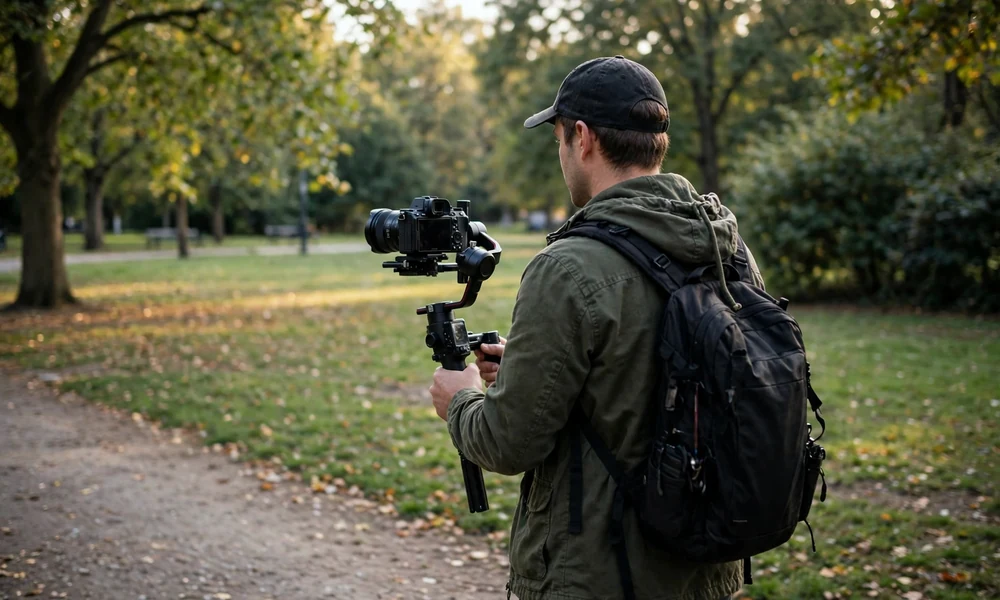
Camera gimbals are built for mirrorless and DSLR cameras. They are bigger, heavier and far stronger, with three motors that handle a camera and lens of one to four kilograms depending on the model. They offer proper follow modes, a joystick for framing, and often a small screen or app control for settings. They are the standard tool for wedding films, travel documentaries and YouTube work shot on a real camera. The cost is size and weight: a loaded camera gimbal is a serious piece of kit to carry all day.
Action-camera gimbals are small, tough and built for movement. They hold a lightweight action camera and are designed for running, cycling, skiing and anything else where the camera gets thrown around. Many are waterproof or splash-proof, and they keep the horizon level even when the wearer is upside down. They suit the shooter who wants smooth footage from a tiny camera in rough conditions, and they pair naturally with a chest mount or a helmet mount when hands-free shooting is the goal.
Large and professional gimbals sit at the top of the range. They carry cinema cameras and heavy lens combinations, often with a second operator controlling focus and framing from a remote handle or a wireless controller. They are overkill for most people, but for a crew shooting a short film or a commercial, they are the tool that makes dolly-smooth tracking shots possible without a dolly.
How to Choose: Payload and Balance
Payload is the first number to check, and it is the one people get wrong most often. The payload is the maximum weight the gimbal can carry, and your camera and lens together must sit comfortably under it, not right on the edge. A gimbal rated for three kilograms will hold a two-kilogram camera and lens happily, but a camera and lens that add up to 2.9 kilograms will strain the motors, drain the battery fast and wobble in a breeze. Weigh the camera and the heaviest lens you plan to use, then add a little for a microphone or a small light, and choose a gimbal with room to spare.
Balance is the second thing, and it matters more than most buyers expect. Every camera and lens combination balances differently, so the gimbal needs enough adjustment in its arms and plate to level your exact setup. Before buying, check that other shooters with your camera model report an easy balance on the gimbal you are considering. A gimbal that balances in two minutes will get used every shoot; one that needs ten minutes of fiddling will get left at home, and a gimbal left at home steadies nothing.
The Best Gimbals of 2026
The best camera gimbal for most shooters this year is a mid-sized three-axis model built for mirrorless cameras. It carries a camera and a standard zoom lens with ease, balances in a couple of minutes, and offers smooth pan, tilt and roll follow modes that feel natural rather than robotic. The battery lasts a full day of shooting, the handle is comfortable for long sessions, and the joystick gives precise control without taking your eyes off the shot. For weddings, travel films and YouTube work, this is the gimbal that makes the most sense for the most people.
The best phone gimbal of 2026 is a folding model with a built-in tripod, subject tracking and a long battery life. It opens in seconds, balances a phone in under a minute, and follows a walking presenter smoothly without losing them at the edge of the frame. The app adds time-lapse, panorama and gesture control, so a solo shooter can start and stop recording without touching the phone. It is light enough to carry all day and small enough to fit in a coat pocket, which means it actually gets used instead of sitting in a drawer.
The best gimbal for action cameras is a compact, rugged model built for fast movement and rough weather. It holds a small action camera steady through running, riding and skiing, keeps the horizon level on steep ground, and shrugs off rain and dust that would stop a bigger gimbal. The controls are simple enough to use with gloves on, the battery swaps quickly, and the whole unit is small enough to clip to a bag. Readers who shoot this way will find the best action cameras guide useful too, since the camera and the gimbal need to match in size and weight to work well together.
The best budget gimbal is a simple two-or-three-axis model that does the basics well and skips the extras. It balances easily, holds a phone or a small camera steady, and costs a fraction of the flagship models. It will not track a subject as cleverly, and it will not carry a heavy lens, but for a beginner learning to shoot smooth video it is more than enough. It is the gimbal to buy when you are not sure gimbal shooting is for you: cheap enough to be a low-risk experiment, good enough to show you what smooth footage really looks like.
The best travel gimbal of 2026 is a lightweight folding model that packs flat and weighs little more than a water bottle. It is designed for the shooter who walks all day with a small mirrorless camera and wants smooth footage without a heavy rig. It folds into a bag side pocket, sets up in under two minutes at each location, and its battery charges from the same USB charger as the phone.
What Else You Need
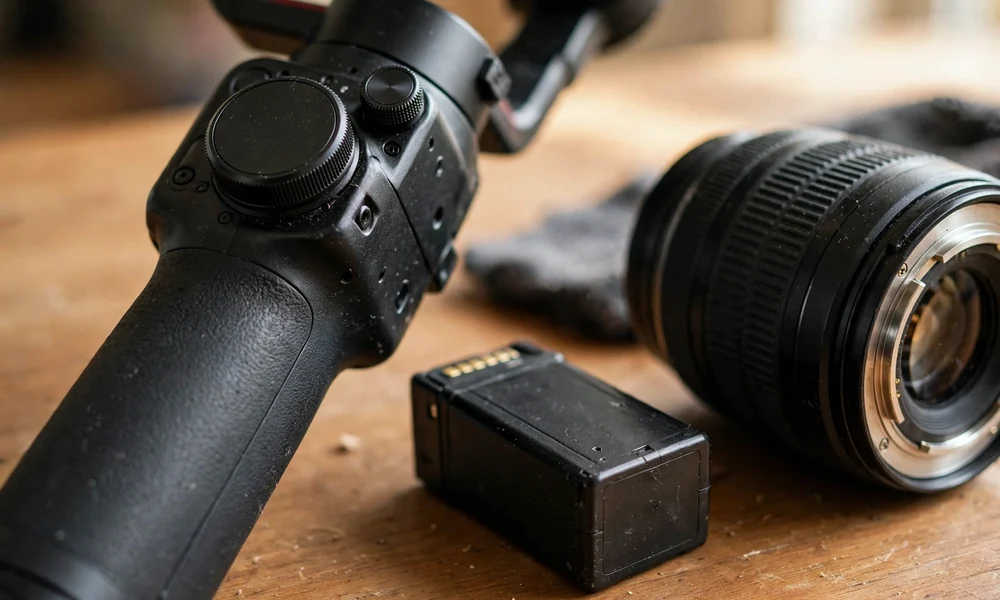
A gimbal on its own is only part of the kit. A spare battery is the first extra worth buying, because a gimbal that dies halfway through a shoot is worse than no gimbal at all. A small tripod or stand lets the gimbal rest upright between shots and doubles as a base for time-lapse. A quick-release plate matched to the camera saves minutes at every setup, and a short cable for charging or control keeps the kit tidy. None of this costs much, and all of it makes the gimbal far more useful in the field.
Common Mistakes to Avoid
The biggest mistake is buying a gimbal that cannot carry the camera. A buyer falls for a small, cheap model, then mounts a camera and lens that weigh twice its payload, and the motors scream, the battery dies in an hour and the footage still shakes. Always weigh the full setup first, heaviest lens included, and buy the gimbal to match it. The second mistake is never balancing properly: switching the gimbal on with an unbalanced camera burns out motors, drains batteries and makes every shot worse. Balance first, power on second, every single time.
Another common mistake is forgetting that a gimbal is not magic. It steadies movement, but it cannot fix bad light, bad framing or a dull subject. New shooters sometimes wave the gimbal around expecting cinema, then wonder why the footage still looks amateur. The gimbal rewards slow, deliberate movement: walk gently, turn smoothly, and let the shot breathe. Practise the basic moves, the slow push-in, the gentle pan, the steady follow, before chasing fancy modes. A simple shot done smoothly beats a clever shot done badly every time.
How a Gimbal Fits a Filmmaker’s Kit
A gimbal sits naturally beside the rest of a shooting kit. The camera comes first, because the gimbal is chosen to carry it, and readers planning a new setup should start with the best cameras guide to find a body and lens the gimbal can actually hold. The same steady-movement idea carries into the air: smooth footage from the ground pairs well with smooth footage from above, and the best drones guide covers flying cameras that use the same three-axis stabilisation, just on a different scale. Together, a gimbal and a drone cover almost every moving shot a solo filmmaker will ever need.
The hobby also rewards the same patience that makes a good gimbal operator. Slow, steady movement is a skill, and it transfers: the calm hands that keep a gimbal level also keep a long lens steady and a microphone still. A gimbal teaches a shooter to plan the shot before pressing record, to walk the route first, and to think about where the camera ends up rather than where it starts. That discipline shows in the footage, and it is what separates a smooth video from a merely stable one.
The Verdict
The best gimbal of 2026 is the one that matches the camera you actually shoot with. For most mirrorless shooters that means a mid-sized three-axis camera gimbal: strong enough to carry a real lens, light enough to use all day, and simple enough to balance in minutes. For phone shooters, a folding phone gimbal with tracking is the smarter buy, and for action and adventure, a small rugged model is the only sensible choice. Whatever you choose, weigh the camera, balance it properly, carry a spare battery, and move slowly. A gimbal chosen this way will not just steady your footage on the first day; it will still be making your videos look professional years from now.


