
Bug Zappers That Clear a Patio Without Drawing in More Insects in 2026
Bug zappers promise the simplest deal in the garden: switch one on, and the biting insects die on a glowing grid instead of biting you. The best bug zappers of 2026 keep that promise, with a bright ultraviolet bulb, a high-voltage grid, a sealed housing that survives rain, and a tray that empties in seconds. The worst ones hum, flicker, and draw in more insects than they kill.
This guide covers the bug zappers worth buying in 2026, judged on killing power, coverage, and weather resistance. A bug zapper is an electric-grid killer, not an attract-and-trap device: a zapper kills insects the moment they touch the grid, while a trap lures them in and holds them alive in a chamber.
Key Takeaways
- Buy for the bulb first: a dim or warm-white bulb is ignored by insects, however good the grid is.
- Check the grid voltage and spacing: a low-voltage grid stuns insects instead of killing them, and wide gaps let small ones through.
- Hang the zapper at the edge of the garden, never beside the table: a lure placed beside people draws insects to the food.
- Outdoor zappers must be weatherproof: a unit with no rating dies in the first storm.
- Empty the tray weekly in summer: a full tray blocks airflow and the zapper stops working within days.
Bug Zappers 2026 at a Glance
| Best for | Zapper type | Coverage | Power | Standout strength |
|---|---|---|---|---|
| Best overall | Hanging lantern zapper | Up to 80 square metres | Mains | Bright bulb, strong grid, easy tray |
| Best for large gardens | High-voltage garden zapper | Up to 150 square metres | Mains | Kills on contact, survives rain |
| Best for patios | Tabletop zapper lantern | Up to 40 square metres | Mains or USB | Sits on the table, quiet at close range |
| Best for bedrooms | Plug-in indoor zapper | One room | Mains | Silent grid, dim glow, no crackle |
| Best for camping | Battery lantern zapper | Up to 30 square metres | Rechargeable | Light, portable, doubles as a lantern |
| Best budget | Compact hanging zapper | Up to 50 square metres | Mains | Cheapest way to cover a patio |
What a Bug Zapper Really Is
A bug zapper has two parts: an ultraviolet bulb that insects cannot resist, and an electrified grid that kills them the moment they touch it. The insect flies to the light, touches the grid, and falls into a tray below. There is no scent lure, no fan, and no chamber. The kill is instant, the sound is a sharp crackle, and the tray tells the truth: a good zapper catches a mix of insects, including the small biting ones, while a bad one catches moths and midges and almost no mosquitoes.
That instant kill is what separates a zapper from a mosquito trap. Our guide to the best mosquito traps of 2026 covers attract-and-trap devices that lure mosquitoes with warmth, scent, and carbon dioxide, then pull them into a chamber with a fan. A trap works quietly and catches mosquitoes specifically, because it mimics a breathing person. A zapper works by light alone, kills everything that touches the grid, and is a poor choice for a bedroom, where the noise and the flash disturb sleep. Buy a trap for the bedroom and a zapper for the garden.
A zapper is also different from a fly trap, which uses a lure and a sticky surface or a chamber to catch flies indoors. Our guide to the best fly traps of 2026 explains that difference. Flies follow food smells, not ultraviolet light, so a zapper hung over a kitchen catches far fewer flies than a trap placed near the bin. Use the zapper outside at dusk, and the fly trap inside for the flies that follow food.
The Six Zapper Types Worth Knowing
Hanging Lantern Zapper
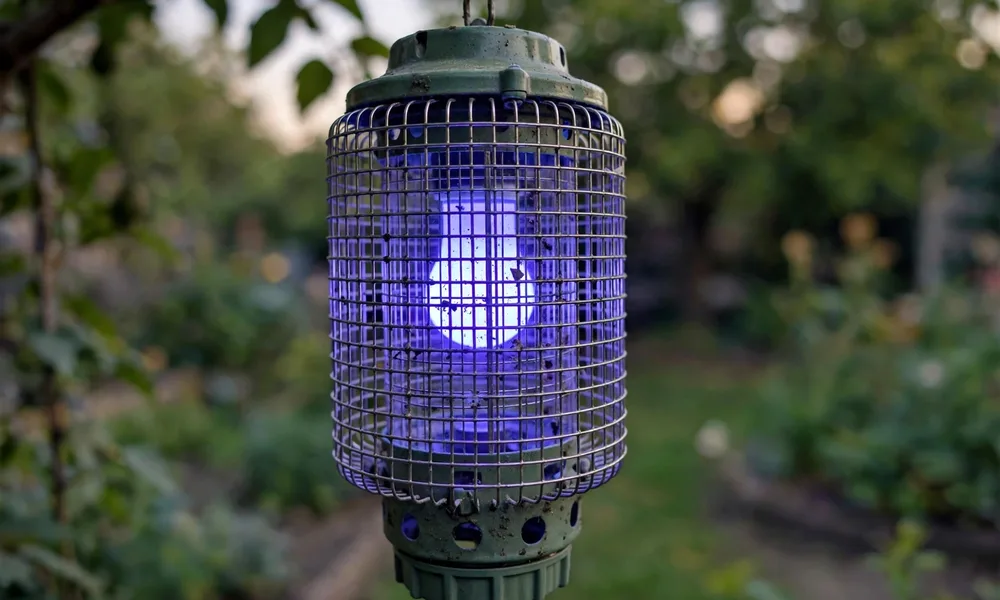
The hanging lantern zapper is the classic: a lantern-shaped unit that hangs from a hook or a beam, with a bright bulb inside a wire grid and a tray underneath. It covers up to 80 square metres, which suits most patios and small gardens. Check the cord before you buy: a good zapper has a long cord, so it can hang at the edge of the garden, away from the chairs. A zapper with a cord barely a metre long has to hang beside the door, where it draws insects towards the people instead of away from them.
High-Voltage Garden Zapper
The high-voltage garden zapper is the heavyweight, built for large gardens and farms. It runs a stronger grid at a higher voltage, covers up to 150 square metres, and kills large insects on contact instead of stunning them. The trade-off is noise and size: the crackle is louder and the unit is bigger. Buy it when the garden is large and the insect pressure is high.
Tabletop Zapper Lantern
A tabletop zapper sits on the patio table instead of hanging, which makes it the easiest to place and the easiest to empty. It covers up to 40 square metres and suits small patios and balconies, where hanging space is short. Its weakness is range: the bulb is smaller, so it guards a circle the size of a table and little more.
Plug-In Indoor Zapper
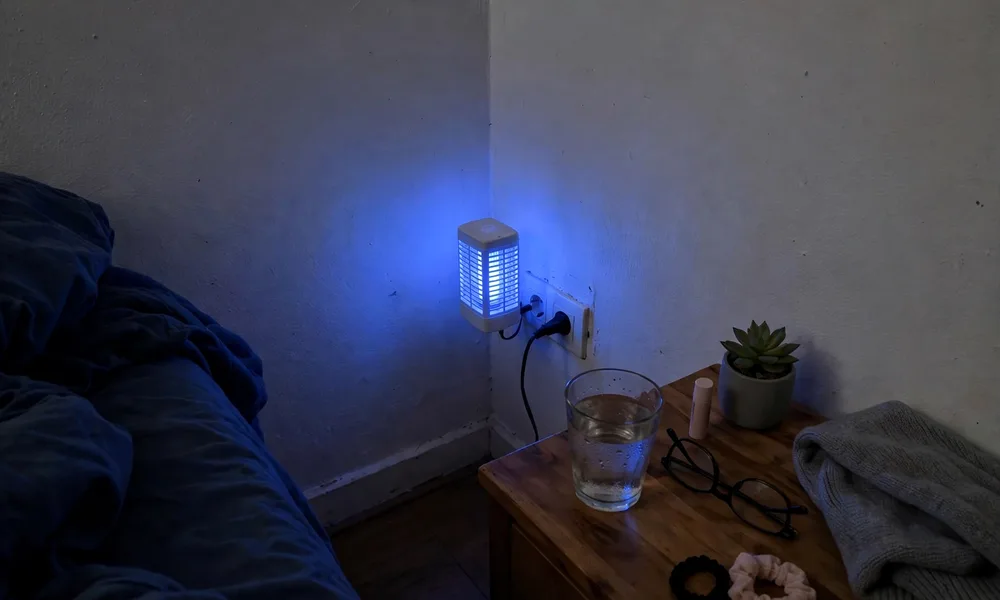
A plug-in indoor zapper is a small unit that fits straight into a wall socket, with a dim ultraviolet glow and a quiet grid. It covers one room and suits bedrooms, where a loud outdoor zapper would disturb sleep. The grid is weaker than an outdoor unit, so it kills small insects and larger ones slowly, but in a closed bedroom that is enough. Never use an outdoor zapper indoors.
Battery Lantern Zapper
A battery lantern zapper is a rechargeable unit that doubles as a camping lantern, with a zapper grid on one side and a light on the other. It covers up to 30 square metres and suits tents, caravans, and gardens with no outdoor socket. A full charge lasts a whole evening. Its weakness is power: the grid is weaker than a mains unit, and the bulb dims as the battery runs down.
Compact Budget Zapper
Compact budget zappers are sold in pairs for the price of one good unit, with a smaller bulb and a lighter grid. They cover up to 50 square metres and are the cheapest way to guard a patio for one summer. Their grids are thinner and their bulbs dimmer, so expect to replace them next year. Check the tray first: a tray that cannot be emptied without tools will fill up and stop working within a week.
Bulb, Grid, and Weatherproofing: The Three Tests
The bulb is the lure, and the grid is the kill, and a zapper that fails at either one is a lamp with a noise. A good bulb is a bright ultraviolet tube that insects can see from across the garden. A bad bulb is dim, small, or warm white, and insects ignore it from more than a metre away. The grid should run at a high voltage, with gaps tight enough to catch small insects. A good grid kills on contact, with a single sharp crackle, and the insect falls into the tray. A bad grid crackles weakly, and the insect flies off.
Weatherproofing decides whether an outdoor zapper survives the summer. A good outdoor zapper is rated for rain, with a sealed housing, a covered bulb, and a cord that is protected where it enters the unit. A bad one has no rating at all. Look at the housing: if the seams are open, if the tray does not fit tightly, or if the cord enters through a bare hole, water will get in.
Placement: Where Zappers Work and Where They Fail
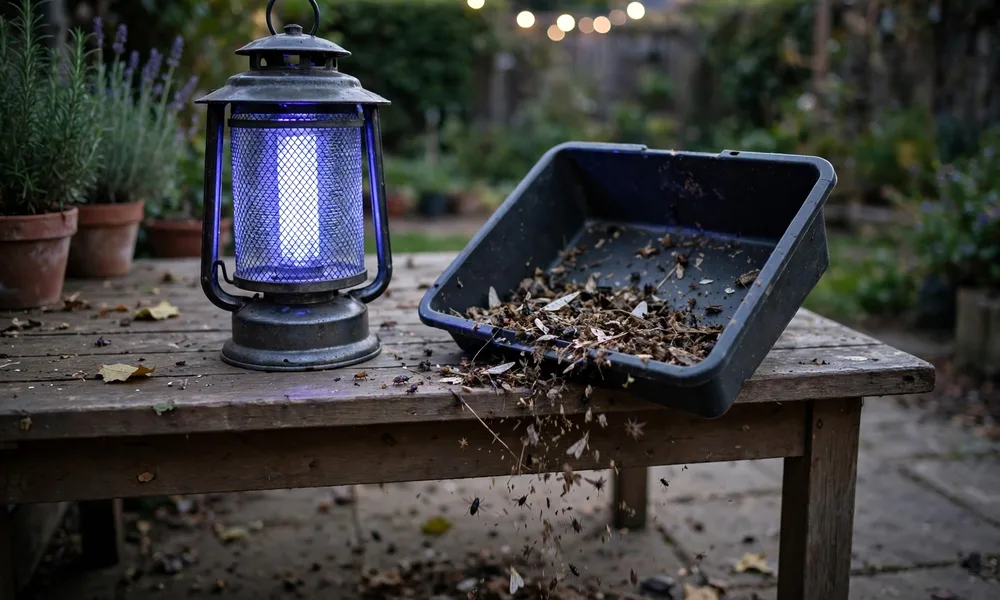
Placement matters more than most buyers think, because a zapper is a lure, and a lure placed in the wrong spot lures insects to the people. The right spot is at the edge of the garden, away from the chairs, so it draws insects away from the people and kills them there. Hang it about two metres high and at least five metres from the seating. A zapper hung beside the table draws insects straight to the food.
Keep the zapper away from other lights, so it is the brightest thing in its corner of the garden: a zapper competing with a porch light catches far less. Switch it on at dusk, when insects start flying, and leave it running all evening. A zapper switched on late catches nothing. Our guide to the best bug sprays of 2026 covers the skin protection that works when you leave the house, where no zapper can follow.
How to Choose, Clean, and Look After a Zapper
Start with the place, not the product. A bedroom needs a quiet plug-in zapper, a small patio needs a hanging lantern or a tabletop unit, a large garden needs a high-voltage zapper at the far edge, and a campsite needs a rechargeable lantern zapper. Then check the build: a bright ultraviolet bulb, a high-voltage grid, a sealed housing, a long cord, and a tray that empties without tools.
Clean the zapper weekly in summer. Switch it off, unplug it, and let the grid cool. Empty the tray, brush the grid gently to clear dead insects, and wipe the bulb with a dry cloth. Never clean a zapper while it is plugged in, and never wash the grid with water. Store the zapper indoors for winter, with its tray empty and its cord coiled.
Before You Buy: A Short Checklist
- Bright ultraviolet bulb, large enough to be seen from across the garden, not dim or warm white.
- High-voltage grid with tight gaps, so small insects are killed on contact, not stunned.
- Weatherproof housing with a rating for rain, sealed seams, and a protected cord entry.
- Cord long enough to hang the zapper at the garden edge, at least five metres from the seating.
- Tray that empties easily without tools, and a spare bulb available for the model.
- Right size for the place: one room indoors, up to 80 square metres for a patio, up to 150 for a large garden.
Frequently Asked Questions
Do bug zappers actually kill mosquitoes?
They kill some, but they are not the best mosquito tool. Mosquitoes follow carbon dioxide and warmth far more than ultraviolet light, so a zapper that relies on light alone catches moths and harmless insects while the mosquitoes feed a metre away.
Where should I hang a bug zapper?
At the edge of the garden, about two metres high and at least five metres from the seating, so it draws insects away from the people and kills them there. Never hang one beside the table or the door.
Are bug zappers safe around children and pets?
They are safe when hung out of reach, with the grid behind a protective outer cage that small fingers cannot pass through. Keep zappers away from play areas, and never let a child touch one while it is plugged in.
Can I use a bug zapper indoors?
Yes, but only a small plug-in indoor zapper with a quiet grid. Never use a large outdoor zapper indoors: the noise, the flash, and the smell are all wrong for a bedroom.
How often should I empty the tray?
Once or twice a week in mosquito season, and every morning after a heavy night. A full tray blocks airflow, so empty it before it fills.
Do bug zappers work in the rain?
A good outdoor zapper works in light rain, because its housing is sealed and its bulb is covered. A cheap zapper with no weather rating will die in the first storm.
The Bottom Line
The best bug zapper of 2026 is a hanging lantern zapper with a bright ultraviolet bulb, a high-voltage grid, a sealed housing, a long cord, and a tray that empties without tools. Hang it at the edge of the garden, two metres high and five metres from the chairs, and switch it on at dusk.


