
Butterfly houses that welcome pollinators in 2026 are the quietest way to make a garden work harder for wildlife: a small wooden shelter with narrow vertical slots, hung on a post or fence, where butterflies rest out of the wind and rain. It will not fill a garden with butterflies on its own, but where nectar flowers already grow, it gives passing butterflies a reason to stay a little longer.
The best butterfly houses of 2026 are simple and well made. They shelter adult butterflies, not caterpillars, and work best as one part of a pollinator-friendly garden. This guide explains what a butterfly house is, the main types, where to put one, and how to choose one butterflies will actually use.
Key Takeaways
- A butterfly house shelters adult butterflies from wind and rain; it does not house caterpillars or breed butterflies.
- Narrow vertical slots, a sloped roof, and untreated wood matter more than decoration or a painted finish.
- Place the house in a sunny, sheltered spot one to two metres high, facing south or south-east, near nectar flowers.
- Flowers attract the butterflies; the house only gives them somewhere safe to rest once they arrive.
- Clean the house once a year in late winter, and never spray insecticide anywhere near it.
What a Butterfly House Actually Is
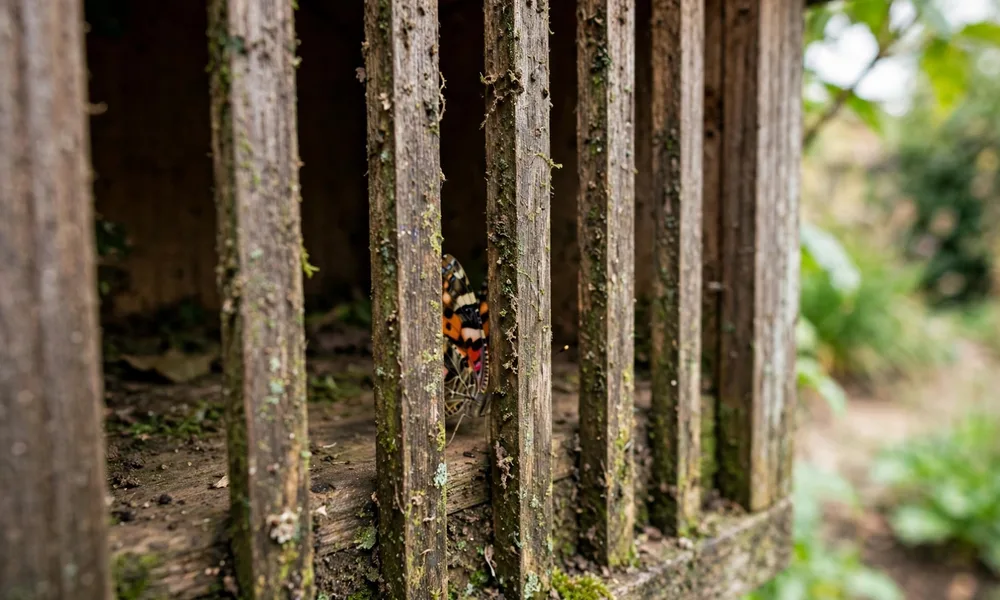
A butterfly house is a small wooden box, about the size of a shoebox, with a sloped roof and a front panel cut with narrow vertical slots. Butterflies slip through the slots and rest inside, hanging from bark strips fixed to the inner walls. The slots are too narrow for most birds, and the enclosed space stays darker, drier, and calmer than the open garden.
It helps to be clear about what it is not. A butterfly house is not a bird cage, which is a barred enclosure that keeps a pet bird safely inside, and it is not a bird bath, which is an open dish of water. Birds visit a garden for food and water; butterflies visit for nectar and shelter, and need a quiet, enclosed space rather than bars or a basin. It is also not a bee house, which is drilled with round holes for solitary bees to nest and lay eggs in, while a butterfly house has tall, thin slots and no nesting tubes.
On a hot afternoon butterflies rest in the shade inside, out of the drying wind. In a summer shower they wait under the roof until the rain passes, and some settle inside overnight on a cool autumn evening. They do not live in the house permanently or raise young inside it. Think of it as a bus shelter rather than a home.
The Main Types of Butterfly House
Most butterfly houses fall into four groups, differing in shape, size, and where they fit.
Classic wooden houses
The classic butterfly house is a plain wooden box with a pitched roof, narrow slots, and a post or bracket for mounting. It suits almost any garden and costs little. The best ones are cedar or pine with a roof that overhangs the front, so rain runs off. Avoid flat roofs, which pool water, and slots wider than about a centimetre, which let in birds and draughts.
Tall tower houses
Tower houses are taller and narrower than the classic box, with slots running down a long front panel. They suit small gardens and balconies, where a tall, slim shape fits a fence post or wall bracket. The extra height gives butterflies more room to hang, and the slim shape sheds wind well. The trade-off is capacity: a tower holds fewer butterflies at once.
Decorative cottage houses
Cottage-style houses are shaped and painted to look like a tiny house, often with a bright roof. They look charming on a fence, but the decoration is where problems creep in. Thick paint seals the wood so it cannot breathe, and fussy trim can block the slots. If you like the look, choose one with an unpainted interior and clear slots.
Multi-chamber houses
Multi-chamber houses are wider boxes divided inside into two or three sections, each with its own set of slots. They suit larger gardens where several butterflies may want shelter at once, but they are heavier and need a sturdier post.
Butterfly Houses Compared
| Type | Best for | Strengths | Watch out for |
|---|---|---|---|
| Classic wooden | Most gardens | Simple, cheap, proven shape | Flat roofs pool water |
| Tall tower | Small gardens, balconies | Slim, sheds wind, easy to mount | Holds fewer butterflies |
| Decorative cottage | Ornamental gardens | Looks charming on a fence | Paint can block slots |
| Multi-chamber | Large, busy gardens | Room for several butterflies | Heavy, needs a strong post |
Slots, Size, and Materials
The slots matter most. A good house has vertical slots about five to eight millimetres wide and eight to ten centimetres tall: wide enough for a butterfly to slip through with its wings folded, narrow enough to keep out most birds. Round holes belong on a bee house.
A house about 25 to 30 centimetres tall and 20 centimetres wide is the right scale for most gardens. Much smaller and a butterfly cannot hang comfortably inside; much larger and the interior stays cold and damp. Inside, a few strips of bark fixed to the back wall give butterflies something to grip; a smooth, varnished interior gives them nothing to cling to.
Untreated cedar is the best choice: it resists rot naturally and weathers well. Pine is cheaper and works if it is thick enough, but it rots unless the roof keeps the rain off. Avoid pressure-treated timber, which can leach chemicals, and houses painted inside. Wood oil on the outside only is fine; the inside should stay bare.
Where to Put a Butterfly House
Placement decides whether a butterfly house gets used or ignored. Hang it one to two metres off the ground, on a post, fence, or tree trunk, facing south or south-east so the morning sun warms it early. Butterflies are cold-blooded and need warmth to fly, so a house in morning sun is used far more than one in permanent shade. A spot sheltered from the wind, with a hedge or fence behind it, keeps the interior calm and dry.
Keep the house close to the flowers, but not buried in them: a butterfly feeding on lavender or coneflowers should be able to see it from a few metres away. Five to ten metres from the main flower bed is about right. A bird bath a few metres away gives birds their own water without drawing them to the butterfly house, and the two complement each other.
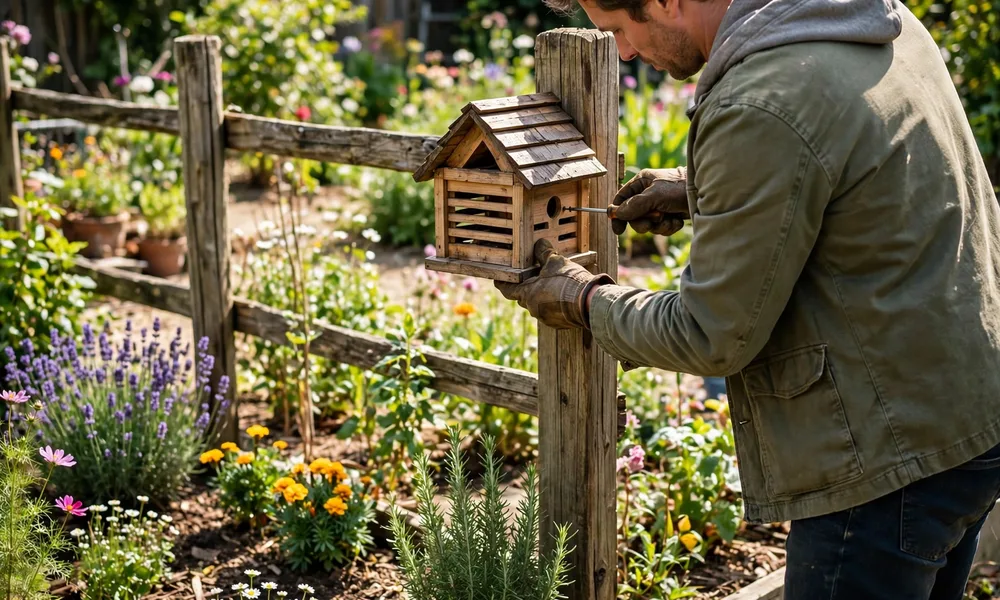
A house at ground level is easy for cats to reach and stays damp after rain, while one above two metres is hard to check and clean. The one-to-two-metre band keeps it out of easy reach of pets, lets you lift it down for its annual clean, and puts it at the height butterflies naturally fly. Fix it firmly with a solid bracket: a house that swings in the wind is one butterflies will avoid.
Planting That Brings the Butterflies
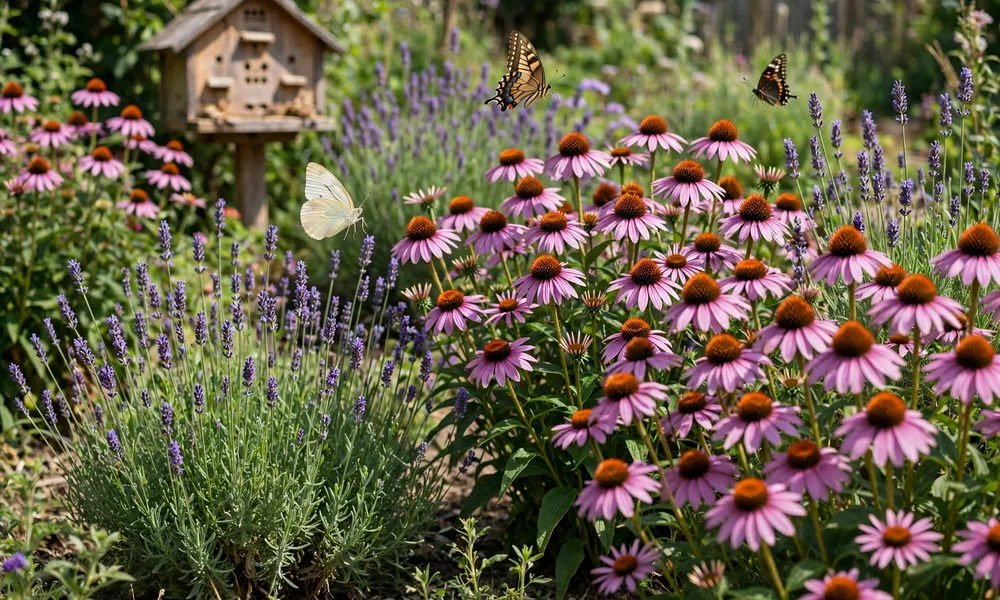
A butterfly house without flowers is an empty shelter. Butterflies come for nectar and stay where the flowers are rich. Plant in drifts rather than single specimens, and choose flat, open heads a butterfly can land on: lavender, coneflowers, buddleia, verbena, sedum, and asters. A mix flowering from spring through autumn matters more than any single species.
Leave a little wildness at the edges, too. Long grass, a patch of nettles in a quiet corner, and fallen leaves all help the caterpillars that become next year’s butterflies. If you grow vegetables, raised garden beds keep the planting tidy while the flower borders do the wildlife work.
Care, Cleaning, and the Seasons
A butterfly house needs very little care, but the little it needs matters. Clean it once a year, in late winter, before the first butterflies appear: lift it down, brush out old leaves and cobwebs, and check the wood for rot, especially around the roof and base. If the roof has warped, replace it or the rain will get in. Leave it to dry for a day before putting it back, and never clean it in summer while butterflies may be sheltering inside.
In spring, check the bracket and slots after winter storms. In summer, leave it alone: this is when butterflies use it most. In autumn, resist the urge to tidy it out, because some butterflies may already be settling in for a cold night.
Never spray insecticide anywhere near the house or the flowers around it. A single spray can kill the butterflies the house is meant to shelter, and it can linger on the wood for weeks. If aphids appear, wash them off with water or leave them for the ladybirds.
Mistakes That Put Butterflies Off
The most common mistake is buying a house and expecting it to do the attracting: a house in a garden with no flowers is a shelter nobody visits. The second is the wrong spot: facing north, in deep shade, or at ground level. The third is paint and varnish inside. And the fourth is putting the house right next to a bird feeder, where the birds it draws will also investigate the butterfly house. Give each creature its own corner.
Checklist: Before You Buy
- Slots are vertical, five to eight millimetres wide, and clear of paint or trim.
- The roof slopes and overhangs the front, so rain runs off instead of dripping in.
- The wood is untreated cedar or pine, with a bare, rough interior.
- The house is about 25 to 30 centimetres tall, not so large it stays damp.
- You have a sunny, sheltered spot one to two metres high, facing south or south-east, near flowers.
- Your garden has flowers in bloom from spring to autumn, and no insecticide is used nearby.
Frequently Asked Questions
Do butterfly houses actually work?
Yes, but only as part of a pollinator-friendly garden. Butterflies use them to rest out of wind and rain and to shelter overnight, and they are most used where plenty of nectar flowers grow nearby. A house alone in a flowerless garden will usually stay empty.
Will butterflies live in the house all year?
No. Butterflies visit to rest and shelter, then fly out to feed. A few may spend a cold night inside, but none lives in a house permanently, and none raises young inside it.
What is the difference between a butterfly house and a bee house?
A butterfly house has tall, narrow vertical slots for adult butterflies to slip through and rest inside. A bee house is drilled with round holes where solitary bees nest and lay eggs. Their entrances are shaped for the creature each is made for.
Where is the best place to hang a butterfly house?
On a post or fence, one to two metres high, facing south or south-east, sheltered from wind and close to nectar flowers. Morning sun matters most: butterflies need warmth before they can fly.
Do I need to put anything inside the house?
No food or bedding is needed. A few strips of bark fixed to the inner walls give butterflies something to grip, and that is all. Never put sugar water, fruit, or honey inside: it attracts wasps and ants.
How do I clean a butterfly house?
Once a year in late winter, lift it down, brush out leaves and cobwebs, and check for rot around the roof and base. Leave it to dry for a day before putting it back.
The Bottom Line
The best butterfly houses of 2026 are the simplest ones: untreated wood, narrow vertical slots, a sloped roof, and a sunny, sheltered spot near the flowers. Buy the house for the butterflies your garden already attracts, plant for the ones you want to see, and leave the house quietly in place.


