What Is the Best Carrot Cake in 2026?
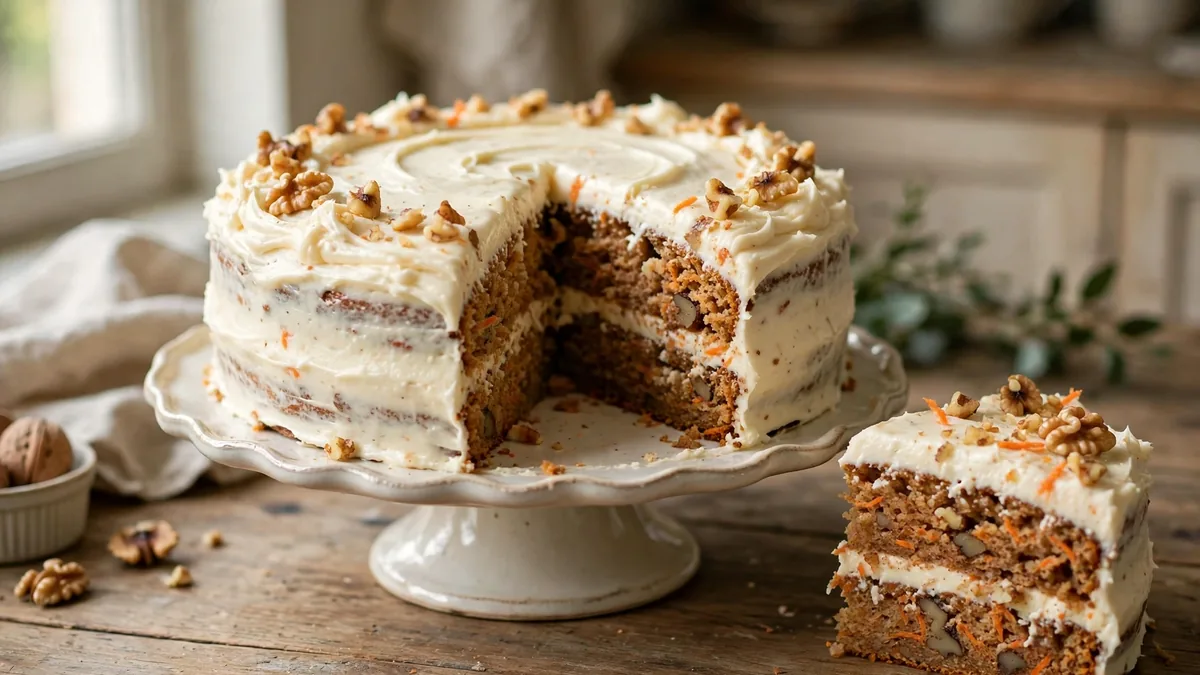
The best carrot cake in 2026 is a moist, warmly spiced layer cake with a tender crumb, visible shreds of carrot, crunchy walnuts, and a thick layer of tangy cream cheese frosting. The best versions balance sweetness against spice, keep the crumb damp without turning soggy, and let the frosting cut the richness.
Carrot cake earns its place because it is both a celebration cake and an everyday bake. It shows up at birthdays, Easter lunches, autumn dinners, and coffee mornings. This guide explains what separates the best carrot cakes from the dry, bland, or overly sweet ones, how to judge a bakery version before you buy it, and how to bake one at home that stays moist for days.
Key Takeaways
- The best carrot cake is moist but never wet, with a crumb that springs back lightly when pressed and shreds of carrot you can see and taste.
- Warm spices matter more than sweetness: cinnamon leads, with nutmeg and ginger behind it, and the sugar should support the spice rather than overwhelm it.
- Cream cheese frosting is the classic finish, and it should taste tangy and fresh, not like sweetened butter with a hint of cheese.
- Freshly grated carrots beat pre-shredded ones every time, because thick shreds stay distinct while fine shreds melt into the crumb.
- A good carrot cake keeps well: it stays moist for three to four days in the fridge and freezes beautifully for up to three months.
What Makes a Carrot Cake Great
A great carrot cake starts with the crumb. The carrots release moisture as the cake bakes, and that moisture keeps the cake soft for days. Oil, rather than butter, is the traditional fat here, and it is the right choice: oil stays liquid at room temperature, so the cake never firms up the way a butter cake does in the fridge. Brown sugar adds a gentle caramel note and extra moisture, so the cake bends slightly when lifted and never crumbles into dry crumbs.
Spice is the second pillar. Cinnamon is the lead flavour, but the best carrot cakes layer in nutmeg, ginger, and sometimes a pinch of clove or allspice. The spices should be present in every bite, yet restrained enough that the cake still tastes like cake rather than a spice jar. If you can only taste sugar, the spice is underdone. Freshly ground spices make a real difference here.
Texture comes from the mix-ins. Walnuts are the classic choice, adding a buttery crunch that contrasts with the soft crumb, and pecans work just as well. The carrots themselves should be grated on the large holes of a box grater: thick shreds hold their shape and give the cake its character, while finely grated carrot disappears and leaves the cake dense and wet.
The Cream Cheese Frosting Question
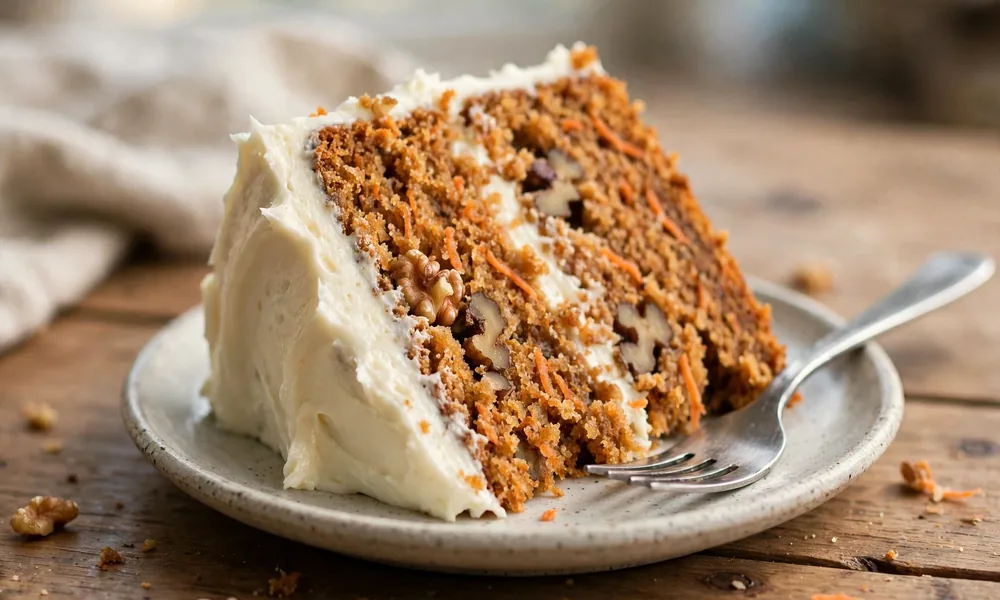
Cream cheese frosting is not optional on a classic carrot cake; it is half the point. The tang of the cream cheese balances the sweet, spiced crumb, and a good frosting should taste bright and fresh rather than cloyingly sweet. The best frostings use full-fat block cream cheese, real butter, a modest amount of powdered sugar, and a splash of vanilla. Beat them just until smooth, because overbeating makes frosting runny, and apply generously between layers and on top.
Getting the frosting right is a matter of temperature and proportion. Cold cream cheese straight from the fridge will not blend smoothly, so let it sit out for about half an hour first. Too much sugar turns the frosting into a sweet paste that hides the cheese entirely. Our guide to the best frosting in 2026 covers the textures that matter most. The cream cheese matters too, which is why we tested the best cream cheese in 2026 before recommending any frosting recipe.
How Much Frosting Is Enough
A two-layer cake needs a generous layer between the layers and a full coat outside. Thin, scraped-on frosting looks neat in photographs but tastes mean in real life. The frosting should be thick enough that each forkful carries both cake and frosting together. If you are buying rather than baking, look for frosting at least a quarter of an inch thick on top, holding soft peaks rather than sliding off the sides.
Carrot Cake vs the Rest of the Cake Case
Carrot cake is often confused with its neighbours in the bakery case. Cheesecake, for example, is a completely different dessert: a baked custard set on a biscuit base, rich and dense, with no sponge at all. Carrot cake, by contrast, is a spiced sponge whose moisture comes from grated vegetables and oil. The two share cream cheese in their ingredient lists, but they eat nothing alike.
Red velvet cake is the closest relative, and the two are easy to tell apart once you know what to look for. Red velvet is a cocoa cake with a deep red crumb, a light buttermilk tang, and the same cream cheese frosting tradition. Carrot cake is brown and gold, spiced rather than cocoa-forward, and studded with carrot and nuts. Both are layer cakes with cream cheese frosting, and both reward the same skills, but they are distinct flavours, not variations on one recipe.
Carrot Cake Compared: Bakery, Box Mix, and Homemade
There are three realistic ways to get a carrot cake on the table. A bakery cake is the easiest option for a celebration: the best bakeries use real butter in the frosting, freshly grated carrot, and a crumb that stays moist for two days. A box mix is the fastest route and has improved a great deal, though it rarely matches a homemade crumb for moisture. Homemade is the most work and the most rewarding, because you control the spice, the sweetness, and every ingredient.
| Option | Effort | Cost | Moisture | Best For |
|---|---|---|---|---|
| Bakery cake | None | Highest | Very good for 2 days | Birthdays and gifts |
| Box mix | Low | Lowest | Good on day one | Quick weeknight bakes |
| Homemade from scratch | High | Moderate | Excellent for 4 days | Best flavour and control |
| Loaf or sheet version | Medium | Moderate | Excellent, easy to store | Everyday eating |
| Cupcakes | Medium | Moderate | Good for 2 days | Parties and portion control |
If you go the box-mix route, the mix itself sets the ceiling for the cake, so it is worth choosing carefully. Our roundup of the best cake mixes in 2026 looks at which mixes bake up moist and which dry out by the next morning. A good mix plus a homemade cream cheese frosting is a genuinely strong combination that closes most of the gap to a from-scratch cake.

How to Bake the Best Carrot Cake at Home
Start with the carrots. Peel and grate about three cups on the large holes of a box grater, and do not squeeze them dry: their moisture is part of the recipe. Toast the walnuts until they smell warm and nutty, then chop them roughly. Whisk the dry ingredients, flour, baking soda, cinnamon, nutmeg, ginger, and salt, in one bowl, and whisk the oil, eggs, brown sugar, and vanilla in another. Combine the two gently, fold in the carrots and nuts, and stop mixing as soon as the flour disappears.
Divide the batter between two lined 9-inch round pans and bake at 350°F (175°C) for 30 to 35 minutes, until a skewer comes out with a few moist crumbs but no wet batter. Cool the layers in their pans for ten minutes, then turn them out onto a rack and let them cool completely before frosting. Warm cake melts frosting. While the layers cool, beat the cream cheese and butter until smooth, add the powdered sugar in two batches, then the vanilla, and beat only until the frosting is spreadable.
Baking Checklist
- Grate the carrots fresh on the large holes of the grater, and do not squeeze them dry.
- Toast the walnuts before chopping so their flavour comes through the crumb.
- Line the pans with parchment so the layers release cleanly every time.
- Stop mixing as soon as the flour disappears to keep the crumb tender.
- Cool the layers completely before frosting, or the frosting will slide off.
- Taste the frosting before you spread it, and add a pinch of salt if it tastes flat.
Mistakes That Ruin a Carrot Cake
The most common mistake is overmixing the batter, which develops the gluten in the flour and turns a tender cake tough and dense. Mix only until the flour disappears. The second mistake is using pre-shredded carrots from a bag: they are dry, thick, and woody, and they never soften properly in the oven. The third is underbaking, which leaves the centre wet and gummy, or overbaking, which dries out the edges before the middle is done. A skewer test at the minimum baking time, checked again after five minutes, catches it.
Frosting mistakes are just as common. Overbeaten frosting turns soft and runny, especially in a warm kitchen, and a cake frosted while still warm sheds its frosting in sheets. If the frosting turns soft, chill the bowl for fifteen minutes and beat it briefly. If the cake tastes bland, the cause is almost always too little salt or spice.

Storing and Serving Carrot Cake
Carrot cake keeps better than almost any other layer cake, because the oil and the carrots hold moisture for days. Store a frosted cake in the fridge in a covered container, and let slices come to room temperature for twenty minutes before serving, when the frosting is soft and tangy. An unfrosted layer keeps two days wrapped tightly at room temperature; a frosted cake keeps three to four days in the fridge.
For longer storage, freeze the cake in slices wrapped in cling film and foil, and thaw overnight in the fridge. Frozen carrot cake keeps for up to three months and thaws with its crumb intact, which makes it one of the best cakes to bake ahead. Serve it with coffee or black tea, and keep the slices generous.
Frequently Asked Questions
Does carrot cake actually taste like carrots?
Not really. The carrots add moisture, sweetness, and texture, but the dominant flavours are cinnamon, nutmeg, and brown sugar. Most people who dislike carrots still love carrot cake, because it tastes like a warmly spiced cake, not a vegetable.
Can I make carrot cake without nuts?
Yes. Leave the walnuts out, or replace them with raisins, shredded coconut, or well-drained crushed pineapple. The cake will be slightly softer without the crunch, but the crumb and frosting carry the flavour.
Why is my carrot cake dense and heavy?
The usual causes are overmixing, finely grated carrots, or too much batter in the pan. Mix only until the flour disappears, grate on the large holes, and fill the pans no more than two-thirds full.
Can I use a box mix and still get a great carrot cake?
You can get a good one, especially if you replace the water with milk, add an extra egg, and finish it with a homemade cream cheese frosting. The mix sets the crumb, but the frosting and a few fresh touches lift it.
How long does carrot cake last?
A frosted carrot cake lasts three to four days in the fridge in a covered container. Unfrosted layers keep for two days at room temperature when wrapped tightly. Frozen slices keep for up to three months and thaw overnight in the fridge.
Is carrot cake healthier than other cakes?
It contains real carrots, but it is still a cake, with sugar, oil, and frosting, so it is a treat rather than a health food.
The Bottom Line
The best carrot cake in 2026 is the one that gets the fundamentals right: a moist, tender crumb with visible carrot and crunch, warm spice you can actually taste, and a tangy cream cheese frosting applied generously. Whether you bake it yourself, buy it from a good bakery, or start from a mix and finish it properly, judge it on those three things.


