
The best centerpiece for a dining table in 2026 is the one that makes the table feel finished without getting in the way of dinner. A good centerpiece draws the eye, sets the mood and gives the table a sense of occasion, whether it is a vase of fresh flowers, a row of candles or a simple bowl of fruit. The wrong one blocks conversation, crowds the plates and ends up moved to a sideboard before the food arrives.
Choosing a centerpiece is less about following a trend and more about matching it to your table, your light and the way you actually eat. A long table needs length, a round table needs a single focal point, and a table used for homework needs something that can be lifted away in seconds. This guide compares the best centerpieces for a dining table in 2026 and helps you pick one that looks good every day, not just on special occasions.
Key Takeaways
- Keep the centerpiece low: guests should be able to see each other across the table without leaning around it.
- Match the shape to the table: long and low for rectangular tables, round and compact for round tables.
- Fresh flowers and greenery suit everyday dining, while candles and lanterns suit evening meals.
- Choose materials you can clean easily, because a centerpiece collects dust, crumbs and wax drips.
- One strong focal point beats a crowded collection of small objects every time.
Why the Centerpiece Matters
A dining table without a centerpiece can feel bare, even when it is beautifully made. The centerpiece turns a piece of furniture into the heart of the room: it gives the eye somewhere to land and sets the tone for the meal. A vase of flowers says relaxed and welcoming. Candles say slow down and stay a while. A bowl of lemons says fresh and informal.
The centerpiece also does practical work. It anchors the table visually, so plates and glasses look arranged rather than scattered, and it fills the empty middle of a large table that would otherwise feel unfinished. The trick is proportion: the centerpiece should feel like part of the table, not an object that landed on it.

The Main Types of Centerpiece Compared
Floral centerpieces are the classic choice. Fresh flowers bring colour, scent and life to a table, and they can be changed with the seasons: tulips in spring, sunflowers in summer, dahlias in autumn. Their weakness is upkeep: they need water, they drop petals, and they last about a week.
Greenery runners are the easiest everyday option. A length of eucalyptus, olive branches or faux greenery laid down the middle of the table looks full and generous, costs little, and needs no water at all if you use good-quality artificial stems. A runner suits long rectangular tables best, where it can stretch the full length without crowding anyone.
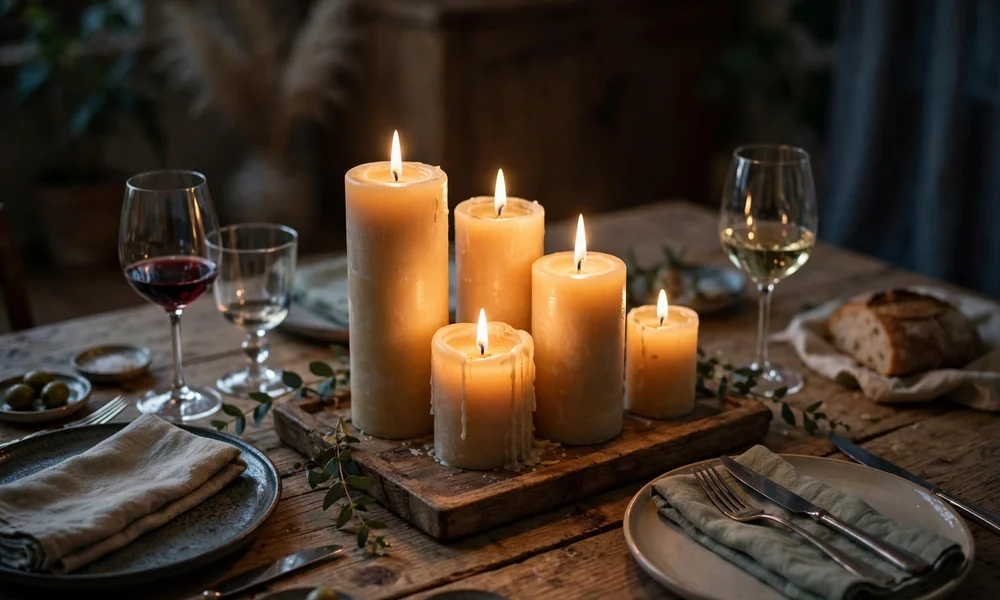
Candle centerpieces create the most atmosphere for the least effort. A cluster of pillar candles on a wooden tray or a row of taper candles in brass holders turns an ordinary dinner into an occasion. Candles suit evening meals and darker months, but never leave them burning unattended, keep them away from curtains and greenery, and expect wax drips on the tray.
Fruit, bowl and object centerpieces are the lowest-maintenance choice of all. A ceramic bowl of lemons and oranges, a wooden bowl filled with pinecones, or a sculptural vase on its own can sit on a table for weeks with no attention beyond a quick dust. They suit households with children or pets, because there is nothing to knock over that will spill water.
| Type | Best for | Upkeep | Mood | Cost |
|---|---|---|---|---|
| Fresh flowers | Special occasions, spring and summer | High, weekly | Fresh, romantic | Mid |
| Greenery runner | Everyday dining, long tables | Low to mid | Relaxed, natural | Low |
| Candles | Evening meals, winter | Low, plus safety care | Warm, intimate | Low to mid |
| Fruit and bowls | Busy households, all year | Almost none | Simple, cheerful | Low |
How to Size a Centerpiece
The first rule of sizing is height. A centerpiece should sit below eye level when you are seated, usually no taller than about 30 centimetres for a vase arrangement and lower still for candles and bowls. Anything taller forces guests to lean around it to talk. If you love a tall vase, keep it for a sideboard and use something lower on the table itself.
The second rule is width. On a rectangular table, the centerpiece should take up no more than a third of the table width, leaving room for plates, glasses and serving dishes. On a round table, it should fit inside a circle of about 40 centimetres in the middle. Measure your table before you buy a tray, a runner or a vase, and leave space for the food.
Length matters most on long tables. A single small vase in the middle of a two-metre table looks lost, while a runner or a row of three small arrangements spaced along the table looks intentional. A good dining table deserves a centerpiece that matches its size, not one that disappears on it.
What to Look For Before You Buy
Start with the base. A centerpiece needs a tray, a runner or a placemat underneath it, because vases leak, candles drip and fruit leaves marks. A wooden tray or linen runner protects the table and pulls the arrangement together, and it makes the centerpiece portable: you can lift the tray off in one move when you need the space.
Next, think about the light in your room. A dining room with a big window suits fresh flowers and light colours, which glow in daylight, while a darker room suits candles and warm metallics. A centerpiece that looks beautiful in a shop can look flat in a north-facing room, so picture it in your own light first.
Then consider how the table is used day to day. A table that doubles as a workspace needs a centerpiece that can be moved aside in seconds. Households with small children or cats should avoid tall glass vases and open flames, and choose a low, heavy bowl or a sturdy tray instead.
Finally, match the centerpiece to the rest of the table. A patterned tablecloth calls for a plain, simple centerpiece, while a bare wood table can carry something more colourful. And if flowers are your choice, the vase matters as much as the stems: a good vase will be used for years.
The Best Centerpieces for a Dining Table in 2026
We judged every style on looks, practicality, upkeep, safety and value, living with each one through everyday meals and special occasions. The five picks below cover every table, from a small round breakfast table to a long family table.
Best Overall: Low Floral Arrangement in a Ceramic Vase
The best centerpiece for most tables in 2026 is a low arrangement of fresh flowers and foliage in a wide ceramic vase. It is beautiful without being fussy, it sits below eye level so conversation flows, and it can be refreshed weekly with whatever is in season. A ceramic vase is heavy enough not to tip and looks good even when it holds a single stem.
Best Budget: Greenery Runner
The best budget centerpiece is a greenery runner of eucalyptus and olive branches, fresh or good-quality artificial, laid down the middle of the table. It costs very little, it fills a long table beautifully, and it needs almost no care. Add pinecones in winter or small white flowers in summer and it looks different every season.
Best for Evenings: Pillar Candle Tray
For evening meals, nothing beats a wooden tray holding pillar candles of different heights, with a few sprigs of greenery tucked around the bases. The light is warm and flattering, the tray catches any wax, and the whole thing can be lifted off the table in one move. Keep it away from curtains and never leave it burning unattended.
Best for Small Tables: Fruit Bowl
Small tables need a centerpiece that earns its space, and a shallow ceramic bowl of lemons, oranges and a potted herb does exactly that. It is colourful, it smells good, it doubles as a fruit bowl, and there is nothing to spill or break. Change the fruit with the season and the table always looks cared for with almost no effort.
Best for Special Occasions: Tall Taper Candles with Flowers
For a celebration, the best centerpiece pairs tall taper candles in brass holders with a low floral arrangement between them. The candles add height and drama, the flowers soften the look, and the low arrangement keeps conversation open. It takes more effort than an everyday centerpiece, but for a birthday or a holiday dinner, it is worth it.

Caring for Your Centerpiece
Fresh flowers last longest if you change their water every two days, trim the stems at an angle, and keep the vase away from the fruit bowl, because ripening fruit makes flowers fade faster. Greenery should be misted if fresh and dusted if artificial. Trim candle wicks before lighting, which keeps the flame steady, and lift any wax off the tray with warm water.
Whatever style you choose, give the centerpiece a quick check each week: dust the tray, wipe the vase and replace anything that has faded. A centerpiece that is looked after stays beautiful.
Centerpiece Checklist
- Keep the centerpiece below eye level when seated, about 30 centimetres at most.
- Match the shape to the table: long and low for rectangular tables, round and compact for round ones.
- Use a tray, runner or placemat underneath to protect the table from water and wax.
- Leave room for plates, glasses and serving dishes on either side.
- Choose materials that survive your household: low and heavy beats tall and fragile.
- Refresh flowers weekly, dust bowls and trays, and trim candle wicks before lighting.
Frequently Asked Questions
What is the best centerpiece for a dining table?
For most tables, a low floral arrangement in a wide ceramic vase. It looks good every day, sits below eye level so conversation flows, and can be refreshed weekly with seasonal flowers.
How tall should a dining table centerpiece be?
No taller than about 30 centimetres when you are seated, and lower is usually better. Guests should be able to see each other across the table without leaning. Tall vases belong on a sideboard, not in the middle of the table.
What centerpiece works on a round dining table?
A single compact arrangement in the middle, such as a low bowl of flowers, a round tray of candles or a fruit bowl. Keep it inside a circle of about 40 centimetres so nobody has to reach around it for their plate or glass.
Can I leave a centerpiece on the table all the time?
Yes, if it is low, stable and easy to clean. Fruit bowls, greenery runners and candle trays can stay out permanently. Fresh flowers need weekly care, and anything tall or fragile should be moved aside when the table is used for work or homework.
Are candles safe as a dining table centerpiece?
Yes, with care. Use a sturdy tray to catch wax, keep candles away from greenery and curtains, trim the wicks before lighting, and never leave them burning unattended. Battery candles are a good alternative in a home with small children or pets.
What is the cheapest good centerpiece?
A greenery runner made from eucalyptus or olive branches, fresh or artificial, costs very little and fills a table beautifully. A bowl of seasonal fruit is almost as cheap and doubles as something to eat.
The Bottom Line
The best centerpiece for a dining table in 2026 is a low, well-proportioned arrangement that suits your table and the way you eat. Start with a low floral arrangement in a ceramic vase, a greenery runner or a candle tray, and keep it below eye level. The right centerpiece does not shout for attention. It simply makes the table feel finished, every time you sit down.


