
Best Cheese Slicers for Thin, Even Slices in 2026
The best cheese slicers turn a block of cheddar or gouda into thin, even slices in one smooth motion, without the crumbling, sticking and ragged edges you get from a kitchen knife. A knife was never designed for it: the wide blade drags through soft cheese and gives you a different thickness every time. This guide covers the wire, plane and roller designs that actually work and how to match one to the cheeses you buy most.
5 Key Takeaways
- Wire cheese slicers cut the cleanest thin slices: a taut wire passes through cheese without pressing it flat.
- Plane slicers suit semi-hard cheeses best, shaving thin curls for sandwiches and burgers.
- Roller slicers with adjustable thickness are the most versatile, from deli-thin to chunky slices.
- Match the slicer to your cheese: soft cheeses need a wire, hard cheeses need a sturdy plane, crumbly cheeses should not be sliced.
- Stainless steel wires and blades, a comfortable handle and easy cleaning matter far more than extra gadgets.
What a Cheese Slicer Actually Does
A cheese slicer cuts a block of cheese into slices of even thickness, again and again, with very little effort. Instead of a wide flat blade that pushes cheese aside, a slicer uses a thin wire or a narrow plane blade that meets the cheese with almost no surface area. The result is a slice that holds its shape, with a clean edge and no smear. A sandwich slice needs to lie flat, a burger slice needs to melt evenly, which only happens if it is the same thickness all the way across, and a board slice needs to look deliberate, not torn.
It is worth drawing a clear line, because cheese tools are easily confused. A cheese slicer slices a block into thin, even pieces; it does not cut wedges or chunks. That is the job of a cheese knife, which comes in different blade shapes for soft, semi-hard and hard cheeses. Our guide to cheese knives explains how to pick one when you need wedges rather than slices. A slicer is also not a grater: grating shreds cheese for sauces, while slicing keeps it whole for sandwiches, boards and burgers.

The Main Types of Cheese Slicer
Most cheese slicers fall into four designs, and the right one depends on the cheese you buy most and how thin you like your slices.
Wire Slicers
The wire slicer is the classic design: a handle with a taut stainless steel wire stretched across a frame, drawn across the top of a cheese block. The wire cuts with almost no friction, so soft and semi-soft cheeses release cleanly instead of sticking. It is cheap, light and easy to clean, and gives the thinnest slices of any design. Its weakness is hard cheese, where a wire can bow or snap. For everyday cheddar, gouda and havarti, it is the best first buy.
Plane Slicers
A plane slicer looks like a small spatula with a slot cut through the blade. Press it flat against the cheese and pull, and a thin shaving curls up through the slot. It suits semi-hard cheeses best and is the design most often seen in Scandinavian kitchens. The slices are delicate and slightly curled, which suits open sandwiches. The trade-off is control: thickness depends on the angle and pressure of your hand. It is also the best choice for very hard cheeses such as aged parmesan, where a wire would struggle.
Roller Slicers
A roller slicer adds a small wheel that runs along the cheese as the wire or blade cuts, keeping the thickness constant. Many let you adjust the thickness, from paper-thin to chunky, with a dial or a sliding stop. They are the most versatile design and the easiest to use well. The trade-off is cleaning: the roller and adjustment mechanism trap crumbs. If you slice cheese for a family every day, a roller slicer is worth the extra money.
Board and Cutter Slicers
Board slicers fix the cutting wire to a small board or base, so the cheese sits still while you press down. They suit large blocks and anyone who slices a lot at once, for example before a party. They are stable and fast, but they take up real cupboard space.
Cheese Slicers Compared
| Cheese Slicer | Best For | Slice Style | Why It Stands Out |
|---|---|---|---|
| Wire Slicer | Everyday cheddar and gouda | Thin, flat slices | Cleanest cut, lowest price |
| Plane Slicer | Semi-hard and hard cheeses | Thin curls | Best for hard cheese |
| Roller Slicer | Families, daily slicing | Adjustable thickness | Even slices every time |
| Board Slicer | Large blocks, parties | Even slices, one press | Fastest for big batches |
| Adjustable Wire Slicer | Sandwiches and burgers | Deli-thin to chunky | One tool, every thickness |
How to Choose a Cheese Slicer That Cuts Cleanly
Start with the cutting edge. On a wire slicer, the wire should be stainless steel, straight and taut, with no sag: a sagging wire pushes the cheese before it cuts it, and the slice comes out thick at one end and torn at the other. Pluck it gently: it should give a faint ping, not a dull wobble. On a plane slicer, the blade should be sharp and nick-free.
Next, think about the cheese you actually buy. Soft cheeses such as brie and camembert smear under a plane, so a wire slicer is the only sensible choice for them: chill the cheese first so it firms up. Semi-hard cheeses such as cheddar, gouda and havarti suit every design. Hard cheeses such as aged parmesan need a sturdy plane slicer, and crumbly cheeses such as feta and stilton should not be sliced at all. Our guide to cheese boards shows how sliced, chunked and whole cheeses sit together on one board.
The handle matters more than it looks. You hold a slicer for short, repeated cuts, often with greasy hands, so it should be long enough to grip fully, with a non-slip surface and no sharp edges where it meets the frame. Wood handles look warm but need oiling and should not be soaked; stainless steel handles are the easiest to clean. A handle that twists in a damp hand is a poor choice, however good the wire is.

Slicing Technique: One Smooth Pull
Good slicing is mostly technique. Take the cheese out of the fridge about ten minutes before slicing: fridge-cold cheese is brittle and can crack under the wire, while warm cheese is soft and drags. Cut from the top of the block, not the side. For a wire slicer, draw the wire toward you in one smooth, steady pull; pressing down hard squashes the cheese and makes the slice thicker at the far end. For a plane slicer, hold the tool flat and pull toward you at a low angle. If the slices come out ragged, the cheese is probably too warm or the wire too slack.
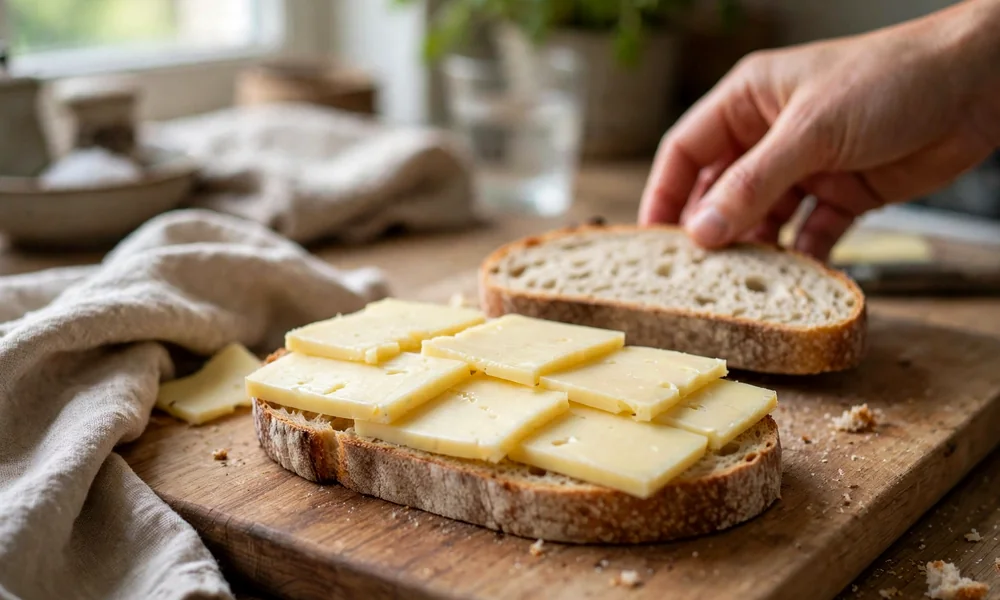
Slice only what you need. Cut cheese dries out fast once exposed to air, and sliced cheese goes hard at the edges within a day. Keep the block wrapped tightly and slice fresh each time. For sandwiches, cover the bread edge to edge, with no gaps and no overhang.
What Sliced Cheese Is Best For
Sliced cheese earns its place at breakfast and lunch first. Thin slices lie flat on toast, fold neatly into a sandwich, and melt evenly over a burger or a grilled cheese, where a thick wedge would stay cold in the middle. Sliced cheese also suits cooking: it melts faster than a chunk, so it is the right shape for quesadillas and cheese sauces.
A slicer also saves money. Pre-sliced cheese costs far more per kilo than a block, and it often contains anti-caking agents that stop it melting cleanly. Slicing your own gives you better cheese for less money, and you choose the thickness.
Care, Cleaning and Storage
Cheese is greasy and sticky, so clean the slicer straight after use. Rinse a wire slicer under warm water before the cheese dries on the wire, and use a soft brush around the frame joints where crumbs collect. Most stainless steel slicers are dishwasher safe, but hand washing keeps a wire tighter for longer, and wooden handles should never go in the dishwasher. Dry it before storing, away from heavier tools. If a wire snaps, replace it: most good wire slicers sell cheap replacements.
Store a plane slicer with the blade covered, because a nicked edge tears cheese instead of shaving it. Check the wire before each use: if it has gone slack, tighten or replace it first.
What to Avoid When Buying
Avoid slicers with plastic wires or coated blades: they drag, go dull quickly, and cannot be tightened when they slacken. Avoid very cheap wire slicers with flimsy frames, because the frame keeps the wire taut. Be wary of slicers that promise to do everything: a tool that tries to do too much usually does none of it well. Skip oversized board slicers unless you genuinely slice in bulk.
One more thing to avoid is slicing cheese straight from the fridge. Cold cheese is brittle, and a cold wire can crack a hard wedge instead of cutting it. Let the cheese sit for a few minutes first.
6-Point Checklist Before You Buy
- Wire is stainless steel, straight and taut, or the plane blade is sharp and nick-free.
- Design matches your cheese: wire for soft and semi-hard, plane for hard, roller for adjustable thickness.
- Handle is long enough for a full grip, non-slip, and comfortable in a damp hand.
- Thickness suits your cooking: deli-thin for sandwiches, thicker for burgers and boards.
- Easy to clean, with no hidden crevices that trap cheese, and replacement wires available.
- Size fits your storage: a drawer divider, a hook, or a small space in a crowded drawer.
Frequently Asked Questions
Is a cheese slicer worth buying?
Yes, if you slice cheese more than once a week. It is one of the cheapest kitchen tools you can buy, it gives you even slices a knife rarely manages, and it saves money against pre-sliced cheese.
Can I use a cheese slicer on soft cheese?
Yes, with a wire slicer and chilled cheese. Chill brie or camembert for twenty minutes first so it firms up, then slice with one smooth pull. A plane slicer will smear soft cheese.
What is the difference between a cheese slicer and a cheese knife?
A slicer cuts thin, even slices from a block, while a knife cuts wedges and chunks. A knife suits serving a whole wedge on a board; a slicer suits sandwiches, burgers and everyday eating. Most kitchens benefit from both, and a butter knife covers the soft spreads a slicer cannot handle.
How thin can a cheese slicer cut?
A good wire slicer cuts slices under a millimetre thick, thin enough to see through. An adjustable roller slicer lets you choose, from deli-thin to about five millimetres.
How do I stop cheese sticking to the slicer?
Chill the cheese first, wipe the wire or blade between slices, and use one smooth pull rather than sawing. A taut stainless steel wire sticks far less than a slack one.
Can I put a cheese slicer in the dishwasher?
Most stainless steel slicers are dishwasher safe, but hand washing keeps a wire tighter for longer. If you use the dishwasher, use the top rack and dry the slicer straight away.
Bottom Line
The best cheese slicers are simple and well made: a taut stainless steel wire or a sharp plane blade, a comfortable handle, and nothing you do not need. Choose a wire slicer for everyday cheddar and gouda, a plane slicer for hard cheeses, and a roller slicer for adjustable thickness. Slice in one smooth pull and clean the tool straight after use.


