
How to Choose the Best Chocolate Chip Cookies in 2026
The best chocolate chip cookies in 2026 are easy to recognise once you know what to look for: a chewy centre, crisp edges, and real chocolate in every bite. The difference between a great cookie and a forgettable one is rarely the recipe name on the packet. It is the butter, the chocolate, the bake, and how fresh the cookie is. This guide shows you how to judge all four before you buy or bake.
Chocolate chip cookies are the most bought cookie in the world, and also the most inconsistent. Two cookies with the same name can taste completely different: thick and chewy, thin and crisp, soft and cakey, loaded with chunks or dotted with a few chips. Match the cookie to your own taste instead of trusting the packet.
Key Takeaways
- Chocolate in every bite is the first test: a good cookie has chips or chunks throughout, not just on top.
- Real butter beats margarine and shortening on flavour, texture and browning, and it is the easiest quality signal on a label.
- Texture is a style choice: chewy, crisp and cakey cookies come from different sugars, fats and bakes, so decide which you like first.
- Chips hold their shape, chunks melt into pools, and chopped chocolate gives you both: the chocolate format changes the eating experience more than the brand.
- Freshness is easy to check by hand: a chewy cookie should flex before it breaks, and a stale one crumbles dry with no resistance.
What Sets a Great Chocolate Chip Cookie Apart
A great chocolate chip cookie starts with balance. The dough should taste of butter and brown sugar, the chocolate should be dark enough to cut the sweetness, and the salt should make both taste stronger. When any one is missing, the cookie falls flat: too much sugar and it is cloying, too little chocolate and it is just a sweet biscuit, too little salt and it tastes dull.
Butter is the foundation. Real butter creams into the sugar properly, browns gently at the edges, and leaves a clean, rich finish. Margarine spreads fast and tastes flat, while shortening gives a soft texture with almost no flavour. On a label, butter near the top is the best sign of a serious cookie; if the fat is palm oil or hydrogenated vegetable oil, it will not taste like a great one.
Chips, Chunks or Chopped Chocolate?
The chocolate format changes the cookie more than most people expect. Standard chips hold their shape in the oven, so you get neat, distinct morsels in every bite. Chunks are bigger and melt into soft pools, which makes the cookie feel richer. Chopped chocolate from a bar gives you a mix of both. Chips suit a tidy, even cookie; chunks suit a thick, bakery-style cookie; chopped chocolate suits anyone who wants a less uniform bite.
Size matters too. Mini chips spread the chocolate evenly through a small cookie, which suits lunchboxes and children. Standard chips are the safe middle ground. Large chunks need a thick cookie to support them, or they sink and burn on the tray. Whatever the size, count the chocolate: a good cookie has chocolate in every bite, not a few chips pressed on top. A cookie that is all chocolate on the surface and plain underneath was built for the shelf, not for eating.

Dark, Milk or White Chocolate?
Dark chocolate is the classic choice: its bitterness balances the sweet brown-sugar dough, so the cookie tastes more complex than its sugar content suggests. Milk chocolate makes a sweeter, softer cookie that children usually prefer. White chocolate is the sweetest option and works best with a tart addition, like dried cranberries, to give it contrast. If you bake at home, our guide to the best dark chocolate for snacking and baking explains what to look for.
Chewy, Crisp or Cakey: Pick Your Texture
Texture is where chocolate chip cookies divide people most, decided by three things: sugar, fat and bake time. Chewy cookies use more brown sugar, which holds moisture, and melted butter, which makes the dough spread and then set soft. Crisp cookies use more white sugar and a longer bake that drives the moisture out. Cakey cookies use more flour and often an extra egg, which gives them a soft, risen crumb more like a small cake.
| Style | Texture | Sugar and fat | Bake | Best for |
|---|---|---|---|---|
| Chewy | Soft centre, crisp edge | More brown sugar, melted butter | Pulled early, still soft | Most people, sharing |
| Crisp | Snappy all the way through | More white sugar, creamed butter | Baked longer, fully set | Dunking, lunchboxes |
| Cakey | Soft, risen, tender | More flour, extra egg | Short bake, pale edges | Children, tea breaks |
| Thick bakery-style | Soft centre, tall edges | Chilled dough, more flour | High heat, short time | Fresh eating, gifts |
| Thin and lacy | Delicate, caramelised | More butter, less flour | Spread wide, fully baked | With ice cream, coffee |
Chewy is the most popular style, and the safest choice for a group. Crisp suits dunking in milk or coffee, because it holds together instead of falling apart. Cakey is the softest and most forgiving to bake. Thick bakery-style cookies need chilled dough and a hot oven, or they spread into flat discs. Thin and lacy cookies are wonderful fresh, but they go stale fastest.
Store-Bought, Bakery or Homemade?
Where you get your chocolate chip cookies matters as much as which style you choose. A good bakery wins on freshness and chocolate quality. Small bakeries bake in small batches, sell through them fast, and can afford real chocolate. The trade-off is price: a bakery cookie costs more, and one batch may differ slightly from the next.
Supermarket cookies win on price and availability. The best use real butter and a decent chip. The worst are built for a six-month shelf life, which means more preservatives, more palm fat, and a flavour that fades fast. Check the bake date rather than the best-before date, and choose the pack with the latest date.
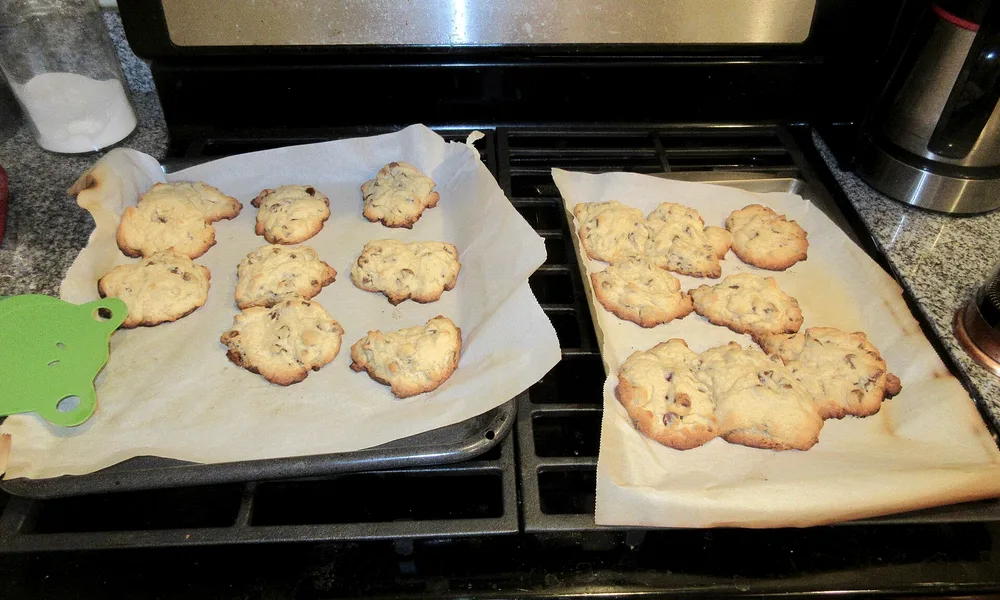
Homemade wins on control and warmth: you choose the butter, the chocolate and the bake, and you eat the cookies while the chocolate is still soft. The catch is skill: a first batch can spread into one giant cookie if the butter is too warm or the dough is not chilled. Chill the dough for at least thirty minutes, portion it evenly, and use a pale, heavy tray. Our guide to the best baking sheets for even browning explains why the tray matters: a thin dark sheet browns the bottoms fast and can burn the edges before the centres finish.
How Chocolate Chip Cookies Differ from Other Cookies
Chocolate chip cookies are often confused with their neighbours. They are not oatmeal cookies, which are spiced, hearty and built around oats; not sugar cookies, which are pale, tender and buttery with no inclusions; and not shortbread, which is crumbly, rich and made from almost nothing but flour, butter and sugar. Each is a distinct type with its own rules, and a chocolate chip cookie judged as a sugar cookie would fail for the wrong reasons.
The closest neighbour is cookie dough, the raw starting point rather than the finished food. Dough is judged on how evenly it bakes, while a baked cookie is judged on flavour, texture and freshness. And a chocolate chip cookie is not a chocolate bar either: the chocolate is one ingredient among several, and a cookie made with great chocolate but poor butter will still taste ordinary. For a wider view, our guide to the best cookies in 2026 compares the main cookie types side by side.
Mistakes to Avoid When Buying or Baking
The most common buying mistake is choosing by the picture. A glossy photograph with chocolate piled on top tells you nothing about the inside of the cookie, and a cookie that looks perfect in a studio can taste of nothing at home. Judge by the ingredient list, the bake date and the feel of the cookie.
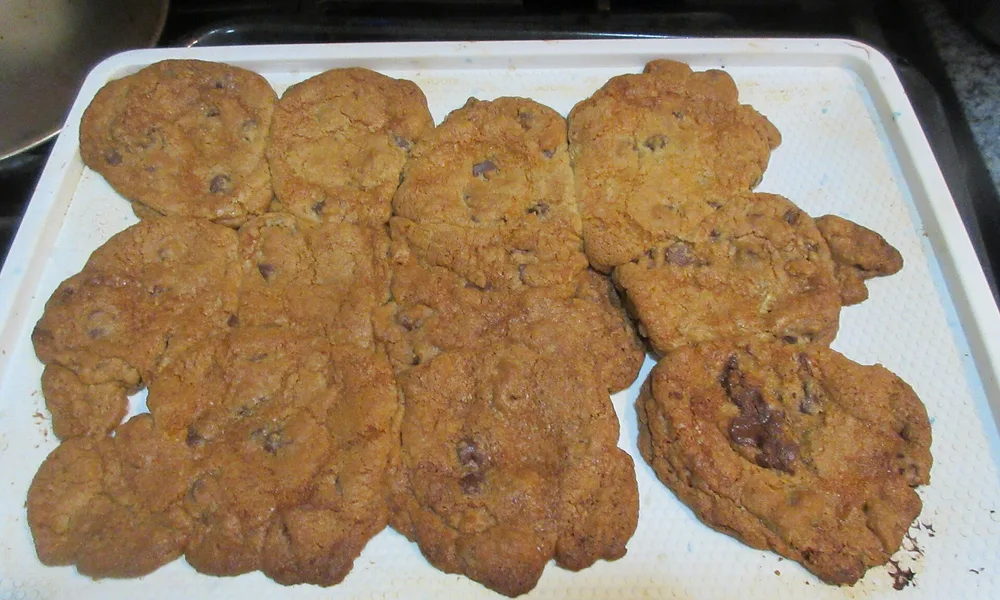
The most common baking mistake is warm butter. Butter that is too soft or partly melted makes the dough spread fast, so the cookies come out thin, greasy and over-baked at the edges. Use butter soft enough to dent with a finger but still holding its shape, and chill the dough before it goes into the oven. The second baking mistake is crowding the tray: a tray packed edge to edge steams instead of baking, leaving pale, soft middles and no crisp edge.
The third mistake is over-baking. Cookies should come out when the edges are set and the centres still look a touch underdone, because they keep baking on the hot tray for two or three minutes. A cookie baked until it looks finished in the oven will be dry by the time it cools. The fourth mistake is storage: crisp cookies stored with soft cookies swap moisture until both are mediocre, so keep them apart, and freeze what you will not eat within four days.
Your Chocolate Chip Cookie Checklist
- Check the fat first: real butter near the top of the ingredient list beats palm fat, shortening or margarine every time.
- Count the chocolate: a good cookie has chips or chunks in every bite, not just on top.
- Decide your texture before you shop: chewy for sharing, crisp for dunking, cakey for a soft bite.
- Judge freshness by hand: a chewy cookie should flex before it breaks, a crisp one should snap cleanly, and a stale one crumbles dry.
- Buy the latest bake date, not the longest best-before date, and prefer small batches that sell through fast.
- Store by texture: keep soft and crisp cookies apart in airtight containers, and freeze what you will not eat within four days.
Frequently Asked Questions
What is the best chocolate chip cookie in 2026?
A thick, chewy one made with real butter and dark chocolate chunks, pulled from the oven while the centre is still soft. It balances sweet dough, bitter chocolate and a pinch of salt, and it stays soft for three to four days.
Are chips or chunks better in chocolate chip cookies?
Neither is better in general: chips hold their shape and give an even bite, while chunks melt into pools and feel richer. Chopped chocolate from a bar gives you a mix of both. Choose chips for a tidy cookie and chunks for a thick bakery-style one.
Why do my chocolate chip cookies spread flat?
Usually butter that is too warm or dough that was not chilled. Cold dough spreads slowly, so the edges set before the centre over-bakes. Chill the dough for at least thirty minutes and portion it evenly.
How long do chocolate chip cookies stay fresh?
Three to four days in an airtight container at room temperature. Thick bakery-style cookies last a day less, because their soft centres dry out faster. Freeze them for up to three months if you need longer.
Should I refrigerate chocolate chip cookies?
No. The fridge dries cookies out and dulls their flavour. Store them airtight at room temperature for up to four days, or freeze them for up to three months.
Can I freeze chocolate chip cookie dough?
Yes, and it is often the better option. Scoop the dough into balls, freeze them solid on a tray, then store them in a bag and bake from frozen with a couple of extra minutes.
The Bottom Line
Choosing the best chocolate chip cookies in 2026 comes down to four checks: real butter on the label, chocolate in every bite, a texture that matches your taste, and a bake date that proves the cookie is fresh. Chewy suits most people, crisp suits dunking, and thick bakery-style suits a treat, but any style can be great when the butter and the chocolate are real. Buy the latest bake date, store soft and crisp cookies apart, and bake at home if you want them warm.


