A Guide to Craft Knives for Clean, Precise Cuts in 2026
A craft knife is a slim, precision hobby knife for fine, controlled cuts in paper, card, vinyl, foam and thin plastic. Where scissors crush and tear, a craft knife slices cleanly along a ruler or a curve. This guide explains how a craft knife differs from a utility knife, which blades and handles cut best, which knives are worth buying in 2026, and how to cut safely.
Key Takeaways
- A craft knife is a precision tool for fine detail work, not a heavy-duty cutter: light pressure and sharp blades do the work.
- Change the blade often: a fresh blade cuts cleanly in one light pass, while a dull blade tears and slips.
- Always cut on a mat with a steel ruler, away from your free hand and your body.
- Pen-style handles suit detail work; heavier handles suit thick card and foam board.
- Buy a knife with a secure blade lock and a cap, and store it away from children.
What Is a Craft Knife?
A craft knife is a small hand tool with a slim handle and a short, very sharp replaceable blade, designed for precise cutting in craft materials. The classic design is a pen-style handle, held like a pencil, with a pointed blade that follows curves, cuts windows in card, and trims vinyl to a hairline. The blade is held by a twist chuck, and spare blades are cheap, so the knife lasts for years while blades are treated as disposable.
The important distinction is the one between a craft knife and a utility knife. A utility knife is a heavy-duty tool with a thicker blade, built for cutting cardboard boxes, carpet, rope and plasterboard with force. Our guide to utility knives for everyday cutting covers that tool. A craft knife is the opposite: a light, precise instrument for detail work, where the blade is thin, the pressure is gentle, and the aim is a clean edge. Using a utility knife for paper craft leaves a ragged edge and poor control. Using a craft knife on heavy boxes is just as wrong, and it is how blades snap and fingers get cut.
Craft knives are used for paper cutting, card making, model making, vinyl weeding and stencil cutting. They cut paper, thin card, mount board, foam board, balsa wood, thin plastic, leather and fabric, though thick chipboard needs several light passes.
The Main Types of Craft Knife
The pen-style craft knife is the standard: a slim handle, a twist chuck, and a pointed number eleven blade, and the best all-rounder for paper, card and vinyl. Look for a knurled or rubberised grip, because a smooth handle slips when your hands are warm.
Scalpel-style knives use a flat handle with a surgical-style blade for the finest detail: tiny paper cuts and model making. The blades are extremely sharp and very thin, so they cut beautifully but snap if twisted: keep them for light materials and gentle strokes. Swivel knives have a blade that rotates as you move, and they suit curves, circles and freehand shapes in paper and vinyl. They take practice, because the blade follows the direction of travel, but once learned they cut smooth curves a fixed blade cannot match.
Heavy-duty craft knives have a thicker handle and a sturdier blade for thick card, foam board and mount board. They trade some finesse for strength, and suit straight cuts through heavier material. Retractable precision knives hide the blade inside the handle when not in use, which makes them safer to carry and store, though the mechanism can allow a little wobble, so they suit general craft rather than fine detail. A single good pen knife with spare blades beats a cheap set of wobbly handles every time.
Blades: What Fits and When to Change Them
The number eleven blade is the standard pointed blade: a short triangular point for curves, corners and fine detail. The number ten blade is a curved edge for long sweeping cuts, while the number sixteen is a short, hooked point for scoring thick card. Chisel blades cut straight lines and right angles cleanly. Buy blades in packs from a known maker, because cheap blades vary in sharpness and can snap.
Change the blade when the cut stops feeling effortless: dragging, torn paper fibres, or a cut that needs a second pass. A fresh blade should glide through paper with almost no pressure. Change the blade after a long session of heavy cutting, or at the start of any project where the edge will show. Changing a blade takes seconds: loosen the chuck, slide the old blade out with pliers, and slide the new one in, point away from your hand. Drop the old blade into a sharps container or a sealed jar, never loose in the bin.

Craft Knives Compared
| Type | Best for | Materials | Watch out for |
|---|---|---|---|
| Pen-style | General craft, detail | Paper, card, vinyl | Smooth handles slip |
| Scalpel-style | Finest detail work | Paper, thin card | Thin blades snap if twisted |
| Swivel | Curves and circles | Paper, vinyl | Takes practice to steer |
| Heavy-duty | Thick card, foam board | Card, foam board | Less finesse for detail |
| Retractable | Carrying and storage | Paper, light card | Some blade wobble |
| Knife sets | Several materials | Mixed craft work | Cheap sets wobble |
Which Craft Knives Are Worth Buying in 2026
The best buy is a pen-style craft knife with a metal handle, a knurled grip, a secure twist chuck and a pack of number eleven blades. Metal handles last longer, hold the blade firmly, and give the weight that keeps a long cut steady. Be wary of the cheapest knives: a loose chuck lets the blade shift mid-cut, which ruins the line and risks a slip. Buy from a craft supplier, and check spare blades are easy to find there.
For paper and card, the pen knife with number eleven blades is enough: spend the money on blades and a good mat instead of a second handle. Our guide to cutting mats that protect your table explains why the mat matters as much as the knife. For model making and fine detail, add a scalpel-style knife and fine blades, and keep it for light materials only. For foam board and mount board, buy the heavy-duty knife, because a pen knife will flex and wander in thick material.
Buy blades in packs of ten or more. A single blade is false economy, and a dull blade is the most common cause of bad cuts. A blade storage case keeps spares safe, and a sharps container for used blades prevents a nasty surprise in the bin. For a shared household or a classroom, choose a retractable knife, but check the lock holds firmly. Hold it first if you can: a handle that fits your grip cuts better than a famous name that does not.
How to Cut Cleanly and Safely
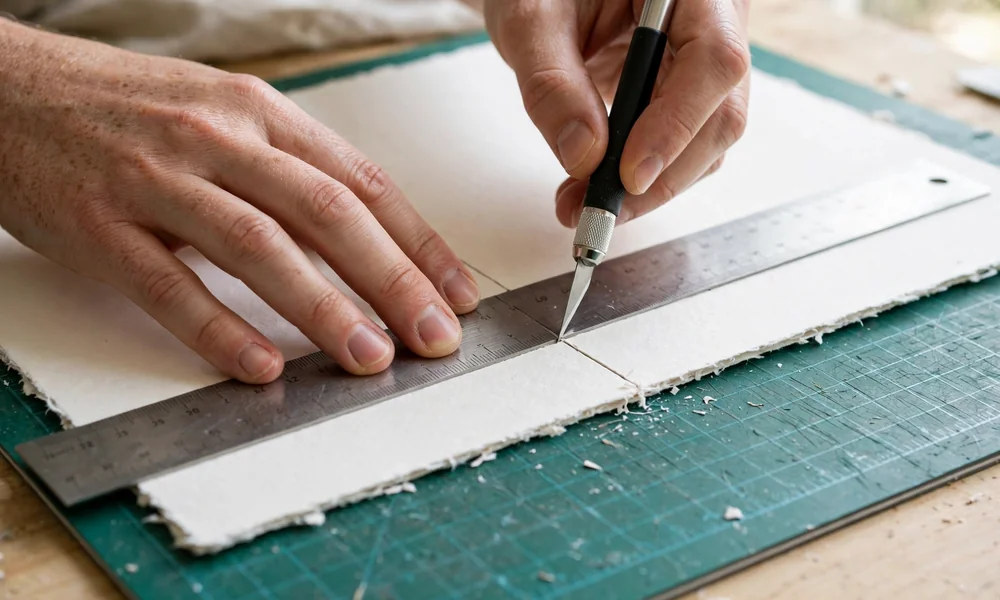
Work on a cutting mat on a flat table, with good light and the material flat against the mat. Place a steel ruler along the line, holding it firmly with your free hand behind the edge, fingers away from the blade path. Hold the knife like a pencil, blade upright, and pull it towards you in one smooth, light stroke. Let the sharpness do the work: pressing hard is what makes blades wander, snap and slip.
For thick card or foam board, make several light passes in the same groove rather than one hard push: the first scores the surface, the second deepens the cut, and the third goes through. For curves, turn the material rather than the knife. For circles, a swivel knife beats a fixed blade. Always cut away from your free hand and your body, and never pull the blade towards your fingers.

The blade is sharper than a kitchen knife. Keep the cap on whenever the knife is not in your hand, store it in a case or a drawer, and never hand a bare blade to someone else. If the blade slips, let it go rather than grabbing for it. A craft knife cut usually needs pressure and a plaster rather than panic. Children should use one only with an adult present and a retractable knife, with one rule: the blade points down at the mat, never at a hand.
Mistakes That Ruin Cuts
The most common mistake is a dull blade: it tears fibres, drags through card and needs force, and force is what makes a blade slip. Change it at the first sign of drag. The second is cutting without a mat, which blunts the blade in seconds and scores the surface underneath. A mat protects the blade, the table and the cut. The third is using a plastic or wooden ruler as a guide, because the blade bites into soft edges and wanders. Use a steel ruler, and keep your fingers behind it.
The fourth is pressing too hard to cut through in one pass, which bends the blade and tears the material. Several light passes always beat one hard push. The fifth is cutting towards your free hand, which is how most craft knife injuries happen: always cut away from the hand holding the material. The sixth is using a craft knife for jobs it was never made for, such as opening heavy boxes: that is utility knife work, and a craft blade will snap under the load. For fabric, a different tool works better, and our guide to rotary cutters that slice fabric clean covers the right choice.
Checklist: Before You Buy a Craft Knife
- Decide the work first, and buy the handle that fits it.
- Choose a metal handle with a knurled or rubberised grip, so it does not slip in a warm hand.
- Check the blade lock: twist the chuck firmly and pull the blade gently to check it does not shift.
- Buy spare blades in a pack, and a sharps container for the used ones.
- Pair the knife with a cutting mat and a steel ruler.
- Check the cap or case, and store the knife where children cannot reach it.
Frequently Asked Questions
What is the difference between a craft knife and a utility knife?
A craft knife is a light, precise hobby tool with a thin blade for fine detail in paper, card and vinyl. A utility knife is a heavy-duty tool with a thicker blade for boxes, carpet and plasterboard. Each does the other’s work badly.
Which blade should I use for paper cutting?
The number eleven pointed blade is the standard for paper and card. For long straight cuts, a chisel blade holds a steadier line. Change the blade as soon as it drags.
Do I need a cutting mat?
Yes. A mat protects your table, keeps the blade sharp, and gives a grid that keeps cuts square. A self-healing mat in the largest size that fits your table is the best buy.
How often should I change the blade?
Change it when the cut stops feeling effortless: dragging, torn fibres, or a second pass all mean the blade is dull. Blades are cheap, so change them early.
Are craft knives safe for children?
Only with an adult present, a retractable knife, and clear rules: the blade points down at the mat, cuts move away from the hands, and the cap goes on when the knife is put down. For younger children, child-safe scissors are a better choice.
Can a craft knife cut vinyl and leather?
Yes, thin vinyl and thin leather cut well with a fresh number eleven blade and several light passes. Thick leather and hard plastics need a different tool, and a steel ruler keeps straight edges true.
The Bottom Line
A craft knife rewards a light hand and a fresh blade. Buy a pen-style knife with a metal handle and a secure chuck, stock up on blades, pair it with a mat and a steel ruler, and cut with light passes away from your free hand.