How to Choose a Cuckoo Clock for Your Home in 2026
A cuckoo clock is the one clock that does more than tell the time. On the hour a little wooden bird pops out, calls, and disappears again, while the pinecone weights hang below and the pendulum swings behind the carved case. It is part timekeeper, part theatre, and a good one turns an ordinary wall into the talking point of the room. The best cuckoo clocks in 2026 come in two kinds: traditional mechanical clocks with weights and a real bellows-driven call, and modern quartz clocks that play a recording. Choosing well means knowing which kind suits your home, your ears and your patience.
Key Takeaways
- A mechanical cuckoo clock is wound by pulling its chains, daily or weekly, while a quartz clock runs on batteries.
- The real call comes from two wooden bellows inside a mechanical clock; quartz clocks play a recording.
- Buy the size for the wall: a traditional cuckoo clock is 30 to 45 centimetres tall, plus weights hanging 60 to 90 below it.
- A night shut-off matters most if the clock hangs near a bedroom: a mechanical cuckoo calls every hour, all night.
- Look for a reputable Black Forest maker or a clear warranty: a good mechanical clock lasts decades, a cheap one stops within a year.
What a Cuckoo Clock Actually Is
A cuckoo clock is a wall clock with a bird that appears on the hour and sounds a two-note call. The traditional version comes from the Black Forest region of Germany, where clockmakers have built them since the 1700s. The case is usually carved wood, often a chalet or a hunting lodge, with a small door above the dial. Behind the door sits the bird. Below the case hang two or three pinecone-shaped weights on chains, and a pendulum swings between them. The weights drive the clock: as they sink they power the hands, the bird and the call, and pulling the chains raises them again.
The call is the clever part. Inside a mechanical cuckoo clock are two small bellows, like tiny accordions, each with a whistle. When the hour strikes, air is pushed through one bellows and then the other, making the two notes, while a lever pushes the bird out and moves its wings and beak. It is entirely mechanical, which is why enthusiasts love it and why it needs regular winding. Quartz clocks work differently: a battery movement turns the hands, and a small speaker plays a recorded call while a plastic bird pops out. They are cheaper and far easier to live with, but they lack the depth of sound and craft of the mechanical version.
Wall clocks are decoration and timekeeping in one: a good one fills a blank stretch of wall and tells the time at a glance. A cuckoo clock does that too, but it adds movement, sound and a ritual of winding, which a plain wall clock never asks of you. The best and worst wall clocks differ mostly in size, readability and ticking volume, while cuckoo clocks differ in movement, chime and upkeep. An alarm clock wakes you at a set time and then stops; a cuckoo clock calls every hour of every day unless you silence it, so the sound matters far more.

The Main Types of Cuckoo Clock, Compared
| Type | Best for | Winding | Watch out for |
|---|---|---|---|
| One-day mechanical | Enthusiasts, daily ritual | Pull chains daily | Needs winding every 24 hours |
| Eight-day mechanical | Most homes, real call | Pull chains weekly | Heavier weights, higher price |
| Quartz battery | Bedrooms, easy living | Change batteries yearly | Recorded call, plastic bird |
| Modern minimalist | Contemporary rooms | Battery, or mechanical | Small bird, quieter call |
| Chalet and hunter styles | Traditional rooms, collectors | Daily or weekly | Large, heavy, needs a strong hook |
One-Day Mechanical Cuckoo Clocks
The one-day mechanical cuckoo clock is the traditional entry point, and the one most people picture. It has two weights, runs about 24 hours on a full wind, and needs its chains pulled once a day, usually in the morning. The ritual takes less than a minute, but it is a commitment: miss a day and the clock stops. One-day clocks are lighter and cheaper than eight-day clocks, with a smaller case, usually 30 to 40 centimetres tall. They suit a living room or study where someone is home every day. Check the movement is German-made if you want the real bellows call: some cheap one-day clocks use a recorded sound even with weights.
Eight-Day Mechanical Cuckoo Clocks
The eight-day mechanical cuckoo clock is the one to buy if you want the real call without the daily chore. It has three weights, the third driving a music box on some models, and it runs for a full week on one winding. The weights are heavier and the case larger, usually 40 to 50 centimetres tall, so it needs a stronger hook and a solid wall, not plasterboard with a picture pin. Eight-day clocks cost roughly twice as much, but they are the standard choice for a family home or a holiday cottage. Pull the chains gently and evenly, never yank them, and never pull the weights past the case. If the clock also plays music, check the tune can be switched off separately from the call.
Quartz and Modern Cuckoo Clocks
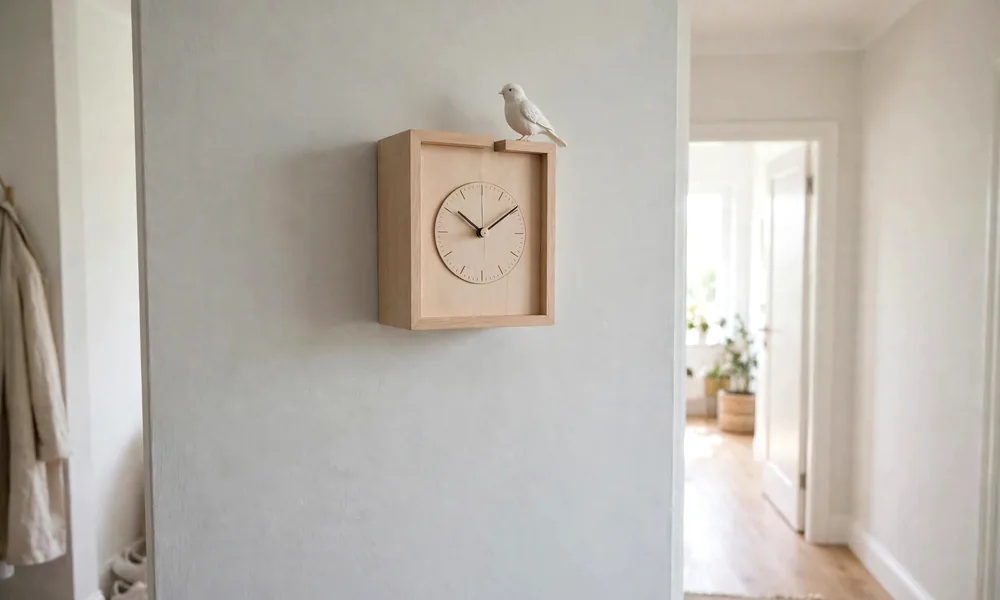
A quartz cuckoo clock is the easy answer, and for many homes the right one. It runs on batteries, needs new ones about once a year, and the bird and call work at the push of a button or on a light sensor that silences it in the dark. The call is a recording, thinner and more regular than a bellows call, and the bird is usually plastic, but the clock keeps perfect time and never stops because someone forgot to wind it. Quartz clocks suit bedrooms, nurseries and offices, where a mechanical call every hour would be a problem. Modern minimalist cuckoo clocks go further: clean lines, a small white bird, no carving, a quiet call. They suit contemporary rooms where a carved chalet would look out of place, but check the sound first, because a small speaker can sound tinny in a large room.
Getting the Size and Hanging Right
Size is the decision most people get wrong, because a cuckoo clock is taller than it looks in a photograph. The pinecone weights hang 60 to 90 centimetres below the case, and they need clear space to sink as the week goes on. Measure from the hook to the floor, not just the case. A clock with a 40-centimetre case needs about 130 centimetres of clear wall below the hook, so the hook sits at about 180 centimetres from the floor. Hang it lower and the weights reach the furniture before the week is out, and the clock stops.
A cuckoo clock suits a wall with clear space beneath it: above a sideboard, beside a fireplace, or on a hallway wall where the call carries. The centre of the dial should sit at eye level, around 150 to 160 centimetres from the floor. The hook matters more than for any other clock, because a mechanical cuckoo with three weights can weigh 4 to 5 kilograms. Use a proper hook screwed into a stud or solid masonry, never a stick-on hook, and hang the clock level, because a tilted clock runs fast or slow and the pendulum can catch. Keep it out of direct sunlight and away from radiators, which dry out the case and can crack the carving.
Sound, Silence and Living With the Call
The sound decides whether a cuckoo clock becomes a beloved part of the house or a regret, so think about it before you buy. A mechanical cuckoo calls once on the half hour and counts the hour, so at three o’clock it calls three times. In a living room during the day that is charming. At three in the morning, with light sleepers, it is not. A night shut-off is the most useful feature a cuckoo clock can have: a lever or a sensor that silences the call between about nine at night and nine in the morning. On mechanical clocks it is usually a manual lever, which means remembering to set it every evening. On quartz clocks it is often automatic, driven by a light sensor.
Volume matters too. A mechanical bellows call carries well through a house, wonderful in a large home and too much in a small flat. There is no volume control on a mechanical clock: closing the little door stops the bird but not the sound. Quartz clocks usually have a volume switch or a mute button, one more reason they suit bedrooms. If you are buying for a gift, ask where the clock will hang first: mechanical for a hallway or living room, quartz for anywhere near a bedroom. And remember the tick: a mechanical cuckoo ticks audibly, so if you hate ticking, buy quartz.

Checklist: Before You Buy a Cuckoo Clock
- Choose the movement first: mechanical for the real bellows call, quartz for easy living and silent nights.
- Check for a night shut-off if the clock hangs anywhere near a bedroom.
- Measure the full drop: case plus 60 to 90 centimetres of weights, dial at eye level.
- Use a proper wall hook in a stud or solid masonry, and hang the clock level so the pendulum swings freely.
- Buy from a reputable Black Forest maker or a seller with a clear warranty, and check that the movement is German-made.
- Ask where the clock will live: mechanical for hallways and living rooms, quartz for bedrooms.
Frequently Asked Questions
How often do you have to wind a cuckoo clock?
A one-day mechanical clock needs its chains pulled once a day, an eight-day clock once a week. Quartz clocks need no winding, just new batteries about once a year.
Can you turn the cuckoo sound off at night?
Yes. Most mechanical clocks have a shut-off lever on the side of the case, and many quartz clocks switch themselves off in the dark with a light sensor. Check for this before you buy if the clock will hang near a bedroom.
How long does a cuckoo clock last?
A well-made mechanical cuckoo clock lasts decades, and many Black Forest clocks from the 1970s are still running today. The movement needs cleaning and oiling every five to ten years. Cheap clocks with plastic movements often stop within a year or two and cannot be repaired, which is why the maker matters more than the price.
Do cuckoo clocks need a special wall or hook?
They need a strong hook, because a mechanical clock with three weights can weigh 4 to 5 kilograms. Screw the hook into a wall stud or solid masonry, never use a stick-on hook, and hang the clock level. The weights need 60 to 90 centimetres of clear space below the case.
What is the difference between a one-day and an eight-day cuckoo clock?
A one-day clock runs for 24 hours on one winding and has two weights, while an eight-day clock runs for a week and usually has three weights, the third driving a music box on some models. Eight-day clocks are larger and more expensive, but far easier to live with if you go away for weekends.
Are modern cuckoo clocks real cuckoo clocks?
Modern quartz cuckoo clocks look like cuckoo clocks and sound the call on the hour, but the call is a recording and the bird is usually plastic. Traditionalists prefer the mechanical bellows call, but a quartz clock is genuine for anyone who wants the charm without the winding.
Bottom Line
Choose the movement for your life, not for the photograph. A mechanical clock rewards winding with a real bellows call no recording matches, while a quartz clock gives you the bird and the charm with almost no upkeep. Measure the full drop, fit a proper hook, and make sure the clock can be silent at night.