The best cupcake liners in 2026 are the ones you barely notice while you are baking, and then notice again for all the right reasons when the cakes come out. A good liner holds its shape, keeps the cake moist, peels away cleanly, and still looks bright on the plate. A poor one goes soggy, sticks to the crumb, fades to a dull brown, or collapses before the batter has set. This guide explains the main types, how to match a liner to the recipe and the occasion, and the small habits that stop the usual problems before they start.
Key Takeaways
- Greaseproof paper liners are the safest everyday choice: they hold their colour, resist soggy patches, and peel away cleanly.
- Foil liners keep their shape best and suit rich, wet batters, while silicone liners are the reusable option for regular bakers.
- Standard liners fit a standard 12-cup muffin pan; mini and jumbo sizes need their own pans and liners.
- Fill each liner about two-thirds full so the cake rises level instead of spilling over the edge.
- Let cupcakes cool in the pan for five minutes, then move them to a rack, so steam does not soften the liners.
What a Cupcake Liner Actually Does
A cupcake liner is not just decoration. It is a small mould that shapes the cake, protects the pan, and carries the finished cupcake to the plate. Inside the oven it holds the batter in place while it rises, so a soft batter keeps a neat shape instead of spreading. It also stops the cake sticking to the metal, which matters most with a well-used pan. After baking, the liner slows moisture loss from the sides, so the cake stays fresh longer, and it makes serving simple: guests can pick up a cupcake without touching the cake itself.
The liner also affects browning. Thin paper lets heat through quickly, foil reflects more heat and slows browning slightly, and silicone insulates, so cakes in silicone often need a minute longer. The liner also sets the look: plain white suits a simple bake, bright colours suit a party, and a tall tulip liner suits a bakery-style display.
The Main Types of Cupcake Liners, Compared
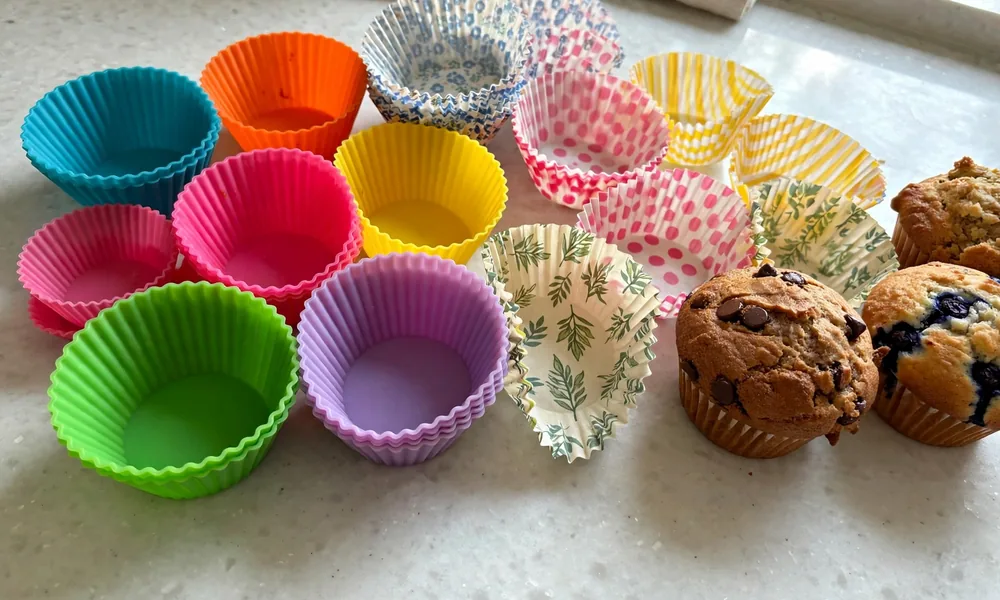
Most liners fall into four groups: standard paper, greaseproof paper, foil, and silicone. Tulip liners are a taller paper variation worth knowing about for special occasions. The table below gives a quick comparison, and the sections after it explain each type in more detail.
| Type | Best for | Peel | Reusability | Watch out for |
|---|---|---|---|---|
| Standard paper | Everyday baking, light batters | Good when greaseproof | Single use | Cheap paper goes soggy and fades |
| Greaseproof paper | Buttery and oily batters | Clean | Single use | Slightly dearer than plain paper |
| Foil | Rich batters, parties, gifts | Clean | Single use | Can hide browning; do not microwave |
| Silicone | Regular baking, less waste | Very clean | Reusable | Needs a tray underneath; slower browning |
| Tulip | Bakery look, tall cakes | Good | Single use | Needs a snug pan; costs more |
Standard Paper Liners
Standard paper liners are the ones most kitchens start with: thin, pleated paper cups in white or a single colour, sold in large packs. They are cheap, easy to find, and perfectly good for everyday baking, especially with a light sponge or a plain vanilla batter that is not very greasy. Their weakness is the paper: thin, untreated paper absorbs fat as it bakes, so the colour darkens, the pattern blurs, and the paper can cling and tear when peeled.
The fix is to buy greaseproof liners, or at least thicker paper. Greaseproof paper stops fat soaking through, so the colour stays bright and the paper peels in one piece. If you already have thin liners, use them for a low-fat batter, or double them up. Keep spares in a dry cupboard, because damp liners go limp and stick together.
Greaseproof Paper Liners
Greaseproof paper liners are the workhorse of the group, and for most bakers they are the best cupcake liners to buy first. The paper is treated so that butter and oil stay in the cake instead of soaking into the cup, which keeps the outside looking clean and the inside moist. They peel away without tearing the crumb, even from a sticky chocolate or carrot cake, and they keep their printed pattern through the bake. That matters at a party, where a faded liner can make a good cake look careless.
They come in plain white, solid colours, and patterns. Check the size before you buy: a standard liner is about 50 millimetres across the base, the size that fits a standard muffin pan. Too small, and it tips when filled; too large, and it folds and creases the cake.
Foil Liners
Foil liners are paper cups with a thin metal foil outside, and they are the sturdiest of the single-use options. They hold their shape without a pan better than paper does, which makes them useful for baking on a flat tray when the muffin pan is already in use, or for serving cupcakes that need to travel. The foil also keeps colours vivid: gold, silver, and bright metallic liners look polished at a party, and they do not fade in the oven the way printed paper can. For a rich batter, foil is a strong choice because it does not go soggy.
Remember two things with foil. It reflects heat, so the sides may brown a little less than in paper. And never put foil liners in a microwave. Let very sticky cakes cool fully before peeling. For gifts and bake sales, though, they are hard to beat.
Silicone Liners
Silicone liners are reusable cups, usually sold in sets of twelve or twenty-four, in bright colours. They are the best choice for a baker who makes cupcakes often and wants to cut down on single-use paper. A good silicone liner releases the cake cleanly without any greasing, washes in warm soapy water or in the dishwasher, and lasts for years. The colours stay bright because there is no paper to absorb fat, and the cakes come out with smooth, even sides.
Silicone has two quirks. It is soft, so always set liners in a muffin pan or on a rigid tray before filling them, and carry the tray, not the cups. It also insulates, so give the batch an extra minute and check with a skewer. If a liner smells after washing, soak it in warm water with a little vinegar, rinse, and dry fully.
Tulip and Parchment Liners
Tulip liners are tall paper cups whose points rise above the rim, giving a bakery-style look for celebrations. They are usually greaseproof parchment, so they peel well. They cost more, and they need a snug pan: if the cup is loose, the tall sides can flop over during baking. Plain parchment liners are a quieter option, good when the topping is the star.
Getting the Size Right
Size is the most common mistake with cupcake liners, and it is easy to avoid. Standard liners fit a standard 12-cup muffin pan, with cups about 50 millimetres across the base and about 30 millimetres deep. Mini liners fit a mini muffin pan, with a base of about 35 millimetres, and they bake faster, so check them a few minutes early. Jumbo liners fit a jumbo muffin pan, with a base of about 60 millimetres, and they need a longer bake. A mismatched liner sits too high and tips, or folds and creases the cake.
If you are not sure which size you have, measure the base, not the top. A good muffin pan that bakes evenly is worth matching with liners that fit it, because the pan gives the heat and shape, and the liner gives the release and finish.
How to Use Cupcake Liners Well
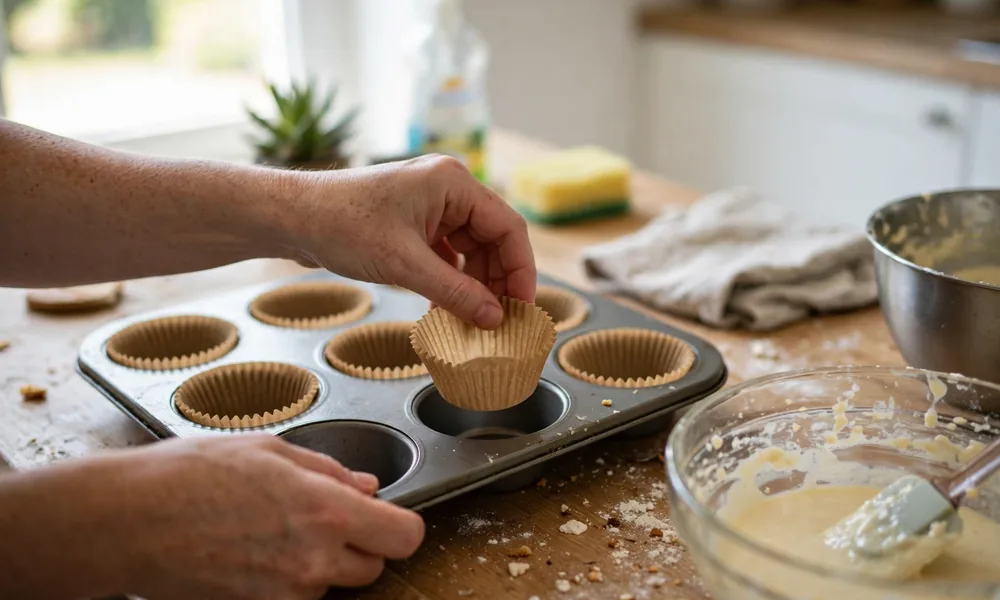
Using a liner well starts before the batter goes in. Set the liners in the pan first, and press each one gently into the cup so it sits flat. A liner that is sitting crooked will bake crooked, and the cake will rise to one side. Fill each liner about two-thirds full, using a spoon or a scoop so the amounts are even. An even fill means an even bake: a liner that is overfilled will spill over the edge and bake into its neighbour, while one that is underfilled will bake flat and dry.
While the cakes bake, leave them alone: opening the door lets heat out and can make them sink. Cool them in the pan for five minutes, so the crumb sets and the liner releases cleanly, then move them to a wire rack. Longer in the pan traps steam, which softens liners. Peel by holding the base and pulling the paper down gently from the top. Do not grease paper liners: the grease soaks in and defeats a greaseproof cup.
Common Liner Problems and How to Fix Them
Most liner problems have a simple cause. Soggy liners mean paper too thin for the batter, or cakes left in the pan too long: switch to greaseproof or foil, and move cakes to a rack after five minutes. Faded patterns mean the paper was not greaseproof. Sticking usually means a cheap paper, or a cake peeled while still warm.
Checklist: Choosing Cupcake Liners
- Match the liner base to your pan: standard, mini, or jumbo, measured at the base, not the top.
- Choose greaseproof paper for buttery or oily batters, and foil for rich batters and parties.
- Pick silicone if you bake often and want a reusable liner that releases cleanly.
- Fill each liner two-thirds full, and keep the amounts even across the pan.
- Cool cupcakes in the pan for five minutes, then move them to a wire rack.
- Store liners flat and dry, away from damp and strong smells, so they hold their shape.
Frequently Asked Questions
Do I need cupcake liners, or can I bake without them?
You can, if you grease the pan well, but liners make release easier, keep cakes moist, and make serving tidier. They are worth using for most cupcakes, especially any you plan to transport or give away.
Are cupcake liners and muffin liners the same thing?
Yes, they are the same product under a different name: pleated cups that fit a standard muffin pan. Buy by size rather than by name.
Why do my cupcake liners go greasy and see-through?
Thin, untreated paper absorbs fat as it bakes. Switch to greaseproof paper or foil, made to resist fat, and the colour should stay bright.
Can I reuse silicone cupcake liners?
Yes, many times. Wash them in warm soapy water or in the dishwasher, dry fully, and store flat. Replace them if they feel sticky or smell after washing.
How full should I fill a cupcake liner?
About two-thirds full: room to rise into a neat dome without spilling, and an even bake across the pan.
Do foil liners change how cupcakes bake?
Foil reflects a little heat, so the sides may brown slightly less than in paper. The difference is small. Do not use foil liners in a microwave.
The Bottom Line
The best cupcake liners in 2026 are greaseproof paper liners for everyday baking, foil liners for parties and rich batters, and silicone liners for regular bakers who want a reusable option. Match the size to your pan, fill each liner two-thirds full, and move the cakes to a rack after five minutes. Get those basics right, and the liner does its quiet job: a neat shape, a clean peel, and a cupcake that looks as good as it tastes. For cakes that stay soft for days, see our guide to cupcakes that stay moist for days, and for the finishing touch, our guide to piping bags that make decorating easy will help you frost them neatly.