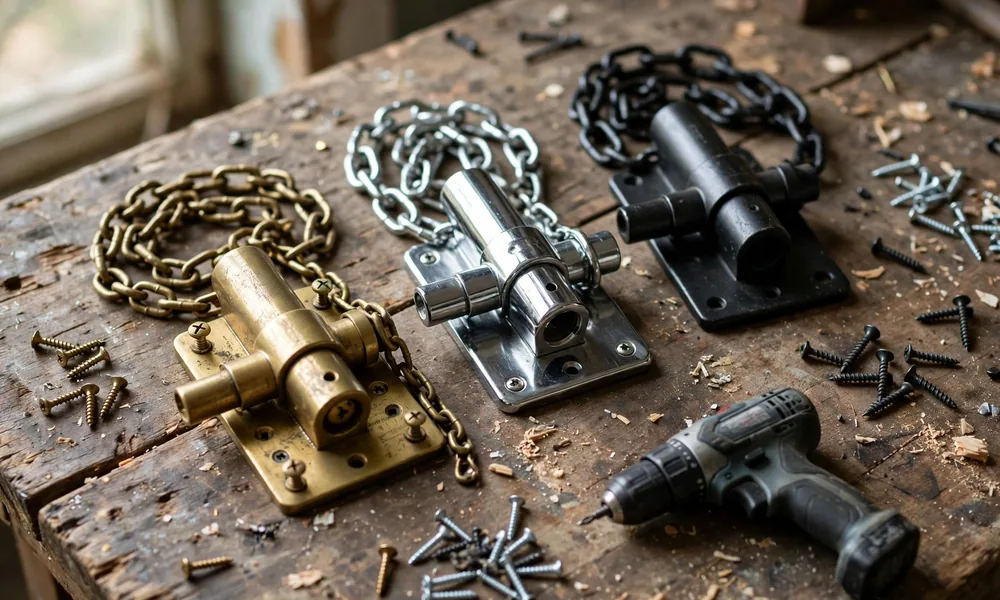
A knock at the door should never force a choice between being polite and being safe. The door chains that add a second layer of safety in 2026 solve exactly that problem: they let you open the door a few centimetres, see and speak to whoever is outside, and keep the door firmly held while you decide. A chain is not a lock, and it is not meant to replace one. It is the extra layer that sits behind the lock and works only when you are at home.
This guide explains how door chains work, which type suits which door, what to look for when you buy one, and how to fit it so it holds when it matters.
Key Takeaways
- A door chain is a second layer, not a replacement for a lock: it only protects you while you are at home and the chain is on.
- Solid steel chains with welded links and a strong keeper plate hold far better than thin, decorative chains.
- Fit the chain at eye level or just above, with long screws that bite into the door frame, not just the architrave.
- A chain lets you open the door a few centimetres to talk, take a parcel, or check an identity card.
- Check the chain every few months: a loose plate, a stretched link, or a sticking slide is a chain that will fail.
What a Door Chain Actually Does
A door chain is a short length of metal chain fixed to the door frame at one end, with a slide bolt at the other end that slots into a keeper plate on the door itself. When the chain is engaged, the door can only open about five centimetres: wide enough to talk through and see a face, but far too narrow for anyone to push through or reach the chain from outside.
The value of a chain is in the pause it creates. Most unwanted callers rely on the door swinging fully open the moment it is answered. A chain breaks that pattern: you can ask who is there, look at an identity card, or take a delivery without ever giving up control of the door. If anything feels wrong, you close the door and throw the lock. It is a small piece of hardware that buys you time and information.
The Main Types of Door Chain
Not every chain works the same way, and the differences matter more than the price tag. The right choice depends on your door and how much strength you need from it.
The Standard Slide-Bolt Chain
The standard chain is the one most people picture: linked steel chain with a slide bolt on the door and a slotted keeper plate on the frame. You slide the bolt into the slot and the chain holds the door. It is simple and cheap to fit, and a good one in solid steel is stronger than it looks. The weakness is the slide itself: on a cheap chain the bolt is thin and the slot is shallow, so a hard push can bend the bolt or pull the plate off its screws. Buy the heaviest version you can find, with a thick bolt and a keeper plate that takes at least three screws.
The Security Chain With a Hardened Link
A security chain is a standard chain built to a higher standard. The links are welded shut rather than simply bent closed, the chain is made from hardened steel that resists cutting, and the plates are thicker, with screws long enough to reach into the frame. These chains cost more, but they are worth buying for a front door that faces a street or a shared hallway. A welded link cannot be prised open with a screwdriver, and a hardened chain cannot be snipped with pliers, which are the two quiet ways a cheap chain is defeated.
The Door Bar and Chain Combination
Some homes fit a door bar alongside a chain: a hinged steel bar that swings across the door and drops into a bracket on the frame. A bar is stronger than a chain because it spreads the force across the whole door. The trade-off is that a bar gives you no gap to talk through: the door is either shut or open. Fitted together, the two cover each other well: the chain when you want to speak to a caller, the bar at night when you want the door held solid.
How to Judge a Good Door Chain
Judging a chain starts with the metal. Pick it up: a good chain has weight, and the links feel solid and close tightly against each other. A chain that feels light and rattly is made from thin wire, and thin wire bends. Welded links, each a closed loop with no visible gap, are far stronger than links simply bent shut, because a bent link can be prised open with a screwdriver.
Next, look at the plates. The keeper plate on the door and the anchor plate on the frame carry all the force when someone pushes, so they need to be thick steel with at least three screw holes each, and the screws need to be long. Short screws hold only in the soft architrave and pull out under pressure; screws of 50 millimetres or more reach the solid frame behind it. The same lesson applies to a deadbolt: our guide to the deadbolts that keep your door locked tight explains how a reinforced strike plate turns a good lock into a strong one. A chain fitted to a weak frame is decoration, however good the chain is.
Finish matters too: a chain lives on the inside of the door, where it is handled every day. Brass and stainless steel resist rust and keep sliding smoothly; a cheap plated chain can flake, stick, and stain the door within a year. Matte black suits modern doors and hides fingerprints, while polished brass suits period doors. Pick the finish that matches the rest of your hardware, because a chain that looks like it belongs on the door is a chain you will actually use.
The Main Types, Compared
| Type | Strength | Talking gap | Best for |
|---|---|---|---|
| Standard slide-bolt chain | Moderate | Yes | Most homes, low-risk doors |
| Hardened security chain | High | Yes | Street-facing and flat doors |
| Door bar | Very high | No | Night-time security, light doors |
| Light chain for rentals | Low to moderate | Yes | Rented homes, thin doors |
Fitting a Door Chain So It Holds
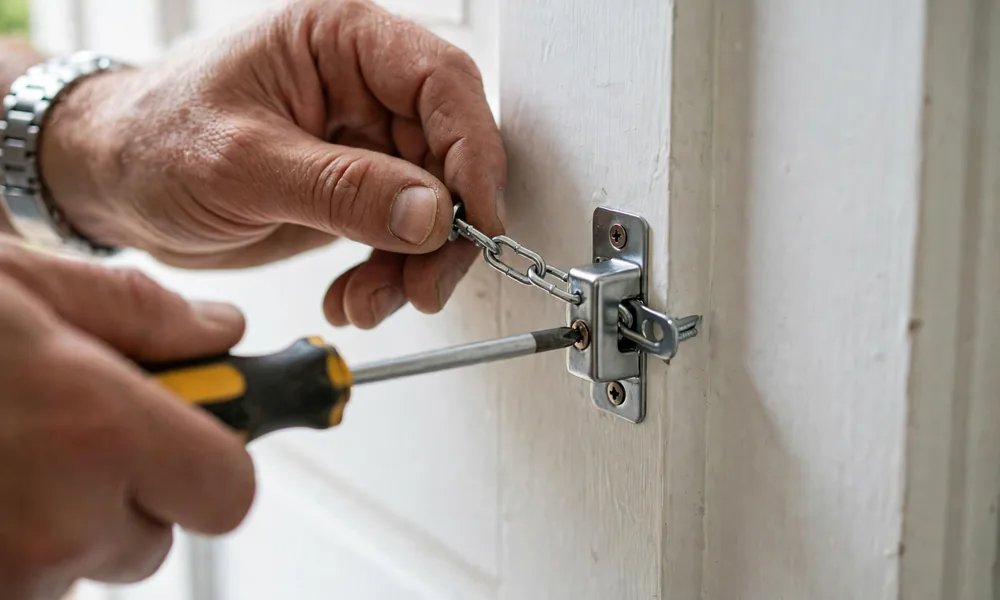
Fitting a chain is a job most people can do in half an hour with a drill, a screwdriver, and a pencil. Start with the height: the chain should sit at about eye level, so you can reach it and engage it every time you answer the door. Too low, and a visitor can reach over the door to fiddle with it; too high, and shorter members of the household will not use it.
Mark the anchor plate on the frame first, then hold the chain taut and mark where the keeper plate falls on the door. The chain should hang with a little slack when the door is closed, so the bolt slides in easily, but not so much slack that the door opens wide. Drill pilot holes slightly smaller than the screws, so they bite without splitting the wood, and drive the screws in by hand for the last few turns. Once both plates are fixed, test the chain: open the door against it, push firmly, and check that nothing moves. If a plate flexes, the screws are too short, and you should fit longer ones before you rely on it.

Where a Door Chain Works Best, and Where It Does Not
A chain works best on a solid door in a solid frame, answered by someone at home and alert. It is at its best in the everyday situations that actually happen: a delivery driver with a parcel, a stranger asking for directions, or a caller whose identity you want to check before you open up. In all of those, the chain gives you the gap to talk and the control to close the door again, and that is exactly what it is for.
It does not work as a lock when you are out: a chain can only be engaged from inside, so an empty house has no chain on it at all. Nor does it stop a determined intruder willing to kick a door hard. A chain is a delay, not a wall, and a thin door in a soft frame will give way before the chain does. That is why a chain should always sit alongside a proper lock, not instead of one. The best vs worst door locks comparison shows how the main lock, the chain, and the rest of the hardware work as a system: the chain protects you while you are home, and the lock protects the house while you are away.
Door Chain Checklist
- Choose a welded-link steel chain, not a thin bent-link one, and pick the heaviest version that suits your door.
- Fit the chain at eye level, with plates fixed by long screws into the solid frame.
- Test the chain after fitting: push the door firmly and check that neither plate moves or flexes.
- Keep the chain oiled so the bolt slides smoothly and never sticks when you need it.
- Use the chain every time you answer the door to someone you do not know.
- Check the screws and plates every few months, and replace the chain if a link stretches or a plate loosens.
Frequently Asked Questions
Is a door chain enough security on its own?
No. A chain only works while you are at home, and it is a delay rather than a barrier. It should always sit alongside a good lock, which is what protects the house when you are out.
Can a door chain be cut from outside?
A thin chain can be cut or prised open, but a hardened steel chain with welded links resists hand tools, and the gap is only a few centimetres, so an intruder cannot easily reach the chain from outside.
What height should a door chain be fitted at?
About eye level, so every adult in the house can reach it comfortably. Too low and it is easy to tamper with over the door; too high and shorter people will not use it.
Can I fit a door chain on a uPVC door?
Yes, but take care. uPVC doors have a steel core inside the frame, so you need the right screws and pilot holes, and you must avoid drilling through the sealed glass unit. If in doubt, ask the door supplier or a locksmith.
Will a door chain work on a door that opens outwards?
Yes, with the plates fitted the other way round, so the chain still holds the door when it is pulled towards you. The principle is the same: the chain limits how far the door can open.
How often should I replace a door chain?
Replace it when a link stretches, the bolt sticks, or a plate loosens and will not tighten again. A well-made chain can last many years, but check it every few months, and check the hinges too, because a sagging door puts extra strain on the chain. Our guide to the door hinges that make doors swing smoothly explains how worn hinges cause a door to drop.
The Bottom Line
The door chains that add a second layer of safety in 2026 are the simple ones done well: a solid welded-link steel chain, thick plates, and long screws into a solid frame, fitted at eye level and used every time you answer the door to a stranger. It will not replace a lock, but while you are at home it is the layer that lets you see, speak, and decide before you open the door fully.