
Door knockers that make a first impression in 2026 are the smallest piece of hardware on a front door and the one visitors touch first. Before anyone rings a bell or turns a handle, they lift the knocker, and in that second they learn something about the house. A good door knocker sounds solid, feels weighty, and looks like it belongs on the door. A bad one rattles, feels hollow, and tells a visitor the details were an afterthought.
Choosing a door knocker is not about buying the loudest or the most ornate design. It is about matching the knocker to the door, the house and the way people arrive. A heavy lion-head knocker suits a period townhouse; a slim modern ring suits a flat-panel contemporary door. This guide compares the main types and helps you pick the right one.
Key Takeaways
- A door knocker should have real weight: a heavy knocker sounds solid and lasts longer than a light, hollow one.
- Ring knockers suit most doors, lion heads suit period homes, bar knockers suit contemporary doors.
- Solid brass and stainless steel last longest; thin plated metal chips, tarnishes and loosens within a couple of years.
- Check the fixing before you buy: through-bolted knockers are far more secure than surface screws alone.
- Match the finish to the rest of your door hardware so the entrance reads as one considered design.
Why a Door Knocker Still Matters
Doorbells have not killed the door knocker. A bell needs power, wiring and a working chime, and it fails silently when any of those go wrong. A knocker needs nothing. It works in a power cut, it needs no batteries, and it can be heard through a thick solid door in a way a small bell sometimes cannot. Many homes keep both.
The knocker also does something a bell cannot: it sets the tone. A visitor who lifts a heavy brass ring and hears a deep, satisfying knock already has a sense of the house before the door opens. The knocker works with the rest of the entrance to do that job: the house numbers tell a visitor they are at the right place, and the knocker is the invitation to announce themselves. A cheap knocker shows wear within a year; a well-made one lasts a decade or more.
The Main Types of Door Knocker
Door knockers come in a few basic designs, each suited to a different door style and a different kind of entrance. The right choice depends on the period of the house, the weight of the door, and whether you want a statement piece or something quiet and understated.
The Ring Knocker
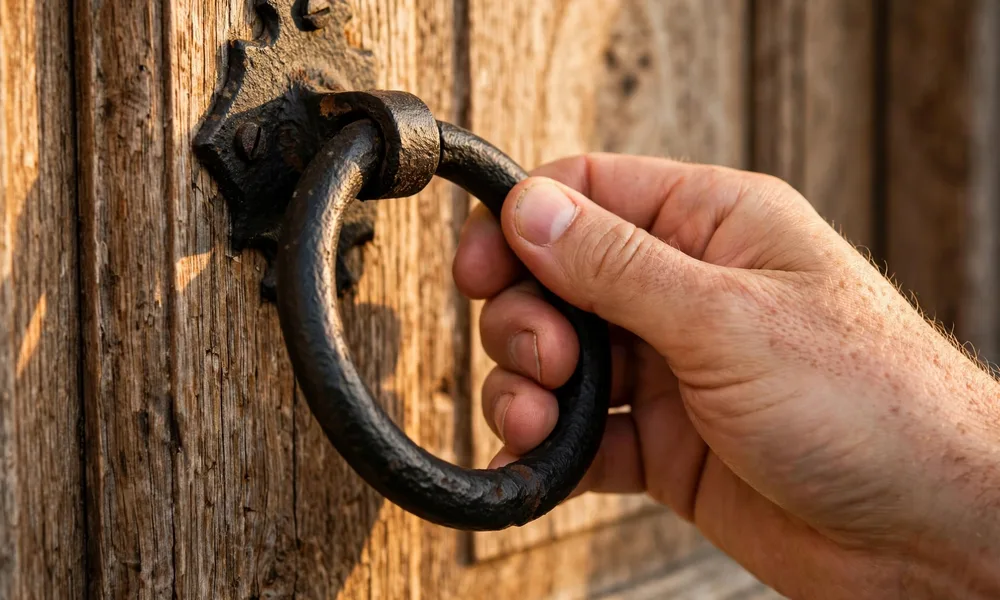
The ring knocker is the most versatile design there is: a metal ring hanging from a hinge, lifted and dropped onto a strike plate. It suits almost every door, from a cottage to a modern townhouse, and it comes in every finish from polished brass to matte black. The best rings are thick and heavy, with a satisfying weight in the hand and a sturdy hinge that never wobbles. A thin, light ring feels cheap and sounds tinny, so weight is the first thing to check.
The Lion-Head Knocker
The lion-head knocker is the classic statement piece: a cast lion holding a ring in its mouth, usually in solid brass. It suits period homes, townhouses and grand entrances, and it is the knocker people picture when they think of a smart front door. The best examples are cast, not pressed, with crisp detail in the mane and face. A poorly cast lion looks soft and blurred, so inspect the detail closely. It is heavier than a ring knocker and needs through-bolting, but on the right door it is unmatched.
The Modern Bar Knocker
The modern bar knocker is a slim vertical bar or cylinder that drops onto a small strike plate, and it is the right choice for contemporary doors. It suits flat-panel doors, minimalist entrances and homes where the lion head would look out of place. The best modern knockers are made from solid stainless steel or blackened bronze, with clean lines and no unnecessary decoration. They are usually lighter than a lion head, so they fit thinner doors, and their quiet, precise knock suits a modern hallway.
What to Look for When You Buy
Weight and Sound
Pick the knocker up before you buy it, if you can. A good knocker has real weight, and that weight is what makes the sound deep and satisfying rather than thin and rattly. The strike plate matters too: it should be thick enough to take the impact without denting, and fixed firmly so it does not buzz. If you are buying online, check the listed weight and the material; a solid brass knocker of a given size is always heavier than a hollow plated copy.
Material and Finish
Solid brass is the classic choice and it ages well, developing a warm patina that suits period doors. Stainless steel is the practical choice for modern doors: it never rusts, it is easy to clean, and it holds a crisp finish. Black iron suits cottages and rustic entrances, but it needs occasional oiling to keep rust at bay. Whatever you choose, match it to the rest of the hardware. The door knobs and letterbox set the tone, and a knocker in a clashing finish breaks the look of the whole entrance.
Fixing and Security
Through-bolted fixings are the gold standard: bolts pass through the door and are secured on the inside, so the knocker cannot be pulled off from the street. Surface screws are easier to fit but far less secure, and on a thin door they can work loose over time. Check the fixing centres before you order, because they must suit your door, and check that the bolts are long enough for your door thickness. A knocker that is easy to steal is a knocker you will be replacing.

Door Knockers Compared
The main types side by side:
| Type | Best for | Sound | Weight | Typical cost |
|---|---|---|---|---|
| Ring knocker | Most doors | Clear and solid | Medium | Moderate |
| Lion-head | Period homes | Deep and loud | Heavy | Higher |
| Modern bar | Contemporary doors | Quiet and precise | Light to medium | Moderate |
| Urn and dolphin | Georgian homes | Light and bright | Medium | Higher |
The Best Door Knockers of 2026
The Ring Knocker: Best All-Rounder
The ring knocker is the one most homes should buy. It suits almost any door, it is easy to fit, and a good solid-brass or stainless ring sounds exactly right. Look for a ring at least 8 millimetres thick, a sturdy hinge with no play, and a strike plate thick enough not to dent. Avoid the thinnest budget rings: they feel hollow, they sound tinny, and the hinge loosens within a year. A good ring knocker is the safest choice you can make.
The Lion-Head Knocker: Best Statement Piece
If your house has period character and you want the entrance to say so, the lion-head knocker is the choice. Buy cast solid brass with crisp detail, through-bolt it properly, and it will anchor the whole front door for decades. Check the size against your door before ordering, because a lion head that is too large looks comic rather than grand. On the right door, nothing else makes quite the same first impression.
The Modern Bar Knocker: Best for Contemporary Doors
For a flat-panel or minimalist door, the modern bar knocker is the right call. It is clean, quiet and precise, and it suits doors where a lion head would look wrong. Choose solid stainless steel or blackened bronze, and check that the strike plate is properly aligned, since a bar knocker that misses its plate sounds dull and feels careless. It is the best choice for a modern entrance that values restraint.
Fitting a Door Knocker
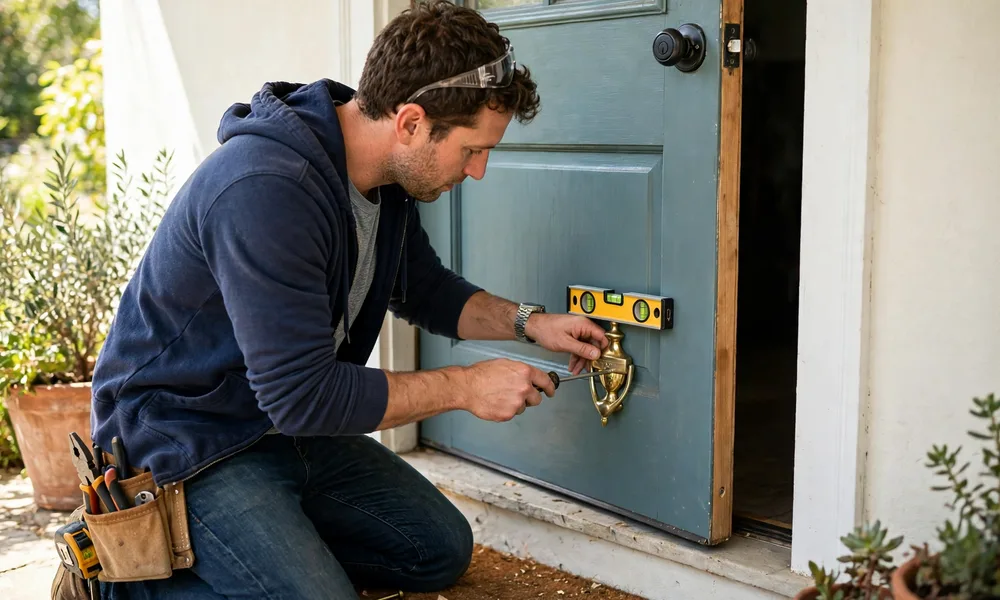
Fitting a door knocker usually takes under half an hour. Hold it in position at a comfortable height, usually around 150 centimetres from the ground, and mark the fixing holes with a pencil. Drill pilot holes, taking care not to split the timber, then fix the knocker with the bolts or screws supplied. Through-bolts need access to the inside of the door, so remove any interior cover plate first. Before you tighten everything, check that the ring or bar drops cleanly onto the strike plate and that the hinge moves freely.
Test the sound before you finish. Knock a few times from outside and listen from inside with the door shut: you want a clear, solid sound that carries through the house without rattling. If it buzzes, the strike plate is loose or the hinge has play, and tightening the fixings usually solves it. If the door itself sags or sticks, the knocker will never sit right: our guide to door hinges covers the fix for that.
Door Knocker Checklist
- Choose the type to match your house: ring for most doors, lion head for period homes, bar for contemporary doors.
- Pick solid brass or stainless steel, and match the finish to your other door hardware.
- Check the weight in the hand: heavy means solid, light usually means hollow.
- Insist on through-bolted fixings where the door allows it, for security and longevity.
- Size it to the door, and fit it at a comfortable height for visitors.
- Test the sound from inside with the door shut before you finish.
Frequently Asked Questions
What height should a door knocker be fitted at?
Around 150 centimetres from the ground is the standard height, roughly at eye level for most adults. On a very tall door you can go slightly higher, but avoid placing it so high that shorter visitors have to reach, or so low that it looks like an afterthought.
Are door knockers secure?
A through-bolted knocker is very secure, because the bolts are fastened from the inside and cannot be removed from the street. A surface-screwed knocker is less secure and can be prised off, so choose through bolts wherever the door allows it.
Can I fit a door knocker to a composite or uPVC door?
Yes, but check the construction first. Composite and uPVC doors often have a reinforced core, so you need the right drill bits and fixings, and you should avoid drilling into any steel reinforcement. If you are unsure, ask the door manufacturer before drilling.
How do I stop a door knocker rattling in the wind?
Rattling usually means a loose hinge or a worn strike plate. Tighten the fixings first, and check that the ring sits flat against the plate when at rest. A small felt pad behind the ring can silence a persistent rattle without affecting the sound of a proper knock.
Should I keep a doorbell as well as a knocker?
Most homes benefit from both. The bell is convenient for regular visitors, and the knocker is the backup that works in a power cut and can be heard through a thick door. Together they make sure nobody is ever left standing unheard on the step.
How do I clean a brass door knocker?
Wipe it with a soft cloth and warm soapy water for regular cleaning, and use a brass polish a few times a year if you want to keep the shine. If you prefer the aged look, leave the patina alone and just wipe off dirt: many owners prefer the mellow finish that develops naturally.
The Bottom Line
Ring knockers suit most homes, lion heads suit period houses, and modern bars suit contemporary doors. Buy solid metal with real weight, fix it with through bolts, and match the finish to the rest of your entrance. It is a small piece of hardware, and it is the first thing every visitor touches.


