How to Choose Earphones That Stay Put and Sound Great in 2026
Earphones are the simplest way to get great sound into your ears without charging anything, pairing anything, or worrying about a battery dying halfway through a journey. A good pair plugs straight into your phone or laptop, sits comfortably for hours, and sounds better than wireless pairs costing twice as much. The best earphones in 2026 are comfortable and durable: they put music and calls in your ears with a wire you can rely on, and ask for nothing in return.
Choosing well matters, because earphones fail in small, annoying ways. The wrong tips slip out on a walk. A thin cable tangles into a knot in your pocket. A cheap microphone makes you sound distant on every call. This guide explains how to pick earphones that fit, survive daily use, and sound as good as they should, so the pair you buy is the pair you still reach for in a year.
Key takeaways
- Earphones mean wired and neckband in-ear phones here; true wireless earbuds are a different product with their own buying rules.
- Fit decides everything: try every tip size in the box and wear a new pair for twenty minutes before judging.
- A good seal improves bass, comfort, and background noise more than any driver size or specification.
- Check the plug matches your phone: 3.5mm, USB-C, or Lightning, because the wrong plug means an adapter for life.
- Pay for a strong cable and proper strain relief, because the cable breaks first on almost every pair.
What earphones are, and what they are not
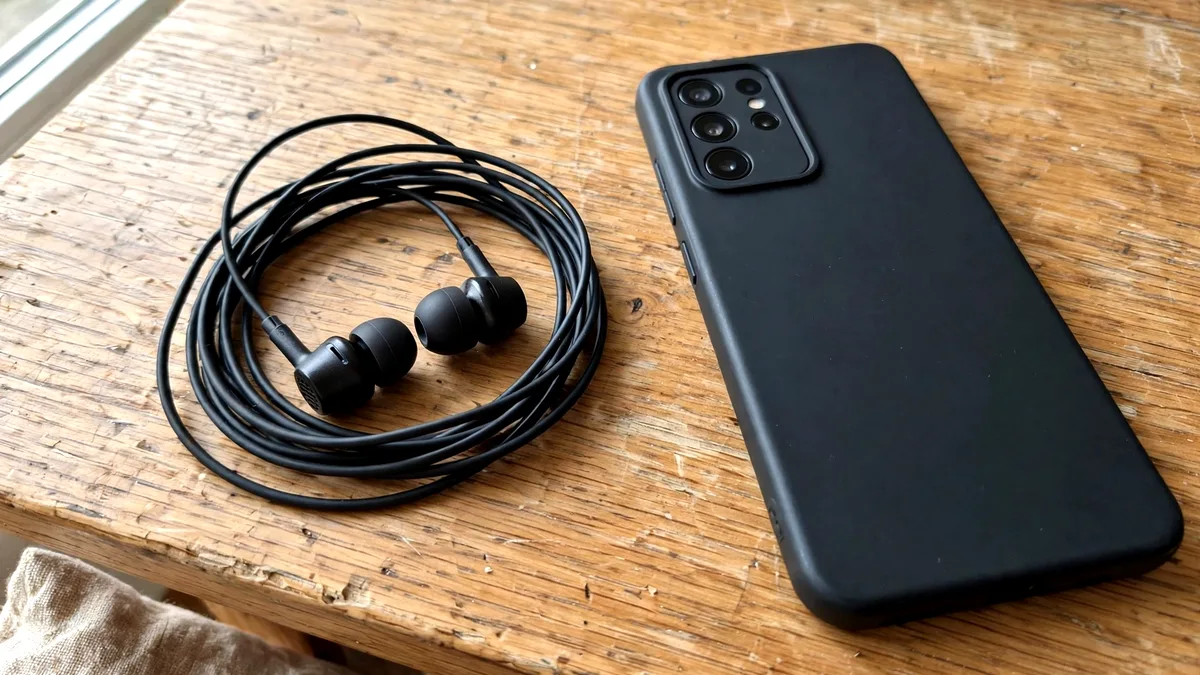
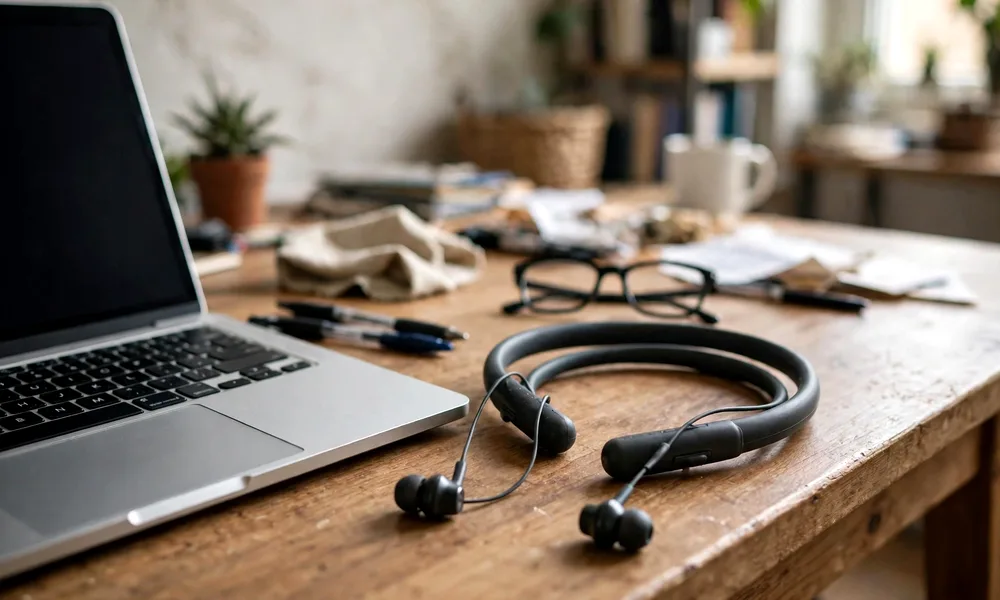
Earphones are in-ear phones that connect to your device with a wire or a neckband. The classic pair has a cable from each earpiece down to a single plug, while a neckband pair joins the two earpieces with a light band around your neck that carries the battery and controls. Both are earphones, and both are what this guide covers.
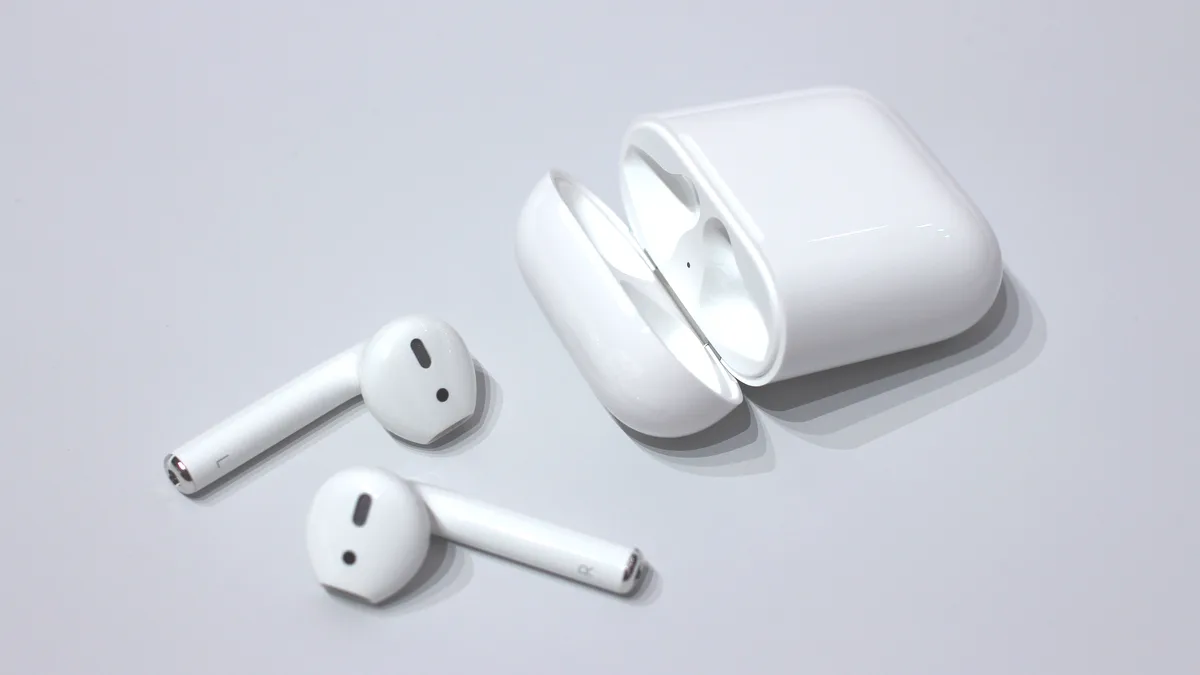
That scope matters, because the words earphones and earbuds are used as if they mean the same thing, and on this site they do not. True wireless earbuds have no wire at all: two separate buds live in a charging case, and that convenience is a whole different buying decision, with batteries, Bluetooth, and charging cases to judge. Our guide to the best earbuds covers that world in full, including its wired section, and our guide to the best wireless earbuds goes deeper on the cable-free pairs alone. Over-ear headphones are different again: they sit on or around the whole ear rather than inside it, and our guide to the best noise cancelling headphones covers the strongest options for call-heavy days and long journeys. This guide stays with wired and neckband earphones, the pairs with a physical connection between the two earpieces, and judges them on their own terms.
The types of earphones
Most earphones fall into four types, and the right one depends on your phone and how you listen.
Wired 3.5mm earphones
The classic pair plugs into a 3.5mm headphone socket and needs no battery, no charging, and no pairing. Sound per pound is better than any wireless pair, because none of the price goes to batteries and Bluetooth chips. The downside is the socket: many newer phones no longer have one, so check your phone before you buy.
Wired USB-C and Lightning earphones
These plug straight into a modern phone’s charging port and work the same way as a 3.5mm pair, with no battery and no pairing. They solve the missing-socket problem, and sound just as good. The catch is that you cannot charge your phone and listen at the same time without a splitter, and a USB-C pair will not fit a Lightning phone, or the other way round.
Neckband earphones
Neckband earphones join the two earpieces with a flexible band around your neck that holds the battery, controls, and Bluetooth radio. They are the least fashionable type and one of the most practical: battery life is usually twelve hours or more, they are almost impossible to lose, and the earpieces hang safely around your neck when you take them out. The band can bounce when running, but for long workdays and travel they are hard to beat.
Sport earphones
Sport earphones add ear hooks or wings that lock the earpiece in place during movement, plus sweat resistance so rain and workouts do not kill them. They come in wired and neckband forms. If you run or train with earphones, the hook is worth more than any sound specification, because a pair that falls out mid-run is useless however good it sounds.
| Type | Best for | Battery | Main weakness |
|---|---|---|---|
| Wired 3.5mm | Music lovers, old phones | None | Needs a socket |
| Wired USB-C / Lightning | Modern phones | None | Blocks the charging port |
| Neckband | Workdays, travel, calls | 12 hours or more | Band bounces when running |
| Sport | Running, workouts | None or 10 hours | Hooks take getting used to |

Fit and ear tips: the part everyone rushes
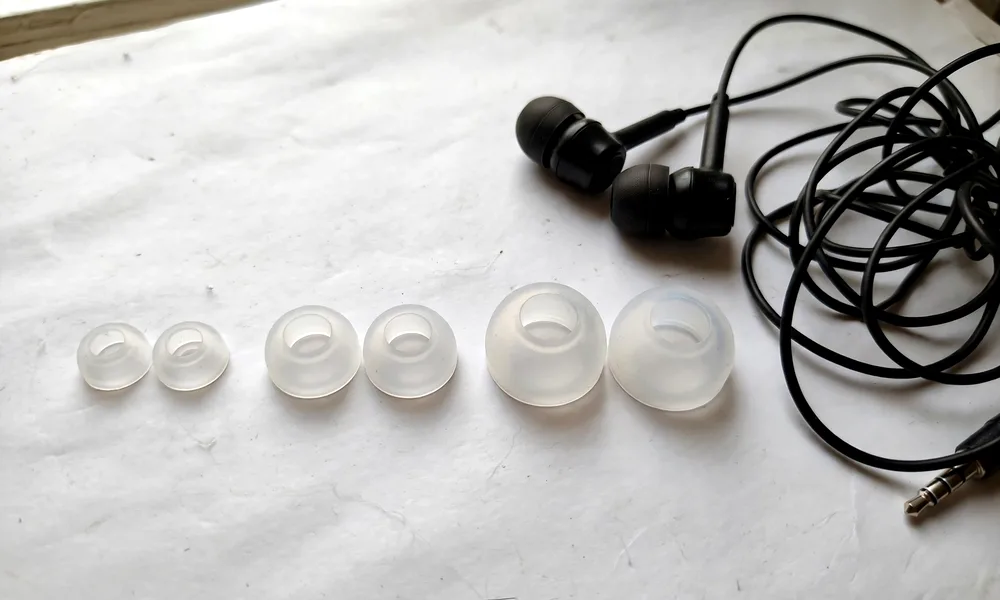
Fit is the part of buying earphones that most people rush, and it causes most returns. Every ear is shaped differently, and a pair that fits one person perfectly can feel loose or painful for another. Try all the tip sizes in the box, and wear the earphones for at least twenty minutes before deciding. A good fit feels secure without pressure: the earpiece sits still when you turn your head or walk, and does not ache after half an hour.
The seal is what makes the difference. A proper seal traps the bass inside your ear and keeps background noise out, so music sounds full and you can listen at a lower, safer volume. A poor seal lets the bass escape, and even a good pair sounds thin. If the smallest tip feels loose and the largest feels tight, try the middle size first, then test with a bass-heavy track: if the bass is weak, the seal is wrong, not the earphones.
Foam tips are worth trying if silicone tips never feel right. Foam expands gently to fill the ear canal, improving comfort and bass, though it wears out faster and needs replacing every few months. Silicone tips last longer and are easier to clean. If a pair hurts within half an hour, return it and try a different shape: no breaking in will fix earphones that do not fit your ears.
Sound: what actually matters
Sound is the hardest feature to judge from a specification sheet. Driver size tells you far less than a twenty-minute listen, because tuning matters more than any single number. A well-tuned pair with a small driver beats a poorly tuned pair with a large one every time. Balanced sound suits every kind of music, while podcast listeners should prioritise clear voices over bass, and music lovers should listen for detail: whether instruments stay separate in a busy track, and whether vocals sound natural.
For wired earphones, ignore Bluetooth codecs entirely, because a cable carries the sound directly. What matters instead is the seal, the tuning, and the source: a wired pair sounds as good as the recording allows, with no dropouts and no latency when you watch a film. If a pair sounds harsh or muddy in the shop, it will sound the same at home, so trust your ears over the box.
Cables, durability, and everyday use
The cable is what breaks first on almost every pair of wired earphones, so judge it before you judge anything else. A good cable feels flexible but not flimsy, with a smooth jacket that does not tangle into a knot in your pocket. Look for proper strain relief: the small ribbed sleeves where the cable meets each earpiece and the plug. Those sleeves stop the wire bending sharply at its weakest point, which is where most cables fail. A cable already fraying at the plug in the shop will not survive a month in a pocket.
Flat cables tangle less than round ones, and braided cables last longer, but both cost more. The in-line remote is worth having if you take calls or skip tracks often: one button answers a call, two presses skip forward, and a small microphone sits on the cable near your mouth. Test the buttons before you buy, because a stiff remote is annoying a dozen times a day. For neckband pairs, check the band itself: it should flex without creasing, and the earpieces should sit in small magnetic docks when not in use, so they do not swing and snag.
Calls and microphones
For calls, look for a microphone that sits close to your mouth and picks up your voice without the noise around you. On a wired pair, the in-line microphone does this well when the cable hangs naturally, but it will rub against a jacket and send a rustling sound to the other end if you walk fast. On a neckband pair, the microphones sit on the band near your collarbone, which is steadier, and the better ones use two to cancel background noise. Test the microphone on a real call before the returns window closes: ask the other person whether you sound clear, and whether they can hear wind or traffic behind you.
What to spend
Under the budget tier, sound and build quality drop sharply, and poor fit is common, so the cheapest pairs are usually false economy. The mid-range is where value lives: balanced sound, comfortable tips, a strong cable, and a microphone that works. Premium wired earphones add finer sound and better materials, but the gains are smaller than the price jump suggests, and a mid-range pair with a perfect seal will beat a premium pair that does not fit. If you listen for an hour a day at home, buy the mid-range pair that fits best; if you travel or take calls all day, pay for the neckband with the longest battery and clearest microphone.
Checklist: choosing earphones
- Decide the type first: wired 3.5mm, wired USB-C or Lightning, neckband, or sport, based on your phone.
- Try every tip size in the box and wear the pair for twenty minutes before judging fit or sound.
- Check the plug matches your phone, because the wrong plug means an adapter for life.
- Look for strain relief where the cable meets each earpiece and the plug.
- Make a real phone call on the pair to test microphone clarity and wind handling.
- Confirm the returns policy, so a poor fit is a swap, not a loss.
Frequently asked questions
Do wired earphones sound better than wireless?
At the same price, yes, because none of the cost goes to batteries and wireless chips, and a cable carries the sound with no compression.
How long should earphones last?
A good wired pair should last two to three years. Neckband pairs last a similar time, though their battery fades gradually.
Can I wear earphones while running?
Yes, if you choose a sport pair with an ear hook or wing design and a strong sweat resistance rating.
Why do my earphones keep falling out?
Usually the tip size is wrong. Try the next size up or down, and try foam tips if silicone never seals.
Do earphones work with a phone that has no headphone socket?
Yes, with USB-C or Lightning earphones that plug into the charging port, or with a small adapter.
Are expensive earphones worth it?
For most people, the mid-range is the sweet spot. Premium pairs sound finer, but a mid-range pair that fits will beat a premium pair that does not.
The bottom line
The best earphones in 2026 are not the most expensive pair. They are the wired or neckband pair that fits your ears, matches your phone, and survives daily use. Try every tip size, check the plug, feel the cable, and make a real call before the returns window closes. Do that, and the pair you buy will still be the one you reach for in a year.