Top Etagere Shelves for Books, Plants and Display in 2026
Every home has a wall that is too bare and a collection with nowhere sensible to live. Books pile on the floor, plants crowd the windowsill, and the nice things you like looking at end up shut in a cupboard. Etagere shelves solve that problem in one piece of furniture. A freestanding etagere is a tall, open shelving unit with several tiers, no doors, no back panel and nothing to drill into the wall. It turns an empty stretch of wall into display space in about ten minutes. The best etagere shelves in 2026 hold books, plants and ornaments without sagging, suit rooms from kitchens to bathrooms, and look like furniture rather than flat-pack storage.
Key Takeaways
- An etagere is a freestanding open shelf unit, not a wall shelf: it needs floor space, not fixings.
- Buy for what you own: measure your tallest book first, then check the gap between tiers.
- Check the weight rating per shelf: a shelf of paperbacks weighs around 20 kilograms.
- Metal frames with wooden shelves suit most rooms; solid wood suits period homes, bamboo suits bathrooms.
- Leave a third of every shelf empty: spaced looks like display, crammed looks like storage.
What an Etagere Shelf Actually Is
An etagere is a tall, narrow shelving unit that stands on its own feet, with three to five open tiers. Uprights at the corners, shelves between them, open sides so you can see and reach everything. No doors, no back panel, no wall fixings. That openness is the point: a cabinet hides your things, an etagere shows them.
Corner shelves are small triangular boards fixed where two walls meet, made for dead corners. An etagere does the opposite job: it stands against a flat wall, holds far more, and needs no drilling. Floating shelves are single boards fixed to one wall, each holding only a few kilograms. An etagere holds a whole collection across four or five tiers and moves in minutes. A display cabinet protects precious things behind glass; an etagere leaves everything open and reachable.
Etageres come in two broad shapes. The straight etagere is a rectangle, usually 60 to 90 centimetres wide and 150 to 180 tall, with tiers of equal depth. The ladder etagere steps backwards as it rises, with a deep bottom shelf and shallow top shelves. The straight shape holds more; the ladder shape looks lighter and suits trailing plants, because each tier gets light.
The Main Types of Etagere Shelf, Compared
| Type | Best for | Typical size | Watch out for |
|---|---|---|---|
| Wood and metal frame | Most rooms, books and display | 70 to 90 cm wide, 160 to 180 cm high | Thin shelves sag under books |
| Solid wood | Period homes, heavy books | 80 to 100 cm wide, 170 to 190 cm high | Heavy to move, needs level floors |
| Ladder etagere | Small rooms, trailing plants | 60 to 80 cm wide, 150 to 170 cm high | Top tiers hold very little |
| Bamboo or rattan | Bathrooms, kitchens, bright rooms | 50 to 70 cm wide, 140 to 160 cm high | Lower weight limits per shelf |
| Narrow tower etagere | Hallways, beside a desk | 30 to 45 cm wide, 150 to 180 cm high | Tips if loaded top-heavy |
Wood and Metal Frame Etageres
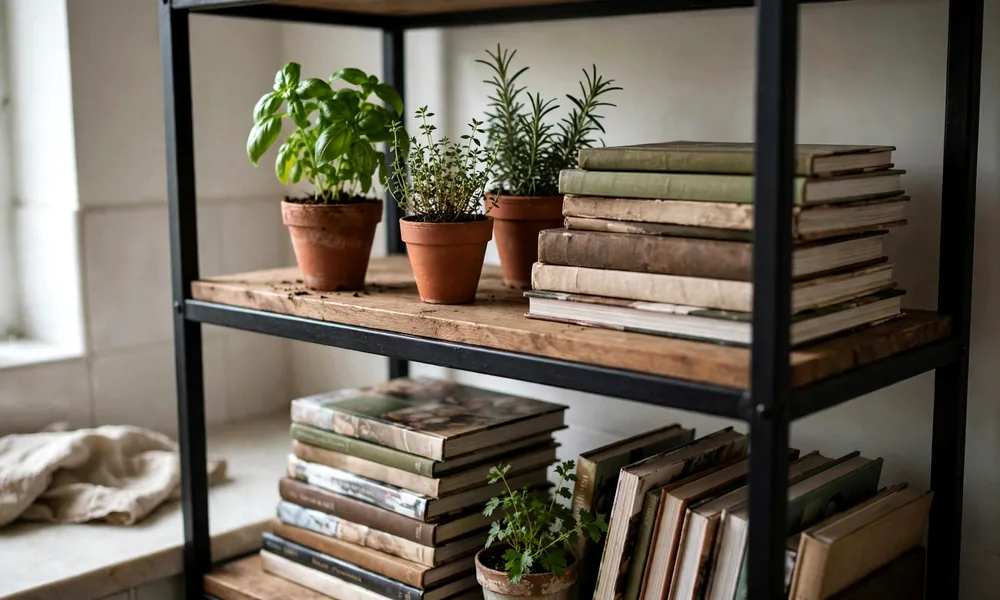
The wood and metal frame etagere is the most common type, and for most homes it is the right one. Black or brass metal uprights carry solid wooden shelves: the warmth of wood where you look, the strength of metal where it matters. A good one holds 15 to 20 kilograms per shelf, enough for hardbacks or a large potted plant. Check shelf thickness: boards under 15 millimetres bow under books within a year, while 18 to 20 millimetre boards stay flat. Shelves bolted through the uprights stay rigid; shelves resting on small pins can work loose. This type suits living rooms, studies and bedrooms, and it is the easiest to style.
Solid Wood Etageres
A solid wood etagere costs more and weighs far more, but it is the one to buy if the shelves will hold heavy books for years. Oak, walnut and mango wood all work well, and a well-made one lasts decades rather than seasons. The trade-off is weight: a solid oak etagere can weigh 25 kilograms empty, so place it once and leave it there, on a level floor. Solid wood also suits period homes better than metal frames. Check that shelves are properly joined to the uprights rather than glued and pinned, and avoid thin foil-wrapped board dressed up as wood, which chips along the front edge within a year or two.
Ladder Etageres
A ladder etagere is the best choice for a small room, because it looks lighter than a straight unit of the same height. The bottom shelf is the deepest, often 35 to 40 centimetres, and each shelf above is a little shallower, so the whole piece steps back from the room. That shape suits plants best: a trailing plant on top falls freely, leafy plants in the middle get light, heavy pots sit low where they are easy to water. The trade-off is capacity: the top shelves hold a small pot and a book or two, not a row of hardbacks, so buy a ladder etagere for display and plants rather than for a library. Most stand on their own feet, but check before you buy, because a few designs need the wall for stability.
Bamboo, Rattan and Narrow Tower Etageres
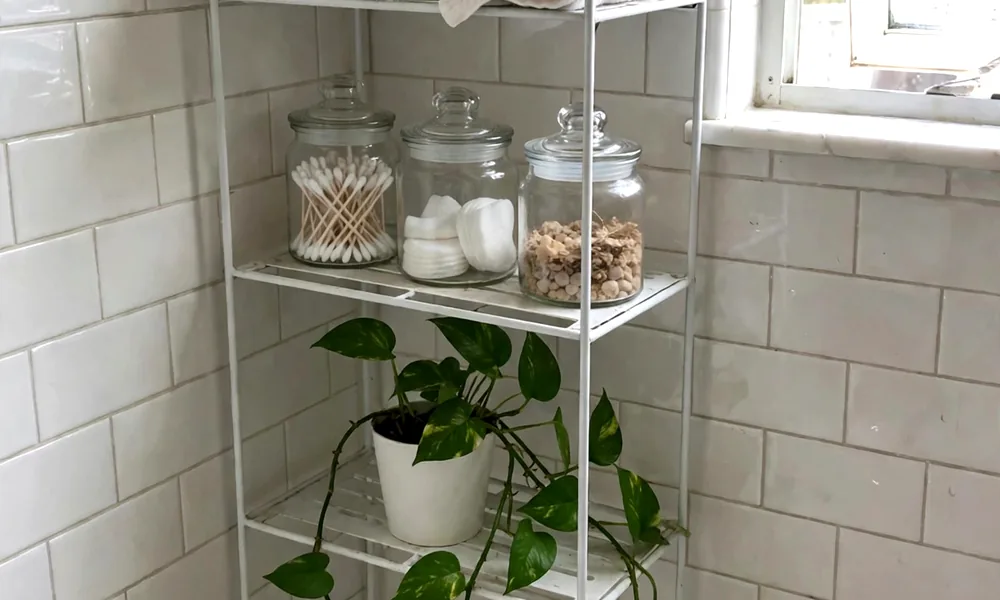
Bamboo and rattan etageres suit bathrooms, kitchens and bright rooms where a heavy wooden unit would look out of place. They are light, warm, and naturally resistant to bathroom damp, though no etagere likes standing in a puddle. Weight limits are lower, usually 5 to 8 kilograms per shelf, so they suit folded towels, jars and small plants rather than books. Narrow tower etageres, 30 to 45 centimetres wide, suit hallways and the gap beside a desk. They hold a surprising amount, but they must be loaded bottom-heavy, or the tower can tip when someone brushes past it. Some come with a wall strap, worth using if children or pets live in the house.
Getting the Size Right
Size is the decision most people get wrong, and it is the hardest to fix afterwards, because an etagere that is too tall or too wide dominates the room it was meant to finish. Measure the clear stretch of wall, then aim for a unit that fills about two-thirds of it, with 30 centimetres clear on one side. On a three-metre wall, 80 to 90 centimetres wide looks right, while 60 looks lost.
Then measure what will live on it. The gap between tiers decides what fits: 30 to 35 centimetres suits paperbacks and small plants, 40 or more suits hardbacks and tall vases. Measure your tallest book, add five centimetres of air, and buy a unit with at least one tier that tall. A 180-centimetre etagere suits ceilings above 240 centimetres; in a low room it looms, so a 150-centimetre unit looks better. Depth is the dimension to cut first in a tight room: 30 centimetres deep holds books and plants well, while 45 eats the walkway. Leave 60 centimetres of clear floor in front.
Materials, Weight and Build Quality
An etagere is a piece you will load and rearrange for years, so build quality matters more than the price tag suggests. The frame decides how much it holds and how long it stays square. Welded metal frames stay rigid; bolted frames can work loose and need tightening every year or two. Wooden uprights should be at least 30 millimetres square, because thinner legs flex when the shelves are full. Check the fixings: shelves in grooves or bolted through the uprights stay put, while shelves resting on small pins can slip.
Weight ratings deserve a careful read: the rating per shelf and the rating for the whole unit are very different. A unit rated at 60 kilograms total with four shelves holds 15 per shelf, paperbacks but not hardbacks. Books are the heaviest thing most homes put on a shelf: a metre of paperbacks weighs about 20 kilograms. Plants are lighter but wetter, so put a tray under each pot. Put the heaviest things on the lowest shelf.
Styling an Etagere So It Looks Like Furniture
The difference between an etagere that looks like furniture and one that looks like a storage rack is spacing. Leave a third of every shelf empty, and the full part looks intentional. Group things in odd numbers: three books, one vase, one plant. Repeat one colour across the shelves, such as the green of a plant echoed by a green vase two shelves down, and vary the heights: a tall vase beside a low stack of books.
Mix uses across the tiers rather than giving each shelf a single job. Books on the bottom two shelves, plants and display on the top two, reads as furniture; five shelves of identical storage boxes reads as a warehouse. Keep the heaviest pieces low and the lightest high, and put fragile things behind the front edge rather than perched on it. Rotate the display every few months, and dust every fortnight, because dust shows on open shelves far sooner than inside a cupboard.

Checklist: Before You Buy an Etagere Shelf
- Measure the wall, the tallest book and the deepest pot, and buy to those numbers.
- Check the weight rating per shelf, and make sure one tier fits your tallest book.
- Choose the frame for the room: metal and wood for most homes, solid wood for heavy books.
- Check the shelf fixings: bolted or grooved shelves stay rigid.
- Load bottom-heavy, with books and heavy pots low and light display high.
- Leave a third of every shelf empty, and put a tray under every plant pot.
Frequently Asked Questions
Do etagere shelves need to be fixed to the wall?
Most do not: four feet and a wide base keep them stable on a level floor. Narrow towers and very tall units above 180 centimetres are the exception: use the wall strap if one is supplied.
How much weight can an etagere shelf hold?
A good metal and wood etagere holds 15 to 20 kilograms per shelf, solid wood holds 20 to 25, bamboo holds 5 to 8. Check whether the quoted rating is per shelf or for the whole unit: a metre of paperbacks weighs about 20 kilograms.
What is the difference between an etagere and a bookcase?
A bookcase has a back panel and often doors, built to store books out of sight. An etagere has open sides and no back, so it displays what it holds. A bookcase holds more books per square metre; an etagere looks better doing it.
Can I use an etagere in a bathroom?
Yes, and it is one of the best uses for one, because bathrooms rarely have spare wall space. Choose bamboo, rattan or powder-coated metal rather than untreated wood, keep it away from splashes, and put towels low and jars and plants above.
How do I stop an etagere looking cluttered?
Leave a third of every shelf empty, group objects in threes, and repeat one colour across the tiers. Store the overflow elsewhere: an etagere works best as a display for the things you like most.
Are ladder etageres stable without leaning on the wall?
Most are, because they stand on four feet like any other etagere, and the stepped shape keeps the centre of gravity low. Check the listing first, because a few ladder designs are made to lean, and those need the wall.
Bottom Line
Buy the etagere for what you actually own, not for the showroom photo. Measure the wall and the tallest book, check the weight rating per shelf, and choose a frame that suits the room. A good etagere earns its floor space every day: books within reach, plants in the light, a bare wall turned into the best-looking part of the room.