
Fishing lures that catch more in 2026 are not the flashiest ones in the shop. They are the ones that match the water, the season and the fish in front of you, and they are fished slowly enough, and in the right place, to look like food rather than decoration. Most anglers own far more lures than they need, yet catch most of their fish on three or four old favourites. That gap is the whole story of this guide: buy less, choose better, and fish each lure the way it was designed to be fished.
A lure is an artificial bait. It has no scent, no taste and no life, so everything it does depends on shape, colour, movement and depth. A rod casts it and a reel retrieves it, but neither of those catches the fish. The lure does that, and that is why lures deserve their own guide, separate from rods and reels. Our guide to the best fishing rods for beginners and weekend anglers in 2026 covers the casting side of the sport, and the best fishing reels 2026 covers the retrieve. This guide covers the business end: the small piece of plastic, metal or rubber that a fish actually decides to bite.
Key Takeaways
- Match the lure to the water: clear water calls for natural colours, murky water for bright colours and vibration.
- Three lure types cover most fishing: a spinnerbait for searching, a crankbait for depth, a soft plastic for slow work.
- Fish the lure slowly. Most beginners retrieve far too fast.
- Size matters more than colour: match the lure to the bait fish in the water.
- Keep lures organised and dry, because rusted hooks and tangled trebles waste fishing time.
How Lures Actually Catch Fish
A fish decides to strike in about a second, and it decides on very little information. It sees a shape moving, senses vibration through its lateral line, and judges whether the thing in front of it is food, a threat, or nothing worth chasing. A good lure gives it the right signals in the right order: a flash of flank, a wobble that says wounded bait fish, a pause that says easy meal.
That is why presentation beats pattern. The same crankbait that catches nothing on a fast, straight retrieve will catch fish after fish when it is cranked down, paused, and twitched so it hangs for a moment before moving again. The pause is often the trigger. A bait fish that stops and hangs is a bait fish that is hurt, and predators are built to take advantage of exactly that moment.
Colour: What Really Matters
Colour matters, but not in the way tackle shops suggest. In clear water, fish see colour well, and natural patterns that copy roach, perch or bleak are the safest choice. Silver, white and pale green do most of the work, with a little orange or red near the throat. In stained or murky water, colour matters less than contrast and vibration, because the fish finds the lure by feel as much as by sight. Bright chartreuse, firetiger and black-and-orange show up better in low visibility.
Size and Weight: The Quiet Decision
Size is the choice most anglers get wrong. A lure much bigger than the bait fish in the water looks unnatural, and a lure much smaller gets ignored because it is not worth the energy of a chase. Watch the water before you cast. If small fry are flicking at the surface, tie on a small lure. If you see good-sized roach or perch, step up.
The Lure Types That Earn Their Place
There are hundreds of lure designs, but only a handful earn a permanent place in a working tackle box. The rest are variations on the same ideas, and most of them exist to be sold rather than to be fished. Start with the types below, learn them properly, and add new ones only when a specific water or species demands it.
Spinnerbaits: The Search Tool
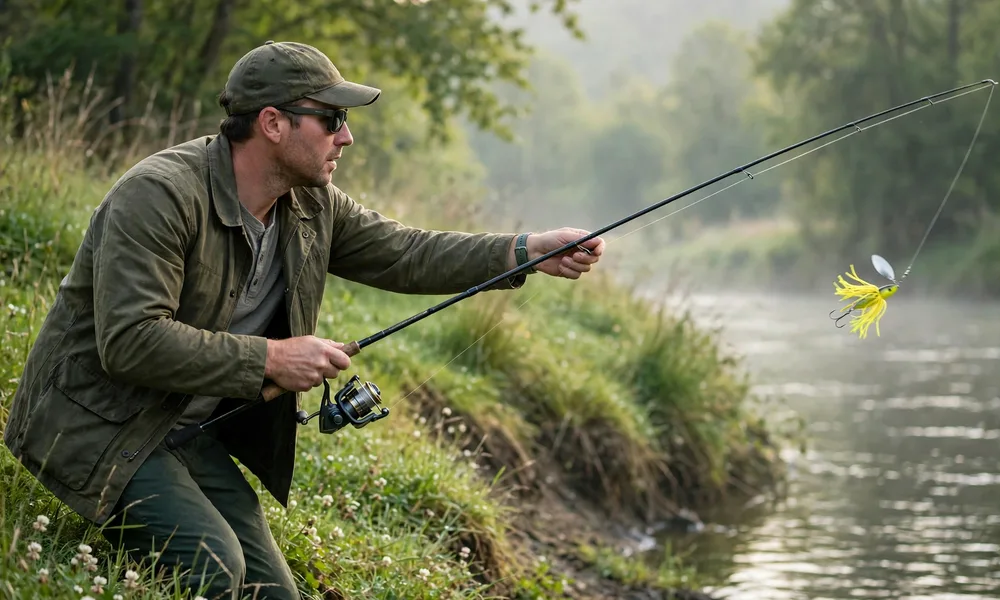
A spinnerbait is a wire arm with one or two spinning blades above a weighted head and a skirt. The blades flash and thump as the lure moves, and the skirt pulses behind it like a small bait fish. It is the best lure for finding fish on a new water, because you can cast it out, retrieve it steadily, and cover a lot of water quickly. It also fishes well through weed and around snags, because the wire arm and the single upward hook deflect cover rather than catching it.
Crankbaits: Depth on Demand
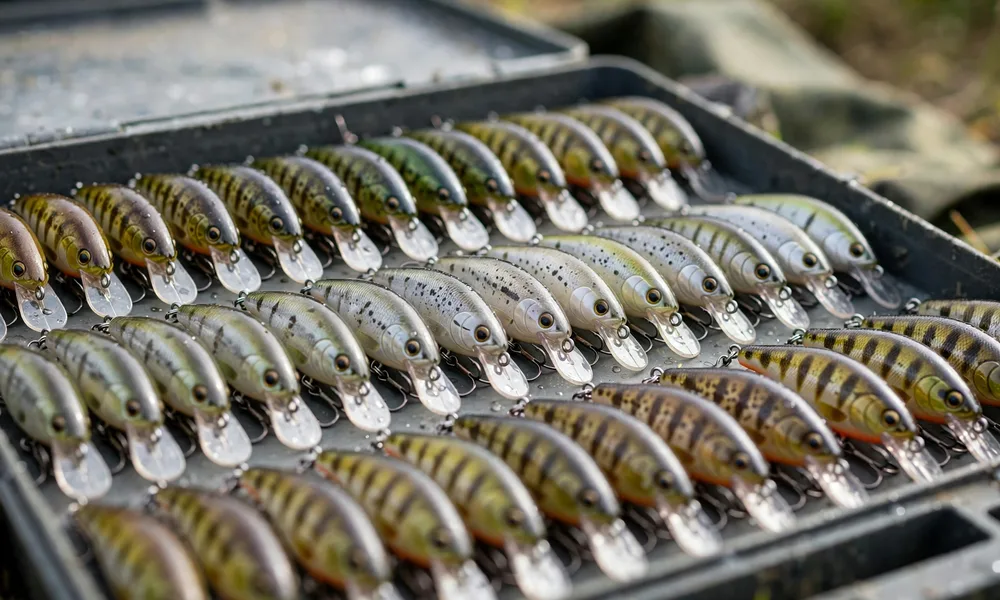
A crankbait is a hard-bodied lure with a plastic lip that pulls it down as you retrieve. The size of the lip decides the depth: a small lip runs shallow, a big lip runs deep. Crankbaits are the best way to fish a precise depth, because you can count the lure down, crank it to its running depth, and hold it there along a weed edge, a drop-off or a submerged bank. Their tight wobble copies a swimming bait fish, and many models carry rattles that call fish in from a distance. Let the lure hit things: bounce it off rocks and tick it through weed tops, because a lure that suddenly changes direction after a knock is exactly what triggers a following fish to strike.
Soft Plastics: Slow and Precise
Soft plastic lures are the quietest tool in the box, and often the most effective. A soft plastic worm, shad or creature bait has no rattle, no blade and no hard body, so it can be fished slowly and precisely where other lures are too loud or too fast. Rigged on a jig head, it can be hopped along the bottom, swum through weed, or dropped beside a snag. Rigged weightless, it flutters down slowly and tempts fish that have refused everything else. Choose natural greens, browns and smoky shad patterns for clear water, and bright chartreuse, pink or white for murky water.
Spoons and Jigs: The Old Reliables
A spoon is a curved piece of metal that wobbles and flashes as it sinks and rises. It is one of the oldest lure designs and still one of the best, especially for perch, trout and pike. Its weight lets it cast a long way, which matters on big water and windy banks. Fish a spoon with a lift-and-drop retrieve: raise the rod, let the spoon flutter down, and repeat. The flash on the fall is what draws the strike. A jig is a weighted head with a hook and a soft body, and it is the most versatile lure of all, fished on the bottom, through mid-water, or vertically from a boat.
Fishing Lures 2026 at a Glance
| Lure type | Best for | Typical water | Retrieve | Standout strength |
|---|---|---|---|---|
| Spinnerbait | Searching new water | Weedy lakes, rivers | Steady, with pauses | Flash and vibration find fish fast |
| Crankbait | Fishing a set depth | Lakes, drop-offs, weed edges | Crank, pause, twitch | Precise depth and strong wobble |
| Soft plastic | Slow, precise fishing | Clear lakes, snags, margins | Lift and fall | Natural fall, bites on the drop |
| Spoon | Long casts, perch and trout | Big lakes, reservoirs | Lift and drop | Distance, flash, simplicity |
| Jig | Bottom fishing, all species | Lakes, rivers, boats | Hop along the bottom | Versatility and low cost |
| Topwater | Summer surface strikes | Calm lakes, dawn and dusk | Walk the dog, pause | Spectacular visible takes |
How to Choose Lures for Your Water
Fish the water you actually have. A small weedy pond calls for weedless soft plastics and spinnerbaits. A deep reservoir calls for deep-diving crankbaits and heavy spoons. A river calls for lures that hold their action in current, which usually means spinnerbaits and jigs rather than light crankbaits that get washed out of shape. The water decides, and the angler who argues with it catches less.
Building a Small Box That Catches Fish
You do not need a hundred lures. You need about fifteen, in five types, in three colours, and you need to know how each one behaves. A good starter box holds three spinnerbaits, three crankbaits in shallow, medium and deep models, a handful of jig heads with soft plastic bodies, a couple of spoons, and one topwater lure for summer evenings. That is a box that fits in a jacket pocket and catches fish on almost any water. The best fishing tackle boxes 2026 guide covers storage in detail, and it is worth reading, because a lure is only useful if you can find it.
Mistakes That Cost Fish
The most common mistake is retrieving too fast. A lure moving at full speed looks like something fleeing, and a predator has to decide in a split second whether the chase is worth it. Most of the time it is not. Slow down, add pauses, and let the lure hang. The second mistake is changing lures too often: give a lure twenty minutes in a good spot before you decide it does not work. The third mistake is fishing the same depth all day. If nothing is happening, change depth before you change lure. The fourth mistake is a leader that is too heavy or too visible, which can kill the action of a small lure in clear water.

Lure Care and Hook Safety Checklist
- Rinse every lure after fishing and dry it before it goes back in the box.
- Check treble hooks each trip; replace any that are rusted, bent or blunt.
- Store each lure in its own compartment so hooks do not tangle.
- Carry small pliers for unhooking and a hook file for quick sharpening.
- Keep spare split rings and hooks in the box for bankside repairs.
- Handle fish with wet hands.
Frequently Asked Questions
What is the best fishing lure for a beginner?
A spinnerbait is the best first lure, because it is easy to fish, covers water quickly, and catches most species. Add a couple of soft plastics on jig heads for slow fishing.
Do expensive lures catch more fish than cheap ones?
Sometimes, but not often enough to matter. A well-made lure runs true, holds its depth and has sharp hooks, and those qualities are worth paying for. Beyond that, the angler matters more than the price tag.
What colour lure should I use in murky water?
Bright colours and strong vibration. Chartreuse, firetiger and black-and-orange show up best in low visibility, and a lure with rattles or a spinning blade helps fish find it by feel as well as by sight.
How do I stop my lures from tangling in the box?
Give each lure its own compartment and do not overfill the box. A box that is about eighty per cent full stays organised.
Are artificial lures better than live bait?
They are different tools. Lures let you cover water, fish precisely and release fish unharmed, and they are allowed on waters where live bait is banned.
How long does a fishing lure last?
A hard lure can last for years if it is rinsed, dried and stored properly. Soft plastics wear out faster and should be replaced when they tear. Hooks are the weak point: check them every trip.
The Bottom Line
The fishing lures that catch more in 2026 are the ones you know well, fished slowly, in the right place, at the right depth. Buy a small box of proven types and spend your time on the water rather than in the tackle shop. The fish do not care how many lures you own. They care whether the one in front of them looks like food.


