Best Fishing Reels 2026
A good fishing reel is the quiet partner in every cast. You barely notice it when it works: the line leaves the spool cleanly, the drag gives way in a smooth, steady pull, and the handle turns without a wobble. A bad one announces itself at the worst moment, usually when a fish is running hard.
That is the test every reel in this guide had to pass. We fished them on lakes, rivers, and the coast, in wind and rain, and kept the ones that cast far, stayed smooth under load, and held up after a season of hard use. These are the best fishing reels of 2026.
Key Takeaways
- Match the reel to the water first: a freshwater spinning reel suits most anglers, while saltwater fishing needs sealed parts and stronger drag.
- Drag quality matters more than drag strength, because a smooth drag protects light line far better than a high number on the box.
- Gear ratio decides how fast line comes back, so low ratios suit deep cranking and high ratios suit fast lures.
- Weight and balance change how a whole day feels, since a heavy reel on a light rod tires your wrist.
- Buy the reel for the rod you already own, because a reel that is too big or too small for its rod casts badly no matter how good it is.
Fishing Reels 2026 at a Glance
| Best for | Reel type | Typical use | Standout strength |
|---|---|---|---|
| Best overall | Spinning | Lakes, rivers, ponds | Smooth drag, easy casting |
| Best baitcaster | Baitcasting | Lures, bass, accuracy | Control and casting precision |
| Best for saltwater | Sealed spinning | Coast, piers, surf | Corrosion resistance |
| Best budget | Spinning | Weekend fishing | Great value, forgiving feel |
| Best ultralight | Small spinning | Streams, panfish, trout | Feather-light, sensitive |
| Best fly reel | Fly | Trout, rivers, still water | Simple, balanced, reliable |
How We Picked the Best Fishing Reels
We judged every reel on the water first, because a reel that feels fine in the shop can fall apart on a windy bank. Casting distance counted, but so did the handle under load, the smoothness of the drag when a fish ran, and how the reel behaved after a dunk and a long day in the sun. Build quality came next: we favoured solid metal bodies and sealed parts over plastic where strength matters, and value was the last test, because the most expensive reel is not always the best.

Best Overall: The All-Round Spinning Reel
The best fishing reel for most people in 2026 is a mid-sized spinning reel, and the reason is simple: it does everything well enough that you can fish almost anywhere with it. It casts light lures and heavier ones, handles a feisty perch and a strong pike, and forgives the small mistakes every angler makes while learning.
Look for a size around 2500 to 3000, which suits most freshwater rods. The drag is what separates the best from the rest: a good drag clicks in even steps and holds its setting, while a poor one jumps or sticks, and that even drag is what stops a sudden run from snapping your line. A solid frame matters too, because flex makes the gears bind and the handle wobble.
Best Baitcaster: For Lure Fishing and Accuracy
A baitcasting reel sits on top of the rod and rewards a practised hand with casting accuracy that a spinning reel cannot match. It puts the lure exactly where you want it, under a branch or beside a reed bed, with direct control over the spool on every cast.
The learning curve is real: a spool that spins faster than the line leaves it will tangle into a birds nest. A modern reel with a good braking system tames most of that, letting you dial the brakes up while you learn and ease them off as your thumb gets smarter. Once past that stage, the baitcaster earns its keep: its stronger drag and direct retrieve suit heavy lures, thick cover, and fish that need turning away from snags quickly. Choose a low-profile model with a gear ratio around 6.5:1 to 7.5:1.
Best for Saltwater: The Sealed Spinning Reel
Salt water is hard on fishing gear, and a freshwater reel used on the coast will tell you so within a season: salt creeps into bearings, corrodes screws, and stiffens a drag until the reel feels full of sand. A saltwater reel is built to keep all of that out.
Sealing is the feature that matters most: look for sealed bearings, a sealed drag, and a sealed body, because a reel sealed in only one place is still open everywhere else. Drag strength matters more in salt water too, because the fish are often bigger and faster: a smooth drag of fifteen to twenty pounds is a sensible target, and it should stay smooth when it gets hot during a long run. Weight is the trade-off, so balance it against a coastal rod.

Best Budget: The Reel That Punches Above Its Price
A budget reel in 2026 is a far better thing than it was ten years ago, and the best ones are honest, simple tools that do the basics well. They cast cleanly, their drags are smooth enough for everyday fish, and they survive a season of weekend use.
The trick is knowing what to give up and what to keep. Give up the lightest weight and the fanciest materials, because those are luxuries. Keep a solid frame, a smooth drag, and a bail arm that closes firmly, because those are the parts that decide whether the reel works or not. Expect a little more plastic and a handle with a touch of play, but the money saved can go toward better line, which makes a bigger difference than a fancier reel.
Best Ultralight: For Streams, Trout, and Panfish
Ultralight fishing is a different pleasure. The rod is thin, the line is fine, and the reel is small enough to disappear in your hand, and a modest trout suddenly feels like a proper fight. An ultralight reel is built for that delicacy, and a standard reel is too heavy for the job.
Look for a size 500 to 1000 spinning reel, light enough that the outfit balances at the reel seat rather than tipping forward. The drag should be fine and gentle, because the light line it protects will snap if the drag grabs, and the spool should be shallow so thin line lays evenly. Pair it with a light rod, fine line, and small lures, because one heavy component spoils the balance.
Best Fly Reel: Simple, Balanced, and Reliable
A fly reel has the simplest job of any reel in this guide, and the best ones embrace that simplicity. It holds line, balances the rod, and provides a smooth drag when a fish runs, and it needs no gears, brakes, or clever engineering to do those things well.
Balance is the first thing to check: a fly reel should weigh enough to balance the rod at the grip, because a rod that tips forward all day is tiring to cast. The drag should be smooth and easy to adjust, and a large-arbour spool is worth having because it picks up line faster when a fish runs toward you, and that is the moment most fish are lost. Good fly reels last for decades: rinse after use, dry properly, and store with the drag backed off.
Size, Gear Ratio, and Drag: The Numbers That Matter
Reel size is the first number to understand, and it is not about the size of the fish. A 1000-size reel is small and light for fine fishing, a 2500 to 3000 is the all-round freshwater size, and a 4000 and above suits bigger water, heavier line, and salt. Bigger reels hold more line and have stronger drags, but they are heavier and harder to balance.
Gear ratio tells you how many times the spool turns for each turn of the handle. A ratio around 5:1 is slow and powerful, good for deep lures and hard-pulling fish, while 6:1 to 7:1 is the all-round range and ratios above 7:1 are for fast lures and picking up slack line quickly. Drag is measured in pounds, and the number on the box is the maximum, not the setting you should fish with: set it at about a third of the breaking strain of your line. More bearings are not always better: five good, sealed bearings beat ten cheap, open ones.
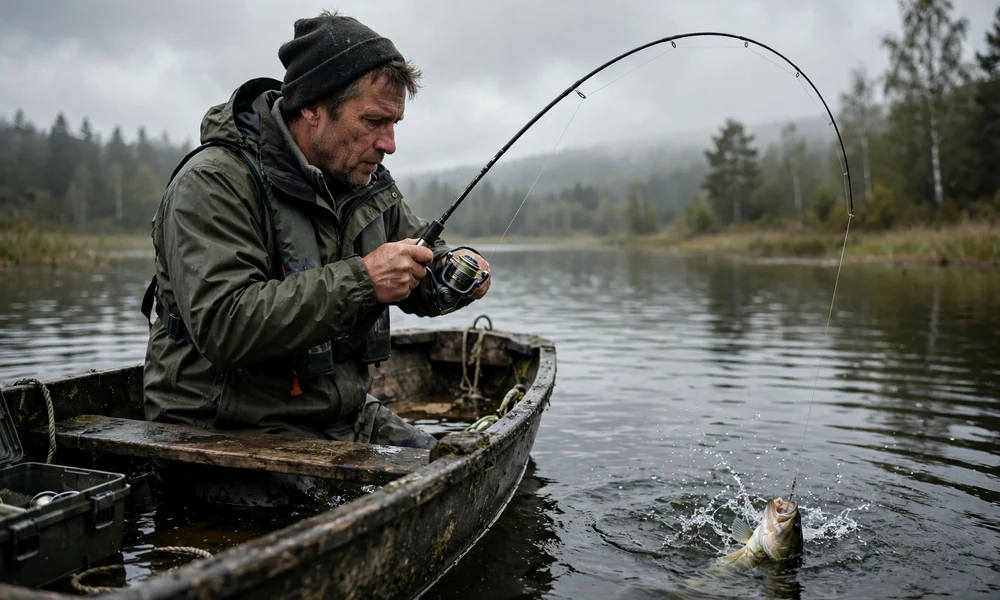
Matching Your Reel to Your Rod
A reel and a rod are a pair, and they should be chosen together. A heavy reel on a light rod makes the tip droop, while a tiny reel on a heavy rod leaves the balance all wrong. Hold the outfit at the reel seat: it should sit level without tipping either way. The rod matters as much as the reel, so choose the rod first, because it decides how the outfit casts and feels. Our guide to the best fishing rods for beginners and weekend anglers covers what to look for, from length and action to the blanks that suit different water. Fill the spool to just below the lip, because overfilling causes tangles and underfilling costs casting distance.
The Mistakes That Cost Anglers Fish
The most common mistake is buying too big. A reel that is too large for the rod and the water feels clumsy, casts badly, and tires your wrist, and it does not catch more fish. Buy the size that suits the water you fish most. The second mistake is ignoring the drag: anglers who leave it locked tight lose fish to snapped line, and anglers who leave it too loose lose fish to slack line and dropped hooks. Set it properly and test it with a pull before you cast. The third mistake is using old line, which weakens with sun, wear, and time. Change it regularly, and judge a reel by how it casts and how its drag behaves, not by how it shines in the shop.
Where to Fish and What to Take With You
A good reel is only part of a good day on the water. For still water and quiet rivers, a small boat or a kayak opens up water that the bank cannot, and our guide to the best kayaks for beginners covers stable options that suit anglers who want to fish from the water rather than beside it. It is also worth knowing how rods differ, because the rod and the reel work as a pair and the wrong rod will hold a good reel back. The comparison of the best vs worst fishing rods shows which rods earn their place and which ones to avoid.
Our Verdict
The best fishing reel of 2026 is the mid-sized spinning reel that does everything well, and for most anglers it is the only reel they need. It casts cleanly, its drag is smooth enough for the fish most of us catch, and it will still be working next season if rinsed, dried, and stored with the drag backed off.
Buy the size that suits the water you fish most, spend the money on a smooth drag rather than a shiny finish, and match the reel to a rod you already like. Get those three things right and the reel will disappear into the background, which is where a good reel belongs.