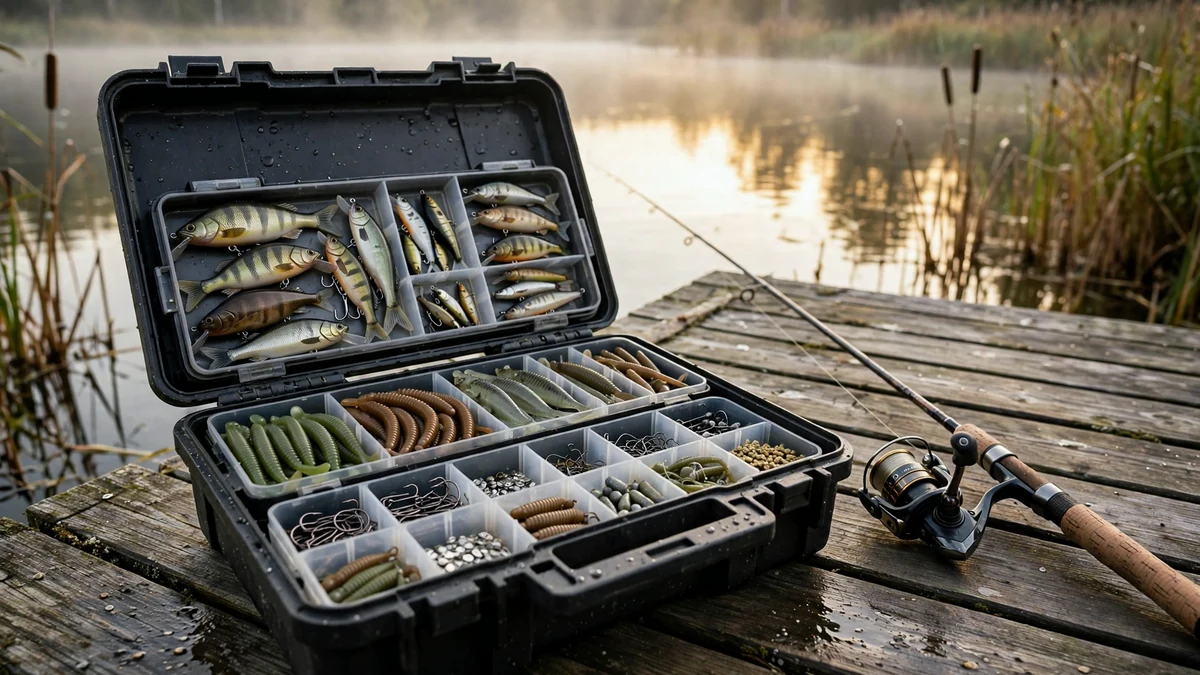
A fishing tackle box is not a storage box that happens to hold fishing gear. It is the part of your kit that decides whether a good day on the water stays good. When a fish is feeding and you need a different lure, you do not want to be digging through a tangled pile of hooks, weights and soft plastics in the bottom of a bag. You want to open a lid, take out exactly what you need, and be casting again in seconds. The best fishing tackle boxes of 2026 do that without fuss, and the worst ones turn a relaxing morning into a knot of rusted hooks and cracked plastic.

What Makes a Tackle Box Different
A general storage box is designed to sit on a shelf and keep things tidy. A tackle box assumes the opposite. It assumes it will be carried over wet grass, dropped on a boat deck, left in the rain, knocked against rocks and opened with wet, cold hands. The latches therefore matter more than the looks. A latch that pops open when the box tips over is not a minor fault. It is a disaster, because a hundred small hooks and split rings scattered across a riverbank are never all found again. The best fishing tackle boxes close with a firm, positive click and stay closed when they fall.
The third difference is how the box is actually used on the bank. A tackle box is not opened once and put away. It is opened and closed dozens of times in a session, often with one hand while the other holds a rod. The lid should stay open on its own without flopping shut, the trays should slide out smoothly, and the compartments should be big enough for the lures you actually own. A tray with dividers so small that your favourite crankbait does not fit is a tray you will stop using, however clever it looks in the shop.
The Main Types of Tackle Box
The classic hard tackle box is still the best choice for many anglers. It is a rigid box with a hinged lid, usually with two or three cantilever trays that fold out when the lid opens. Everything is visible at a glance, the box doubles as a small seat on the bank, and it shrugs off knocks that would tear a soft bag. The trade-off is bulk and weight. A large hard box is heavy when it is full, and it takes up real space in a car boot or a small boat. For the angler who fishes from one spot and drives there, that rarely matters. For the angler who walks a mile along a river, it matters a lot.
Tackle backpacks are the newest mainstream option, and they suit the angler who wants to carry everything and walk. A good backpack holds three or four trays in a front compartment, with rod holders, pliers pockets and a water bottle holder on the outside. It keeps your hands free on rough ground and spreads the weight across both shoulders. The weakness is access. Reaching a tray in a backpack takes longer than flipping open a hard box on the bank, so backpacks suit anglers who move between spots and then stop, rather than anglers who change lures every five minutes.
How to Choose: What Matters Most
Start with size, and be honest about how much gear you really carry. A box that is too small forces you to leave lures behind or cram them in until hooks tangle. A box that is too big becomes a burden you resent carrying, and it encourages you to carry gear you never use. Count your trays, not your dreams. Lay out the lures, hooks, weights and tools you actually take on a normal trip, and choose a box that holds that kit with a little room to spare. A box that is about eighty per cent full is a box that works. A box stuffed to the lid is a box that spills.
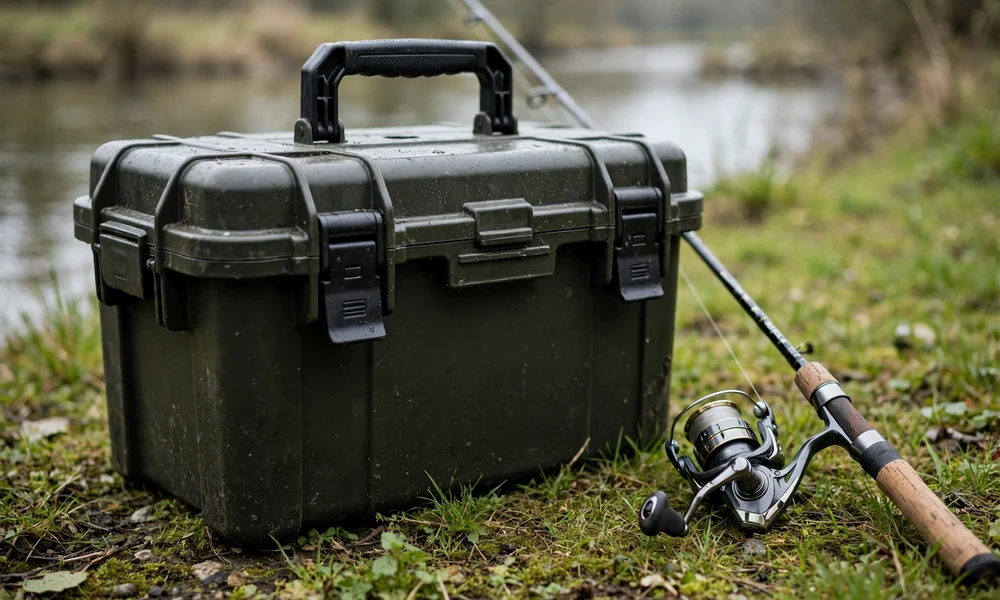
Next, look at the latches and the seal. Open and close the box several times before you buy it. The latches should click shut with a clear, firm action and need a deliberate push to open. The lid should sit flat with no gap, and if the box claims to be waterproof, look for a rubber gasket around the rim. A gasket that is thin, loose or badly fitted will not keep water out for long. If you fish in the rain or from a boat, a sealing lid is not a luxury. It is the feature that keeps your hooks from rusting into a single clump.
Finally, think about how the box fits the rest of your kit. A tackle box does not work on its own. It works with a rod, a reel, a net and a seat. If your rod is a light spinning rod for small streams, you need a small, light box to match it. If you are heading out for a full day on a big lake, you need a bigger system. Our guide to the best fishing rods for beginners and weekend anglers in 2026 covers the rod side of that match, and the same logic applies here: buy the box for the fishing you actually do, not the fishing you imagine doing one day.
The Best Tackle Boxes by Style of Fishing
For the bank angler who drives to a lake and fishes from one swim, a large hard box is hard to beat. It holds everything, it stays put on the ground, it opens into a full workstation with trays fanned out, and it can be used as a seat while you wait for a bite. The best of this style have three cantilever trays, a deep base for larger items, and a lid that stays open at a useful angle. The worst have trays that jam, latches that pop open when the box is lifted by the handle, and a base so shallow that a reel or a spool of line will not fit.
For the lure angler who changes lures constantly, a tray system with several shallow, clear trays is the best setup. You can see every lure at a glance, swap a whole tray in seconds, and keep different species or techniques in different trays. The best systems use trays with dividers that lock in place and lids that seal well enough that small hooks do not migrate between compartments. The worst use dividers that lift out of their slots, which lets a size six hook wander into the compartment next door and tangle with a crankbait. That is the kind of small failure that ruins a morning.
For the angler who fishes with children or is just starting out, a small, simple box is the right choice. It should be light, easy to open, and big enough for a handful of lures, some hooks, a few weights and a bobber or two. It does not need five trays and a waterproof seal. It needs to be simple enough that a beginner can find what they want without a lesson. A small box also teaches the most important habit in fishing: carrying only what you need and knowing where it is. A beginner with a small, tidy box will catch more fish than a beginner with a huge, chaotic one.

Keeping Your Box Organised
Organisation is a habit, not a purchase. The best box in the world will turn into a mess if everything is thrown back in at random at the end of the day. The habit that works is simple: put every lure back in the compartment it came from, wipe hooks dry before they go back in the box, and throw away rusted hooks rather than keeping them just in case. A rusted hook in a tray will stain and damage the hooks next to it, so one bad hook can spoil a whole compartment. Replacing a hook costs pennies. Replacing a tray of ruined tackle costs far more.
Check the box itself once a season. Look at the latches, the hinge and the gasket, and replace the box if any of them is failing. A latch that no longer clicks shut is a spill waiting to happen, and a gasket that has gone hard and cracked is no longer keeping water out. A tackle box is not expensive compared with the tackle inside it, and replacing it a season early is cheaper than replacing the contents after a spill or a soaking. The same care applies to the rest of your gear. A good reel deserves the same attention as a good box, and our guide to the best fishing reels of 2026 explains what to look for when the reel, not the box, is the weak link in your kit.
Frequently Asked Questions
Do I need a waterproof tackle box? It depends on where you fish. If you fish from a boat, in the rain, or wading in a river, a sealing or waterproof box is worth the extra cost, because it protects steel hooks and split rings from rust. If you fish from a dry bank in fair weather and you dry your box after every trip, a standard box is fine. Waterproof is a feature to pay for when you need it, not a feature to pay for by default.
How many trays do I need? For most anglers, three or four trays cover a full day: one for hard lures, one for soft plastics, one for terminal tackle such as hooks, weights and swivels, and one spare for the extras that always accumulate. Beginners can manage with one or two trays. Anglers who fish for several species or techniques may want more, but it is better to add a tray than to buy a bigger box. A bigger box tempts you to carry gear you never use.
Are expensive tackle boxes worth it? Up to a point, yes. The difference between a cheap box and a mid-priced box is real: better latches, a better seal, stronger plastic and trays that actually stay organised. The difference between a mid-priced box and a very expensive one is smaller, and it is mostly about brand, finish and extra features. Spend enough to get solid latches and a good seal, and spend the money you save on hooks and lures. If you want to see how the best and worst of a related category compare, our guide to the best vs worst fishing rods of 2026 shows the same logic applied to rods, where a mid-priced pick often beats both the cheapest and the most expensive.
The best fishing tackle box is the one that fits your fishing, your walk to the water and your habits. Choose a box with latches you trust, trays you can see into, a size that matches the gear you actually carry and a seal that suits the weather you fish in, and it will quietly do its job for years. Choose on price alone, or on the number of compartments printed on the packet, and you will be choosing again far sooner than you planned.