
A fondue set turns an ordinary evening into an event. There is something about a pot of melted cheese in the middle of the table that makes everyone slow down, reach for a fork, and actually talk to each other. Nobody rushes fondue, and that is the whole point. It is why a good set earns its place in the cupboard even if it only comes out a dozen times a year.
But not every fondue set is worth owning. The cheap ones scorch the cheese, wobble on the table, and leave you scrubbing burnt crust out of a pot that was never meant to be cleaned. The good ones hold a steady temperature, sit solidly on their stand, and make the whole ritual feel easy rather than fiddly. This guide walks through what actually matters when you buy one in 2026, from the material of the pot to the fuel underneath it, so you can pick a set that will still be coming out of the cupboard years from now.
What makes a good fondue set
At its simplest, a fondue set is four things: a pot, a stand, a heat source, and forks. A weak link in any of them will show up at the table. A pot that heats unevenly leaves a ring of burnt cheese around the edge while the middle stays lukewarm. A stand that flexes under a full pot is a spill waiting to happen. Forks that are too short put hands too close to the heat, and forks with loose handles are worse still.
The first thing to decide is what you will mostly melt. Cheese fondue is the classic, and it asks the most of a pot: gentle, even heat, a surface that releases food, and enough capacity for a group. Chocolate fondue is more forgiving on temperature but needs a smaller, shallower pot so the chocolate stays fluid without overheating. Broth fondue, where you cook meat and vegetables in hot stock, needs a pot that can take a proper simmer and a burner with real power. Many households end up wanting one set for cheese and chocolate, and a separate approach for broth, which is worth knowing before you buy.
Capacity is the next decision, and it is easy to get wrong. A pot of about one and a half to two litres suits four to six people for cheese fondue, because each person only needs a modest amount of melted cheese once the bread and vegetables are counted. Go smaller and you will be refilling mid-meal, which breaks the flow. Go much larger and a small group is left with a deep pool of cheese that cools and thickens before it is finished. For two people, a one-litre pot is plenty, and it heats faster too.
Ceramic pots: the classic choice for cheese
Ceramic is the traditional material for cheese fondue, and for good reason. It heats gently and evenly, it holds heat well once it is warm, and it does not react with the wine and lemon juice that go into a classic cheese mixture. A glazed ceramic pot is also easy to clean once it has soaked, because the smooth surface lets the cheese release rather than grip.
Electric sets: the easiest way to keep the temperature right
Electric fondue sets solve the single hardest part of fondue, which is holding the temperature steady. A dial replaces the flame, and most electric pots have a thermostat that keeps the cheese at serving temperature without constant attention. That makes them the best choice for anyone who wants fondue to be relaxing rather than a juggling act, and for households with children at the table, where an open flame is one risk too many.

The trade-off is the cord and the look. An electric set needs a socket within reach, and the base is bulkier than a slim burner stand, so it takes up more room on the table. The pot itself is usually stainless steel or aluminium with a non-stick coating, which heats fast and cleans easily but will not give you the same gentle heat as ceramic. Non-stick coatings also need care: metal forks can scratch them, so use the fondue forks gently and avoid scouring pads when you wash up.
Cast iron pots: slow, steady, and built to last
Cast iron is the heavyweight of fondue pots, in both senses. It heats slowly, but once it is hot it holds its temperature with a steadiness nothing else matches. That makes it excellent for cheese fondue, where a slow drift downward is far better than the spikes a thin pot produces. A cast iron pot will also survive being dropped, knocked, and scrubbed in ways ceramic never will.
Chocolate fondue sets and fountains
Chocolate fondue is a different meal from cheese fondue, and the equipment reflects that. The pot can be smaller, the heat lower, and the dippers sweeter: strawberries, marshmallows, banana, cubes of sponge, and biscuits. A small ceramic pot over a tea light is enough for two people, and it is charming in a way a large electric pot is not. For a party, a tiered chocolate fountain makes a centrepiece out of dessert, though it is a different kind of machine altogether.

Fountains look spectacular, but they come with honest drawbacks. They need a large amount of chocolate to run properly, usually far more than a small group will eat, and the chocolate must be the right consistency or it will flow unevenly. Cleaning a fountain takes real effort, with every tier and the central column needing to be taken apart and washed. A fountain is worth it for a party of ten or more, and for a birthday or celebration where the spectacle is half the point. For a quiet evening, a small pot is the better buy.
Broth fondue: the set that cooks your dinner
Broth fondue, sometimes called fondue chinoise, is a meal rather than a starter. Thin slices of meat, seafood, and vegetables are cooked in a pot of simmering stock at the table, and the broth itself becomes a soup by the end. It needs a pot that can hold a rolling simmer for an hour, which rules out most small ceramic pots and tea-light burners.
How to choose the right size
Count the people who will usually be at the table, then add a little room for guests. Two people are well served by a one-litre pot. Four to six people want one and a half to two litres. Eight or more is the point where one large pot starts to feel crowded, and two smaller pots, one at each end of the table, often work better than a single huge one. Two pots also let you serve two kinds of fondue at once, cheese at one end and chocolate at the other. Table space matters as much as capacity, so measure where the pot will sit and remember that the stand, the burner, the forks, and the bowls of dippers all need room around it.
Burners, fuel, and safety
Whatever fuel you use, a few rules keep the evening safe. Fill the burner away from the table, never while it is lit or still hot, and keep the fuel bottle well away from the flame. Make sure the burner has a proper snuffer cap so you can put the flame out cleanly, and never try to blow it out. Keep long sleeves, loose napkins, and anything flammable away from the pot, and keep children from reaching across the burner to spear their food. Electric sets remove the fuel question entirely, which is a real advantage in a home with children or pets.
Forks, plates, and the rest of the kit
Small plates and bowls matter too. Each person needs a plate for their dippers and a little space to set a fork down, and small bowls for the cubes of bread and vegetables keep the table tidy. A set that includes matching plates is convenient, but ordinary small plates do the job just as well, and a cheese board laid out beside the pot gives everyone a place to build their plate from. A long-handled spoon for stirring the cheese and a trivet to protect the table are small extras that make the meal smoother.
What to serve with your fondue
For chocolate fondue, the rules are simpler: anything that can be skewered and dipped. Strawberries, banana slices, marshmallows, cubes of sponge cake, and shortbread all work, and a little variety of texture, soft fruit against crisp biscuit, keeps the dessert interesting. Keep the pieces bite-sized, because a large piece is hard to coat evenly and tends to slide off the fork. Presentation helps more than people expect: a charcuterie board filled with meats, pickles, and bread makes a fondue evening feel generous, and serving platters keep the dippers within easy reach of every seat.
Cleaning and looking after your set
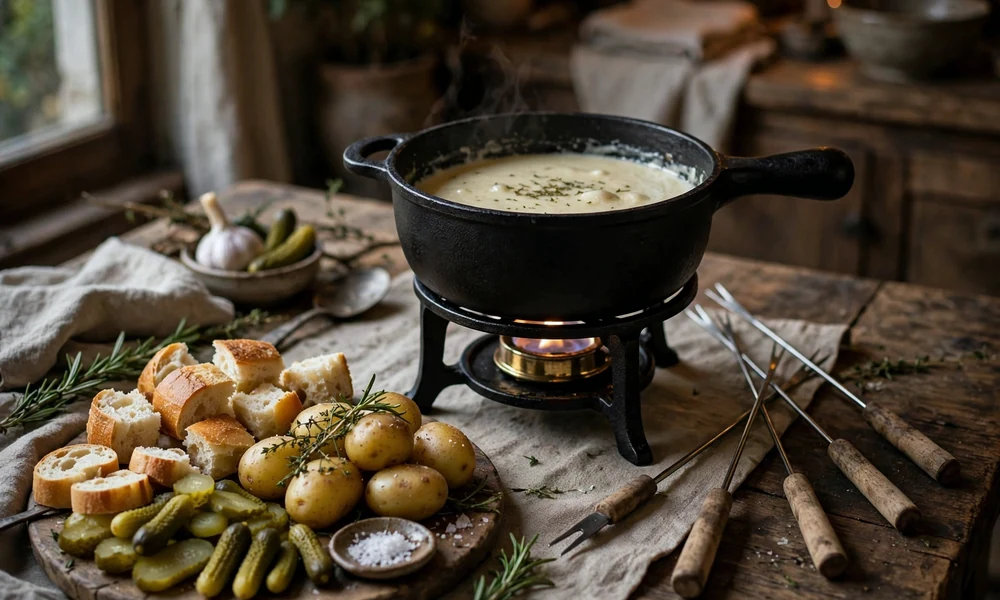
Ceramic pots should never go from a hot burner into cold water, because the shock can crack them, so let them cool a little first. Cast iron should be dried thoroughly after washing, and a light rub of oil keeps the surface in good condition. Non-stick pots should never see a scouring pad or a metal utensil. Burners should be emptied of fuel after use and stored upright. Keep the pot, stand, burner, and forks together in one place, ideally in the box the set came in, so that a fondue evening does not start with a hunt through three different cupboards. A set that is easy to find is a set that gets used.
How much should you spend
Fondue sets cover a wide range of prices, and the money is best spent on the pot and the stand rather than on decoration. A small ceramic set with a burner and six forks can be had for the price of a good dinner out, and it will serve a family well for years. An electric set costs more, but the thermostat and the safety of a flameless table justify the difference for many households. A heavy enamelled cast iron set is the most expensive of the three, and it is the one most likely to be handed on rather than replaced.
The bottom line
The best fondue set is the one that fits your table, your group, and the way you like to cook. Ceramic suits the traditionalist who loves a slow cheese fondue. Electric suits the host who wants steady heat and no open flame. Cast iron suits the cook who wants something that will last for decades. Chocolate lovers need a small pot or a fountain, and broth lovers need a strong burner and a metal pot.
Whatever you choose, keep the fundamentals in mind: a pot that heats evenly, a stand that sits solidly, a burner you can control, and forks long enough to keep hands safe. Get those right, lay out good dippers, and the set will do what it is meant to do, which is to bring people to the table and keep them there a little longer than usual.


