
Best Passport Covers 2026
A passport is the one document you cannot replace in a hurry, and it spends most of its life being stuffed into jacket pockets, bag flaps, and seat-back pouches. The corners curl, the spine cracks, and a spilled coffee at the gate can turn a perfectly valid document into a conversation with a border officer you would rather not have.
A good passport cover is a small, cheap piece of insurance. It keeps the booklet clean, dry, and flat, it makes the passport easier to find in a crowded bag, and it adds a little structure to a document that otherwise flops around. These are the best passport covers of 2026, chosen for fit, material, durability, and how they behave on real trips rather than in a product photograph.
Key Takeaways
- Buy the cover for your passport’s exact size, because a cover that is even a few millimetres too tight will crease the booklet every time you slide it in.
- Full-grain leather ages well and survives years of travel, while coated fabric and clear plastic are lighter, cheaper, and easier to wipe clean.
- A slim sleeve suits travellers who carry only the passport, while a wallet-style cover suits those who also want cards and a boarding pass in one place.
- RFID blocking is a nice extra, not a reason to buy, since modern passports already carry their own chip protection and the cover’s job is physical.
- Skip covers with bulky clasps, stiff metal corners, or anything that stops the passport lying flat in a scanner tray.
Passport Covers 2026 at a Glance
| Best for | Cover type | Material | Standout strength |
|---|---|---|---|
| Best overall | Full-grain leather sleeve | Vegetable-tanned leather | Ages gracefully and protects for years |
| Best for light packing | Slim slip-on cover | Coated fabric | Barely adds bulk or weight |
| Best for wet weather | Clear waterproof sleeve | Flexible PVC | Keeps rain and spills off the booklet |
| Best for organisation | Wallet-style cover | Leather with card slots | Holds cards and a boarding pass too |
| Best on a budget | Plain plastic sleeve | Clear vinyl | Cheap, light, and easy to replace |
| Best for families | Colour-coded set | Mixed materials | Each passport is easy to tell apart |
What a Passport Cover Actually Does
A passport cover has one job, and it is simpler than most travel gear: protect the booklet. The cover of a passport is not especially tough. It scuffs, it absorbs moisture, and once the corners start to fray it only gets worse. A sleeve takes that wear instead, and a worn sleeve costs very little to replace while a damaged passport costs a renewal fee and weeks of waiting.
Leather Covers: The Long-Term Choice
Leather is the classic passport cover material for a reason. A full-grain leather sleeve is stiff enough to protect the booklet, soft enough to feel good in the hand, and it develops a patina over years of use instead of looking worn out. The best leather covers are cut from a single piece, with the edges burnished rather than glued, so there is nothing to peel apart after a dozen trips.
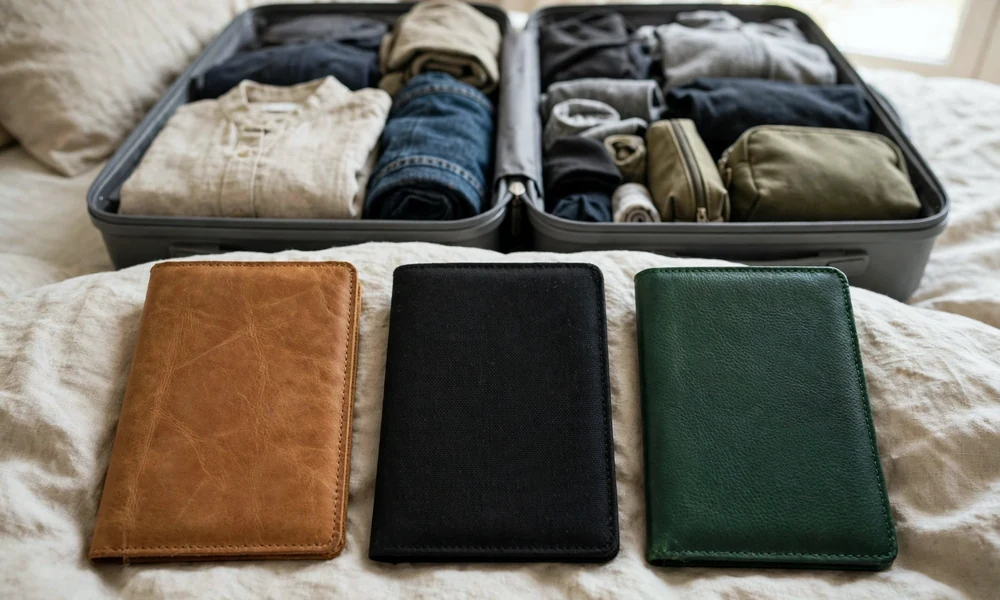
Vegetable-tanned leather is the pick of the bunch. It starts out pale and firm, darkens with handling, and picks up small marks that blend into the surface rather than standing out. Chrome-tanned leather is softer from the start and comes in brighter colours, but it shows scratches more readily and can feel slightly slippery when new. Either will last for years if the stitching is tight and the dye does not rub off on the passport itself, which is worth checking on the first use.
Leather does have weaknesses. It is heavier than fabric or plastic, it absorbs water if it is not treated, and a cheap leather cover can be stiff enough to make the passport hard to slide in and out. Look for a sleeve with a slightly generous fit and a smooth interior lining, and avoid anything with a metal clasp or a snap that presses against the booklet. A good leather cover should feel like a book jacket, not a wallet with a lock.
Fabric and Canvas Covers
Fabric covers are the lightweight alternative, and they suit travellers who count every gram. A coated canvas or waxed cotton sleeve weighs almost nothing, folds flat when empty, and can be thrown in the wash if it picks up a stain. They are also the easiest covers to find in bright colours and patterns, which matters more than it sounds when four passports live in one family bag.
Clear and Waterproof Covers
The cheapest passport covers are clear plastic sleeves, and they are better than their price suggests. A clear sleeve shows the passport underneath, which some border officers prefer, and it keeps the booklet dry in rain or at the beach. It also makes it obvious which passport is which in a family set, since the colour of each booklet shows straight through.
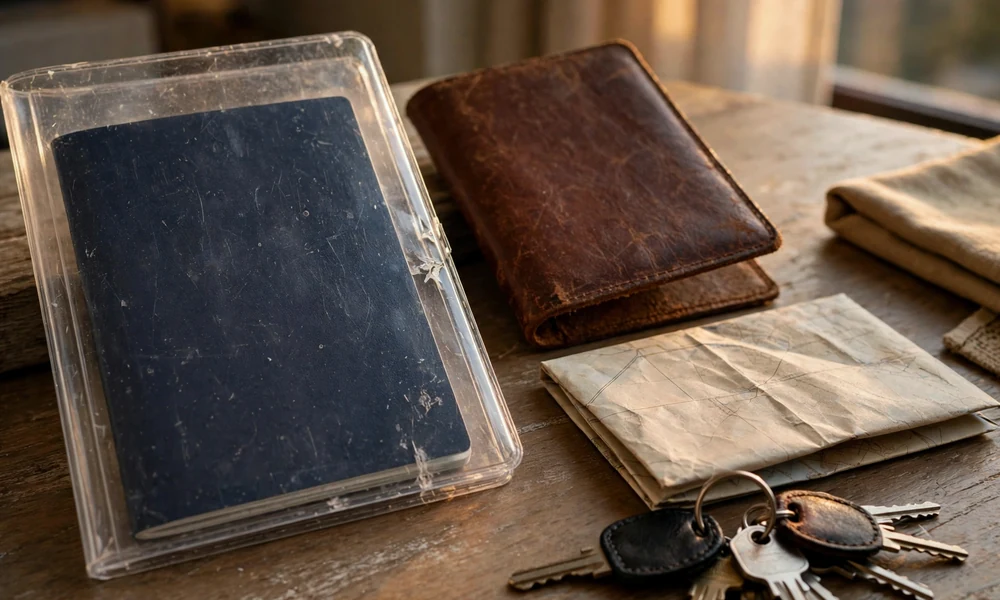
The weakness of clear plastic is durability. Thin vinyl yellows in sunlight, cracks at the fold after a year or so, and can stick to the passport cover in heat. A thicker flexible PVC sleeve lasts longer and stays clear, but it adds a slight shine that some travellers dislike. Either way, treat a plastic cover as a consumable: replace it when it clouds or stiffens, and keep a spare in the bag for a long trip.
Slim Sleeves Versus Wallet Styles
The biggest decision is not the material but the shape. A slim sleeve holds the passport and nothing else. It adds almost no bulk, it slips into a jacket pocket, and it forces you to keep your cards and boarding pass elsewhere, which some travellers prefer because it keeps the passport separate from everything else.
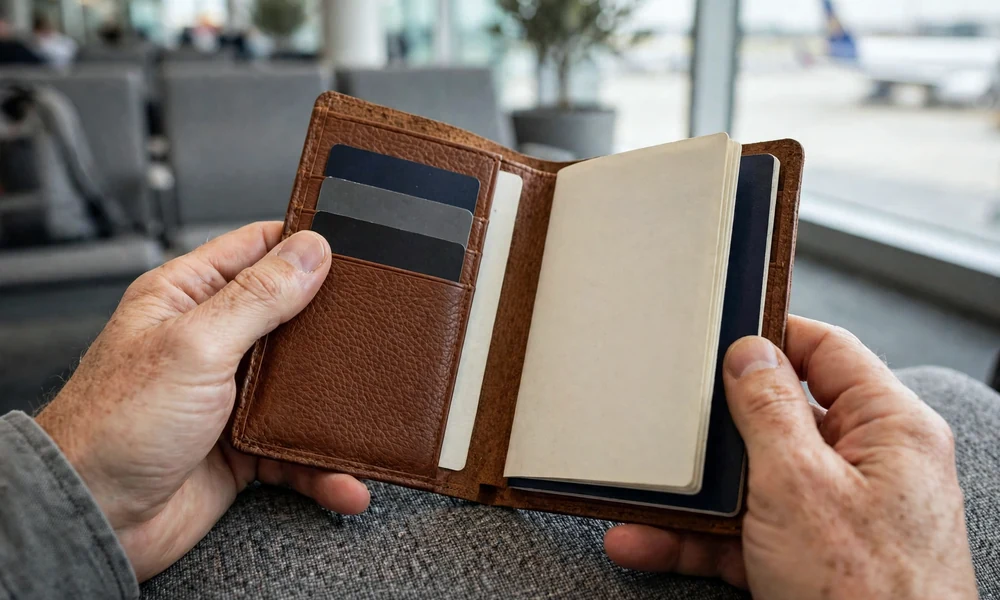
A wallet-style cover is the opposite: it turns the passport into a small travel wallet, with slots for cards, a pocket for cash, and sometimes a flap for a boarding pass. This is convenient at the airport, where one item holds everything the check-in desk and the gate need, and it means fewer things to lose track of. The cost is bulk. A loaded wallet-style cover is noticeably thicker than a slim sleeve, and it will not fit comfortably in a trouser pocket.
RFID Blocking: Useful, but Not the Point
Many passport covers are sold with RFID blocking, and it is worth understanding what that actually does. Modern passports contain a chip that stores your details, and an RFID-blocking layer stops that chip being read from a distance. It sounds important, and it is a genuine feature, but it is not the reason to choose one cover over another.
The reason is simple: a passport chip can only be read at very close range, and the data on it is encrypted. The real risks to a passport are physical, not electronic. Water, bending, torn pages, and a faded photograph cause far more trouble at borders than any theoretical wireless skim. An RFID-blocking cover does no harm, and it is a reasonable bonus if it comes free, but it should never be the deciding factor.
Getting the Fit Right
Fit is where most passport cover purchases go wrong. Passports are not all the same size, and a cover made for one country’s booklet may be a poor fit for another. A cover that is too small will crease the passport every time you force it in, and a cover that is too large will let the booklet slide around and wear at the edges.
The best check is the simplest: slide the passport in and out a few times. It should go in smoothly, sit flat without bulging at the spine, and come out with a gentle pull rather than a tug. If the cover has pockets, the passport should sit fully inside them, with no corner sticking out. And if the cover is a tight fit when new, remember that leather stretches slightly with use while plastic and fabric do not.
Colour, Pattern, and Personalisation
A passport cover is one of the few travel items where colour is genuinely useful. A bright cover is easy to spot in a bag, easy to describe if it is lost, and easy to tell apart from other passports in a family. Dark covers look smarter and age more gracefully, but they disappear into a dark bag lining, so a coloured stitching line or a small tag can help.
Personalisation, such as initials embossed on the leather, is a nice touch and a practical one, since it makes the cover unmistakably yours. It also makes the cover a better gift, which is why passport covers are a common present for a first big trip. Keep the embossing small and on the outside, though, because anything raised on the inside can press against the passport and leave a mark over time.
Looking After a Passport Cover
A passport cover needs very little maintenance, but a little care goes a long way. Leather covers benefit from an occasional wipe with a damp cloth and, once or twice a year, a thin coat of leather conditioner, which keeps the hide supple and stops the edges drying out. Avoid soaking leather or drying it next to a heater, because both will stiffen it and can cause the dye to lift.
What to Avoid
A few designs look clever in a shop and cause trouble on a trip. The first is the cover with a bulky metal clasp or a thick zip, which stops the passport lying flat and can scratch the booklet or the table. The second is the cover with a rigid plastic window for a photograph or an ID card, which adds a hard edge that presses into the passport over time.
How to Choose in Five Minutes
Start with the shape. If you want the lightest possible option, choose a slim sleeve. If you want everything in one place, choose a wallet-style cover with card slots. If you travel in wet conditions, add a clear waterproof sleeve to the bag as a backup, because it weighs nothing and can save a passport in a downpour.
Then pick the material. Leather is the best choice for frequent travellers who want a cover that lasts for years. Coated fabric is the best choice for light packers and beach holidays. Clear plastic is the best choice for a tight budget or for a trip where the passport needs to stay visible. There is no single right answer, only the material that matches how you travel.
The Verdict
The best passport cover is the one that fits your passport, suits your way of travelling, and survives the trip without getting in the way. For most travellers, that means a full-grain leather sleeve in a colour you can spot in a bag, with a smooth lining and no bulky hardware. For light packers, a slim coated-fabric cover does the same job for less weight and less money, and for wet-weather trips a clear waterproof sleeve is the cheapest insurance you will ever buy.
Our guide to the best and worst passport holders of 2026 covers the wider wallet-style holders that hold more than just a passport, while our round-up of the best luggage tags of 2026 will help you spot your bag as quickly as your passport. And if you are putting the whole kit together, our list of the best travel essentials of 2026 covers the rest of the packing list in one place.


