The Upright Vacuums That Tackle Deep Carpet Dirt in 2026
The upright vacuums that tackle deep carpet dirt in 2026 all share one thing: a wide motorised brush that digs into the pile while strong suction lifts what it loosens. Carpet hides dirt below the surface, where a quick pass with a light machine never reaches. Dust settles at the base of the fibres, pet hair wraps around them, and grit works its way down with every footstep. An upright is built for exactly that problem. Its weight presses the brush head into the carpet, its wide path covers a room quickly, and its corded motor never fades halfway through the stairs. This guide explains what separates a genuinely deep-cleaning upright from a heavy machine that only looks powerful.
Key Takeaways
- Deep carpet cleaning needs agitation plus suction: a motorised brush roll lifts embedded dirt out of the pile so the suction can carry it away.
- A wide cleaning path and a large dustbin matter more than a long feature list, because they decide how fast a whole carpeted house gets cleaned.
- Height adjustment is essential: the brush must sit at the right depth for deep pile, medium pile and low pile, or it either skims the surface or stalls.
- Sealed HEPA filtration keeps the fine dust you lift from drifting back into the room, which matters most in homes with allergies or pets.
- Uprights are heavy and awkward on stairs and hard floors, so a small handheld or a canister for the edges is the honest companion, not a rival.
What Makes an Upright Different
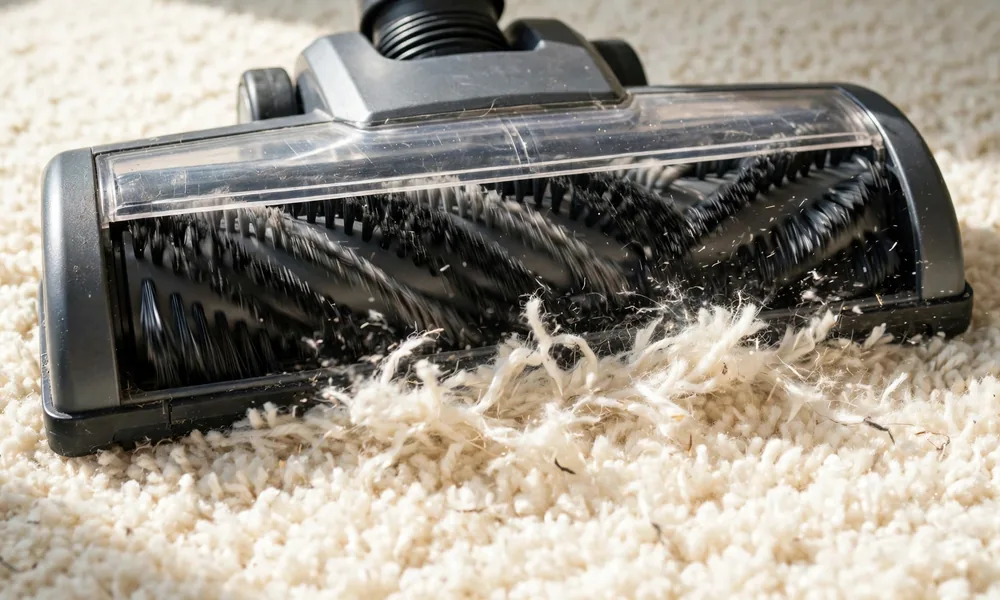
An upright vacuum is one solid machine: motor, brush head, dustbin and handle in a single body that you push across the floor. That simplicity is its strength on carpet. The whole weight of the machine bears down on the brush head, pressing the spinning bristles into the pile, while the wide head covers thirty centimetres or more in a single pass. Nothing else in the vacuum world combines that much agitation with that much coverage. A canister wand is lighter, but it cannot press a brush into deep pile with the same force, and a cordless stick runs out of battery long before a large carpeted house is finished.
The trade is weight and manoeuvrability. A good upright weighs five to eight kilograms, and carrying it upstairs is a proper effort. Its wide head cannot reach flat under low furniture, and it turns around chair legs with far less grace than a wand. Those are real costs, and they are why uprights suit homes that are mostly carpet. In that home, though, the upright is still the machine to beat.
The Best Upright Vacuums of 2026 at a Glance
| Pick | Best For | Standout Strength | Typical Price |
|---|---|---|---|
| Best overall | Carpeted family homes | Deep cleaning, large bin | $350–$600 |
| Best for deep pile | Thick, plush carpet | Adjustable brush height | $400–$700 |
| Best for pets | Pet hair, dander | Tangle-free brush, HEPA | $400–$650 |
| Best lightweight | Stairs, smaller homes | Under 6 kg, easy carry | $250–$450 |
| Best value | Budget carpet cleaning | Strong suction, simple | $150–$300 |
Best Overall Upright Vacuum for Deep Carpet
The best overall upright for deep carpet in 2026 pairs a strong corded motor with a brush roll you can adjust to the pile. Look for suction around 250 to 350 air watts at the head, a brush bar that can be switched off for hard floors, and a dustbin of at least one litre. The handle should adjust to your height, and sealed HEPA filtration is worth paying for, because a deep clean stirs up the finest dust in the house. Expect to pay $350 to $600, and expect a decade of service with basic care.
Best Upright Vacuum for Deep-Pile Carpet
Deep-pile carpet is the hardest surface in the house to clean, and it is where cheap uprights fail first. The pile is long and soft, so a brush set too high skims the tips while the dirt stays at the base, and a brush set too low stalls against the resistance. The best deep-pile uprights offer several height settings, not just two, so you can match the brush to the exact carpet. A wider head helps too, because it spreads the weight and keeps the brush turning steadily. Two slow passes should leave the pile visibly lifted and free of the grey dust a surface clean leaves behind.
Best Upright Vacuum for Pet Owners
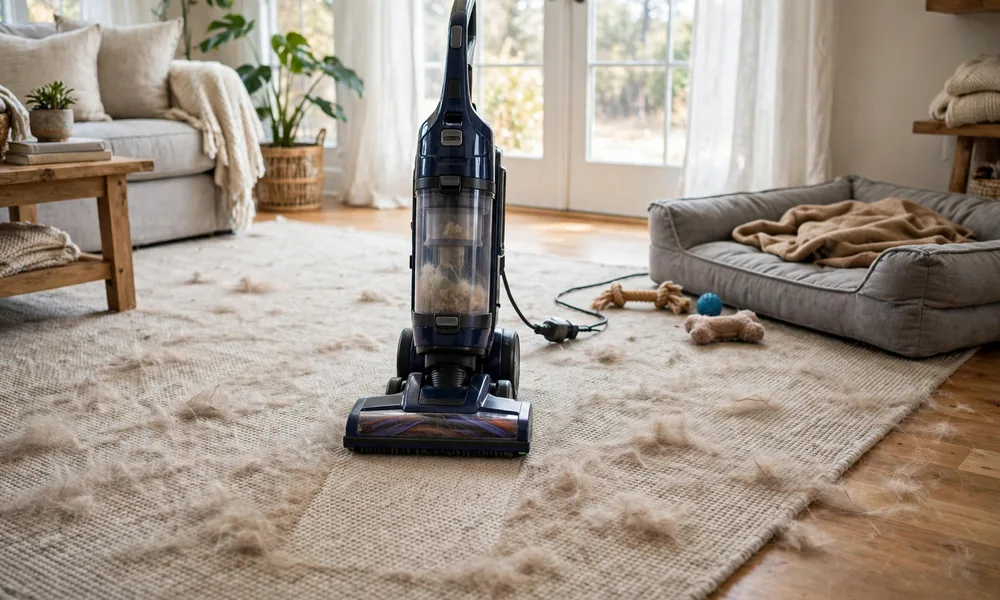
Pet hair tests the whole machine, not just the suction. Hair wraps around a standard brush roll within minutes, and a clogged brush loses power fast and needs constant cutting free. The best pet uprights use a tangle-free brush roll that sheds hair into the dustbin instead of winding it around the bar, and that single feature is worth more than any extra attachment. A larger dustbin matters too: a shedding dog can fill a small bin halfway through the living room, and stopping to empty it mid-clean is the fastest way to abandon the job. Add a motorised mini brush for stairs and upholstery, where hair gathers thickest, and sealed HEPA filtration to trap dander.
Best Lightweight Upright Vacuum
A lightweight upright is the answer for anyone who loves deep carpet cleaning but dreads carrying the machine. The best of them weigh under six kilograms, which is light enough to carry upstairs with one hand, yet they keep a full-size brush head and a corded motor, so they clean like a proper upright rather than a stick. What you give up is usually bin size and a little suction, and for a smaller carpeted home that trade is fair. Check the balance before you buy: a machine that is light at the handle but heavy at the head feels heavier than its weight suggests.
Best Value Upright Vacuum
The best value upright is the simplest one that still cleans deep carpet properly. You do not need a digital display, an app or a self-emptying dock. You need a motorised brush roll, height adjustment, a decent-size bin and a filter you can buy in two years. Machines between $150 and $300 cover that ground, and they are often the same basic design that has cleaned carpets for a decade, with fewer features to fail. What you give up is refinement: more noise, a shorter cord and a heavier body. What does matter is the belt: a cheap upright with a belt that snaps every few months is no bargain, so check that belts, filters and brush rolls are sold as spares.
How Deep Carpet Dirt Actually Works
Carpet dirt is not one thing, and that is why one pass rarely finishes the job. Surface dust and crumbs sit on top of the pile and lift easily. Below them, fine dust filters down to the base of the fibres, where foot traffic grinds it in. Pet hair wraps around individual fibres, and grit works its way down until it sits against the backing, slowly wearing the carpet from underneath. A vacuum that only sucks from above removes the top layer and leaves the rest. The brush roll exists to solve the lower layers: its bristles flick the fibres, shake the dust loose and lift the hair, while the suction carries it away before it settles again. Slow passes matter more than fast ones: two slow, overlapping passes beat four quick ones every time.
Brush Rolls, Suction and Filtration
The brush roll does the real work on carpet, so it deserves more attention than the motor. Stiff bristles agitate deep pile best, while softer bristles suit low pile and delicate rugs, and the best uprights let you adjust the height so the bristles reach the base of the pile without stalling. A brush on-off switch matters in a mixed home, since a spinning brush can scatter debris on hard floors. Suction is measured in air watts, and a good upright delivers 250 to 350 at the head, but a leak at the hose joint or a clogged filter wastes more power than a smaller motor ever could. Filtration decides whether the dust you lift stays lifted: a sealed HEPA system traps particles down to 0.3 microns, and a bagged upright adds another layer, since the bag seals shut when removed.
Upright vs the Alternatives for Carpet
For a carpeted home, the upright still leads, but the alternatives each have a place. A canister with a motorised head cleans low and medium pile well and is lighter on stairs, yet it cannot press a brush into deep pile with an upright’s weight behind it. A cordless stick is the fastest tool for a quick daily clean on hard floors and low pile, but its battery and small bin run out long before a large carpeted house is done. A carpet cleaner washes what a vacuum cannot, lifting stains with water and solution, yet it is a specialist, not a replacement: dry dirt should be vacuumed first. Our guide to the best vacuum cleaners of 2026 compares all four main types side by side, and our guide to the best carpet cleaners of 2026 covers the washing machines that finish the job a vacuum starts.
What to Check Before You Buy
- Brush height adjustment: several settings, not just two, so the brush meets deep, medium and low pile at the right depth.
- Suction and sealing: strong air watts plus a sealed airway, because a leak wastes more power than a smaller motor ever could.
- Filtration: a sealed HEPA system, with bagged models preferred for allergy-prone homes and heavy shedders.
- Bin size: at least one litre for a carpeted house, so you finish a floor without stopping to empty it mid-clean.
- Weight and balance: a machine you can carry upstairs and push for twenty minutes without your arms aching.
- Spares and warranty: belts, brush rolls and filters sold as spares, plus a warranty of at least two years.
Frequently Asked Questions
Can an upright vacuum really clean deep carpet?
Yes, it is the best vacuum type for the job. The wide motorised brush agitates the pile and lifts embedded dirt, while strong corded suction carries it away.
How often should I vacuum deep-pile carpet?
Twice a week for a busy household, and once a week for a quiet one.
Why does my upright lose suction on carpet?
The usual causes are a full bin, a clogged filter, a hair-wrapped brush roll, or a worn belt that lets the brush slip. Empty the bin, wash or replace the filter, clear the brush, and check the belt before assuming the motor is failing.
Are upright vacuums good for pet hair?
The best ones are, provided they have a tangle-free brush roll, a large bin and sealed HEPA filtration. A motorised mini brush for stairs and upholstery completes the kit, since that is where pet hair gathers thickest.
Upright or canister for a mostly carpeted home?
Upright, without hesitation. Its weight and wide brush press into deep pile in a way a canister wand cannot match. A canister is the better choice only when most of the home is hard floor, or when stairs dominate the cleaning.
How long does a good upright vacuum last?
Eight to twelve years with basic maintenance: cleaning the brush roll, changing the belt when it stretches, and replacing filters on schedule.
The Bottom Line
If your home is mostly carpet, an upright vacuum is still the best tool for deep cleaning in 2026. Its wide motorised brush and steady corded suction lift dirt from the base of the pile that lighter machines pass over, and its large bin covers a whole floor without stopping. Buy the best-sealed model your budget allows, with several brush height settings and spares you can actually buy. For quick daily cleans between deep cleans, a cordless stick earns its place; our guide to the best cordless vacuums of 2026 covers the ones worth owning. Choose the upright that fits your carpet, and the floors will show it.