
Freezer Paper That Actually Protects Food in 2026
Freezer paper is the least glamorous roll in the kitchen, and it is the one that saves the most food. A steak wrapped properly in freezer paper comes out of the freezer months later tasting like steak. That grey, dry edge has a name, freezer burn, and freezer paper that actually protects food in 2026 is the cheapest defence against it.
This guide is about freezer paper itself: the poly-coated kraft paper sold in rolls and sheets, with one shiny plastic-coated side and one plain paper side. It is not about freezer bags, foil, or plastic wrap, although this guide compares them honestly. If you buy meat in bulk, portion fish, or wrap baking for the deep freeze, the right freezer paper, used the right way round, keeps it tasting like the day you bought it.
Key Takeaways
- Freezer paper works because of its coating: the shiny poly-coated side goes against the food and blocks air and moisture, while the plain paper side takes tape and a pen for labelling.
- Freezer burn is air damage, not cold damage, so the whole technique is about wrapping tightly with no air pockets and sealing every edge.
- Freezer paper is best for solid foods you wrap by hand, especially meat, poultry, fish and bread; it is the wrong tool for liquids, soups and sauces.
- Use it shiny side in, fold the edges over twice, tape the seam, and label every parcel with the contents and the date.
- Heavyweight paper with a proper poly coating beats thin, lightly coated rolls, and a wide roll wastes less paper on large joints.
What Freezer Paper Actually Is
Freezer paper is kraft paper with a thin layer of polyethylene bonded to one side. The coated side is smooth and slightly shiny, and it is the side that touches the food. The uncoated side is ordinary matt paper: it takes tape, it takes a marker pen, and it gives your hands something to grip. The plastic layer stops moisture escaping from the food and stops air getting in, while the paper layer gives the wrap strength, so it does not tear when you fold it.
It is easy to confuse freezer paper with its neighbours, and the confusion costs food. Wax paper is coated in wax, not plastic, and it is made for wrapping sandwiches at room temperature; it is not a freezer material. Parchment paper is silicone-coated for baking, but it is not designed as a moisture barrier for long freezing. Butcher paper is the closest relative, but plain butcher paper has no plastic coating, so it breathes and lets food dry out.
How It Stops Freezer Burn
Freezer burn is not caused by cold. It is caused by air. Moisture inside food slowly turns to ice crystals on the surface, and those crystals turn straight from ice into vapour and drift away. The surface of the food dries out, oxidises, and turns grey, leathery and tasteless. Anything that keeps air away from the surface of the food slows freezer burn to a crawl, and a tight wrap of freezer paper does that job as well as anything short of a vacuum sealer.
The technique matters as much as the paper. Air trapped inside a loose parcel is air in contact with the food, so a baggy wrap is barely better than no wrap at all. The paper must lie flat against the surface of the food with no pockets, and every fold must be pressed down and taped. A single layer, tightly applied, protects better than two loose layers.
The Types Worth Buying
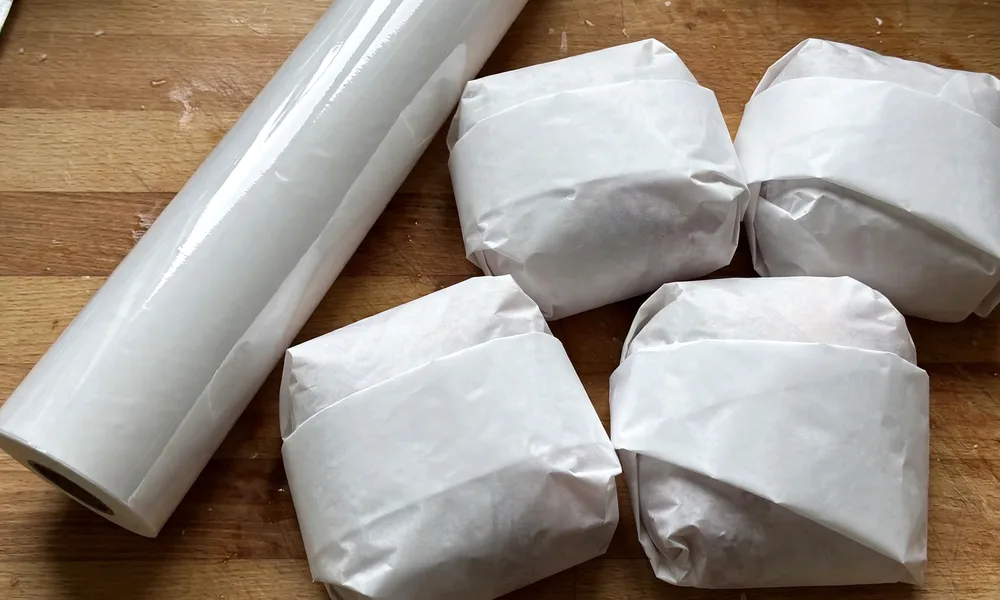
Freezer paper comes in rolls and in pre-cut sheets. Rolls are the flexible option: you tear off exactly the length you need, which matters when you wrap everything from a single chicken breast to a whole leg of lamb. A roll around 45 centimetres wide suits most home freezers, because it wraps a joint in one piece without a join down the middle.
Weight is the other thing to check. Heavier paper is stronger, less likely to tear on a bone, and less likely to let moisture through. Hold a sheet up to the light: if you can see pinholes or patchy areas in the coating, the roll is not doing its job. Buy from a kitchen supplier or a butcher’s supplier, because the paper sold to people who wrap meat for a living is the paper that actually works.
How to Wrap Properly, Step by Step
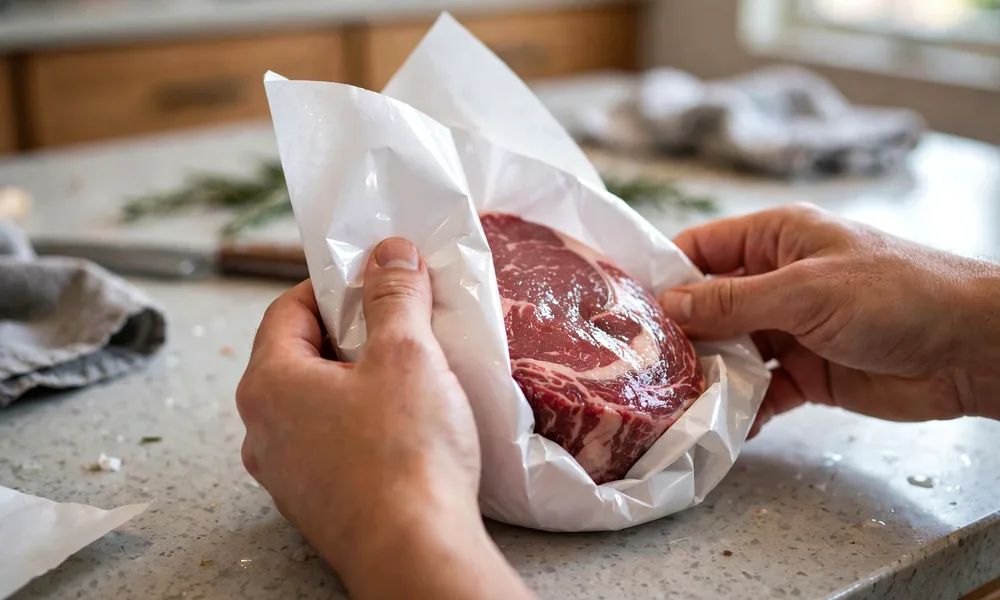
Good wrapping is a skill, and it is a quick one to learn. Cut a piece of paper large enough to wrap the food twice over, lay it coated side up, shiny side facing you, and put the food in the centre. The first rule is the one people get wrong most often: the shiny side goes against the food. Shiny side out is the classic mistake, and it leaves the uncoated paper against the food, where it soaks up moisture, sticks to the surface, and lets air through.
Pull one side of the paper up and over the food, pressing it flat against the surface so no air is trapped underneath. Then pull the other side over the top, overlapping the first by a few centimetres, and press the overlap flat. Fold the open ends in like wrapping a present, pressing each fold flat before the next, and tape the seam and the folded ends with freezer tape, not ordinary sticky tape, which peels off in the cold.
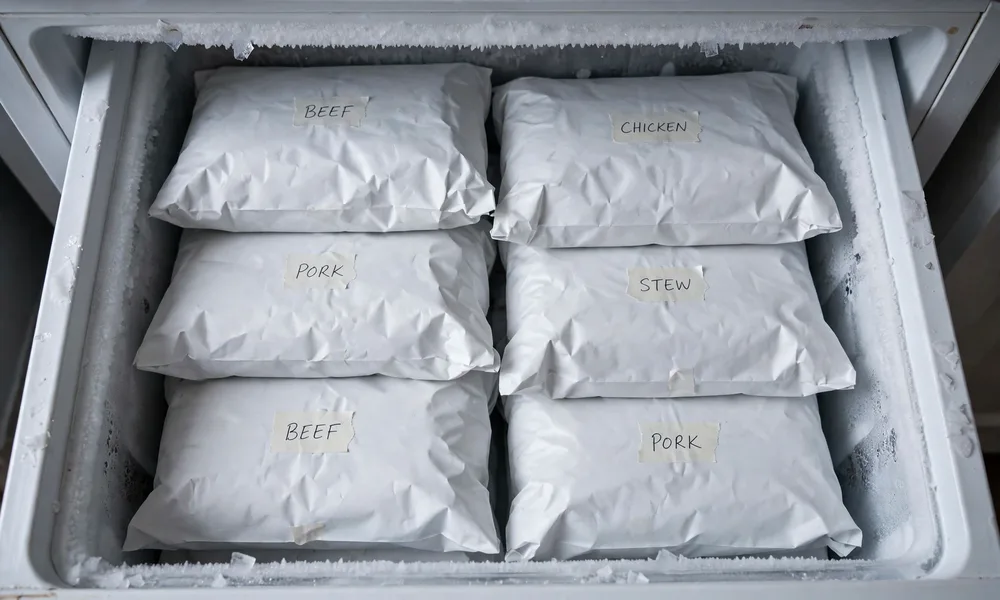
Label the parcel before it goes in, on the plain paper side, with the contents and the date. Press out any remaining air through the last fold before you tape it, and if you are wrapping something with sharp bones, cover the bone end with a small extra piece of paper first, so it does not puncture the wrap from inside.
For extra protection on food that will stay frozen for months, add a second layer. Wrap once in freezer paper, then put the parcel inside a freezer bag and press the air out of the bag before sealing it. The paper stops the food drying out and stops it sticking to the bag, and the bag stops the paper getting knocked about. Our guide to freezer bags covers which bags hold up best for that second layer.
What It Is Best For, and What It Is Not For
Freezer paper is at its best with solid foods that you wrap by hand. Meat is the classic use: steaks, chops, joints, mince formed into patties, and whole birds. Fish fillets wrap beautifully in it, because the paper lies flat against the fillet and stops the edges drying out. Bread freezes well in freezer paper too, especially whole loaves, because the paper stops the crust going soggy and stops the loaf picking up freezer smells.
It is the wrong tool for liquids. Soup, stock, sauce and stew cannot be wrapped in paper. Use containers or bags for anything that pours. It is also the wrong tool for the microwave and the oven: the plastic coating is not made for heat. And it is not a substitute for a vacuum sealer for very long storage. If you want to keep a joint for a year, a vacuum sealer will do it better, because it removes air completely rather than merely pressing it out.
Freezer Paper Against the Alternatives
| Method | Best for | Freezer burn protection | Weakness |
|---|---|---|---|
| Freezer paper | Meat, fish, bread, hand-wrapped portions | Very good when wrapped tight | Not for liquids; needs taping |
| Freezer bags | Loose items, vegetables, leftovers | Good if air is pressed out | Air pockets; single-use plastic |
| Aluminium foil | Short-term wrapping, first layer | Fair; tears easily | Tears on bones; not a full seal alone |
| Plastic wrap | Fridge storage, covering bowls | Poor on its own in the freezer | Punctures, lets air in, invites burn |
| Vacuum sealer | Long storage, bulk buying | Best of all | Costs money; bags cost money |
Plastic wrap deserves a special note because it is the material most people reach for first, and it is the worst of the lot for the freezer. It punctures, it lets air in, and it invites freezer burn, and the guide to plastic wrap says so itself: for the freezer, switch to bags, containers or a vacuum sealer. Freezer paper is the best protection you can get for a few pounds, with no machine and no learning curve beyond wrapping tightly and taping the seam.
Mistakes That Ruin Good Food
The first mistake is wrapping shiny side out, which puts the uncoated paper against the food and defeats the coating entirely. The second is wrapping loosely, which leaves air inside the parcel. The third is skipping the tape, or using ordinary tape that falls off in the cold, so the parcel slowly opens in the freezer. The fourth is not labelling: an unlabelled parcel is a mystery parcel, and mystery parcels get left at the back of the freezer until they are past their best. The fifth is reusing paper, which has a stressed coating and will not protect as well the second time.
Checklist Before You Wrap
- Cool the food completely in the fridge before wrapping; never wrap food that is still warm.
- Cut enough paper to wrap the food twice over, and lay it coated shiny side up.
- Put the food in the centre, shiny side against the food, and press the paper flat with no air pockets.
- Fold the ends in like a present, press each fold flat, and tape the seam and ends with freezer tape.
- Cover sharp bone ends with a scrap of paper first so they cannot puncture the wrap from inside.
- Label the parcel with the contents and the date, then freeze it with space around it until solid.
Frequently Asked Questions
Which side of freezer paper goes against the food?
The shiny, poly-coated side goes against the food. It is the moisture barrier that stops air and drying out. The plain paper side faces out, takes the tape, and takes the label. Shiny side out is the most common freezer paper mistake.
Is freezer paper the same as wax paper or parchment paper?
No. Wax paper is wax-coated for room-temperature wrapping and is not a freezer material. Parchment paper is silicone-coated for baking. Freezer paper is poly-coated kraft paper made specifically as a moisture barrier for long freezing.
How long does food last wrapped in freezer paper?
Properly wrapped meat keeps for six to twelve months, fish for three to six months, and bread for about three months. Fatty meat goes rancid sooner than lean meat. Label with the date so you use parcels in time.
Can I use freezer paper in the microwave or oven?
No. The plastic coating is not made for heat, and freezer paper should never go in a microwave or an oven. Thaw food by moving the parcel to the fridge and unwrapping it once it has softened.
Is freezer paper better than freezer bags?
For hand-wrapped solid foods such as meat, fish and bread, yes: it lies flat against the food and stops drying out. For loose items, vegetables and liquids, bags are better. For the longest storage, wrap in freezer paper first and then put the parcel in a freezer bag with the air pressed out.
Can I reuse freezer paper?
No. Paper that has already been frozen and thawed has a coating that has been stressed, and it will not protect as well the second time. Freezer paper is cheap, so always use a fresh piece.
Bottom Line
Freezer paper is not a gadget and it is not a trend. It is a coated sheet of paper, a roll of tape, and thirty seconds of care, and it is the cheapest way to make sure the food you freeze tastes like the food you bought. Buy a heavyweight poly-coated roll, wrap shiny side in, and label the date.


