Why Frozen Raspberries Deserve a Spot in Your Freezer in 2026
Frozen raspberries have the brightest flavour of any frozen berry, and they are also the most fragile. A good bag opens onto berries that are frosted, fragrant and tart-sweet, ready to blend, bake, or cook down into a sauce in five minutes. The best frozen raspberries in 2026 are not about one brand, but about knowing what whole versus crumbled means, handling the berries gently, and using their tartness instead of fighting it. This guide explains how to buy, store and cook with frozen raspberries, from smoothies and baking to sauces and desserts.
Key Takeaways
- Raspberries have the brightest, most perfumed flavour of any frozen berry, but they crush easily and bleed, so handle them gently and add them last.
- A bag of frozen raspberries is always part whole berries and part crumbled pieces. Use the whole ones where they will be seen, the crumbled ones where they will be stirred in.
- Tartness is the point. Raspberries balance sweet dishes, cut through rich desserts, and need less sugar than you expect in a sauce.
- Use frozen raspberries straight from the freezer. Thawing first makes smoothies thin, bakes soggy and sauces watery.
- Buy plain berries with nothing added, and squeeze the bag first. Loose berries are fresh; a solid clump has thawed and refrozen.
Why Raspberries Are the Brightest Frozen Berry
Every frozen berry has a personality, and the raspberry is the loud one. Where blueberries are mild and sweet, raspberries are sharp, floral and intensely flavoured, with a perfume you can smell as the bag opens. That brightness survives freezing almost unchanged, which is why a handful of frozen raspberries can lift a plain smoothie, a bowl of yoghurt or a chocolate dessert. Our guide to frozen berries compares raspberries with the rest of the berry family, and it puts them first for flavour.
The brightness comes with fragility. A raspberry is a hollow shell made of tiny drupelets around an empty core, and it crushes under the slightest pressure. Freezing makes it firmer, but not strong, so a bag that has been squeezed or dropped will always contain broken berries. The trick is to buy and cook with that in mind, rather than expecting raspberries to behave like blueberries.
Whole Versus Crumbled: What Is Really in the Bag
Open any bag of frozen raspberries and you will find whole berries and crumbled pieces. The proportion varies from bag to bag, and it matters more than the brand on the front. A bag that is mostly whole berries costs more to produce, and it is the bag to buy when the berries will be seen. A bag that is mostly pieces is cheaper, and just as good when the berries will be stirred in, blended or cooked down.

Whole Berries: For Showing Off
Whole frozen raspberries are for dishes where the berry is visible: scattered over porridge, pressed into the top of a cake, arranged on a cheesecake, or dropped into a glass of sparkling water. They hold their shape if you handle them gently, and they thaw in minutes, softening just enough to eat while keeping their form. Look for berries that feel separate and round through the plastic, in an even, deep red. Pale or orange berries were picked under-ripe and will taste sharp.
Whole berries are also the ones to garnish with: a frozen raspberry on a chocolate dessert looks jewel-like, and it softens as the dessert is eaten, releasing its juice at the right moment.
Crumbled Berries: For Stirring In
Crumbled raspberries are not damaged goods, they are a different ingredient. The broken pieces have more surface area, so they release flavour and colour faster, and they suit anything where the berry disappears into the dish: smoothies, sauces, coulis, jam and batters. A bag of mostly pieces is the best value in the freezer aisle for a cook, because it does the jobs that need flavour rather than form at a lower price.
The one place crumbled berries fail is baking where the berry should stay whole: folded into a muffin batter, they break down and turn the whole crumb pink. Save the pieces for the blender and the saucepan.
Raspberry Forms at a Glance
| Form | What it looks like | Best for | Watch out for |
|---|---|---|---|
| Whole berries | Round, separate, deep red | Garnishing, baking, porridge | Costs more, crushes easily |
| Crumbled pieces | Broken, uneven, juicy | Smoothies, sauces, jam | Turns batters pink |
| Loose, free-flowing | Berries move in the bag | Everything | Check the bag is not clumped |
| Solid clump | One frozen block | Nothing, avoid it | Thawed and refrozen |
Tartness: The Flavour That Makes Raspberries Work
Raspberries are tart, and that tartness is their greatest strength. In a sweet dish, a raspberry cuts through the sugar and stops the dessert from tasting flat. In a rich dish, it provides the sharp note that makes the richness bearable: chocolate and raspberry is a classic pairing, and a raspberry sauce over cheesecake works because the tartness balances the cream.
The tartness varies from bag to bag, and it is visible before you buy. Deep red berries are riper and sweeter; pale, orange or pink berries were picked early and will be sharper. A bag that lists added sugar is sweetening unripe fruit, and sweetened raspberries are too sweet for a sauce and too sticky for baking. Buy plain berries and add sugar yourself where the dish needs it.
Smoothies: Bright Flavour, Seeds and All
Smoothies are the easiest everyday use for frozen raspberries, and the one where their flaws matter least. A frozen raspberry flavours, chills and colours a smoothie at once, turning it a vivid pink. Crumbled berries are perfect here, because they blend completely. Use them straight from the freezer: thawed raspberries make a thin, watery smoothie, and the seeds are worse when the berries are soft.
The classic raspberry smoothie is simple: a cup of frozen raspberries, a banana, a spoonful of yoghurt and a splash of milk. The banana softens the tartness, the yoghurt adds body, and the raspberries do the rest. Add a spoonful of oats and it becomes a breakfast. The one thing to accept is the seeds: small and hard, they survive blending and leave a little grit. A high-speed blender reduces it, and straining through a sieve removes it entirely.
Baking with Frozen Raspberries
Raspberries need the gentlest handling of any baking berry. A raspberry muffin with whole berries, folded in last and stirred once, has bright pockets of tart fruit against a sweet crumb. The rules are simple: use the berries frozen, fold them in last, and stir once; a second stir breaks them and turns the batter pink.
Muffins, Cakes and Crumbles
Muffins are the classic raspberry bake. Toss the frozen berries in flour before folding them in, which stops them sinking, and add two or three minutes to the baking time, because the cold fruit slows the bake. In a pale sponge the care matters more: raspberries bleed more than any other berry, so fold them in last and handle the batter as little as possible. A raspberry crumble is the most forgiving bake of all: scatter the berries into the dish, top with crumble, and bake until the juices bubble.

Cheesecakes and Desserts
Cheesecake is where frozen raspberries earn their keep in desserts. A layer of raspberries under the topping, or a ring of whole berries around the edge, gives a sharp contrast to the rich cream. For a no-bake cheesecake, scatter the frozen berries over the base before pouring the filling. For a baked cheesecake, place them on top after baking, so they keep their shape instead of bleeding into the surface.
Sauces and Coulis: Where Crumbled Raspberries Shine
Sauces are the best use for crumbled frozen raspberries, and the reason to keep a cheap, broken bag in the freezer. Warm a cup of frozen raspberries with a spoonful of sugar and a squeeze of lemon, cook for five minutes, and you have a sauce for pancakes, yoghurt, ice cream or cheesecake. Raspberries make the smoothest sauce of any berry, because they break down completely, and the sauce can be pushed through a sieve for a seedless coulis.
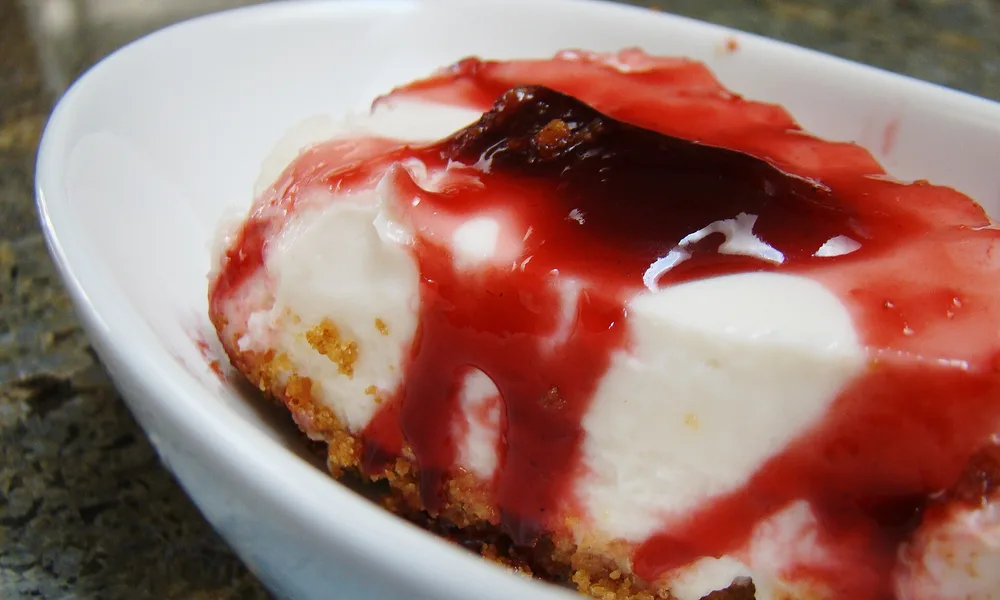
The same sauce, cooked a little longer with a little more sugar, becomes a jam-like topping that keeps in the fridge for a week. It is better than most shop-bought jars, because you control the sugar. Our guide to the best and worst jams explains what to look for in a jarred jam, and the gap between the best and the worst is wide.
Thawing, Storage and Shelf Life
Thaw frozen raspberries only when you must. Smoothies, baking and sauces all want the berries frozen, and thawing first makes smoothies thin, bakes soggy and sauces watery. Thawing is only needed for eating raw, for salads, or for garnishing. To thaw, spread them in a single layer on a plate lined with kitchen paper and leave them in the fridge for an hour. Never thaw them in water or in the microwave.
Storage matters as much as buying. Unopened bags keep for six to twelve months, but the flavour fades after about six, so buy what you will use. Once opened, squeeze the air out of the bag, seal it tightly, and use the berries within three months for the best flavour. A bag left open dries out and picks up the taste of everything else in the freezer. Frozen fruit in general keeps by the same rules.
Frozen Raspberry Buying Checklist
- Pick the form for the job: whole berries for baking and garnishing, crumbled pieces for smoothies and sauces.
- Squeeze the bag before you buy it. Loose, free-flowing berries are fresh; a solid block has thawed and refrozen.
- Look for deep, even red colour through the bag. Pale or orange berries were picked under-ripe and will taste sharp.
- Buy plain berries with nothing added. A bag that lists sugar or syrup is sweetening dull fruit.
- Handle the bag gently on the way home: a squeezed bag is a crumbled bag.
- Seal the bag tightly after opening and use the berries within three months for the best flavour.
Frequently Asked Questions
Why do my frozen raspberries always crush?
Because raspberries are hollow and delicate. Buy loose bags, handle them gently, and use the crumbled pieces for sauces and smoothies, where breaking down is the point.
Should I thaw frozen raspberries before baking?
No. Use them straight from the freezer. Thawed raspberries bleed into the batter, sink to the bottom and make the bake soggy. Toss frozen berries in flour, fold them in last, stir once, and add two or three minutes to the baking time.
How do I get rid of raspberry seeds in a smoothie?
Blend on high speed, which breaks most of them down, then strain through a fine sieve if the texture still bothers you.
How long do frozen raspberries last?
Unopened bags keep for six to twelve months, with the best flavour in the first six. Once opened, seal the bag tightly and use the berries within three months.
Can I use frozen raspberries instead of fresh?
Yes, in almost every cooked dish, sauce and smoothie, where they are often better because they are firmer. The one place fresh wins is eating raw, where a thawed raspberry is softer than a fresh one.
Why did my raspberry cake turn pink?
Because the berries were stirred too much or thawed before they went in. Raspberries bleed more than any other berry. Fold them in frozen and stir once, and the batter stays pale.
The Bottom Line
The best frozen raspberries in 2026 are plain, loose, deep-red berries bought for the job at hand: whole berries for baking and garnishing, crumbled pieces for smoothies and sauces, used straight from the freezer. Buy the bag that feels free-flowing, handle it gently on the way home, and let the tartness do its work.