
Jam is one of the simplest foods in the kitchen, and one of the easiest to get wrong. The supermarket shelf is full of glass jars that all promise ripe fruit, traditional recipes, and a taste of summer, yet the jars themselves tell very different stories. Some are packed with fruit and taste bright, tart, and alive on the tongue. Others are mostly sugar syrup with a little fruit flavouring, and they taste flat no matter how pretty the label looks. The difference between the best jams of 2026 and the worst is not subtle once you know where to look, and it shows up in the first spoonful.
This comparison puts the best and worst jams head to head, judging each jar the way you would actually use it: spread on warm toast at breakfast, stirred into yoghurt, spooned onto scones, and baked into a cake. We look at the fruit content, the sweetness, the set, the ingredient list, and the flavour, because a great jam has to do more than look good in the glass. A great jam tastes of the fruit it came from, spreads without tearing the bread, and still tastes fresh weeks after the jar is opened. A bad one is sugar in a jar, and no amount of pretty packaging can hide it.
Key Takeaways
- Look for at least 45 percent fruit on the label; the best jams list fruit first and keep the ingredient list short.
- A good jam tastes tart as well as sweet; if it tastes only of sugar, the fruit was poor or the jar is mostly syrup.
- Strawberry, raspberry, blackcurrant, and apricot are the strongest everyday choices when the fruit content is high.
- Budget jars bulked out with glucose syrup, and novelty jams made for children, are usually the worst value on the shelf.
- The same honest label reading helps with our comparison of the best and worst honey of 2026, another breakfast spread where the label tells the truth.
How We Judged the Jams
We judged every jam on five things that matter at the table rather than on the packet. First, fruit content: how much real fruit is in the jar, and whether fruit is the first ingredient or an afterthought. Second, sweetness: whether the sugar supports the fruit or buries it. Third, the set: whether the jam spreads cleanly or slides off the toast, and whether it tears soft bread. Fourth, the ingredient list: short and honest, or long and full of syrups, colourings, and flavourings. Fifth, flavour: whether the jam tastes bright, fresh, and recognisably of its fruit, or flat, one-note, and artificial.
The Best Jams of 2026
Strawberry Jam
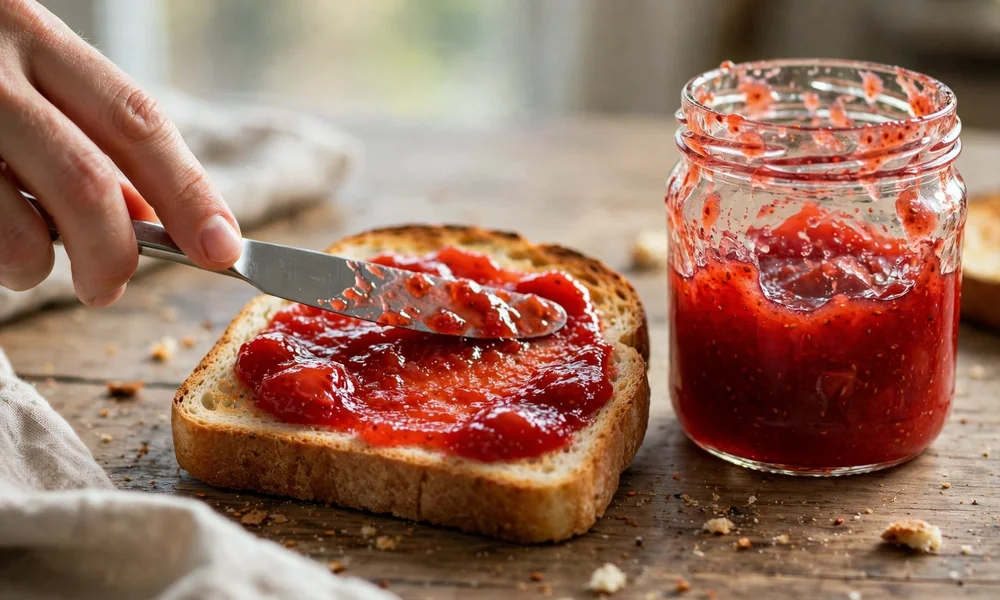
Strawberry is the most popular jam in the world, and also the most variable. A great strawberry jam is bright red, smells of fresh berries, and tastes sweet at first and then pleasantly tart, with soft pieces of real fruit in every spoonful. The best jars of 2026 sit at 50 percent fruit or more, and they spread like a soft set rather than a stiff jelly. The worst strawberry jams are a warning about the whole category: pale, gloopy, and sweet with no berry character at all, because the fruit content is low and the flavour comes from a bottle. Read the label, not the picture of berries on the front, and a good strawberry jam will announce itself in the first spoonful.
Raspberry and Blackcurrant Jam
Raspberry and blackcurrant are the jams for people who like their breakfast with an edge. Raspberry jam is sharp, floral, and seedy, with a fragrance that fills the kitchen when the jar opens, and it is superb on toast, in yoghurt, and baked into cakes. Blackcurrant is darker and more intense, almost wine-like, and a little goes a long way on buttered toast or stirred into porridge. Both fruits are naturally high in pectin, so a well-made jar sets beautifully without help, and both keep their flavour for weeks after opening. The seeds divide opinion, and seedless versions cost a little more, but the flavour of a good raspberry or blackcurrant jam is worth every penny, and these two are the most reliable sign of a serious jam maker.
Apricot Jam
Apricot jam is the quiet achiever of the jam shelf. It is mellow, honeyed, and soft, without the sharpness of berry jams, which makes it the best partner for croissants, soft white bread, and delicate pastries. A good apricot jam is golden, smooth, and fragrant, and it doubles as a glaze for fruit tarts and cakes, which no berry jam does quite as well. The best apricot jars list apricots first and contain no added colouring, because ripe apricots need none. Cheap apricot jam is a different thing entirely: pale, sugary, and oddly flavourless, tasting more of syrup than of stone fruit. Buy the jar with the highest fruit content you can find, and apricot becomes one of the most versatile jams in the cupboard.
The Worst Jams of 2026
Budget Syrup Jars
The worst offenders are the budget jars where glucose-fructose syrup appears before the fruit on the ingredient list. These jams can fall below 35 percent fruit, and the difference is obvious the moment the lid comes off: the colour is flat, the smell is faintly chemical, and the taste is one-note sweetness with no tartness and no real fruit character. They are often sold in large jars at a low price, which looks like value until you realise you are mostly buying sweetened water. A small jar of good jam that you actually enjoy is better value than a big jar of syrup that nobody finishes, and the cheapest jam on the shelf is usually the most expensive per spoonful of fruit.
Novelty and Children’s Jams
Novelty jams made for children are among the worst on the shelf, and they are easy to spot: bright unnatural colours, cartoon characters on the label, and names that promise fun rather than flavour. The jam inside is usually very sweet, heavily coloured, and flavoured rather than fruity, and it teaches children that jam is a sweet topping rather than a food made from fruit. Some are so sweet that a single spoonful contains more sugar than a biscuit, and the fruit content can be vanishingly small. Children deserve real jam as much as adults do, and a good strawberry jam with real berries in it is a far better introduction to breakfast than a neon jar of flavoured sugar.
Runny Jelly-Style Jams
Some jars fail on texture alone. A jam that is too runny slides straight off the toast and pools on the plate, while a jam that is too stiff tears soft bread and sits on top of it in a lump. Runny jelly-style jams are the worst offenders, because they look smooth and promising in the jar and then behave like syrup on the bread. They are often made with juice rather than whole fruit, so they lack the body that crushed fruit gives, and they need more sugar to set at all. A good jam holds its shape on the knife, spreads in an even layer, and melts slightly on warm toast without running. If the jam will not stay where you put it, it is not doing its job.

Jam, Jelly, Marmalade and Preserves
It helps to know what you are buying, because the names mean different things. Jam is made from crushed whole fruit cooked with sugar, so it keeps pieces of fruit and a soft body. Jelly is made from fruit juice only, strained so no pulp or seeds remain, giving a smooth, clear finish. Marmalade is a citrus preserve made with peel, and its bitter edge is the point. Preserves use larger pieces or whole fruit, so they are chunkier than jam and often best for cooking. For breakfast, jam is the most versatile, spreading easily on toast, crumpets, scones, and croissants. Jelly suits people who dislike seeds and want a perfectly smooth spread, and it is the classic partner for peanut butter, as our comparison of the best and worst peanut butter of 2026 shows. Marmalade belongs with thick-cut toast, and preserves are at their best stirred into porridge or yoghurt.
How to Choose the Best Jam
Read the back label, not the front. The front is advertising; the back holds the useful facts. First check the fruit content, usually printed as grams of fruit per 100 grams of jam. In 2026 the best breakfast jams sit at 45 to 60 percent fruit, while budget jars can fall below 35 percent and make up the difference with syrup and water. Then check the ingredient order: fruit first, sugar second, and anything else a short list of pectin and lemon juice. Next, think about seeds and texture. Raspberry and blackberry jams naturally carry seeds; some love the crunch, others find it intrusive on soft bread. Seedless versions are strained, so they cost a little more but spread more smoothly. A chunky jam needs sturdy bread, while a smooth jam works on anything, including delicate croissants. Finally, think about sweetness. Reduced-sugar jams contain around 30 percent less sugar, which lets the fruit flavour come through, but they spoil faster once opened and must be used within about three weeks. Standard jams, at roughly 60 percent sugar, keep for four to six weeks after opening because sugar is a preservative. If you eat jam daily, a standard jar is the practical choice; if you eat it occasionally, buy a small reduced-sugar jar and finish it quickly.
Storing Jam Properly
Good jam deserves good storage, and a few small habits make a real difference. Refrigerate after opening and use a clean spoon every time, because crumbs and butter in the jar are what make jam go mouldy. An opened jar stays at its best for about four to six weeks, and the flavour fades long before the jam actually goes off, which is why small jars beat big jars for most households. Keep the lid clean and screwed on tightly, and store the jar away from direct sunlight, which dulls the colour and the flavour. If a jar develops mould on the surface, throw the whole jar away rather than scooping the mould off, because the mould you can see is only part of the problem. And remember that jam is at its best on good bread, which is why our comparison of the best and worst breads of 2026 is worth reading before your next shop: the bread matters as much as the spread.
The Verdict
The best jams of 2026 are the ones where fruit comes first: strawberry, raspberry, blackcurrant, and apricot jars with at least 45 percent fruit, a short ingredient list, and a flavour that is tart as well as sweet. Marmalade earns its place too, for anyone who likes a bitter edge with their toast. The worst jams are the budget syrup jars, the novelty children’s jams, the runny jelly-style jars, and the overpriced jars that hide low fruit content behind heavy glass and a craft label. The rule is simple and it never fails: read the back label, buy the jar with the most fruit, and choose the smallest jar you will finish in a month. Do that, and every breakfast will taste of real fruit.


