Honey is one of the oldest foods people have gathered, and also one of the easiest to buy badly. Walk down any supermarket aisle and you will see rows of golden jars that look almost identical, yet what is inside them can be wildly different. The difference between the best and the worst honey in 2026 is not about the prettiest label or the highest price. It is about how the honey was made, how much of its natural character survived processing, and whether the jar tells you anything honest about where it came from.
This head-to-head comparison puts the two sides against each other properly, rather than listing good honey on one page and bad honey on another. On one side, the jars that keep their aroma, their floral identity, and their slow, thick pour. On the other, the jars that have been heated, filtered, blended, and stretched until almost nothing of the original honey remains. By the end, you will know which kind belongs in your tea and on your toast, and which kind should stay on the shelf.
Key Takeaways
- Raw, minimally filtered honey keeps far more aroma and flavour than honey that has been heated and ultra-filtered, and it is usually worth the small premium.
- Floral source decides flavour: acacia is light and mild, wildflower is warm and complex, buckwheat is dark and malty, and each suits different uses.
- Crystallisation is natural, not a fault; a jar that sets firm can be restored in minutes with a gentle warm water bath.
- Vague labels are a warning sign: jars that name no floral source, region, or beekeeper are usually blends of the cheapest honey available.
- Never feed honey to children under one year old, and do not stir it into boiling water, which dulls the delicate floral notes.
What Makes Great Honey
Great honey is judged by three things: flavour, texture, and honesty. Flavour comes first, because honey is bought to be tasted. A good jar has a clear character that you can name after one spoonful: the light, clean sweetness of acacia, the warm, meadowy depth of wildflower, the dark, almost molasses-like richness of buckwheat. That character comes from the flowers the bees visited, and it survives only when the honey is handled gently. Heat and heavy filtering strip it away, which is why the most processed jars taste the same no matter what the label claims.
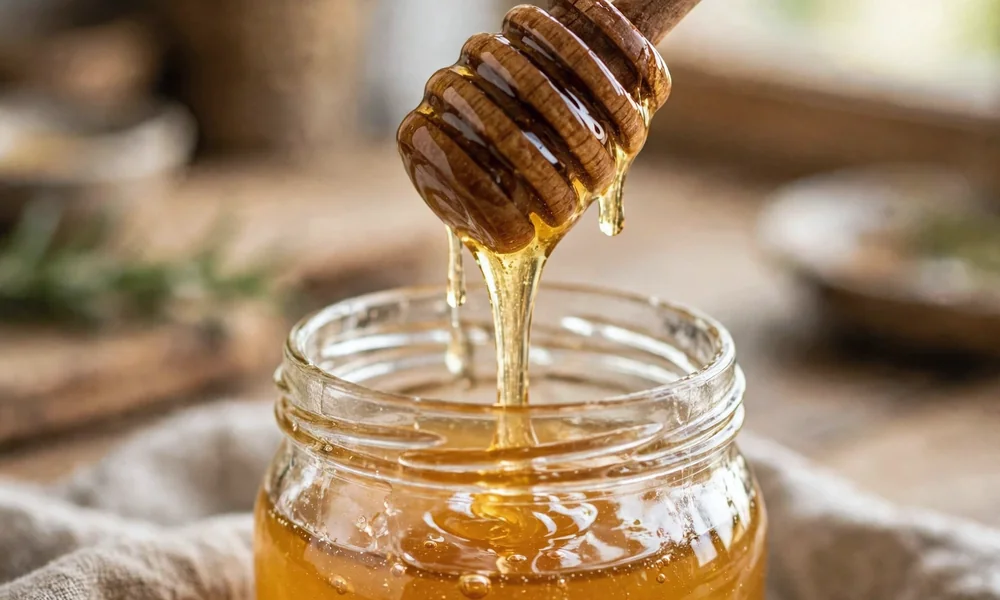
Texture is the test you can run in the shop without opening the jar. Good honey pours slowly and thickly, falling from a dipper in a steady ribbon that folds onto itself. It feels substantial on a spoon and spreads without running straight off the bread. Thin, watery honey that races out of the bottle is a sign of over-processing, added syrup, or honey harvested before it was properly ripened in the comb. Colour helps too, but only as a rough guide: light honey is usually mild, dark honey is usually stronger, and neither is automatically better.
The Best Side: Honey That Tastes of Somewhere
Raw and Single-Origin Honey
The best honey starts in the hive and is changed as little as possible on the way to the jar. Raw honey is extracted by spinning the comb, strained lightly to remove wax, and bottled without high heat. It keeps the pollen, the enzymes, and the volatile aromas that give honey its flavour, and it often looks slightly cloudy rather than perfectly clear. That cloudiness is not a flaw; it is evidence that the honey was not ultra-filtered. Single-origin honey goes one step further by coming from one floral source in one place, so the flavour is consistent and traceable. A jar of single-origin acacia from one valley will taste recognisably different from a jar of wildflower from the next valley over, and that difference is the whole point.
Buying raw and single-origin also makes it easier to find honey that suits what you actually do with it. Light, delicate honeys are best for sweetening tea, where a strong honey would overpower the drink. Darker, bolder honeys are better for baking and glazing, where their flavour survives heat and stands up to other ingredients. A good beekeeper will tell you which of their honeys suits which use, and a good shop will stock more than one type.
Floral Character and Honest Labels
Floral character is what separates honey from every other sweetener. Sugar sweetens; honey adds flavour of its own. Orange blossom honey carries a faint citrus note, lavender honey has a gentle herbal edge, chestnut honey is dark and slightly bitter, and manuka honey has a distinctive earthy depth. When you taste a honey and can name the flower, you are tasting the landscape the bees worked in.
Honest labels also tell you how the honey was handled. Look for words like raw, cold-extracted, or unfiltered, and for a harvest year or a batch number. The best honey also tends to crystallise over time, because real honey is a supersaturated sugar solution that naturally sets. A jar that never crystallises, even after months in a cool cupboard, has usually been so heavily processed that the natural crystals have been removed.

The Worst Side: Honey With Nothing Left to Taste
Ultra-Filtered and Heavily Blended Honey
The worst honey is made by taking good honey and removing everything that made it good. Ultra-filtering pushes honey through fine filters under pressure, stripping out the pollen that carries flavour and the tiny particles that give honey its texture. Heating it to high temperatures makes it flow faster through the bottling line, but it also drives off the delicate aromas that are the whole reason to buy honey in the first place. What comes out is a clear, golden liquid that looks perfect on the shelf and tastes of almost nothing. It is sweet, and that is all it is.
Blending makes the problem worse. Cheap honey is bought in bulk from many different countries, mixed together in huge tanks, and bottled under a single brand. The blend is designed for consistency and low cost, not for flavour, so every batch tastes the same bland sweetness. The label will not tell you where any of it came from, because the answer would be a list of the cheapest sources available that month.
Fake, Stretched, and Misleading Honey
The worst jars of all are the ones that are not really honey, or not entirely honey. Adulterated honey is stretched with cheap syrups made from rice, corn, or beet sugar, which are hard to spot by taste alone because they are sweet and colourless. Some jars labelled as a premium variety, such as manuka, contain only a small amount of the real thing mixed with ordinary honey, or none at all. Others carry pictures of bees and hives on the label while the contents were produced in a factory far from any apiary. These are not rare exceptions; honey is one of the most commonly adulterated foods in the world, precisely because real honey is expensive to produce and syrup is cheap.
There are a few practical defences. Buy from beekeepers, farmers markets, and shops that name their suppliers, because a named source is accountable in a way that an anonymous blend is not. Be suspicious of very cheap honey, especially in large plastic squeeze bottles with no floral source on the label. Check that the jar lists honey as the only ingredient, and remember that a jar of honey should never need flavourings or colourings.

Head to Head: Best vs Worst at a Glance
Put the two sides next to each other and the difference is easy to see, even before you taste anything. The best honey is thick, slow-pouring, and slightly cloudy, with a named flower and a named place on the label. The worst is thin, perfectly clear, and anonymous, in a cheap plastic bottle that tells you nothing. The best honey costs a little more because it was produced slowly, by bees in a particular place, and handled gently. The worst costs less because it was bought in bulk, blended, filtered, and bottled as fast as possible.
The Verdict
The verdict is clear, and it is not close. The best honey wins on every measure that matters: flavour, texture, honesty, and value for money. A jar of raw, single-origin honey costs more per gram, but you use less of it because the flavour is stronger, and you actually enjoy it instead of merely sweetening with it. The worst honey is cheap, but it is cheap for a reason: it delivers sweetness and nothing else, and sweetness is the one thing you can get from sugar for far less money.
That does not mean every jar needs to be a premium single-origin. A good wildflower honey from a named local beekeeper is affordable, versatile, and honest, and it beats a famous-brand blend at any price. The jars to avoid are the anonymous ones: no flower, no region, no beekeeper, and a price that seems too good to be true. The best honey is not a luxury; it is simply honey that was allowed to stay honey.
Who Each Side Is For
The best honey is for anyone who actually tastes what they eat. If you drizzle honey on toast, stir it into tea, or use it in baking, the floral character is the reason you reach for the jar, and only the good side delivers it. It is also for people who care about where their food comes from, because a named beekeeper and a named region are a short supply chain you can trust. Home bakers, tea drinkers, and anyone building a pantry of ingredients that do real work will get the most from the best side.
The worst honey is for nobody, honestly, except as a cautionary example. If all you need is a sweetener and you do not care about flavour, sugar does the job better and cheaper. The only honest use for the worst side is as a reminder of what to look for: pale, thin, anonymous, and cheap is a combination to walk past, not to buy.
How to Choose and Store Your Honey
Choosing well starts in the shop. Pick up the jar and turn it slowly: good honey moves lazily, while thin honey runs like water. Read the label for a floral source, a region, and a producer you could actually find. Prefer glass jars over plastic, because glass does not absorb odours and lets you see the colour and clarity properly.
Storage is simple. Keep honey in a cool, dark cupboard with the lid on tight, and it will last for years without spoiling. Do not refrigerate it, because cold speeds up crystallisation, and do not leave it in a warm place near the cooker, because heat dulls the flavour. If a jar does crystallise, stand it in a bowl of warm water for ten minutes and stir gently; never use boiling water or a microwave, which can scorch the honey and destroy its aroma.
If you enjoy sorting the genuinely good from the merely average, keep exploring the kitchen: our guide to the best honey of 2026 goes deeper into the best jars, while the best maple syrup of 2026 covers the other great natural sweetener, and the best black tea of 2026 will help you pick a tea worthy of the honey you put in it.