Golf clubs are the one purchase that can make a beginner’s first season either enjoyable or miserable, and most new players buy the wrong set before they ever hit a fairway. The clubs that look impressive in the shop are often the least forgiving on the course: blades built for professionals, stiff shafts made for fast swings, and drivers with tiny sweet spots that punish every small mistake. A beginner does not need tour-level equipment. A beginner needs golf clubs that forgive thin hits, heavy hits, and the occasional wild slice, while still giving enough feedback to learn from. This guide explains how forgiving golf clubs work, which types suit a new player in 2026, and how to choose a set that will still be useful two seasons from now.
The first thing to understand is that forgiveness is a real, measurable quality in a club, not a marketing word. A forgiving iron has a wider sole, a lower centre of gravity, and weight pushed to the edges of the clubhead, so a shot struck slightly off-centre still flies reasonably straight and keeps most of its distance. A forgiving driver has a large head, a high moment of inertia, and a face designed to keep ball speed up on mishits. The difference between a forgiving club and an unforgiving one is not subtle. On a mishit, a forgiving iron might lose five yards and drift slightly right; a blade might lose twenty yards and dive into the rough. Over eighteen holes, that difference decides whether a beginner finishes smiling or frustrated.
Key Takeaways
- Forgiveness matters more than brand or price for beginners: wide soles, perimeter weighting and a low centre of gravity keep mishits playable.
- Game-improvement irons are the right starting point; blades and players’ irons belong to golfers who already strike the ball consistently.
- A regular-flex graphite or light steel shaft suits most new players, while a stiff shaft only helps faster swingers.
- Buy a half set or a complete beginner set first, then add clubs as your game develops, rather than buying fourteen clubs you cannot yet use.
- Get fitted for length and lie angle if you can, even for a budget set, because clubs that are the wrong length teach bad habits.
What Makes a Golf Club Forgiving
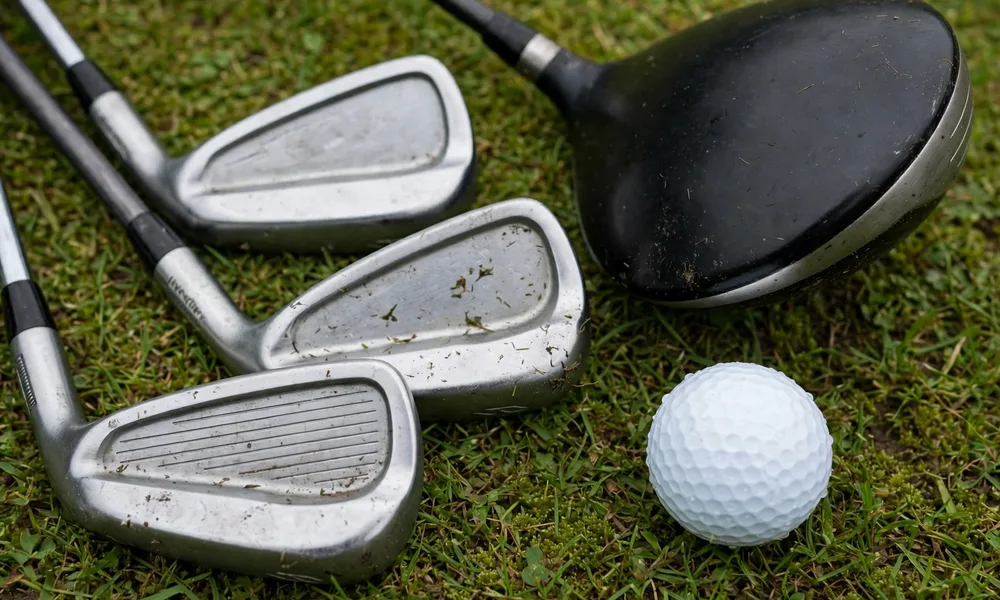
Forgiveness in a golf club comes from how the head is designed, and three features do most of the work. The first is perimeter weighting, which means weight is placed around the edges of the clubhead rather than in the middle. When you strike the ball off-centre, the head twists less, so the ball starts closer to your intended line. The second is a low and deep centre of gravity, which helps the ball get airborne more easily and with more height. Beginners often struggle to launch the ball, especially with long irons, so a low centre of gravity is genuinely helpful rather than a luxury. The third is a wider sole, the bottom edge of the iron, which stops the club digging into the turf on a heavy strike and lets it glide through instead.
Shaft flex matters just as much as head design, and it is the part beginners most often get wrong. A shaft that is too stiff for your swing speed will feel board-like, launch the ball too low, and cost you distance. A shaft that is too flexible will feel whippy and send the ball left or right unpredictably. Most adult male beginners with an average swing speed suit a regular flex, while many women and older players suit a senior or ladies flex, and stronger, faster swingers suit a stiff flex. Graphite shafts are lighter than steel, which helps slower swingers generate clubhead speed, while steel shafts give more feedback and cost less. There is no shame in a lighter shaft; the right one is the one that matches your swing, not the one the best player in the shop uses.
Game-Improvement Irons: The Beginner’s Best Friend
Game-improvement irons are the category built for exactly the golfer this guide is for. They have larger heads, thicker top lines, more offset, and wider soles than the irons professionals use. Offset means the leading edge of the clubface sits slightly behind the shaft, which gives the face a fraction more time to square up and helps fight a slice, the most common beginner miss. The thicker top line looks less elegant at address than a blade, but it inspires confidence, and confidence matters when you are standing over a ball with water on the right.
Drivers, Fairway Woods and Hybrids
The driver is the club beginners fear most and the one they most often buy badly. A forgiving driver in 2026 has a head at or near the maximum legal size, a high MOI, and an adjustable loft sleeve that lets you add loft to launch the ball higher. Loft is your friend as a beginner: most new players should use a driver with ten and a half or twelve degrees of loft, not nine. More loft means more height, more carry, and less side spin, which means fewer slices. A shorter shaft also helps, because a standard forty-five-inch driver is hard to control; a shaft cut to forty-four inches costs a little distance and gains a lot of accuracy.

Complete Sets Versus Building Your Own
For a first season, a complete beginner set is usually the smartest buy. These sets include a driver, a fairway wood, a hybrid, five or six irons, a wedge, a putter, and a bag, all matched for flex and length, at a price far below buying each club separately. The clubs are not the best on the market, but they are forgiving, consistent, and perfectly adequate for learning the game. The main compromise is that the set is built to an average specification, so a very tall or very short player may find the lengths wrong. If you are well outside average height, get measured before buying, even for a complete set.
How to Choose in the Shop
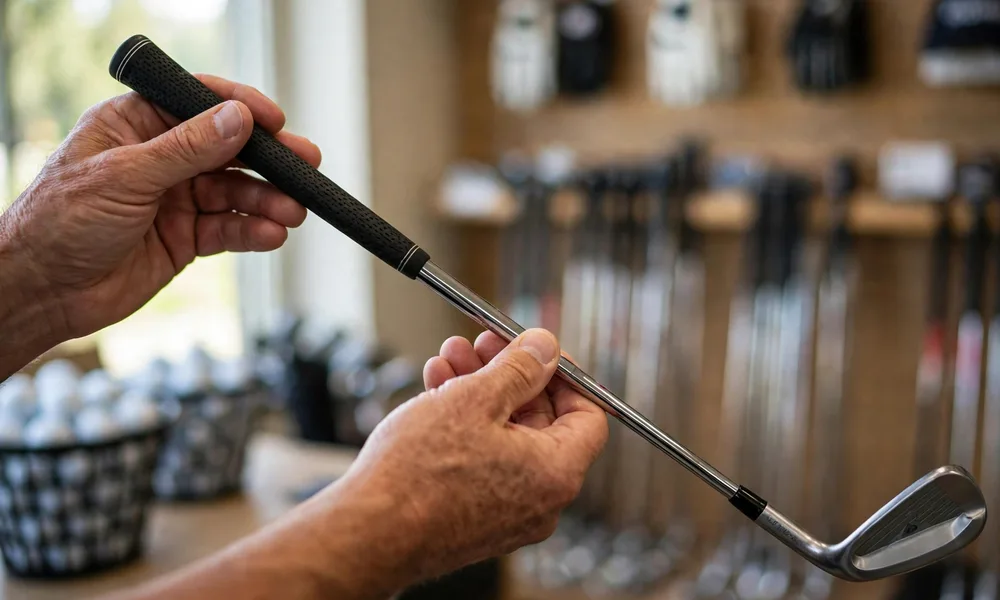
Choosing clubs in a shop is a practical exercise, not a research project, and a few simple tests tell you most of what you need to know. First, check the length: stand in your normal address position with the club sole flat on the ground and see whether the grip sits naturally in your hands without you having to crouch or reach. Second, check the lie angle: if the toe of the club digs in or lifts off the ground at address, the lie is wrong for you. Third, hit balls. A shop with a launch monitor or a net will let you try several irons, and the right one will feel solid on most strikes and forgiving on the rest. Do not choose by brand loyalty or by what your playing partners use; choose by what you hit best.
Comparison Table
| Club type | Best for beginners | Forgiveness | Price range |
|---|---|---|---|
| Game-improvement irons | Everyday play, learning the game | Very high | Moderate |
| Players’ distance irons | Athletic beginners who practise often | High | Moderate to high |
| Blade irons | Not recommended for beginners | Low | High |
| High-MOI driver | Tee shots, maximum forgiveness | Very high | Moderate to high |
| Hybrids | Replacing long irons | Very high | Low to moderate |
| Fairway woods | Long shots from a good lie | Medium | Moderate |
| Complete beginner set | First season, best value | High | Low to moderate |
Your kit beyond the clubs also affects how much you enjoy the game, and a few small items are worth getting right early. Comfortable, well-fitting shoes keep you stable through the swing and comfortable across eighteen holes, and the right pair matters more than most beginners expect. Our guide to the best golf shoes in 2026 explains spiked versus spikeless, waterproofing, and fit. Clothing matters too: shorts that move freely and breathe make a long round far more comfortable, as our guide to the best athletic shorts in 2026 explains. And if you walk the course, a bag that carries comfortably and holds everything you need makes the round easier; our guide to duffel bags that survive weekend trips in 2026 covers what to look for in a bag that gets thrown in the car week after week.
Checklist: Buying Your First Golf Clubs
- Choose game-improvement irons with wide soles and perimeter weighting, not blades.
- Pick a driver with ten and a half or twelve degrees of loft and a high MOI head.
- Replace long irons with hybrids, at least a 4-hybrid and a 5-hybrid.
- Match shaft flex to your swing speed: regular for most beginners, senior or ladies flex for slower swings.
- Check length, lie angle and grip size, and get a basic fitting if the shop offers one.
- Start with a half set or a complete beginner set, spend the saving on lessons, and upgrade once your swing settles.
Frequently Asked Questions
How many clubs does a beginner need?
Seven clubs are enough to start: a driver, a hybrid, a 7-iron, a 9-iron, a pitching wedge, a sand wedge, and a putter. That half set covers tee shots, fairway shots, approach shots, chips, bunker shots, and putting, and it is lighter to carry and easier to learn with than a full fourteen-club set.
Should a beginner buy expensive golf clubs?
No. A beginner should buy forgiving clubs at a modest price and spend the saving on lessons. Expensive clubs are usually built for skilled players and can make a beginner’s game harder. Upgrade once you know your swing speed, your typical miss, and the distances you hit each club.
Are second-hand golf clubs a good idea for beginners?
Yes, if you buy from a reputable shop that checks the clubs are genuine and in good condition. A two-year-old game-improvement set from a major brand is an excellent first set and costs far less than new. Avoid clubs with dented heads, worn grips, or bent shafts unless you know what you are looking at.
What shaft flex should a beginner use?
Most adult beginners suit a regular flex, while slower swingers, including many women and older players, suit a senior or ladies flex, and fast swingers suit a stiff flex. The right flex launches the ball at a good height with a consistent flight; if your shots fly very low or scatter left and right, the flex may be wrong.
Do beginners need a 3-wood?
Not at first. A 3-wood from the fairway is one of the hardest shots in golf. A 5-wood or 7-wood is easier to launch, and a hybrid is easier still. Add a 3-wood later, once you strike the ball consistently and want a long club for tee shots on tight holes.
How long will a beginner set last?
A good beginner set will last two to three seasons of regular play, and longer if you play occasionally. You will outgrow it when your swing becomes consistent, your distances stabilise, and you start wanting more control over trajectory and spin. When that happens, a proper fitting will tell you exactly what to change.
The Bottom Line
Golf clubs that forgive beginner mistakes are not the flashiest clubs in the shop, but they are the ones that keep a new player on the fairway, in the game, and enjoying the round. Choose game-improvement irons, a high-MOI driver with plenty of loft, and hybrids instead of long irons. Match the shaft to your swing, check the length and lie, and spend the money you save on lessons. The best first set is the one that makes your mishits playable and your good shots rewarding, and that is a set you will still be glad you bought two seasons from now.