The best golf shoes in 2026 are not the ones with the flashiest styling or the highest price tag. They are the ones that keep you stable through the swing, comfortable across eighteen holes, and dry when the morning dew is still on the fairway. A good pair disappears on your feet. A bad pair announces itself by the fourth hole, with a hot spot on your heel, a slipping back foot, or a sock that is already damp.
Golf is a walking game as much as a hitting game. The average golfer covers four to five miles per round, much of it on sloping, uneven ground that is wet in the morning and firm by the afternoon. Your shoes touch the ground on every shot, and they are the foundation of every swing.
This guide to the best golf shoes of 2026 sorts the field into the choices that actually matter: spiked or spikeless, waterproof or breathable, classic leather or modern athletic. It explains what to look for, what to skip, and how much to spend, so you can buy once and play in comfort all season.
Key Takeaways
- Fit and grip matter more than brand: a stable shoe that fits properly beats a famous name that pinches.
- Spiked shoes grip best on wet and hilly courses, while spikeless shoes are more comfortable for walking and for the clubhouse.
- Waterproofing is worth paying for if you play early mornings or in wet weather, but it must be paired with breathability.
- Break new golf shoes in with two or three short walks before a full round, never on competition day.
- Budget around £90 to £180 for a strong pair in 2026, and replace them when the tread or the waterproofing gives out.
How to Choose the Best Golf Shoes
Choosing golf shoes starts with an honest look at how and where you play. A golfer who walks a hilly parkland course in all weathers needs a different shoe from a golfer who rides a buggy around a flat resort course in summer. The course, the climate and your feet all have a vote, and the best golf shoes are the ones that win all three.
Start With Fit, Not Fashion
Golf shoes should fit snugly in the heel, with enough room in the toe box to wiggle your toes and enough width that the sides of your feet are not squeezed. Your feet swell slightly as a round goes on, especially in warm weather, so a shoe that feels perfect in the shop can feel tight by the fifteenth hole. Try shoes on in the afternoon, wearing the socks you actually play golf in, and walk around the shop for several minutes rather than just standing still. If the heel slips when you walk, the shoe is the wrong size or the wrong shape for your foot, and no amount of breaking in will fix it. Many golfers find that going up half a size from their everyday shoes gives the best result, particularly in waterproof leather models that do not stretch much.
Spiked or Spikeless: The Big Decision
Spiked golf shoes use replaceable cleats that dig into the turf and give maximum traction, especially on wet grass, steep slopes and muddy lies. They are the choice of most serious players and of anyone who plays in soft conditions, but they feel firmer underfoot and many clubs ask you to change out of them in the clubhouse. Spikeless shoes use moulded rubber lugs instead of cleats. They are lighter, more flexible, and comfortable enough to wear from the car park to the bar, and modern designs grip far better than they used to. For most club golfers in 2026, spikeless is the more practical everyday choice, while spiked shoes remain best for wet winters and hilly courses.

Waterproofing and Breathability
A waterproof golf shoe keeps your feet dry through morning dew, light rain and wet rough, and it is one of the few features that genuinely changes how a round feels. Look for shoes with a stated waterproof guarantee, usually one or two years, rather than vague claims about water resistance. The catch is that a fully waterproof membrane can trap heat, so the best designs pair it with breathable uppers and ventilation around the tongue and collar. If you play year-round, waterproofing is not optional.
Best Spiked Golf Shoes for 2026
Spiked shoes remain the benchmark for grip. The best models in 2026 combine a firm midsole that resists twisting through the swing, a wide cleat pattern that spreads pressure across the foot, and a waterproof upper that stands up to season after season of use.
Best Spikeless Golf Shoes for 2026
Spikeless golf shoes have improved enormously, and in 2026 they are the default choice for most golfers. The best spikeless models use deep, multi-directional lugs that bite into the turf on the downswing and release cleanly on the follow-through, with a flexible forefoot that lets the shoe bend naturally as you walk. They look more like trainers than traditional golf shoes, which means they are easier to wear all day and easier to match with modern golf clothing.
Comfort is where spikeless shoes win outright. They are lighter, they need almost no breaking in, and they cushion five miles of walking far better than a stiff leather shoe. Tired feet change your swing, your tempo and your patience, and a comfortable shoe keeps all three intact through the back nine. Our guide to the best gym shoes of 2026 covers the same comfort-first thinking for training footwear.
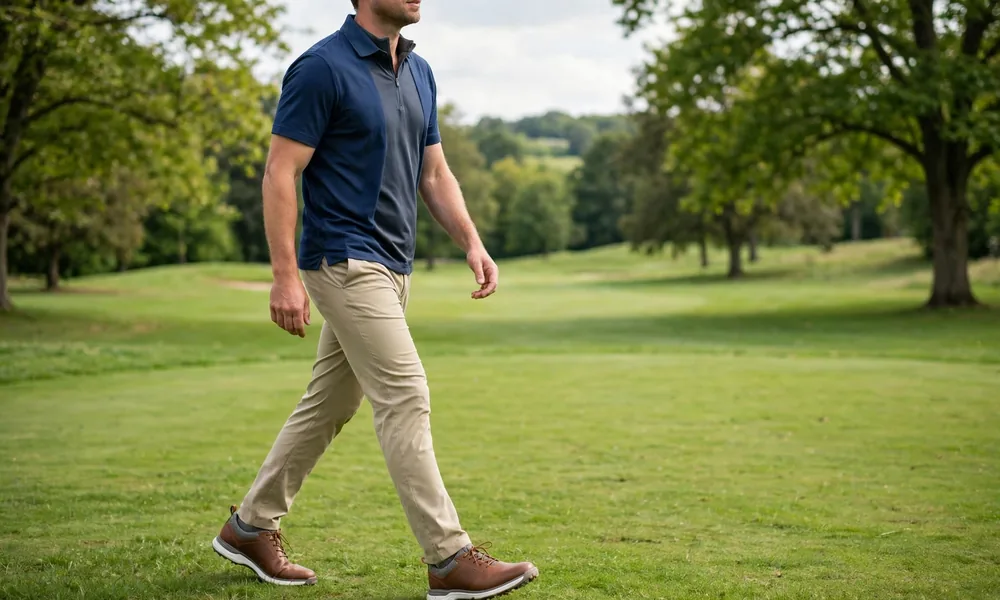
Best Waterproof Golf Shoes for 2026
Waterproof golf shoes are the insurance policy every year-round golfer needs. The best models in 2026 combine treated leather or coated synthetic uppers, sealed seams, and a membrane that stops water getting in while letting sweat vapour escape, so a wet round does not turn the shoe into a sauna.

Best Golf Shoes for Wide Feet and Comfort
Golfers with wide feet often suffer in silence, squeezing into standard-width shoes that pinch across the forefoot and cause blisters by the turn. The best golf shoes for wide feet come in dedicated wide fittings, with a roomier toe box and a wider sole platform that supports the whole foot rather than just the middle of it. If you have ever finished a round with sore feet despite a good score, width is the first thing to check.
Comfort features worth looking for include a cushioned heel collar that stops rubbing, a removable insole that you can swap for your own orthotics, and a midsole with enough give to absorb the impact of walking on firm ground. Some of the best comfort-focused golf shoes borrow cushioning technology from running shoes, and the crossover is no accident: a round of golf is a long walk with bursts of powerful rotation, and a shoe that handles both is worth its price. If you want to compare athletic footwear more broadly, our roundup of the best budget running shoes of 2026 shows how much comfort you can get without spending a fortune, and the same value thinking applies to golf shoes.
Best Golf Shoes Compared
| Shoe Type | Best For | Typical Price | Key Strength |
|---|---|---|---|
| Spiked leather | Wet courses, serious players | £120–£200 | Maximum grip and stability |
| Spikeless athletic | Everyday club golf, walkers | £90–£160 | Comfort and versatility |
| Waterproof spiked | Year-round play, wet climates | £130–£220 | Dry feet in all conditions |
| Waterproof spikeless | All-weather comfort | £110–£180 | Dry feet with easy walking |
| Wide-fit golf shoes | Wide feet, long rounds | £100–£180 | Roomy fit, no pinching |
| Budget golf shoes | Beginners, occasional players | £50–£90 | Good value for casual play |
How Much Should You Spend on Golf Shoes?
Golf shoes in 2026 range from around £50 for basic models to over £250 for premium tour-level shoes, and the sweet spot for most golfers sits between £90 and £180. In that range you get reliable waterproofing, a proper cleat or lug system, and cushioning that lasts the full round. Below £50, you are usually buying a shoe that looks like a golf shoe but grips and waterproofs like a trainer. Above £200, you are paying for premium leather, tour-proven design and the last few percent of performance, which matters to low handicappers but rarely to anyone else.
Think of golf shoes as a cost per round: a £150 pair that lasts three seasons of weekly golf costs about a pound per round. Buy the best shoe you can afford, look after it, and it will repay you every time you step onto the first tee. For everyday trainers to wear off the course, our guide to the best sneakers of 2026 covers comfortable options that pair well with a golf wardrobe.
Golf Shoe Buying Checklist
- Try shoes on in the afternoon, wearing your golf socks, and walk in them for several minutes.
- Choose spiked for wet and hilly courses, spikeless for comfort and everyday club golf.
- Check the waterproof guarantee and the warranty period before you pay.
- Make sure the heel is snug and the toe box has room to wiggle.
- Break new shoes in over two or three short walks before a full round.
- Keep a cleat wrench and a soft brush in your bag, and clean your shoes after wet rounds.
Frequently Asked Questions
What are the best golf shoes for beginners in 2026?
Spikeless golf shoes are the best choice for most beginners. They are comfortable from the first wear, they work well on and off the course, and they cost less than premium spiked models. Look for a waterproof spikeless shoe in the £90 to £130 range, with a good fit and a flexible sole, and you will have a pair that serves you well for several seasons.
Are spiked or spikeless golf shoes better?
Neither is better in every situation. Spiked shoes grip better on wet and hilly courses, while spikeless shoes are more comfortable and more versatile. Most club golfers are happiest with spikeless shoes for everyday play and a spiked pair for winter or wet conditions. If you can only buy one pair, choose based on where you play most often.
How long do golf shoes last?
A good pair of golf shoes lasts two to three seasons of regular play, or roughly 100 to 150 rounds. The outsole wears first, then the waterproofing, then the cushioning. Replace them when the tread is smooth, when your feet get wet in light rain, or when the shoe no longer supports your foot through the swing.
Do I need waterproof golf shoes?
If you play year-round or early in the morning, yes. Morning dew alone is enough to soak through a non-waterproof shoe, and wet feet make the rest of the round miserable. If you only play in dry summer conditions, a breathable non-waterproof shoe is cooler and lighter, and it will serve you fine.
Can I wear golf shoes off the course?
Spikeless golf shoes can be worn off the course, and many golfers wear them to and from the club. Spiked shoes should not be worn on hard surfaces away from the course, as the cleats wear down quickly and can damage floors. Most clubs also ask you to change out of spiked shoes in the clubhouse.
Should golf shoes be tight or loose?
Golf shoes should be snug in the heel with a little room in the toe box. Your heel should not slip when you walk, and your toes should be able to wiggle. If the shoe pinches across the forefoot, try a wide fitting rather than a bigger size, because a bigger size often just makes the heel slip.
The Bottom Line
The best golf shoes in 2026 are the ones that fit your feet, suit your course, and disappear from your mind once the round starts. Choose spiked for grip in the wet, spikeless for comfort and everyday play, and waterproofing if you play year-round. Spend in the £90 to £180 range, break them in properly, and look after them, and a good pair will carry you through season after season of better, more comfortable golf.