Green Goddess Dressing That Actually Tastes Green in 2026
The best green goddess dressing in 2026 is the bottle that earns its colour from herbs, not from a dye. A good green goddess dressing is pale green and flecked with real herbs, creamy without feeling heavy, and bright with lemon and tarragon, so every spoonful tastes fresh and green rather than flat and sweet. This guide explains what green goddess dressing actually is, how the main styles differ, and how to read a label so you can tell a proper herb-led dressing from a tinted ranch before you buy it.
Key takeaways
- The colour must come from herbs: if the dressing is green but you cannot see or taste parsley, chives and tarragon, the colour is doing work the flavour should be doing.
- Tarragon is the signature note: without its gentle aniseed warmth, a green dressing is just a herby ranch by another name.
- Thick dressings suit dipping and spooning over sturdy salads, while thinner ones suit pouring over mixed leaves and grain bowls.
- A short ingredient list is the best sign of quality: real herbs, mayonnaise or yoghurt, lemon and anchovy should come before water and stabilisers.
- Once opened, green goddess dressing belongs in the fridge and should be finished within two to three weeks.
What green goddess dressing actually is
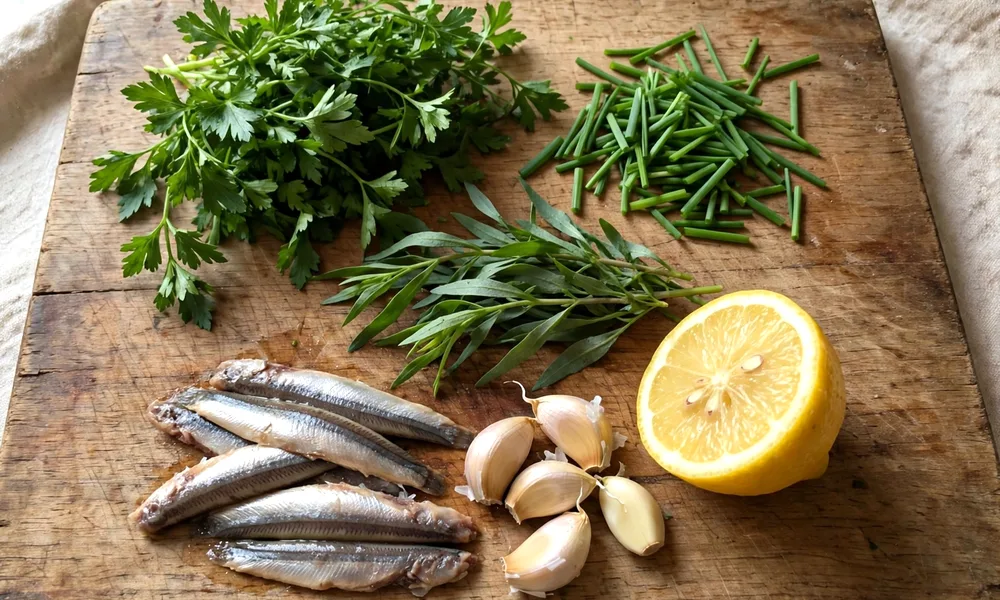
Green goddess dressing is a creamy, herb-led dressing built on mayonnaise and sour cream or yoghurt, blended with fresh parsley, chives and tarragon, lemon juice, garlic and anchovy. The herbs are the whole point: parsley gives it colour and freshness, chives give it a gentle onion warmth, and tarragon gives it the soft aniseed note that makes green goddess taste like itself and nothing else.
The base matters almost as much as the herbs. A mayonnaise base is the richest and most stable, and it keeps the longest, but it can taste heavy if the herbs are weak. A sour cream base is tangier and lighter, and it holds its shape well as a dip. A yoghurt base is the lightest of all, with a clean tang that suits everyday salads, though it can taste thin if the herbs are sparse. The best dressings use more than one: mayonnaise for body, sour cream or yoghurt for tang, and enough fresh herbs that the colour comes from the leaves rather than a bottle.
Comparison table: the best green goddess dressings of 2026
| Rank | Style | Texture | Best for |
|---|---|---|---|
| 1 | Classic herby | Thick, flecked | Dipping, wedge salads, crudites |
| 2 | Light and pourable | Thin, smooth | Mixed salads, drizzling, grain bowls |
| 3 | Avocado green goddess | Rich, buttery | Salads, sandwiches, tacos |
| 4 | Yoghurt-based | Light, tangy | Everyday salads, when you want less fat |
| 5 | Anchovy-led traditional | Creamy, savoury | Steak salads, sturdy greens, dipping |
| 6 | Homemade blender style | Fresh, bright | Full control, freshest herb flavour |
The best green goddess dressings of 2026
1. Classic herby: the real thing
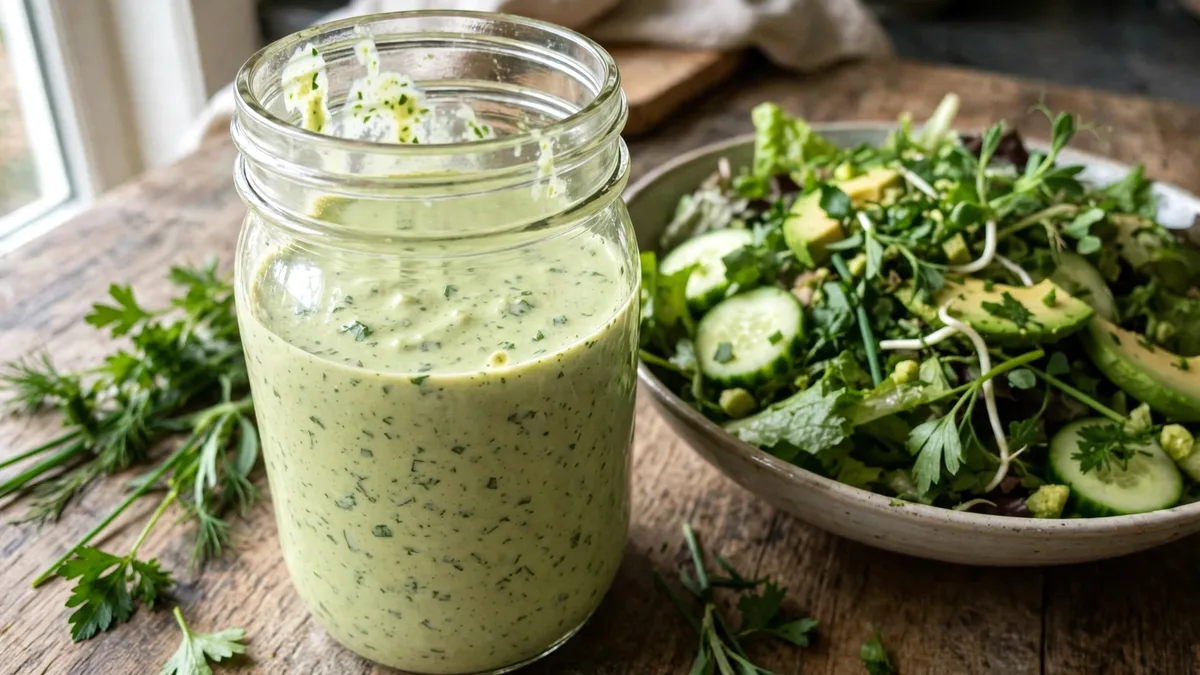
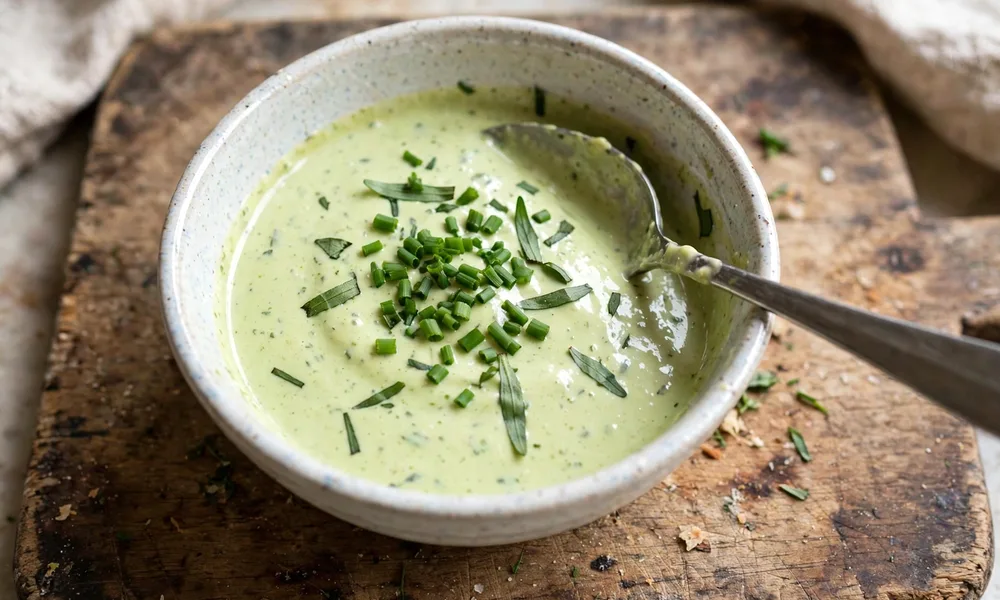
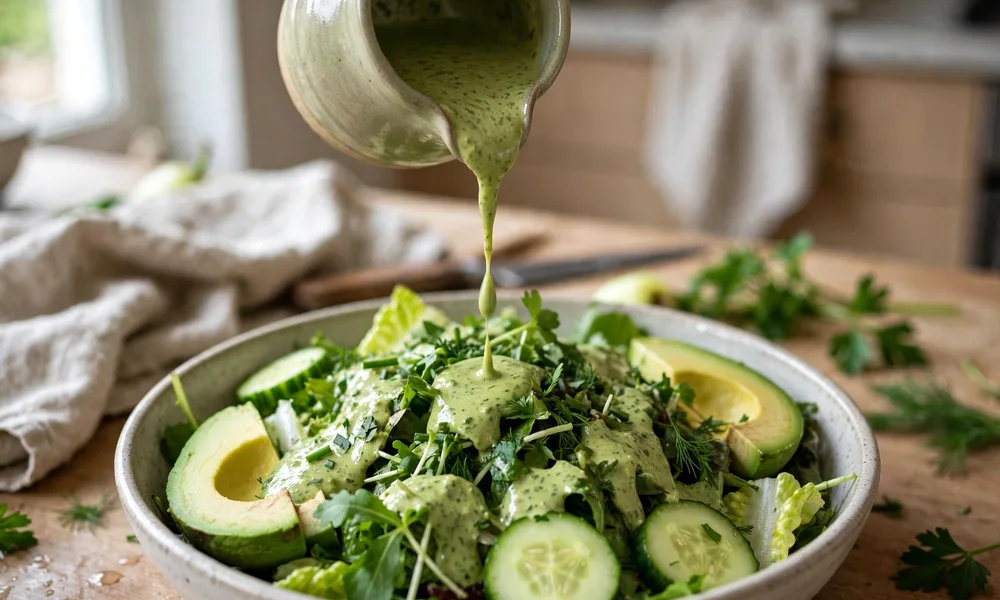
Classic herby green goddess dressing is the style against which all the others are judged. It is thick enough to coat a crudite without sliding off, and it is visibly flecked with chopped herbs. The flavour is fresh and green, with parsley at the front, chives in the middle, and tarragon warming the finish, and the texture is half the pleasure: the creamy base carries the dressing, and the flecks of herb give every spoonful something to bite into.
2. Light and pourable: the salad dressing
Light green goddess dressing thins the classic recipe so it pours easily, coats mixed leaves evenly, and drizzles well over a grain bowl or a plate of grilled chicken. The flavour is brighter and fresher than the classic style, because the herbs are spread through a thinner base rather than concentrated in a thick one, but a good light dressing still tastes clearly of tarragon and chives, with a lemon lift that keeps a salad lively.
3. Avocado green goddess: rich and buttery
Avocado green goddess dressing adds ripe avocado to the classic herb base, which makes it richer, butterier and a deeper green. The avocado smooths the texture and softens the sharp edges of the herbs, so the dressing tastes mellow and creamy rather than sharp, and it clings to leaves and sandwiches better than any other style. The trap is a bottle that uses avocado flavouring rather than real avocado, which tastes flat and slightly artificial, so check that avocado appears early on the label. Our guide to the avocado oil worth keeping in your kitchen explains why avocado makes such a good base for dressings, and the same rule applies here: real avocado first, flavouring nowhere.
4. Yoghurt-based: the everyday bottle
Yoghurt-based green goddess dressings swap some of the mayonnaise and sour cream for yoghurt, which makes them tangier, lighter and lower in fat. The best ones still taste clearly of herbs, because the yoghurt adds its own tang rather than hiding the tarragon and chives. The worst ones taste thin and watery, with the herbs reduced to a green tint, because the yoghurt has replaced the richness without replacing the flavour.
5. Anchovy-led traditional: savoury and deep
Anchovy-led green goddess dressing follows the original 1920s recipe most closely, with anchovy doing real work in the background. The anchovy adds salt and a deep savoury note that makes the dressing taste more grown-up and more complex, and it holds its own against strong food: a steak salad, a wedge with bacon, or a plate of grilled vegetables. It never tastes fishy when it is done well, because the anchovy dissolves into the base and reads as saltiness rather than seafood.
6. Homemade blender style: the freshest bottle
Homemade blender green goddess is the freshest version of all, made by blending fresh herbs, mayonnaise, sour cream, lemon juice, garlic and anchovy until smooth, then resting it for half an hour so the flavours settle. It tastes brighter than any bottled version, because the herbs have never been heated or stored, and the colour is a true leaf green rather than a tinted pale green.
How to read a green goddess dressing label
The label tells you almost everything. Herbs should come early, usually in the first few ingredients, after the oil or the dairy base, and they should be named: parsley, chives and tarragon, not just herbs or natural flavours. If the herbs are near the end of the list, after water, starches and flavourings, the bottle is mostly base tinted to look green, and it will taste flat. The second thing to read is the base. Mayonnaise, sour cream and yoghurt are all honest bases, and the best bottles name them plainly. A bottle that lists water first is mostly water, however green it looks. The third thing to read is the colour. A dressing coloured by herbs is a soft, uneven green with visible flecks. A dressing coloured by spirulina or food colouring is an even, vivid green with no flecks at all, and it usually tastes of nothing much.
Green goddess versus ranch: which bottle to buy
The choice between green goddess and ranch is the single biggest decision in the creamy-dressing aisle, and it comes down to what flavour you want leading the salad. Green goddess is herb-led: parsley, chives and tarragon do the talking, with lemon keeping it bright and anchovy adding depth in the background. Ranch is buttermilk-led: dill, garlic and onion powder give it a gentler, more familiar flavour, and it tastes creamy and mild rather than green and fresh. Neither is better in general, but each is wrong for the other’s job. Green goddess suits salads where freshness is the point, like a spring salad, a grain bowl or a plate of crudites, while ranch suits salads where comfort is the point, like a wedge with bacon or a plate of wings. Our guide to ranch dressings that actually taste fresh makes the comparison plainly: ranch is lighter and more familiar, green goddess is greener and more interesting.
Using green goddess dressing well: beyond the salad bowl
Green goddess dressing earns its place in the fridge by doing more than dressing salads. As a dip, it is the natural partner for crudites, roasted potato wedges, grilled chicken strips and falafel, where its cool freshness balances heat and crunch. As a spread, it lifts a sandwich or a wrap in a way plain mayonnaise never does, and it turns a grain bowl into something worth eating. As a salad dressing, it is at its best on sturdy leaves and bold food: a wedge salad, a steak salad, or a grain bowl with roasted vegetables. The key to using it is restraint. A salad drowned in green goddess tastes of dressing and nothing else, and the leaves go limp under the weight. Two tablespoons will dress a large bowl if you toss it properly. Our guide to the salad dressings that make greens taste good covers the same rule: the dressing is there to tie a salad together, not to bury it.
Checklist: buying green goddess dressing in 2026
- Real herbs are visible through the bottle, and you can taste parsley, chives and tarragon, not just read about them on the label.
- Tarragon is present and named: without its gentle aniseed warmth, the dressing is a herby ranch, not a green goddess.
- The base is honest, mayonnaise, sour cream or yoghurt, not water first with a long line of stabilisers.
- The colour is a soft, uneven green with visible flecks, not an even, vivid green that comes from a dye.
- The style matches the meal: thick for dipping and wedges, thin for pouring over mixed leaves, avocado for sandwiches and tacos.
- The bottle is in date, the seal is intact, and the size matches how fast your household finishes it.
Frequently asked questions
What does green goddess dressing taste like?
Fresh, green and creamy, with parsley and chives at the front, a gentle aniseed warmth from tarragon, a bright lift from lemon, and a savoury depth from anchovy in the background. A good dressing tastes clearly of herbs, with a flavour that feels like a garden.
Does green goddess dressing need to be refrigerated?
Yes, once opened. Shelf-stable bottles keep in the cupboard until opened, then belong in the fridge for two to three weeks. Refrigerated bottles keep for a few weeks, and homemade dressing for about a week.
How long does green goddess dressing last after opening?
About two to three weeks in the fridge for a bottled dressing, and about a week for homemade.
Is green goddess dressing gluten-free?
Most green goddess dressings are gluten-free, made from herbs, oil, egg and dairy. Some flavoured versions add thickeners that contain gluten, so check the label, and check the food it is served with, which is more often the problem.
Can you make green goddess dressing at home?
Yes, and it takes five minutes. Blend fresh parsley, chives and tarragon with mayonnaise and sour cream, add lemon juice, garlic and a little anchovy paste, and rest it for half an hour.
What foods go best with green goddess dressing?
Crudites, wedge salads, steak salads, grain bowls, grilled chicken, roasted potato wedges, falafel, sandwiches and wraps. It suits fresh, green food best, and heavy, fried food least, where a richer dressing is the better choice.
Bottom line
The best green goddess dressing in 2026 is the bottle that actually tastes green: real herbs you can see, tarragon you can taste, an honest mayonnaise or yoghurt base, and a lemon lift that never tastes sweet. Thick is the best choice for dipping and wedge salads, thin is the best choice for pouring over mixed leaves, and avocado is the kindest starting point if you want something richer.