A pressure cooker looks like the most frightening appliance a beginner can buy: a sealed pot that cooks with steam under pressure, with a lid that locks and a valve that hisses. It should be the easiest way to get dinner on the table fast. What nobody warns you about is how many ways a first pressure cooker can go wrong. A bad one leaks steam around a warped seal, scorches food onto a thin base, or confuses a first-time cook with controls nobody can decode. The worst pressure cookers for beginners of 2026 turn a machine that should give you your evenings back into one you are afraid to switch on.

What Makes a First Pressure Cooker Bad
A pressure cooker for a beginner has one job above all others: it must be safe, predictable, and easy to understand the first time it is used. A good first cooker has a lid that lines up easily and locks with a clear click, a pressure indicator you can see at a glance, and a release valve that lets steam out in a controlled way. A bad cooker fails this test on the first meal. Its lid only lines up at one exact angle, it gives no clear sign whether it is locked, and its valve is either stiff or vague, so a beginner never knows whether the pot is under pressure or not.
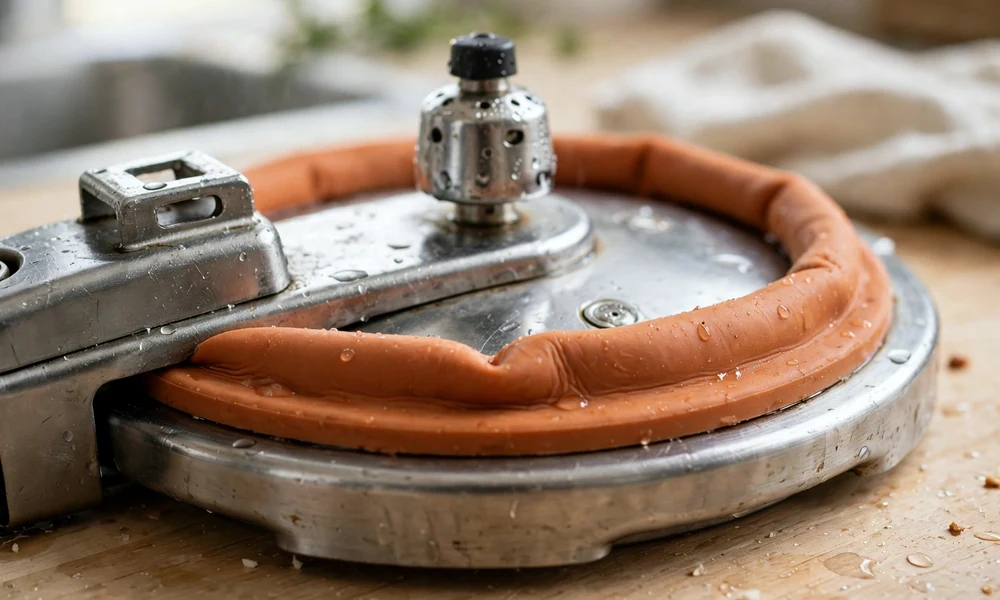
The second problem is the seal. A pressure cooker works because a silicone ring seals the lid to the pot. If the ring is thin or warped, steam escapes, the cooker never reaches full pressure, and cooking times stretch out. A beginner who has followed a recipe exactly and still ends up with hard beans will blame themselves, when the fault is a ring that should never have been fitted. A good ring seals with a quiet click and stays sealed for a year or more. A bad ring needs replacing every few months: that is a design flaw, not a consumable.
The third problem is the base. A thin base develops hot spots, and hot spots scorch rice, beans, and sauces onto the bottom while the food above stays undercooked. A beginner who opens the lid to find a scorched disc on the bottom and pale, undercooked grains on top will assume they did something wrong, when the cooker did it. A good base is thick and heavy, spreads heat across the whole pot, and cleans in minutes rather than an overnight soak. A thin base also warps, and a warped base no longer sits flat on the hob, so on an induction hob it may not heat at all.
The Confusing Controls: Worst for a First-Time Cook
The worst first pressure cookers are the ones a beginner cannot understand. The display is small and dim, the buttons are labelled with icons nobody can decode, and the manual is a thick booklet translated badly from another language. This matters more than it sounds, because pressure cooking is a timed process. A few minutes too long turns vegetables to mush, and a few minutes too short leaves beans hard. A cooker that makes timing hard makes cooking hard, and a cook who cannot trust the timer will stop trusting the machine.
The second failure is preset overload. The worst cookers pile on a dozen buttons for cake, yoghurt, and popcorn, and a beginner who presses the wrong one gets a result they cannot explain. The best cookers keep the controls simple: clear pressure levels, a timer you can read from across the kitchen, and a manual mode that lets you set the time yourself. Most cooks use three or four programs and ignore the rest, so a cooker with a dozen presets is a cooker that has spent its budget on buttons instead of a good seal and a thick base. If you cannot work out how to set the time and the pressure in thirty seconds, the cooker is badly designed, and a badly designed cooker is one a beginner will use twice and leave in the cupboard.
The Leaking Seal: Worst for a Nervous Beginner
A pressure cooker that leaks steam is frightening for an experienced cook and terrifying for a beginner. The hiss, the damp air, the smell of food that is not cooking properly: a beginner who has been told pressure cookers are safe will not believe it when their first cooker hisses at them from every seam. The worst seals leak from the first use, because the ring is too thin, the lid is machined badly, or the rim of the pot is not flat.
The danger is what a leaking seal does to a beginner’s confidence. A cook who has been frightened by their first pressure cooker will not use a second one, and will go back to slow cooking everything, which is a shame, because a good pressure cooker is one of the most useful appliances a busy household can own. The test is to run the cooker with water only, the way you should test any new cooker before the first meal. If steam escapes around the rim, or the cooker never reaches pressure, take it back. A good cooker reaches pressure quietly, holds it steadily, and releases it in a controlled way, with no hissing from the seams at all.
The release is the moment that frightens beginners most, and the worst cookers make it worse. A quick release sends a jet of steam out of the valve, and a natural release takes ten minutes while the food keeps cooking inside. A beginner who does not know which one a recipe means will either wait too long and overcook everything, or open the valve too soon and get a jet of starchy water across the worktop. The worst cookers give no guidance at all: no markings on the valve, no mention in the manual, and a release button that is hard to find when the pot is hot. A good cooker marks the valve clearly, explains both releases in plain language, and lets you release steam with a spoon handle from a safe distance.
The Wrong Size: Worst for a First Purchase
Size is the mistake most beginners make first, and the worst cookers make it worse by being sold in sizes that suit nobody. A cooker that is too small cannot hold a family meal, so a beginner cooks in batches and the second batch is cold before the first is served. A cooker that is too big is worse: a half-empty pressure cooker takes longer to reach pressure, cooks unevenly, and wastes energy, and a beginner who has bought too big will think pressure cooking is slow, when the cooker is simply the wrong size.
The right size for most beginners is six litres, which suits a family of four and still works for two. A three-litre cooker suits one or two people, and an eight-litre cooker suits batch cooking and freezing, but a beginner should not start with either extreme. The worst cookers in this group are the ones sold as one-size-fits-all, with no guidance at all on the box about who they suit. A cooker is a long-term purchase, and the size you buy first is the size you will live with for years, so it is worth getting right. The best pressure cookers of 2026 show what the right sizes look like, and the six-litre electric multi-cooker is the default a beginner should start from.
What the cooker replaces matters too. A beginner who gives up on a bad pressure cooker often goes back to slow cooking everything, which takes eight hours instead of thirty minutes. The best slow cookers of 2026 are fine tools, but they are slow tools, and a household that could have dinner in half an hour will wait all day instead. The best rice cookers of 2026 are the other half of the same kitchen: a pressure cooker that also cooks rice well is a cooker that earns its counter space twice over. A good first pressure cooker does several jobs well, and a bad one does none of them.
The Short Life: Worst for a Long-Term Buy
A pressure cooker is a long-term purchase, and the worst first cookers do not last. The sealing ring stretches, the valve sticks, the non-stick coating peels, and the lid handle loosens. Within a year, the machine that promised to last a decade is unreliable, and the manufacturer has stopped selling spare rings for that model. A brand that abandons its spare parts within a year has told you everything you need to know about its quality.
The warning sign is the price together with the warranty. A very cheap cooker with a one-year warranty is a cooker the maker does not expect to last, and a beginner who buys one will be buying another within two years. A good cooker costs more, comes with a warranty of three years or more, and sells replacement rings, valves, and gaskets for years afterwards, cheaply and easily. Before you buy, check whether spare rings are easy to find and reasonably priced. The best brands sell them for years, and the rings cost only a few pounds or dollars. A cooker whose spares have already vanished is a cooker that has already been abandoned.
How to Spot a Bad One Before You Buy
Start with the lid. Open it and close it three times: it should line up easily, turn smoothly, and lock with a clear click, and the pressure indicator should pop up visibly so you can see at a glance whether the pot is pressurised. If the lid needs a shove, or gives no sign it is locked, put the cooker back. Then check the base: pick the pot up and feel its weight. A thick, heavy base cooks evenly and stays flat, while a thin base scorches and warps.
Next, read the controls. You should be able to set the time and the pressure in thirty seconds, without the manual, and the display should be clear enough to read from across the kitchen. Check the size against your household: six litres for most families, three for one or two people. Finally, check the spares: replacement rings should be easy to find and cheap. A good first pressure cooker is an electric multi-cooker with a stainless steel inner pot, a thick base, a locking lid, and a clear manual mode. It is the easiest way to get fast, even, safe pressure cooking without learning a new skill.
The Verdict
The worst pressure cookers for beginners of 2026 are the ones with controls nobody can decode, seals that leak steam from the first use, sizes that suit nobody, and lives so short their makers have already stopped selling spares. The best are the ones you stop noticing, because the lid clicks, the seal holds, the base cooks evenly, and the timer is one you can trust. Buy a well-made electric multi-cooker with a stainless steel inner pot, a thick base, and a clear manual mode, and test it with water before the first meal. A good first pressure cooker should make you wonder how you ever cooked without it, and the difference between a good one and a bad one is the difference between dinner in half an hour and a machine you are afraid to switch on.