
A salt and pepper grinder looks like the simplest thing on the table: a mill that turns whole peppercorns and coarse salt into seasoning. It should be the easiest purchase a cook makes. What nobody warns you about is how many ways such a simple object can go wrong. A bad grinder jams, grinds unevenly so your seasoning is either dust or whole peppercorns, or falls apart the first time it is refilled. The worst salt and pepper grinders of 2026 turn the simplest job in the kitchen into a chore, and seasoning is the one thing a cook does to almost every meal.

What Makes a Grinder Bad
A salt and pepper grinder has one job above all others: it must grind evenly, from fine dust to coarse flakes, at whatever setting you choose. A good grinder has a mechanism that crushes rather than smashes, so the grind is even, and an adjustment that actually changes the grind instead of doing nothing. A bad grinder fails this test on the first use. Its mechanism is dull, so it crushes half the peppercorns and leaves the rest whole. Its adjustment does nothing, so fine and coarse taste the same. Or it jams, because a peppercorn has lodged in the mechanism and there is no way to clear it without taking the whole mill apart.
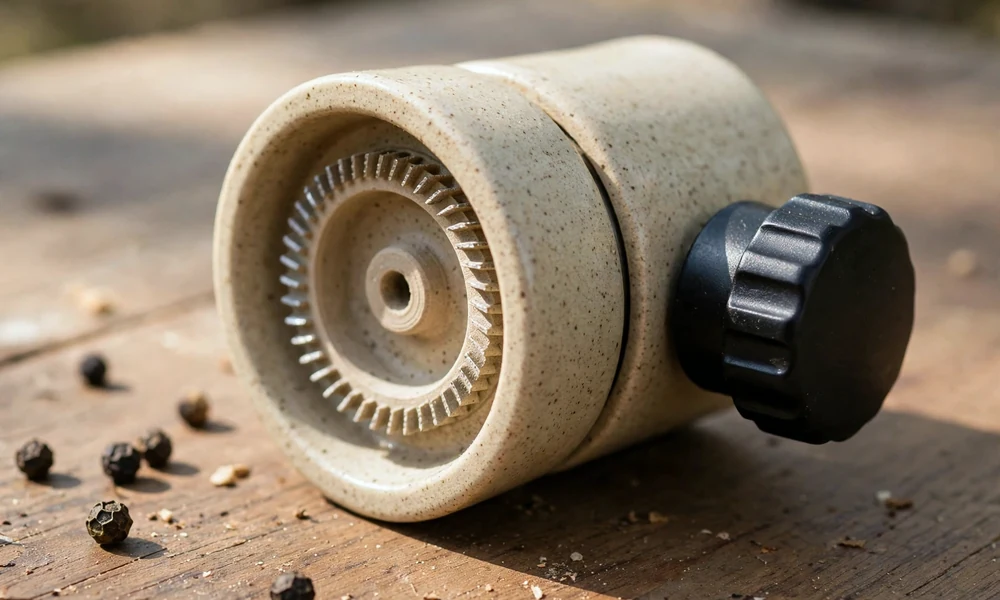
The second problem is the material of the mechanism. Salt corrodes metal, so a grinder with a steel mechanism for salt will rust and seize within months. A good salt mill uses a ceramic mechanism, which salt cannot corrode, and a good pepper mill uses steel or ceramic, both of which stay sharp. A bad grinder uses the wrong mechanism for the wrong spice, or the same cheap mechanism for both, and the salt mill is the one that fails first, grinding slower and slower until it stops altogether.
The third problem is refilling. A grinder that is hard to refill is a grinder that will not be refilled, and a mill that sits empty on the table is a mill that has stopped being useful. A good grinder opens easily, has a wide mouth that accepts peppercorns without spilling them across the worktop, and closes securely so it does not come apart in your hand while you grind. A bad one has a tiny opening, a lid that cross-threads, or a body that unscrews at the wrong joint, spilling a mill full of peppercorns across the floor.
The Jamming Grinder: Worst for Everyday Seasoning
The worst grinders are the ones that jam, and they jam at the worst moment: halfway through seasoning dinner, with one hand on the mill and the other on the pan. A peppercorn lodges in the mechanism, the handle will not turn, and the cook shakes the mill, bangs it on the worktop, and ends up with peppercorns everywhere and no seasoning on the food. The jam comes from a mechanism with too little clearance, so a slightly oversized peppercorn, or a piece of salt that has absorbed moisture and swollen, blocks it completely.
The second failure is the handle. A grinder with a short, smooth handle gives no leverage, so a cook with wet or greasy hands cannot turn it at all. A grinder with a handle fixed by a single screw works loose within weeks, so the handle wobbles and then comes off in your hand. The test is to fill the mill, set it to coarse, and grind for thirty seconds. A good mill turns smoothly and steadily, with an even stream of grounds. A bad one judders, sticks, or needs two hands to turn. If it jams in the shop, it will jam at home, and a mill that jams is a mill that will be replaced by a shaker within a month.
The Uneven Grind: Worst for Flavour
Seasoning is about control, and the worst grinders give you none. An uneven grind means half your pepper is dust and half is whole peppercorns, so one bite is bland and the next is fiery. The fault is in the mechanism: a cheap grinder smashes peppercorns between two rough plates, producing a mix of dust and chunks, while a good grinder crushes them evenly between a burr and a ring, producing a consistent grind at whatever setting you choose.
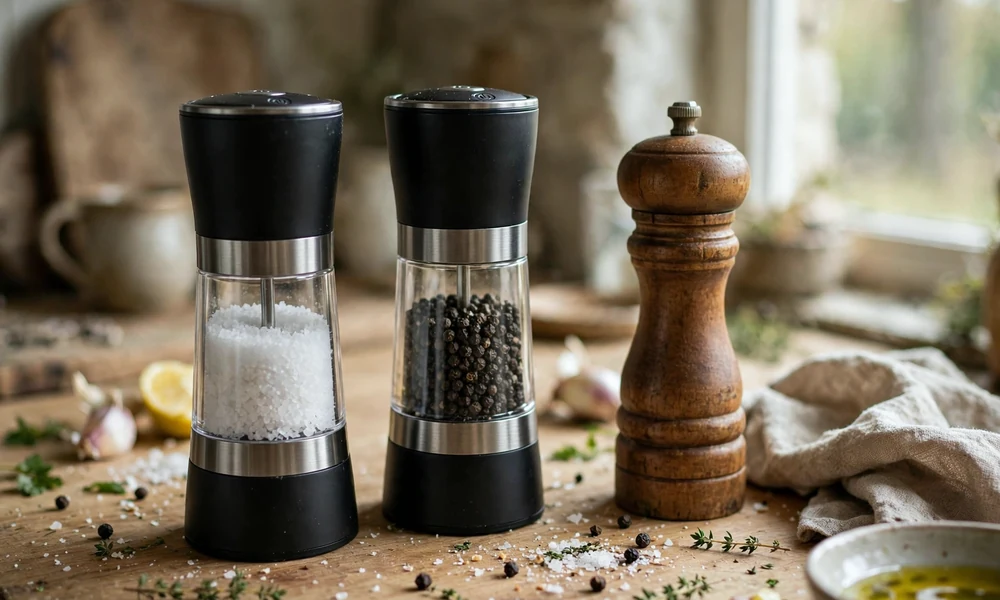
The adjustment is the second half of the problem. A good mill has an adjustment that changes the grind in clear steps, from fine dust for a soup to coarse flakes for a steak, and the setting stays where you put it. A bad mill has an adjustment knob that turns freely and does nothing, or a setting that drifts while you grind, so the grind gets finer and finer as you turn. The test is to grind at the finest setting and then at the coarsest, and to look at the results side by side. If they look the same, the adjustment is decoration, and the mill is a one-setting tool pretending to be adjustable. The best salt and pepper mills of 2026 show what an even grind looks like, and the classic wooden mill is still the standard the rest are judged against.
The Electric Grinder: Worst for the Table
Electric grinders promise effortless seasoning at the push of a button, and the worst ones deliver frustration instead. A cheap electric grinder has a weak motor that stalls on a single peppercorn, a battery that dies after a week, or a button that needs to be held down with exactly the right pressure, so the mill grinds in fits and starts. A grinder that stalls is a grinder that produces nothing, and a cook who has to shake it and bang it to get it going has bought a worse tool than the manual mill it replaced.
The second problem is the noise and the size. An electric grinder is louder than a manual one, heavier, and needs batteries or charging, so it lives in a cupboard instead of on the table, and a grinder that lives in a cupboard is a grinder that is not used. The third problem is the mechanism: electric grinders are often built with the same cheap mechanism as the worst manual mills, so they jam just as often, and when they jam, there is no handle to force through the blockage. A good electric mill is a luxury for a cook with weak hands, and it needs a strong motor and a ceramic mechanism to be worth its price. A cheap electric mill is the worst of both worlds: it costs more than a manual mill and works worse.
The Grinder That Falls Apart: Worst for Refilling
Some grinders fail not while grinding but while being refilled, and the worst ones fall apart in your hands. The body unscrews at the wrong joint, the top comes off instead of the bottom, or the lid cross-threads and will not go back on. A mill full of peppercorns spilled across the floor is a mess, and a mill that cannot be refilled without a struggle is a mill that will be left empty.
The second failure is the seal. A grinder that does not seal lets moisture in, and moisture makes salt clump and peppercorns swell, so the mechanism jams the next time it is used. A good mill seals tightly, with a lid that fits and a body that does not come apart at the wrong joint. The test is to fill the mill, turn it upside down, and shake it gently. Nothing should come out, and nothing should rattle loose. A mill that passes that test will survive years of refills. A mill that fails it will spill its contents across the kitchen within a month.
What goes in the mill matters as much as the mill itself. Whole peppercorns and coarse sea salt are what a mill is for, and pre-ground pepper is a waste of a good mill. The best spice grinders of 2026 are the tool for the spices a mill cannot handle, and the best spice racks of 2026 are where the jars live. A mill on the table, a grinder in the cupboard for the hard spices, and a rack that keeps them all in order: that is a kitchen where seasoning is easy, and a bad mill is the one thing that can spoil it.
Cleaning and storage are the parts of a mill that nobody thinks about until they go wrong. A mill that cannot be taken apart cannot be cleaned, and a mechanism full of old, damp salt will seize the next time it is used. Salt absorbs moisture from the air, so a mill left beside a steaming kettle will clump within weeks, and a mill stored in a damp cupboard will do the same. The worst mills have no way to open the mechanism for cleaning, so the only option is to throw the mill away and buy another. A good mill comes apart easily for a wipe-down, and it lives on the table or in a dry cupboard, away from steam and damp. Keep the mill dry, keep it clean, and it will grind evenly for years.
How to Spot a Bad One Before You Buy
Start with the grind. Fill the mill, set it to coarse, and grind for thirty seconds: the grounds should be even, with no whole peppercorns and no dust. Then set it to fine and grind again: the results should look clearly different. If they look the same, the adjustment is decoration. Then check the mechanism: salt needs ceramic, pepper needs steel or ceramic, and a mill with the wrong mechanism for its spice will fail within months.
Next, check the refill. Open the mill and close it three times: it should open easily, accept peppercorns without spilling, and close securely. Turn it upside down and shake it gently: nothing should come out. Check the handle, if it has one: it should be long enough to give leverage, fixed solidly, and comfortable to hold with wet hands. Finally, check the size against your table: a mill that is too tall tips over, and a mill that is too small needs refilling every week. A good mill is a simple tool that does one job well, and a bad one is a mill that jams, grinds unevenly, or falls apart when you refill it.
The Verdict
The worst salt and pepper grinders of 2026 are the ones that jam halfway through seasoning dinner, grind unevenly so one bite is bland and the next is fiery, promise effortless electric grinding and stall instead, or fall apart the first time they are refilled. The best are the ones you stop noticing, because they grind evenly from fine to coarse, their mechanisms stay sharp, and they refill without a struggle. Buy a mill with a ceramic mechanism for salt and steel or ceramic for pepper, test the grind at both ends of the adjustment, and check that it seals and refills easily. A good mill is a small thing, but it seasons almost every meal you cook, and the difference between a good one and a bad one is the difference between food that tastes as it should and food that does not.