A rice cooker looks like the simplest appliance a small family can buy: a pot that cooks rice while you get on with dinner. It should be the easiest purchase a household of two or three makes. What nobody warns you about is how many ways a small rice cooker can go wrong. A bad one burns the bottom while the top stays raw, boils over and leaves starchy water all over the worktop, or is so badly sized that a small family either cooks too little or wastes half of what it makes. The worst rice cookers for small families of 2026 turn the easiest meal of the week into a chore, and rice is the food a small family can least afford to waste.
What Makes a Small Rice Cooker Bad
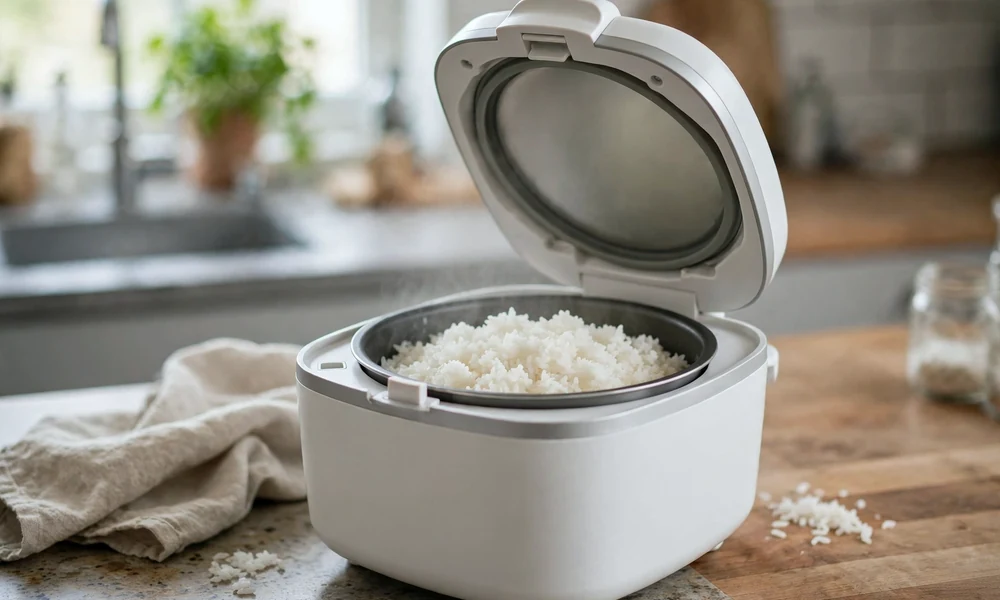
A rice cooker for a small family has one job above all others: it must cook a small amount of rice evenly, every time. A good small cooker has a thick inner pot that spreads heat evenly, a tight lid that keeps steam in, and a thermostat that knows when the rice is done. A bad cooker fails this test on the first pot. Its pot is thin, so the bottom scorches while the top stays undercooked. Its lid fits loosely, so steam escapes and the rice dries out. Or its thermostat guesses, so it switches off too early and leaves the rice crunchy, or too late and leaves it burnt.
The second problem is the size. A cooker made for a family of six is the wrong cooker for a family of two, however cheap it is. A rice cooker needs its pot between a third and two-thirds full to cook evenly, and a big cooker with a small amount of rice in it dries the rice out and burns the bottom. A cooker that is too small is just as bad: it boils over, because there is no room for the water to bubble, and the starchy water runs down the sides and onto the worktop. The right size for a small family is a cooker of around one litre, which makes two to four portions, and no bigger.
The third problem is the pot. A good inner pot is thick, with a non-stick coating that survives years of use, and a handle that stays cool. A bad pot is thin aluminium with a coating that scratches the first time a metal spoon touches it, and once the coating is scratched, rice sticks to the bare metal underneath and burns. A pot that cannot be cleaned properly is a pot that will smell of old rice within a month, and a rice cooker that smells is a rice cooker nobody wants to open.
The Scorched Bottom: Worst for Small Portions
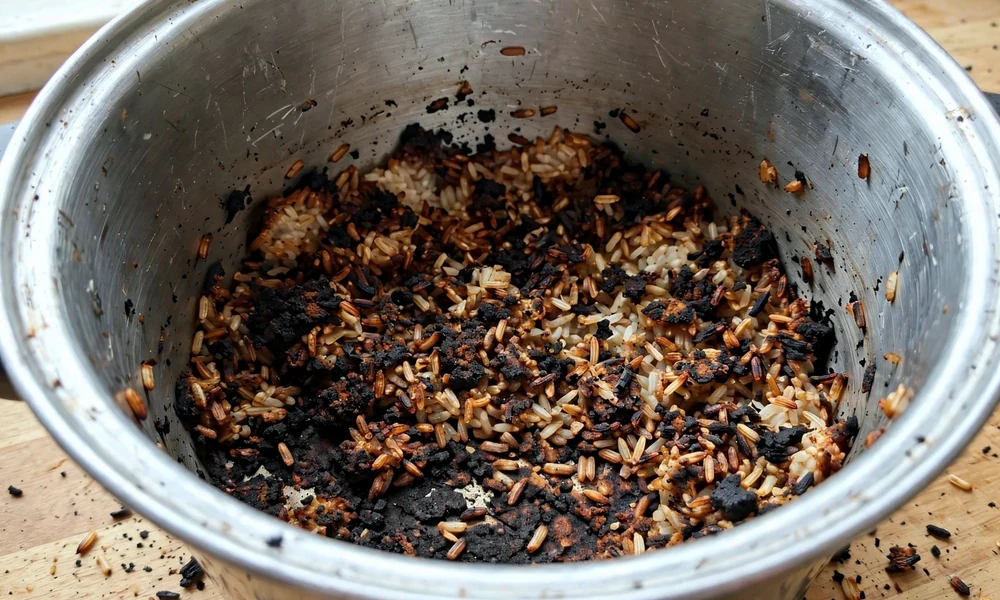
The worst fault in a small rice cooker is a scorched bottom, and it hits small portions hardest. A thin pot develops hot spots, and the rice sitting on a hot spot burns while the rice above it stays pale and undercooked. The burnt layer sticks to the pot, so the next pot burns faster, and within weeks the cooker is one that burns rice every time, whatever you do.
The fault is worse in a big cooker used for a small amount, because a thin layer of rice has nowhere to hide from the hot spot. A small family cooking two portions in a six-portion cooker is cooking a thin layer across a wide, hot base, and the bottom will scorch before the top has steamed. The warning sign is the pot: pick it up and feel its weight. A good pot is heavy for its size, with a thick base that spreads heat. A thin, light pot will scorch, and no amount of careful measuring will save it. A cooker with a thick pot and a fuzzy logic thermostat, which adjusts the heat as the rice cooks, is the one that gets small portions right.
The Boil-Over: Worst for a Small Kitchen
A rice cooker that boils over is a rice cooker that makes a mess a small kitchen cannot afford. The starchy water bubbles up, runs down the sides, pools on the worktop, and drips into the drawer below. The worst cookers boil over every time, because their lids do not seal, their steam vents are too small, or their pots are too small for the amount of water they need.
The second problem with a boil-over is what it does to the cooker. Starchy water dries into a hard crust around the lid and the vent, and the crust blocks the vent further, so the next pot boils over worse. The lid hinge gets sticky, the steam vent clogs, and the cooker starts to smell. A good small cooker has a lid that seals tightly, a vent wide enough to let steam out without letting water through, and a pot with enough headroom for the water to bubble without reaching the lid. Test it the way you test everything else: cook the smallest portion the cooker claims to handle, and watch the lid. If water appears around the rim, the cooker is too small for its own claims.
The Coating That Peels: Worst for the Pot
A rice cooker lives or dies by its inner pot, and the worst pots fail within months. The non-stick coating on a cheap pot is thin, and it scratches the first time a metal spoon or a fork touches it. Once the coating is scratched, rice sticks to the bare metal, and the stuck rice burns, and the burnt rice makes the next pot stick worse. Within a year the pot is one that burns rice every time, and a replacement pot costs almost as much as a new cooker.
The second pot failure is the shape. A pot that is too wide and shallow cooks unevenly, because the rice spreads thin and dries out at the edges. A pot that is too tall and narrow boils over, because the water has nowhere to go. A good pot is deep enough for the water to bubble and wide enough for the rice to steam evenly, with a coating thick enough to survive a wooden spoon and a handle that does not get hot. Never use a metal spoon in a rice cooker, and never scour the pot with anything harder than a soft cloth. A pot that is looked after will last for years, and a pot that is scratched in the first month will ruin every pot of rice after it.
The Cooker With Too Many Buttons: Worst for Everyday Cooking
Some rice cookers are sold with a dozen programs: white rice, brown rice, porridge, cake, yoghurt, and soup. For a small family that cooks rice three times a week, the extra programs are not a feature. They are a distraction, and the worst cookers hide the one button that matters behind a menu that needs the manual to navigate. A cooker that needs a manual to cook rice is a cooker that will be used wrong, and rice cooked on the wrong program is rice that comes out crunchy or mushy.
The second problem with a complicated cooker is that it costs more, and the extra money buys electronics that fail first. A simple one-button cooker has almost nothing to go wrong: a thermostat, a heating element, and a switch. A complicated cooker has a display, a control board, and a dozen sensors, and when any of them fails, the cooker is finished. The best rice cookers of 2026 show what a good small cooker looks like, and the simplest good one is a one-button cooker with a thick pot and a tight lid. A small family does not need a cooker that makes cake. It needs a cooker that makes rice, every time, without a manual.
What the cooker replaces matters too. A small family that gives up on a bad rice cooker often goes back to a pot on the hob, which is slower and easier to get wrong, or to a multi-cooker that does several jobs badly. The best pressure cookers of 2026 can cook rice well, but they are a different tool for a different job, and the best slow cookers of 2026 are slower still. A rice cooker that works is the simplest tool in the kitchen, and a small family that has one will use it three times a week for years.
The keep-warm function is the feature a small family uses most and notices least, and the worst cookers get it wrong. A good keep-warm holds rice at serving temperature for an hour or two without drying it out. A bad one keeps cooking, so the bottom dries into a hard crust while the top goes cold, or it cools down so far that the rice sits lukewarm and unsafe for hours. A small family often cooks rice before the rest of dinner is ready, so the rice may sit for an hour, and a cooker that cannot hold it properly is a cooker that wastes the very food it was bought to save. Test the keep-warm the way you test everything else: cook a small pot, leave it for an hour, and taste the bottom layer. If it is dry and hard, the keep-warm is cooking, not keeping warm.
How to Spot a Bad One Before You Buy
Start with the size. For a household of two or three, buy a cooker of around one litre, which makes two to four portions, and no bigger. A cooker that is too big will dry out small portions and scorch the bottom. Then pick up the inner pot and feel its weight: a good pot is heavy for its size, with a thick base that spreads heat, and a coating that feels smooth and even, with no rough patches.
Next, check the lid. It should sit flat on the rim with no rocking, and the steam vent should be wide enough to let steam out without letting water through. Press the buttons, if it has any: one button is enough, and a cooker with a dozen programs is a cooker with a dozen things to go wrong. Finally, cook the smallest portion it claims to handle and watch the lid. If water appears around the rim, or the bottom scorches, take it back. A good small cooker makes exactly enough rice for the table, with no burning, no boil-over, and no waste.
The Verdict
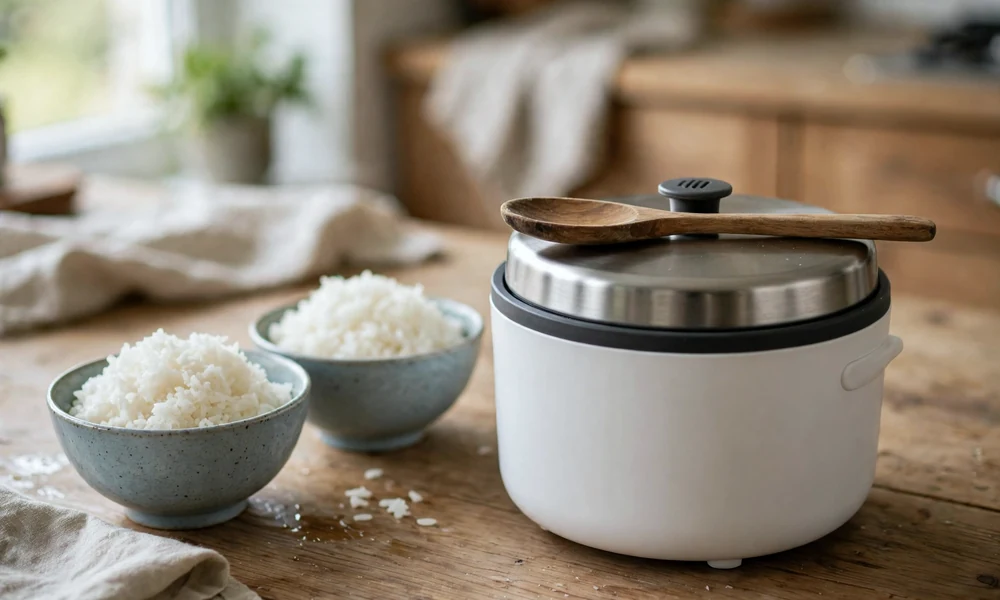
The worst rice cookers for small families of 2026 are the ones that scorch the bottom of a small portion, boil over onto the worktop, peel their coating within months, or hide the rice button behind a dozen programs nobody needs. The best are the ones you stop noticing, because they are the right size, their pots are thick and heavy, their lids seal tightly, and they cook two portions as evenly as six. Buy a one-litre cooker with a thick pot and a tight lid, use a wooden spoon, and never let a metal utensil near the coating. A good small rice cooker is the simplest tool in the kitchen, and the difference between a good one and a bad one is the difference between rice that is ready when dinner is and rice that is burnt, boiled over, or wasted.