
A half-sheet pan is the one pan size that belongs in every kitchen. A half-sheet pan measures about 18 by 13 inches, fits a standard home oven with room for air to circulate, and handles everything from a full batch of cookies to a roast dinner for four. This guide explains what a half-sheet pan is, why that size works so well, how it compares with quarter and full sheets, which material to choose, and how many you need.

Key Takeaways
- A half-sheet pan measures about 18 by 13 inches, with a rim about an inch high.
- It is the most useful sheet pan size because it fits standard ovens and holds a full batch of cookies or a dinner for four.
- Buy heavy-gauge aluminium, 18 gauge or thicker, so the pan heats evenly and stays flat.
- Two half-sheet pans beat one: rotate them so one is loaded while the other bakes.
- Line it with parchment paper for easy release and fast cleanup.
What Is a Half-Sheet Pan?
A half-sheet pan is a rimmed rectangular metal tray measuring about 18 by 13 inches. The name comes from commercial kitchens, where a full sheet pan measures about 26 by 18 inches and fits only a commercial oven. A half sheet is exactly half of that, and it happens to be almost the perfect size for a home oven. The rim, about an inch high, keeps oil, juices and runny batters from sliding off onto your oven floor.
Most half-sheet pans are made from bare aluminium, which conducts heat quickly and evenly, is light enough to lift with one hand when loaded, and does not rust. Professional bakers have used them for decades. Aluminised steel and nonstick versions exist too, but bare aluminium remains the best choice for most people because there is no coating to wear out.
One warning: not every pan sold as a half sheet actually measures 18 by 13 inches. Some measure rim to rim, others the flat surface inside the rim, and some cheaper pans are around 17 by 12 inches. Check the dimensions on the box, and measure the pan at home. A pan an inch short holds noticeably less food, and one an inch too big may not fit your rack.
Why 18 by 13 Is the Right Size
The 18 by 13 inch size works because it matches a standard home oven. Most racks are about 22 to 24 inches wide and 16 to 18 inches deep, so a half sheet sits on the centre rack with an inch or two of space on every side. That gap matters: hot air must circulate around the pan for food to brown evenly. A pan that fills the whole rack blocks airflow, and the middle stays pale while the edges burn.
The size also matches how people cook. A half sheet holds a dozen large cookies or two dozen smaller ones, roasted vegetables for four, or a sheet-pan dinner of chicken thighs and potatoes. It is big enough for a family meal and small enough to lift safely with oven mitts when loaded.
If you are buying your first sheet pan of any kind, our guide to what a sheet pan is explains the whole family of sizes and how the rim and material change what a pan can do. This guide goes deep on the one size that matters most: the half sheet.
Half-Sheet Pan vs Quarter-Sheet and Full-Sheet Pans
The three common sizes look similar on the shelf but suit different jobs. The half sheet is the all-rounder. The quarter sheet, about 13 by 9 inches, is the most useful second pan: it handles half batches of cookies, toasting nuts, roasting for one or two people, and jobs where a half sheet would be mostly empty. It also fits in a toaster oven.
The full sheet, about 26 by 18 inches, belongs in commercial kitchens. It only fits a commercial oven and is far too big for a home oven rack, so do not buy one unless you have measured your oven first. The jelly-roll pan, about 15 by 10 inches with a taller rim, sits between the quarter and half sheet and suits sponge cakes, but it is a specialist rather than a daily pan.

| Pan size | Dimensions | Best for | Fits a home oven? |
|---|---|---|---|
| Half sheet | 18 x 13 inches | Cookies, roasting, dinners | Yes |
| Quarter sheet | 13 x 9 inches | Small batches | Yes |
| Full sheet | 26 x 18 inches | Commercial baking | No |
| Eighth sheet | 9 x 6 inches | Single servings | Yes |
| Jelly-roll pan | 15 x 10 inches | Sponge cakes | Yes |
The practical answer for most kitchens is two half sheets and one quarter sheet. Two half sheets let you rotate trays during batch baking. The quarter sheet covers the small jobs. Anything more is a luxury, and anything less means cooking in batches.
Half-Sheet Pan Materials Compared
The material decides how evenly a half-sheet pan bakes, how long it lasts and how much care it needs: bare aluminium, aluminised steel and nonstick-coated steel.
Bare Aluminium
Bare aluminium is the professional standard and the best choice for most people. It heats fast and evenly, with a hot-to-cool spread under 12 degrees Fahrenheit in careful tests, and it is light enough to lift with one hand when full. There is no coating to scratch or flake. Its weaknesses are cosmetic: it dents if dropped, and acidic foods can leave dark marks. Neither affects how it bakes.
Aluminised Steel
Aluminised steel is tougher and more dent-resistant than plain aluminium, and it holds heat a little longer once hot. It browns slightly more slowly but very evenly, and it resists rust far better than plain carbon steel. It is a good choice if you want one pan to last for many years of hard use.
Nonstick-Coated Steel
A nonstick half-sheet pan is the easiest option for release and cleanup, and the best choice for sticky bakes like bar cookies and granola. The trade-off is lifespan: the coating wears thin and eventually flakes, so a nonstick pan is a two-to-three-year pan rather than a ten-year one. Dark nonstick surfaces brown food about 20 to 25 percent faster, so drop the oven temperature by 25 degrees and check food early. Never use metal utensils on it, and never put it under the broiler.
How Many Half-Sheet Pans Do You Need?
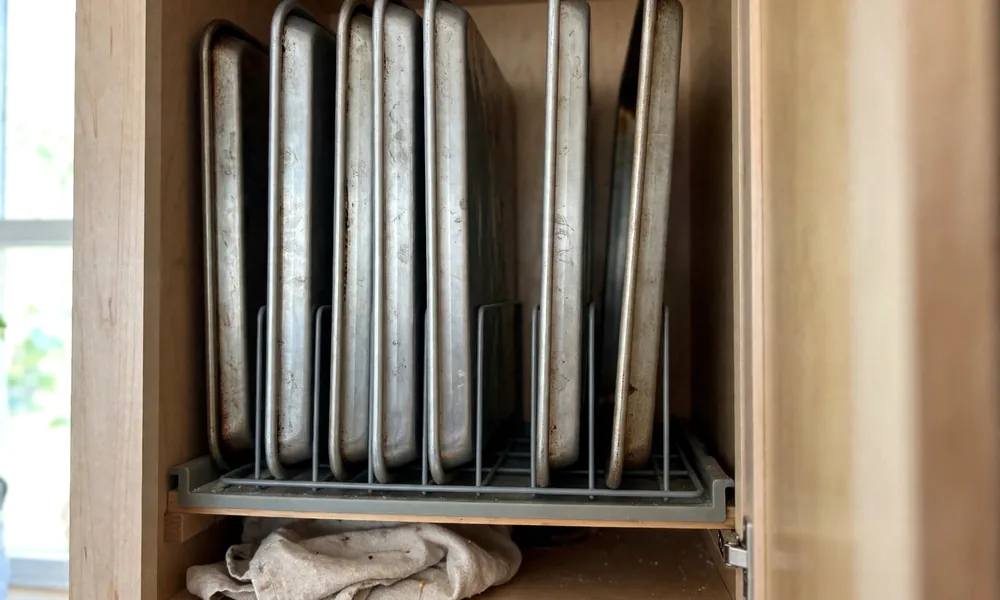
One half-sheet pan is enough to start, but two is the sweet spot for anyone who bakes or roasts more than once a week. With two pans you can bake in rotation: one tray goes in the oven while the next is loaded, which cuts batch baking time nearly in half.
Three or more make sense only if you bake in volume, for example for a family gathering or a bake sale. The pans stack neatly, so a spare is cheap insurance. If you only have room for one pan, make it a heavy-gauge bare aluminium half sheet.
What to Look For When You Buy a Half-Sheet Pan
Shop by specification, not by logo. The design and the metal matter far more than the brand name.
Gauge and Weight
Gauge is the thickness of the metal and the best predictor of performance. Look for 18 gauge or thicker: a heavy pan stays flat, heats evenly and resists warping, while a thin pan buckles and bakes unevenly. Pick it up in the shop — if it flexes by one corner, it is too thin.
Flatness and Rim
Set the pan on a flat counter before you buy it. It should sit dead flat with no rocking, because a pan that rocks on the counter will rock on the rack too. The rim should be about an inch high and rolled or reinforced, which adds stiffness and gives you a safe grip with oven mitts.
True Dimensions
Measure the pan before you trust the label. Some pans sold as half sheets are actually 17 by 12 inches. Check that it fits your rack with an inch of space on every side. If your oven is unusually small, a jelly-roll pan may fit better.
What About Even Browning?
If even browning is your main concern, the material and gauge matter more than the size. Heavy-gauge aluminium browns the most evenly, while dark steel browns faster. Our guide to the best baking sheets for even browning tests half sheets for browning performance. Read it alongside this guide if you bake cookies every week.
How to Use and Care for a Half-Sheet Pan
Line the pan with parchment for baking: it stops sticking and makes cleanup take seconds. For roasting, toss the food in oil and spread it in a single layer with space between the pieces. Crowd the pan and food steams instead of roasting, so use a second pan. A silicone mat works as a reusable liner but slows browning slightly. Our guide to silicone baking mats explains when a mat beats parchment.
Use the pan beyond baking: as a freezer tray for berries and cookie dough, as a drip tray under a pie, as a cooling surface with a rack inside it, and as a prep tray for seasoning meat. Let the pan cool before washing, use hot soapy water and a soft sponge, and dry it straight away. Aluminium darkens with use; that patina is harmless. Avoid the dishwasher for bare aluminium.
Half-Sheet Pan Buying Checklist
- Buy the true half-sheet size, about 18 by 13 inches, and measure the pan yourself.
- Check it fits your oven rack with an inch of space on every side for air to circulate.
- Choose 18-gauge metal or thicker: the pan should feel rigid, not flexible.
- Set the pan on a flat counter and check it sits dead flat with no rocking.
- Pick bare aluminium for everyday baking and roasting, or aluminised steel if you want extra toughness.
- Buy two if you bake often, plus parchment paper for easy release and fast cleanup.
Frequently Asked Questions
Is a half-sheet pan the same as a baking sheet?
Almost. A baking sheet is the general name for a flat tray used for baking, and most trays sold as baking sheets today are rimmed half-sheet pans. When a recipe says bake on a baking sheet, it means a half-sheet pan.
Will a half-sheet pan fit in my oven?
Almost certainly, if your oven is a standard home oven. Measure your rack first: you need about 18 by 13 inches plus an inch on every side for air to circulate. If your oven is smaller than standard, a jelly-roll pan or a quarter sheet may fit better.
Why does my half-sheet pan warp?
Thin metal expands unevenly as it heats, so the pan twists and pops. Heavy-gauge pans with a reinforced rim resist this. Avoid plunging a hot pan into cold water, which makes warping worse.
Can I put a half-sheet pan under the broiler?
Bare aluminium and aluminised steel half sheets can go under the broiler on a lower rack, watched closely. Never put a nonstick half sheet under the broiler or heat it empty.
How many cookies fit on a half-sheet pan?
A half sheet holds about a dozen large cookies or up to two dozen smaller ones, spaced about two inches apart so they can spread. For a full batch, bake in two rounds or use two pans in rotation.
Do I need to grease a half-sheet pan?
Not if you line it with parchment paper, the simplest option for baking. For roasting, a light coating of oil stops sticking and helps browning. Greasing without a liner works, but cleanup takes longer.
Bottom Line
A half-sheet pan is the one tray every kitchen needs: 18 by 13 inches of heavy-gauge aluminium that fits a standard oven, holds a family dinner or a full batch of cookies, and does the work of half a dozen single-purpose pans. Buy the true size, choose 18-gauge metal or thicker, check it sits flat, and buy two if you bake often.


