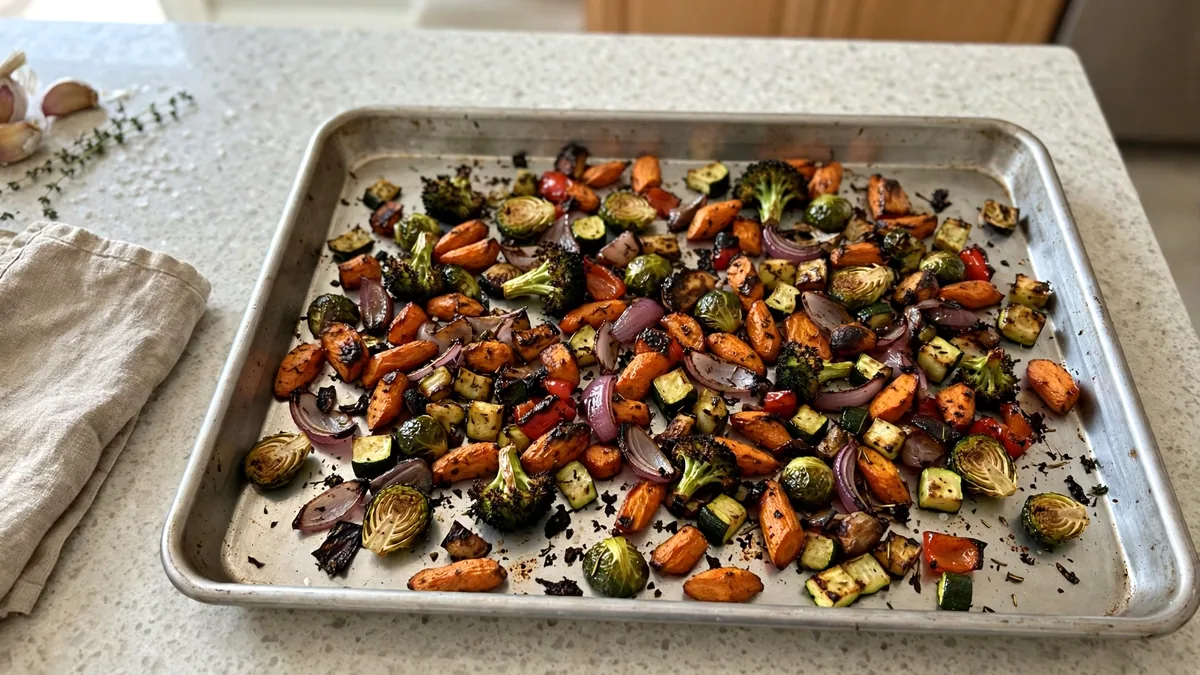
A sheet pan is the most useful piece of metal in most home kitchens, and most people already own one without knowing its proper name. A sheet pan is a flat, rimmed metal tray designed for baking, roasting and cooking whole meals in the oven, and once you understand what it can do, it replaces a surprising number of single-purpose pans. This guide explains what a sheet pan is, how it differs from a cookie sheet and a baking sheet, which size and material to buy, and how to use one for weeknight dinners and batch baking.
Key Takeaways
- A sheet pan is a rimmed metal tray, usually aluminium, with a low raised edge on all four sides.
- The half-sheet pan, about 18 by 13 inches, is the size most home cooks should buy first because it fits a standard oven rack.
- Heavy-gauge aluminium, 18 gauge or thicker, heats the most evenly and resists warping far better than thin trays.
- A sheet pan is not only for baking: it handles roasting, sheet-pan dinners, freezing, cooling and prep work.
- Line it with parchment for easy release and fast cleanup, and never put a nonstick sheet pan under the broiler.
What Is a Sheet Pan?
A sheet pan is a shallow, rectangular metal pan with a rim about an inch high around all four edges. That rim is the whole point: it stops oil, juices and runny batters from sliding off, which is why a sheet pan can roast a chicken dinner, bake cookies and catch drips without making a mess of your oven floor. Professional kitchens have used them for decades, and the same design is now the default tray in home kitchens too.
The classic sheet pan is made from bare aluminium, which conducts heat quickly and evenly, is light enough to lift with one hand when loaded, and does not rust. A good one feels substantial: the metal is thick, the corners are neatly folded, and the rim is rolled or reinforced so the pan stays flat through hundreds of oven trips. Thin trays look similar on the shelf but warp, buckle with a loud pop as they heat, and bake unevenly because parts of the pan lift away from the rack.
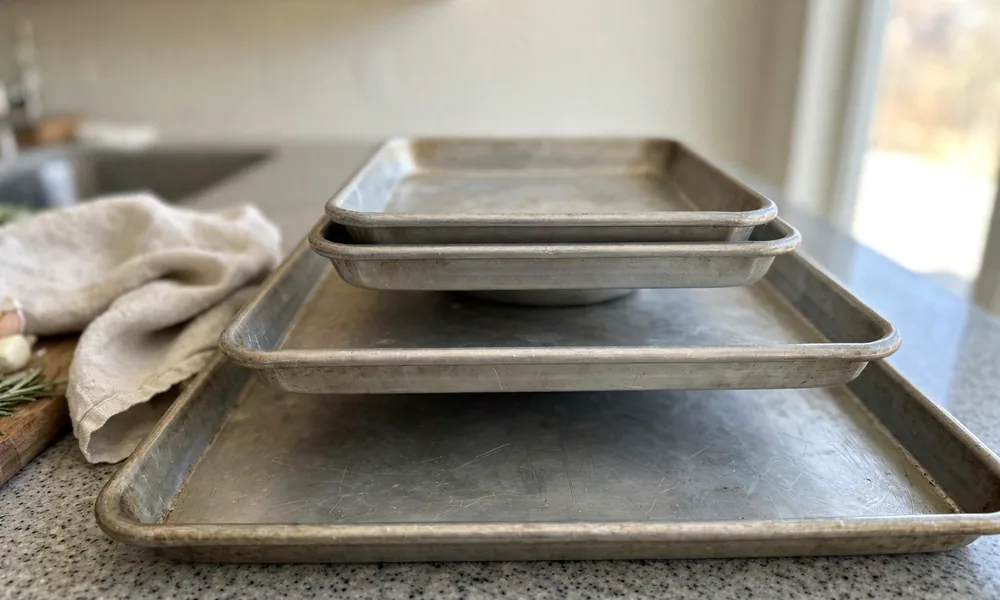
Sheet pans come in standard sizes borrowed from commercial kitchens. A full sheet is about 26 by 18 inches and only fits a commercial oven. A half sheet, about 18 by 13 inches, is the workhorse size. A quarter sheet is about 13 by 9 inches and suits small batches and toaster ovens, while an eighth sheet is about 9 by 6 inches and works for toasting nuts or roasting for one person. When a recipe says bake on a baking sheet, it almost always means a half-sheet pan.
Sheet Pan vs Cookie Sheet vs Baking Sheet
The names get mixed up constantly, and shops do not help: the same tray may be labelled a baking sheet in one store and a sheet pan in another. The differences are real, though. A cookie sheet is traditionally a flat tray with one or no raised edge, so cookies slide off easily. A baking sheet is the general name for any flat tray used for baking, rimmed or flat. A sheet pan is specifically the rimmed version, with a raised edge on all four sides.
That rim makes a sheet pan the better all-rounder. A flat cookie sheet cannot hold a sheet-pan dinner: juices from chicken and vegetables would run off the edge and smoke on the oven floor, and it cannot hold a runny batter or oil-tossed vegetables. A rimmed sheet pan can do everything a cookie sheet can do, plus all of that. The only thing a flat cookie sheet does slightly better is letting air flow over the very edge of a cookie, and most bakers never notice the difference.
The closest guide here is our look at the best baking sheets for even browning, which tests sheets for how evenly they brown cookies and pastry. That guide is about browning performance; this one is about the pan itself — what it is, which size to buy, and how to use one pan for baking, roasting, dinners, freezing and prep.
Sheet Pan Sizes Compared
Size matters more than brand. A pan too big for your oven blocks airflow and bakes unevenly, while one too small leaves you cooking in batches. Measure your oven rack before you buy, and leave an inch of space on every side for hot air to circulate.
| Size | Dimensions | Best for | Fits |
|---|---|---|---|
| Full sheet | 26 x 18 inches | Commercial baking, catering | Commercial ovens only |
| Half sheet | 18 x 13 inches | Cookies, roasting, sheet-pan dinners | Standard home ovens |
| Quarter sheet | 13 x 9 inches | Small batches, toasting nuts | Home and toaster ovens |
| Eighth sheet | 9 x 6 inches | Single servings, small roasts | Toaster ovens |
| Jelly-roll pan | 15 x 10 inches | Sponge cakes, bar cookies | Most home ovens |
If you buy only one, buy a half sheet. If you bake often, buy two: one goes in the oven while the other is being loaded, and batch baking becomes twice as fast. A quarter sheet is the most useful second pan, for small jobs where a half sheet would be mostly empty, and it fits in a toaster oven on hot days.
Sheet Pan Materials: Which One to Buy
Material decides how a sheet pan heats, how long it lasts and how much care it needs. The three common choices are bare aluminium, aluminised steel and nonstick-coated steel.
Bare Aluminium
Bare aluminium is the professional standard and the best choice for most people. It heats fast and evenly, it is light, and there is no coating to scratch, peel or flake into food. Its weaknesses are cosmetic: it scratches and dents if you are rough with it, and acidic foods can leave dark marks. Neither affects how it bakes. It cleans up with hot soapy water and a soft sponge.
Aluminised Steel
Aluminised steel is steel coated with an aluminium-silicon alloy. It is tougher and more dent-resistant than plain aluminium, holds heat a little longer once hot, and resists rust far better than plain carbon steel. It browns a little more slowly than bare aluminium but very evenly. Our guide to the best bakeware sets explains how matching pieces in one material bake more predictably than a mixed cupboard.
Nonstick-Coated Steel
A nonstick sheet pan is the easiest option for release and cleanup: cookies slide off and washing takes seconds. The trade-off is lifespan. The coating scratches, wears thin and eventually flakes, so a nonstick pan is a two-to-three-year pan, not a ten-year pan. Dark nonstick surfaces also brown food about 20 to 25 percent faster, so drop the oven temperature by 25 degrees Fahrenheit and check food early. Never use metal utensils on it, and never put it under the broiler.
What to Look For When You Buy a Sheet Pan
Shop by specification, not by logo. The design and the metal matter far more than the brand name.
Gauge and Weight
Gauge is the thickness of the metal, and it is the best predictor of performance. Look for 18 gauge or thicker: a heavy pan stays flat, heats evenly and resists warping. Pick the pan up in the shop — if it flexes when you hold it by one corner, it is too thin.
Rim Height and Corners
A rim about an inch high is the sweet spot: tall enough to hold juices, low enough that air still flows over the food. Rolled rims add stiffness and give you something safe to grip with oven mitts. Avoid sharp, unfinished edges.
Flatness
Set the pan on a flat counter before you buy it. It should sit dead flat with no rocking: a pan that rocks on the counter will rock on the rack too, and oil will pool on one side while dough slides to the other.
How to Use a Sheet Pan Beyond Baking
A sheet pan earns its cupboard space because it does far more than bake cookies. Sheet-pan dinners are the best example: chicken thighs, potatoes and vegetables tossed in oil and seasoning, spread in a single layer, roasted at 425 degrees Fahrenheit until crisp. Spread food in one layer with space between the pieces — crowd the pan and food steams instead of roasting, so use two pans rather than piling one high.
Use a sheet pan as a freezer tray: spread berries or cookie dough balls on a lined pan, freeze until solid, then transfer to bags. Use it under a pie to catch drips, as a cooling surface — set a cooling rack inside it — and as a prep tray for seasoning meat.
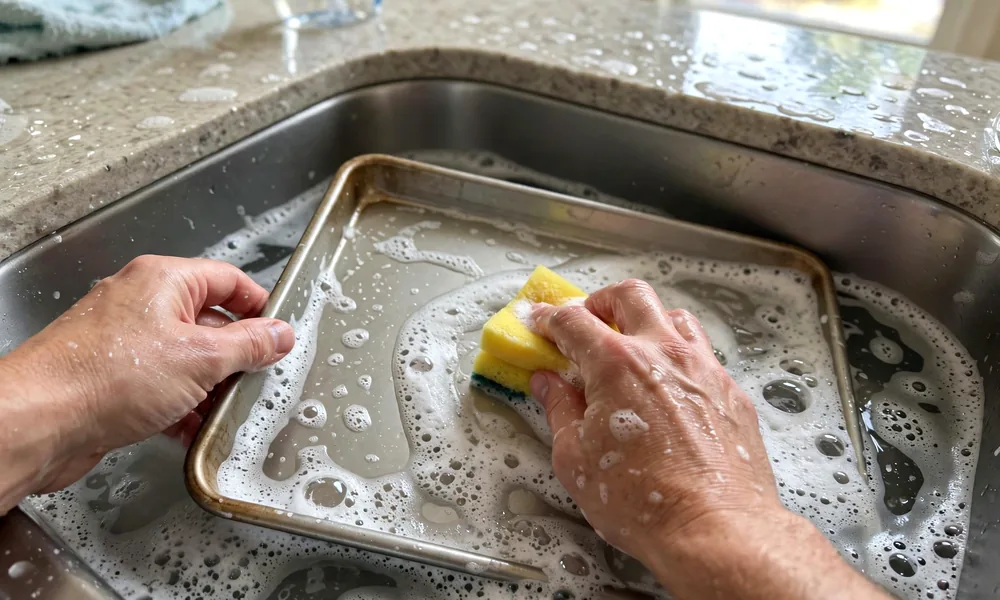
Care is simple. Let the pan cool, wash it in hot soapy water with a soft sponge, and dry it straight away. Aluminium darkens with use; that patina is harmless. Avoid the dishwasher for bare aluminium, since harsh detergents dull the surface, and never scrub nonstick pans with steel wool.
Sheet Pan Buying Checklist
- Buy the half-sheet size first, about 18 by 13 inches, and check it fits your oven with an inch of space on every side.
- Choose 18-gauge metal or thicker, and pick the pan up: it should feel rigid, not flexible.
- Check the pan sits dead flat on a counter with no rocking before you buy it.
- Pick bare aluminium for everyday baking and roasting, or aluminised steel if you want extra toughness.
- Look for a rolled or reinforced rim about an inch high on all four sides.
- Buy parchment paper at the same time: it protects the pan, stops sticking and makes cleanup take seconds.
Frequently Asked Questions
Is a sheet pan the same as a baking sheet?
Almost. A baking sheet is the general name for a flat tray used for baking, while a sheet pan is specifically the rimmed version with a raised edge on all four sides. In practice most trays sold as baking sheets today are rimmed sheet pans, and the terms are used interchangeably.
What size sheet pan should I buy first?
A half-sheet pan, about 18 by 13 inches. It fits a standard home oven, holds a full batch of cookies or a dinner for four, and it is the size most recipes mean by baking sheet. Buy two if you bake often, so one can be loaded while the other bakes.
Why does my sheet pan warp in the oven?
Thin metal expands unevenly as it heats, so the pan twists and pops. Heavy-gauge pans with a reinforced rim resist this, because the thicker metal and stiff rim hold the pan flat. Avoid plunging a hot pan into cold water, which makes warping worse.
Can I use a sheet pan under the broiler?
Bare aluminium and aluminised steel pans can go under the broiler on a lower rack, watched closely. Never put a nonstick sheet pan under the broiler or heat it empty: the coating can be damaged at very high heat.
Do I need to grease a sheet pan?
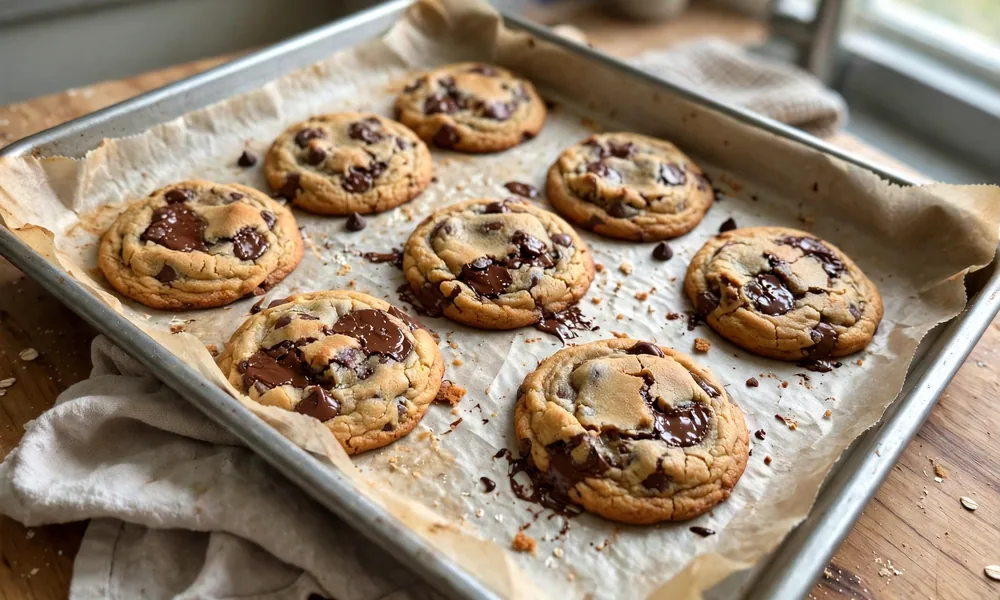
Not if you line it with parchment paper, the simplest option for baking. For roasting, a light coating of oil stops sticking and helps browning. Silicone mats work too, but they slow browning slightly, so save them for delicate bakes.
How do I clean a stained sheet pan?
Soak it in hot soapy water, then scrub gently with a paste of baking soda and water. For stubborn grease, a paste of baking soda and hydrogen peroxide left for a few hours works well. Aluminium darkens with age; that staining is harmless.
Bottom Line
A sheet pan is the hardest-working tray in the kitchen: a rimmed, heavy-gauge aluminium half sheet that bakes, roasts, freezes, cools and catches drips. Buy the 18 by 13 inch size first, choose 18-gauge metal or thicker, check it sits flat, and line it with parchment. One good sheet pan will outlast a cupboard full of single-purpose trays.


