
Why a Good Jewelry Cleaner Matters
A favorite ring can lose its sparkle so slowly that you barely notice it happening. One day the diamond looks a little cloudy, the gold looks a little tired, and the necklace you once reached for every morning stays in its box. Most of the time nothing is wrong with the piece itself. A thin film of lotion, soap, skin oil, and everyday dust has settled into the settings and across the surface, and it is quietly stealing the light. That is exactly the problem the best jewelry cleaners in 2026 are made to solve, and the right one can make a well-loved piece look like itself again in a few minutes.
How Jewelry Gets Dull in the First Place
Jewelry lives close to the skin, and the skin is not a clean environment. Hand cream, sunscreen, foundation, perfume, hair spray, and sweat all leave traces behind. Rings pick up soap residue every time you wash your hands. Necklaces collect powder and lotion from the neckline. Earrings gather hair products and skin oil around their posts and backs. Over weeks and months, that residue builds into a dull layer that softens the shine of metal and clouds the facets of stones.
Water alone rarely does the job. Hard water can leave its own faint deposits, and plain water has no way to dissolve the oily film that binds dirt to metal. Warm water with a drop of mild dish soap helps, and it remains a useful first step, but it is not a complete cleaner for pieces that have gone months without attention. A purpose-made cleaner adds the right chemistry or the right motion to finish the work safely.
The Main Types of Jewelry Cleaner in 2026
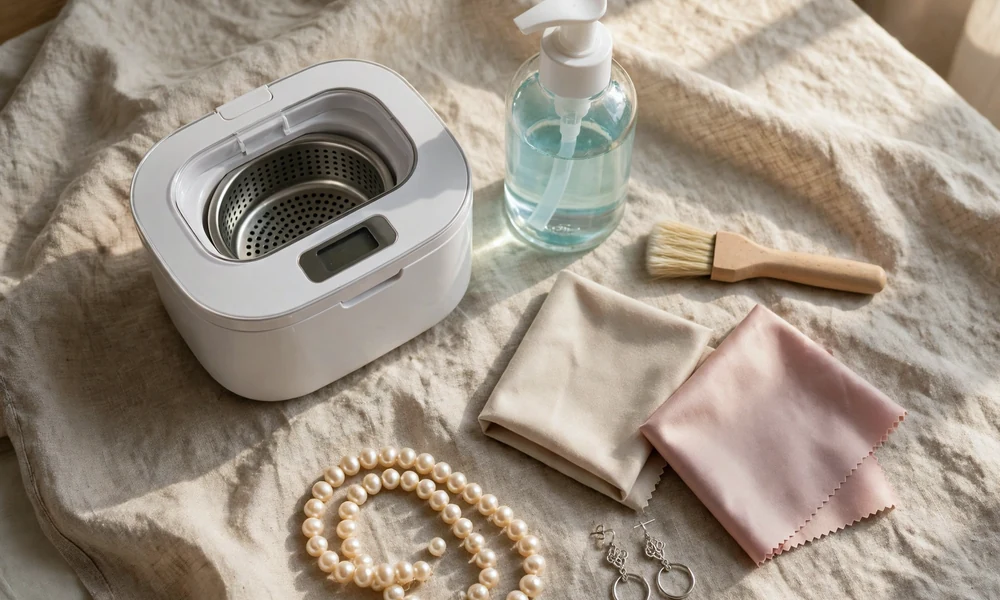
Ultrasonic cleaners are the most talked-about option, and for good reason. They use high-frequency sound waves to create tiny bubbles in a water bath, and those bubbles lift dirt from crevices without any scrubbing. A small home machine usually runs for three to five minutes, and the result on a solid gold or platinum ring with diamonds can be striking. The best home models are quiet, compact, and easy to fill, with a basket that keeps pieces from resting directly on the tank floor.
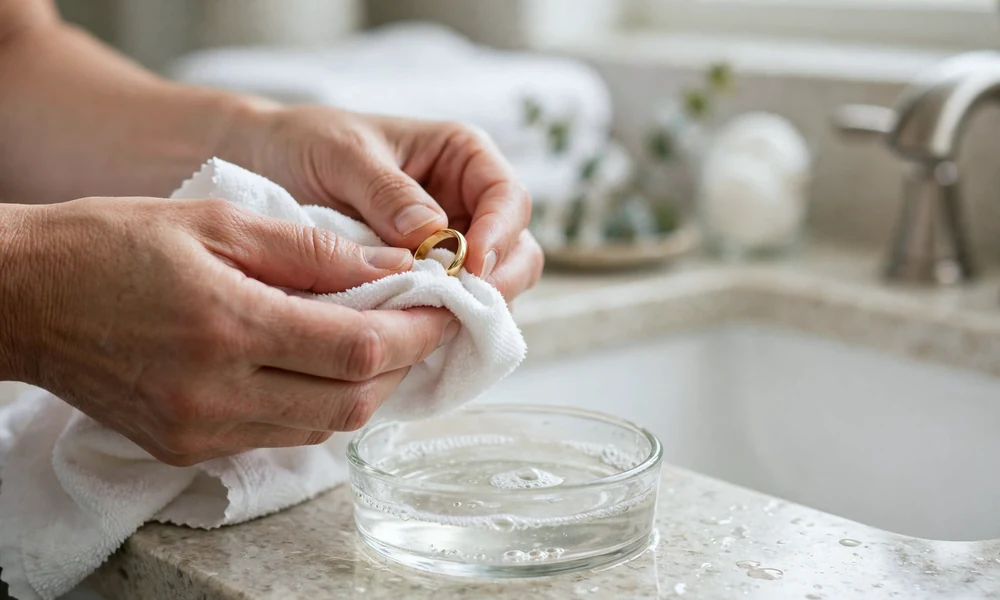
Polishing cloths are the gentlest cleaners you can own, and the most underrated. A good cloth is impregnated with a very mild polishing compound, and it restores shine to gold and silver with nothing more than a few minutes of rubbing. Cloths cannot reach inside a setting the way an ultrasonic machine can, but they are perfect for the final step after any other cleaning method, and they are the safest choice for pieces you are unsure about. Keep one in your jewelry box and one in your travel bag.
What to Look For Before You Buy
Start with the pieces you actually own. If your collection is mostly solid gold and diamond rings, an ultrasonic cleaner will earn its place quickly. If you own a lot of silver, a dip or a polishing cloth matters more, because silver tarnishes in a way that sound waves alone do not fix. If you own pearls, opals, turquoise, or other soft and porous stones, the gentlest options matter most, and a machine may be the wrong buy altogether. The best cleaner is the one that fits your collection, not the one with the longest list of features.
With liquids, read the label before you buy, not after. A good dip or foam should say clearly which metals and stones it is safe for, and which ones it is not. Avoid anything that does not name its limits, and be wary of cleaners that promise to work on everything with no warnings at all. Jewelry is too varied for one formula to suit every piece, and an honest label is a sign of a trustworthy product. If the instructions are vague, choose a different cleaner.
Ultrasonic Cleaners: The Best All-Rounder
For a mixed collection of gold, platinum, and diamond jewelry, an ultrasonic cleaner is the best all-rounder in 2026. It cleans where fingers and brushes cannot reach, it needs no harsh chemicals, and it does the work in minutes. Fill the tank with warm water and a small amount of the recommended solution, place your pieces in the basket, close the lid, and let the machine run. When the cycle ends, rinse each piece under clean water and dry it with a soft cloth.
There are limits, and they matter. Ultrasonic cleaning is not safe for pearls, opals, turquoise, malachite, amber, or other soft and porous stones, which can crack or lose their surface under vibration. It is also risky for pieces with glued-in stones, for very old or fragile settings, and for jewelry that already has a loose stone. If a piece rattles when you shake it gently, or if a prong looks bent, have it checked by a jeweler before it goes near a machine.
Dip Solutions: Fast, Cheap, and Best Used Carefully
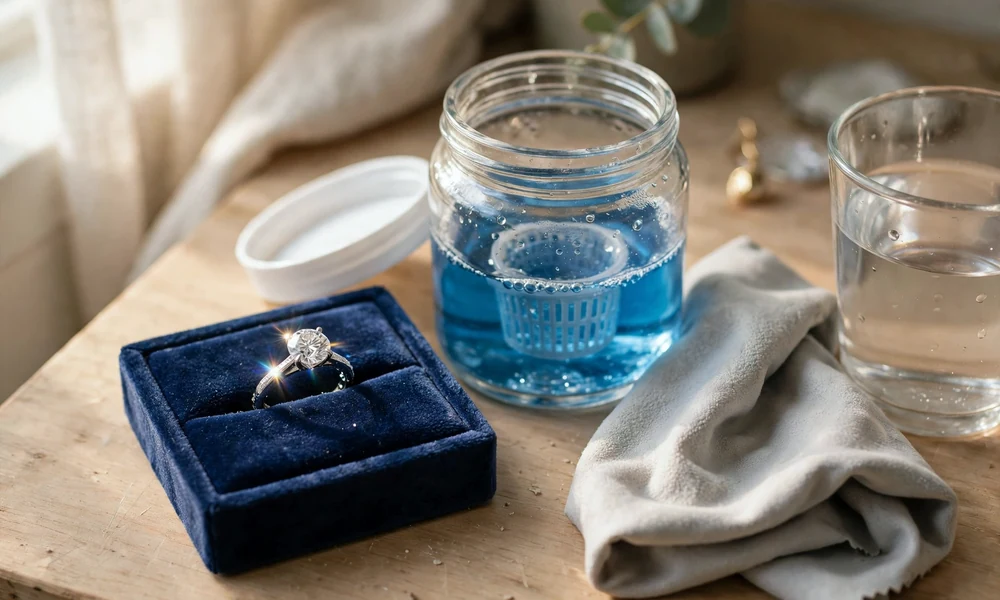
A dip solution is the fastest way to clean a silver chain or a gold ring that has gone dull. The liquid does the work chemically, dissolving tarnish and film in a minute or two, and the little basket makes it easy to lift the piece out without fishing around in the jar. For sterling silver, which tarnishes simply from contact with air, a dip can feel almost magical the first time you use it.
Foams, Sprays, and Cloths for Everyday Care
Foams and sprays are the cleaners most people will use most often, simply because they are so easy. A pump of foam, a minute of waiting, a gentle brush, and a rinse is a routine you can do on a Sunday morning without setting up a machine or opening a jar of chemicals. They are gentle enough for regular use on gold, platinum, and diamonds, and they are a good choice for pieces you wear every day.
Cleaning by Material: What Each Piece Needs
Gold is the most forgiving metal to clean. Solid gold in any color responds well to ultrasonic cleaning, dips, foams, and cloths, provided the stones in it are suitable. Gold-plated pieces need more care: harsh dips and vigorous polishing can wear the thin plating away, so a mild foam and a soft cloth are the safer choices. If the plating is already thin or patchy, no cleaner will restore it, and replating is the only real fix.
Silver tarnishes faster than gold, and it needs a cleaner that deals with tarnish directly. A dip works quickly, a polishing cloth works gently, and a silver foam works in between. Avoid toothpaste, baking soda pastes, and other home remedies that are often suggested online; they are abrasive, and they leave fine scratches that make silver tarnish faster next time. A proper silver cleaner and a soft cloth will keep a piece bright far longer than any kitchen shortcut.
Pearls need the gentlest care of all. They are organic, porous, and easily damaged by chemicals, vibration, and even prolonged soaking. Wipe pearls with a soft, damp cloth after wearing, and clean them only with a very mild solution made for pearls, or with plain lukewarm water. Never put pearls in an ultrasonic cleaner or a dip, and never use a polishing cloth impregnated with compound on them. A pearl necklace that is cared for gently will keep its lustre for decades.
A Simple Routine That Keeps Jewelry Bright
A good routine is short enough to keep, and it starts with the habit of wiping pieces after wearing them. A quick pass with a soft cloth removes the day’s lotion and sweat before they harden into film, and it takes less than a minute. Do it when you take your jewelry off at night, and you will find that deeper cleans are needed far less often. This small habit does more for your collection than any single product.
Once a month, use your chosen deeper cleaner on the pieces that can take it. That might be a three-minute ultrasonic cycle for your diamond rings, a quick dip for a silver chain, or a foam clean for a favorite necklace. Inspect each piece as you dry it: look for loose stones, bent prongs, worn clasps, and thinning plating. Cleaning time is also inspection time, and catching a loose stone early is worth far more than any shine.
Storage matters just as much as cleaning. Pieces that are tossed together in a drawer scratch each other, and chains tangle into knots that strain their links. A proper box with separate compartments keeps pieces apart, and a good organizer does the same for a larger collection. If your storage is due an upgrade, it is worth reading about the jewelry boxes worth buying to protect your collection and what makes a great jewelry organizer worth buying, because clean jewelry that is stored badly will be dull and scratched again within weeks.
Mistakes That Damage Jewelry
The most common mistake is reaching for a household cleaner. Bleach, ammonia-based sprays, and abrasive powders can discolor gold, pit silver, and damage stones in minutes. Toothpaste is another frequent culprit: it feels gentle, but it is designed to polish hard enamel, and it leaves fine scratches on soft metals. Keep jewelry cleaning separate from household cleaning, and use only products made for jewelry, or the mild soap-and-water method described above.
How to Choose the Best Jewelry Cleaner for You
If you own mostly diamonds and solid gold, buy an ultrasonic cleaner first and a polishing cloth second. That pair covers deep cleaning and daily shine, and it will handle almost everything in a typical collection. Add a foam for quick cleans and travel, and you have a complete kit that will last for years. This is the combination most people should start with, and it is the one that gives the most visible improvement for the least effort.
For a mixed collection, a small ultrasonic cleaner plus a dip, a foam, and a cloth covers every situation, provided you know which pieces belong in which method. Keep a simple note of what each piece is made of and which cleaner it can take, especially for gifts and inherited pieces where the stone may be unknown. A necklace you love deserves the same care as a ring you wear daily, and knowing its limits is part of owning it well. The range of necklaces worth wearing in 2026 is a useful reminder of how varied a single type of jewelry can be, and how different each piece’s needs may be.
The Verdict
The best jewelry cleaner in 2026 is not a single product but a matched set: an ultrasonic cleaner for hard stones and solid metal, a dip for silver tarnish, a foam for quick everyday cleans, and a polishing cloth for the final shine. Buy the tools that fit the pieces you own, use the gentlest method that works, and clean regularly rather than waiting until a piece looks dull. Your jewelry will reward that care with years of bright, clear shine, and the pieces you love most will look like the day you first chose them.


