
A kids life jacket is not a smaller version of an adult one. It is a different piece of safety kit with a different job: it has to fit a small, wriggling body snugly, keep a child floating face-up if they fall in, stay comfortable enough that the child will actually keep it on, and survive being dragged across a dock, dropped in the sand and stuffed into a beach bag. The best kids life jackets of 2026 do all of that without feeling heavy or awkward, and the worst ones fail on fit long before anyone notices the colour or the price.

What Makes a Kids Life Jacket Different
An adult life jacket is built for a grown body that can help itself in the water. A kids life jacket assumes the opposite. It assumes the child may panic, may not be able to swim, and may end up in the water without warning. That is why the best designs put extra buoyancy at the front and around the neck, so the child is held upright and their face stays clear of the water. A jacket that only floats a child on their back, or that rides up over their ears the moment they move, is not doing its job, however bright it looks on the shelf.
How to Choose: The Five Things That Matter Most
Start with weight, not age. Life jackets for children are sized by weight, and the weight range on the label is the number that matters. A jacket made for a child of fifteen to thirty kilograms will not hold a smaller child safely, and it will not fit a heavier child properly either. Weigh your child before you shop, then check the label twice. If your child is near the top of one range and the bottom of the next, try both sizes on and choose the one that fits snugly without riding up.
Next, do the lift test. Put the jacket on your child, fasten every strap, then lift them gently by the shoulders of the jacket. If the jacket slides up past their chin or over their ears, it is too big or too loose, and it will do the same thing in the water. Tighten the straps and try again. A good jacket should move very little when you lift, and your child should still be able to breathe and move their arms freely. This simple test tells you more than any picture or review ever will.
Fourth, check the straps and buckles. A kids life jacket needs at least two or three strong straps, including one that goes between the legs on jackets for younger children, so the jacket cannot slip off over their head. The buckles should click firmly and be easy for an adult to open and close, but not so easy that a small child can undo them on their own. Give every buckle a firm tug after fastening it. A buckle that pops open in your hands will pop open in the water too, so do not accept it.
Finally, think about where the jacket will be used. A jacket for a calm lake or a swimming pool is different from one for a boat, a river or the sea. On a boat, a jacket with a grab handle on the back is useful, because an adult can lift a child out of the water quickly by the handle. For very young children, a jacket with a head pillow and a crotch strap gives extra support. Our guide to the best life jackets of 2026 covers the wider market for adults and older children, but for a young child the fit and the head support matter more than anything else.
The Best Kids Life Jackets by Age
For babies and toddlers, the jacket should do most of the work. Look for a design with a padded head support that keeps the baby’s head above water, a strap between the legs, and a grab handle on the back. The jacket should be snug but not tight, and the baby should be able to move their arms and legs without the jacket riding up. Try it on at home first, in a calm moment, so the baby gets used to the feel of it before you are anywhere near the water.

Fit, Comfort and the Lift Test
Fitting a life jacket properly takes five minutes, and those five minutes matter more than the brand or the price. Start by loosening all the straps, then put the jacket on your child and fasten the zip or the buckles from the bottom up. Tighten the straps one at a time, starting with the lowest one, until the jacket feels snug all the way round. You should be able to fit two fingers flat under a strap, but not your whole hand. If the strap is loose enough for your hand, it is too loose.
Swimming, Boating and Days by the Water
On a boat, the rule is simple: the jacket goes on before anyone steps aboard, and it stays on until everyone is safely back on dry land. Do not wait until the boat is moving, and do not take the jacket off because the water looks calm. Most accidents on boats happen close to shore, in calm water, when nobody expected a problem. A jacket that is already on is protection; a jacket sitting in a locker is just luggage. Make it a habit, and children will accept it as part of boating, like a seat belt in a car.
What to Wear With a Life Jacket
What a child wears under a life jacket matters more than most parents expect. A swimsuit or a light top works well, because it sits flat under the jacket and does not bunch up. Heavy clothes, thick jumpers and loose layers make the jacket fit badly and can trap water, so keep the layers thin. On a sunny day, a long-sleeved swim top under the jacket gives extra protection from the sun, and it stops the straps from rubbing on bare skin. Our guide to the best kids swim shorts of 2026 is a useful companion here, because shorts that dry quickly and fit well make the whole day by the water more comfortable.
Care, Storage and When to Replace a Jacket
A life jacket that is looked after lasts far longer than one that is thrown wet into a bag and forgotten. After every use, rinse the jacket in fresh water, especially after swimming in the sea, because salt dries into the fabric and the straps and makes them stiff. Hang it up to dry in the shade, away from direct sun, and do not fold it or sit on it while it is drying, because the foam inside can crease and lose its shape. A jacket that is dried flat and stored hanging up will keep its fit and its buoyancy for years.
Check the jacket regularly for damage. Look for torn fabric, frayed straps, buckles that do not click firmly, and foam that feels lumpy or thin in places. If any strap is frayed, if a buckle is cracked, or if the foam has gone hard or crumbly, replace the jacket. Do not hand a damaged jacket down to a younger child, and do not keep a jacket that your child has outgrown in the hope that it will do. A life jacket is safety kit, and safety kit that is damaged or too small is not a bargain, however much money it saves.
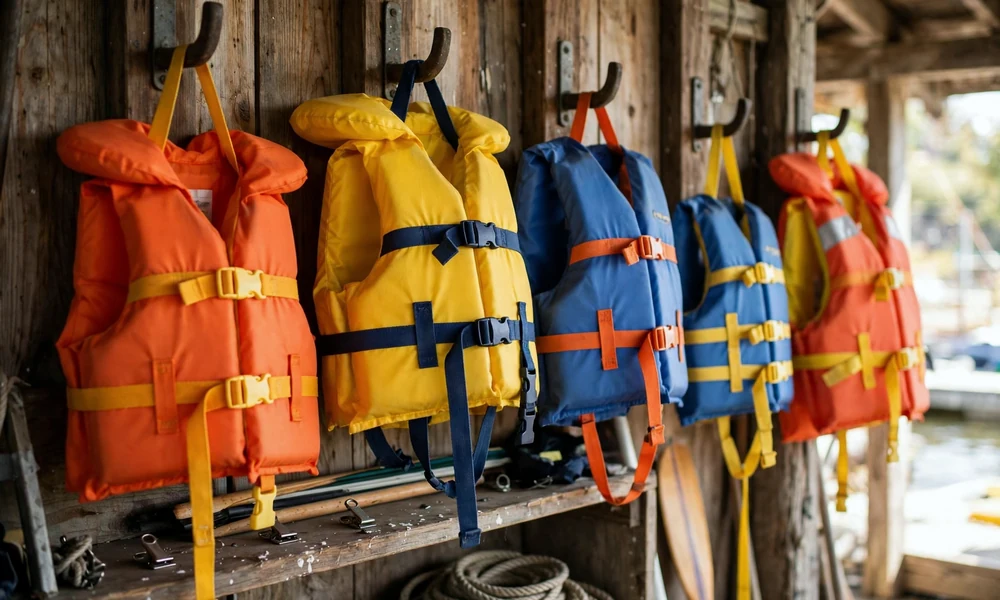
What to Avoid When Buying a Kids Life Jacket
Avoid buying a jacket to grow into. A life jacket that is too big is dangerous, because it will ride up in the water and may slip off over the child’s head. Buy the size that fits your child now, and accept that you will need a bigger one next year. Children grow quickly, and a jacket is not a coat to be bought a size up. The right size today is the only size that keeps a child safe today.
Avoid jackets with no leg strap for young children, and avoid any jacket that has only one strap holding it together. A single strap is not enough to keep a jacket on a wriggling child, and a jacket without a leg strap can slide up and over a small child’s head in the water. Check the straps before you buy, count them, tug them, and make sure there is a strap that stops the jacket from lifting. If the jacket looks simple and cheap, it probably is, and simple and cheap is not what you want in safety kit.
Getting Children Used to Wearing One
Some children hate wearing a life jacket the first time they try one, and that is normal. The jacket feels strange, it is bulky, and it stops them moving the way they are used to. Do not make the first try a battle. Let them wear the jacket at home for a few minutes, walk around in it, sit down in it, and get used to the feel of it. Praise them for wearing it, and let them wear it for short periods at first, building up to a full day by the water.
Make the jacket part of the fun rather than a rule that spoils it. Talk about the jacket as part of going boating or swimming, like putting on shoes before going outside. If older children or adults are wearing jackets too, younger children will copy them without a fuss. And if your child is learning to swim, a pair of goggles can make the water far more fun, so our guide to the best kids swim goggles of 2026 is worth a look before your next trip to the pool or the lake.
Frequently Asked Questions
Does my child need a life jacket if they can swim? Yes, on a boat and in open water. Even strong swimmers can get tired, cold or caught by a current, and a life jacket keeps them afloat while help arrives. Swimming lessons are important, and every child should learn to swim, but swimming ability is not a reason to skip a life jacket on a boat. The two things work together, and neither one replaces the other.
How often should I replace a kids life jacket? Check it before every trip, and replace it as soon as your child outgrows the weight range on the label, or as soon as any strap, buckle or seam is damaged. Most children will need a new size every year or two, so treat the jacket as something to check at the start of each summer rather than something to buy once and forget. A jacket that fits is a jacket that works.
The best kids life jacket is the one that fits your child today, feels comfortable enough to wear all day, and stays on without a fight. Choose by weight, test the fit with a lift, check the straps and buckles, and pick a bright colour your child likes. Get those four things right, and the jacket will be there when it matters, quietly doing its job while your child gets on with enjoying the water.


