A kids ski jacket is not a winter coat with a brighter colour. It is a piece of technical clothing with a different job: it has to keep a child dry in falling snow, let sweat escape on the way up the mountain, survive a tumble onto hard snow, and still be comfortable enough that a child forgets they are wearing it. The best kids ski jackets of 2026 do all of that without feeling stiff or heavy, and the worst ones fail on the mountain long before they fail in the shop.
What Makes a Ski Jacket Different from a Winter Coat
A general winter coat is designed to keep a child warm on the walk to school. A ski jacket is designed for a child who will fall over in deep snow, sit on a cold chairlift, work hard on a slope and then stand still in the wind. That means the shell has to be waterproof as well as warm, the seams have to be sealed against melting snow, and the cuffs, hem and hood have to close out the weather instead of letting it in.
The snow skirt is the clearest sign of a real ski jacket. It is the elasticated band inside the hem that sits snugly against the body and stops snow from riding up the back when a child falls. A winter coat does not have one, and a jacket without one will let a cold, wet draught in at the worst moment. If you want a broader view of cold-weather coats first, our guide to the best kids winter coats of 2026 covers everyday warmth, but for the slopes the ski jacket is a different product with different rules.
Breathability is the second difference, and it is the one most parents overlook. A child skiing is exercising hard, and a jacket that traps sweat will leave them cold and clammy on the chairlift. The best kids ski jackets use a breathable waterproof membrane and pit zips under the arms, so heat can escape when a child is working hard and the jacket can be sealed up again when they stop. A cheap coated jacket feels waterproof in the shop and turns into a plastic bag on the mountain.
How to Choose: What Matters Most
Start with waterproofing. Look for a waterproof rating of at least 10,000 millimetres, and check that the seams are fully taped rather than just the main ones. A jacket with a high rating but untaped seams will leak at the shoulders first, which is exactly where snow sits. Ask how the jacket is meant to be washed, because a waterproof membrane that is never washed will stop breathing, and a jacket that cannot be reproofed will not last a second season.
Next, look at insulation. A heavily insulated jacket suits a child who gets cold easily or skis in very cold weather, while a lightly insulated shell suits a child who runs hot or skis in spring sunshine. Neither is better in general. The right choice depends on where you ski and how your child feels the cold. A shell with room for a warm mid-layer underneath is the most flexible option, because the same jacket can work from January to March with a change of layers.
The hood comes next. A ski jacket hood should fit over a helmet, with a stiffened peak that keeps snow off the face and an adjustment at the back that stops the hood from falling over the eyes. Try it with the helmet your child actually wears. A hood that fits a bare head but not a helmet will be pushed back and left useless on the mountain, and a hood with no adjustment will flap in the wind and distract a child who is trying to concentrate.
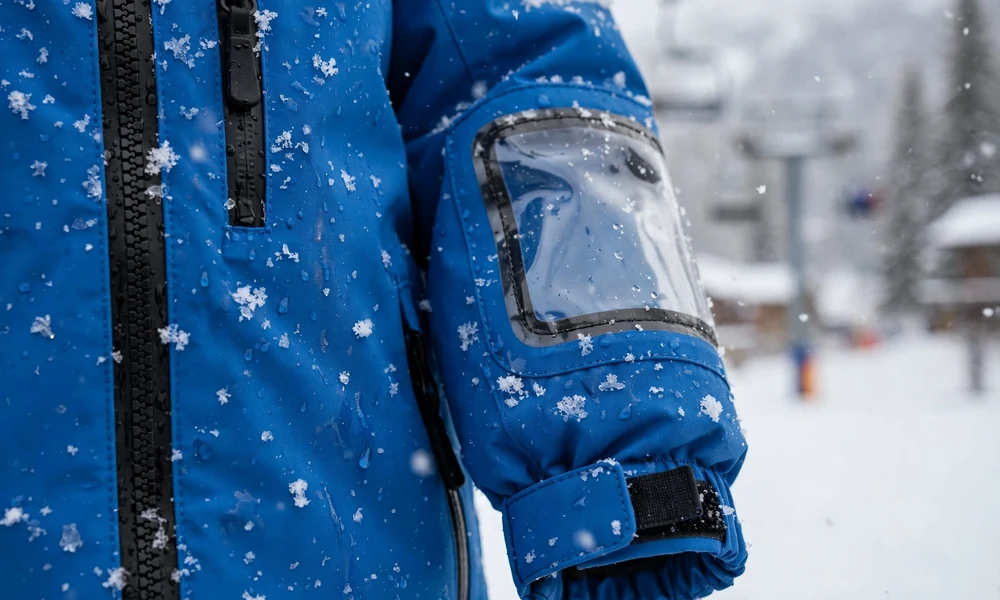
Finally, look at the pockets and zips. A lift-pass pocket on the sleeve saves a child from digging through layers at every lift, and a zipped chest pocket keeps a snack or a small item safe. Zips should be large enough for a gloved hand to use, with a storm flap over the main zip to keep wind out. Fiddly little zips look neat in the shop and are impossible on a cold slope with cold hands.
The Best Kids Ski Jackets by Age
For children aged three to six, simplicity and warmth win. The jacket should be easy to put on without help, with a big front zip, a chin guard that stops the zip from pinching, and a hood that stays up without constant adjustment. Bright colours help here too, because a bright jacket is easy to spot on a busy slope and in a ski-school group. Choose a jacket with a little room to grow, but not so much that the sleeves cover the hands and the hem drags in the snow.
Fit, Grow Room and Layering
Children grow fast, and a ski jacket is not cheap, so the temptation is to buy two sizes too big. Resist it. A jacket that is far too big is cold, because air moves around inside it, and it is dangerous, because the sleeves get in the way and the hem catches. The best approach is to buy the right size with a grow feature: many kids ski jackets have a hem or sleeve that can be let down by a few centimetres, which buys a second season without the jacket swimming on the child in the first.
Layering is what makes one jacket work across a whole season. The base layer should wick sweat away from the skin, the mid-layer should add warmth, and the ski jacket should keep the wind and snow out. Cotton has no place in this system, because once cotton gets wet it stays wet and cold. A thin fleece or a lightweight insulated mid-layer under a shell gives far more flexibility than a single very thick jacket that is right for one temperature and wrong for every other.
Warmth Without the Sweat: Insulation and Venting
Insulation keeps a child warm, but only if the jacket can also let moisture out. This is the balance that separates a good ski jacket from a warm coat. Synthetic insulation is the usual choice for kids ski jackets, because it keeps working when it gets damp and it dries quickly. Down is warmer for its weight, but it loses its warmth when wet, which is a real risk for a child who spends half the day sitting in snow.
Pockets, Hoods and the Small Details That Matter
The small details are where cheap jackets give themselves away. Check that the main zip has a storm flap and a chin guard, that the cuffs close tightly over gloves, and that the hem has an adjustment so it can be tightened against the wind. A jacket with a powder skirt that clips to the snow pants is worth looking for, because it stops snow from getting in at the waist when a child falls, and our guide to the best kids snow pants of 2026 explains how the jacket and pants should work together as a pair.
Reflective details are worth having too. A strip of reflective trim on the sleeves or the back makes a child easier to see in flat light or at the end of the day, when the light fades and the slopes get busy. It costs nothing in comfort and it adds a real margin of safety. The same goes for a name label inside the jacket, because ski jackets all look alike in a pile at the bottom of a slope, and a labelled jacket comes home while an unlabelled one does not.
What to Avoid When Buying a Kids Ski Jacket
Avoid a jacket that is waterproof but not breathable. It will keep the snow out and trap the sweat in, and the child will end up cold and wet from the inside rather than the outside. If the label gives no breathability figure at all, that is a warning sign. A maker who is proud of the fabric will tell you how it performs; a maker who is not will stay quiet.
Avoid buying without trying the jacket on with the helmet, gloves and layers your child will actually wear. A jacket that fits perfectly over a thin top in a warm shop can be too tight over a fleece on a cold morning, and a hood that looks generous can turn out to be useless over a helmet. Ten minutes of trying things on together saves a miserable day on the mountain and a jacket that never gets worn again.
Day One: Fitting and the First Ski Day
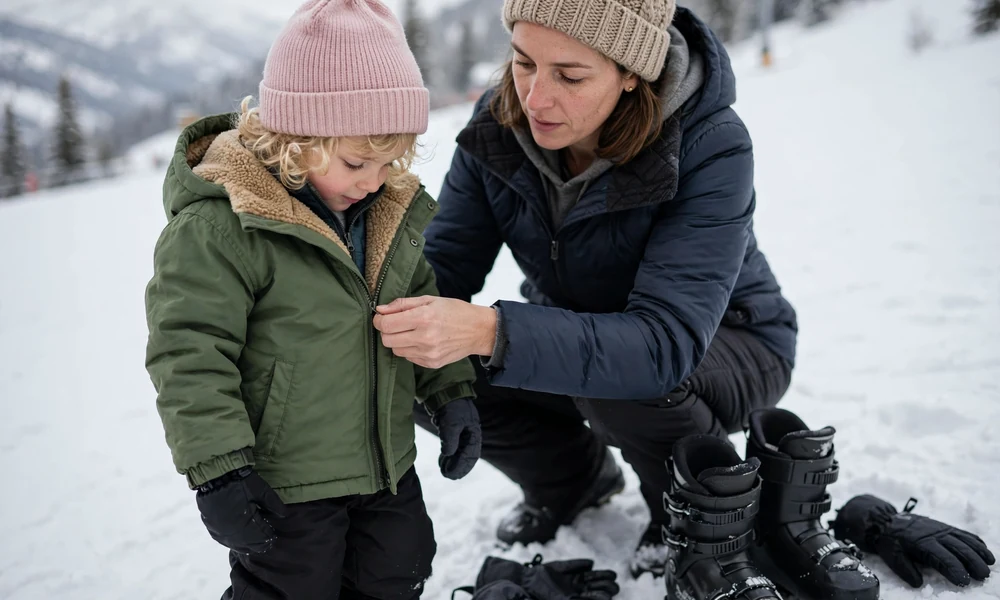
Do the fitting at home, the day before you travel, not in a rush at the resort. Put the jacket on over the layers your child will wear, add the helmet and gloves, and ask the child to raise their arms, bend down and sit as if they were on a chairlift. Check the waist is covered, the cuffs close over the gloves, and the hood fits over the helmet without blocking the view. If something pinches or rides up, it will be ten times worse on the mountain.
If you are still deciding between a jacket and a one-piece suit, our guide to the best kids snowsuits of 2026 covers the all-in-one option, which some younger children find warmer and simpler. A separate jacket and pants give more flexibility as a child grows, while a snowsuit has no gap at the waist for snow to get through, so the right choice depends on the age of the child and how they ski.
Frequently Asked Questions
Can a child ski in a normal winter coat? For one gentle morning on a dry day, a warm winter coat will do, but it will not keep a child dry in falling snow, and it has no snow skirt, no pit zips and no sealed seams. A child who falls over a few times will be wet and cold by lunchtime. A proper ski jacket is worth it for anyone who skis more than once a season.
How waterproof does a kids ski jacket need to be? A rating of 10,000 millimetres is a good minimum for a child who skis regularly, with fully taped seams. Higher ratings are better for wet snow and heavy falls, but the rating is only part of the story: the fit, the cuffs and the snow skirt matter just as much, because water gets in through gaps long before it gets through the fabric.
Should I buy a size bigger so it lasts longer? Buy the right size with a grow feature if you can find one, rather than a jacket two sizes too big. A jacket that is far too large is cold, because air circulates inside it, and the long sleeves and hem get in the way when a child is learning to balance. One size up with room for a mid-layer underneath is the sensible compromise.
The best kids ski jacket is the one that fits your child, matches where you ski, and gets worn without a fuss. Choose a waterproof, breathable shell with a snow skirt, pit zips and a helmet-friendly hood, try it on with everything your child will wear, and the jacket will be part of good ski days rather than the reason a ski day ends early.