
A kids slipper is not a small adult slipper. It is a different piece of footwear with a different job: it has to stay on a moving foot, keep small toes warm on a cold floor, survive being kicked off under the sofa and dragged to the garden gate, and still be easy enough that a four-year-old can put it on without help. The best kids slippers of 2026 do all of that without feeling stiff or clumsy, and the worst ones fail on the basics long before the cute design ever matters.
What Makes a Kids Slipper Different
A general slipper is designed for an adult who will sit still in it. A kids slipper assumes the opposite. It assumes the wearer will run in it, climb in it, spill breakfast on it and wear it outside to fetch a ball from the garden. The sole is therefore not an afterthought. It is part of the slipper. The best kids slippers have a flexible, grippy sole that bends with the foot, grips smooth floors and still lets a child feel where they are stepping.
Fit is the second difference, and it is the one most parents underestimate. A slipper that is too loose slides off and trips a child; a slipper that is too tight squeezes growing toes and gets kicked off in protest. The best kids slippers hold the heel gently, leave a thumb-width of room at the toes, and use a soft elastic opening or a low ankle cuff so the foot slides in easily but does not slide out again. If you want the wider picture first, our guide to the best slippers of 2026 covers the whole market, but for a child the fit matters more than the style.
How to Choose: The Five Things That Matter Most
Start with the sole. It should be flexible enough to fold in your hand, with a textured tread that grips wood, tile and laminate. A hard, flat sole turns a slipper into a slide, and a smooth sole turns a polished floor into a skating rink. Test the bend: hold the slipper at the heel and the toe and fold it gently. It should bend at the ball of the foot, where a real foot bends, not in the middle like a piece of cardboard.
Next, look at the upper. It should be soft against bare skin, with no rough seams across the toes and no scratchy label inside. Children will not tell you a seam hurts; they will simply refuse to wear the slippers. Fleece, soft cotton and plush microfibre all work well. Avoid stiff synthetic uppers that hold their shape but rub the ankle, and avoid decorations that are glued on rather than stitched, because small parts that come loose are a hazard for younger children.
Finally, measure the foot, not the age. Children’s feet grow in bursts, and two children of the same age can be two sizes apart. Stand your child on a piece of paper, mark the heel and the longest toe, and measure in centimetres. Compare that number with the maker’s size chart, and leave about a centimetre of growing room. A slipper bought a size too big to last longer will trip a child every day until the foot catches up, which is a false economy.

The Best Kids Slippers of 2026
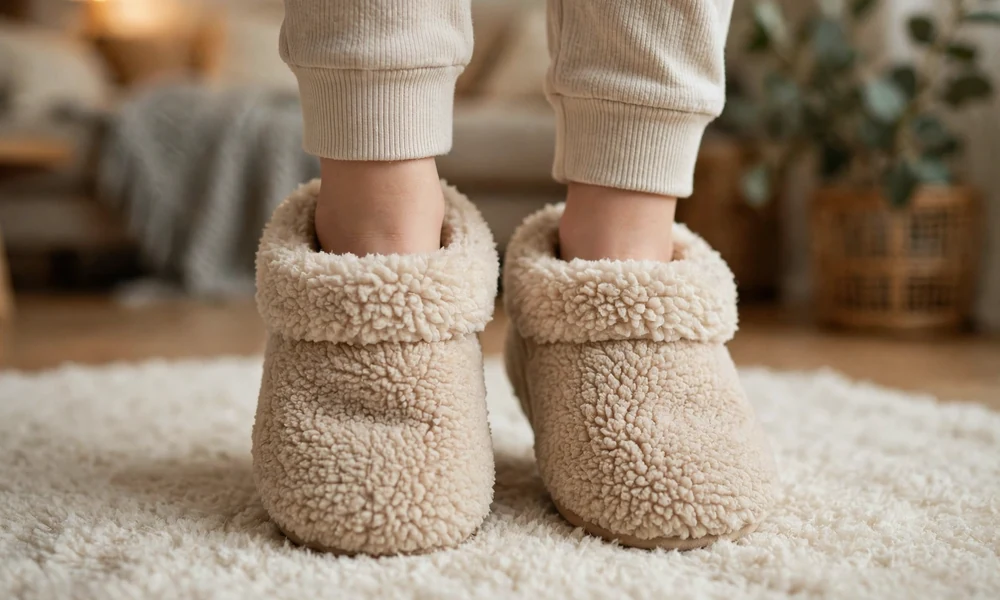
The best overall kids slipper is a soft plush bootie with a fleece lining, a flexible rubber sole and a low ankle cuff. It covers the ankle without squeezing it, keeps the heel in place, and works from the bedroom to the kitchen to the front step. It is the pair a child reaches for first, and the pair that survives the school holidays. Choose a plain, dark colour if you want it to look presentable for longer, and keep a second pair in a brighter colour for weekends if your child loves choosing.
The best kids slipper for cold floors is a thick, closed-toe bootie with a deep pile lining and a slightly heavier sole. It is built for houses with stone, tile or bare wood floors, where a thin slipper is no protection at all. The lining should feel dense and even, not patchy, and the sole should be thick enough that the cold does not seep through after ten minutes. This is the pair for winter mornings, draughty hallways and homes where the heating goes off at night.
The best kids slipper for toddlers is a soft, closed-toe bootie with a gentle elastic opening and a very flexible sole. Toddlers are still learning to walk steadily, so the slipper must not change how the foot moves. A stiff sole teaches a toddler to walk badly; a soft sole lets the foot do its job. Keep decorations minimal and stitched, avoid anything that dangles, and choose a pair that stays on during a whole morning of play. For the step beyond slippers, our guide to the best toddler shoes of 2026 covers first shoes in the same careful way.
The best easy slip-on kids slipper is a low mule with a wide opening, a soft heel that collapses gently and a sole that stays flat on the floor. It is the pair for a child who is always in a hurry, the one that gets stepped into on the way to the bathroom and kicked off at the sofa. The heel should not be so low that the foot slides out at every step, and the opening should not be so wide that the slipper flops. When it is right, a child can put it on without using their hands at all.
The best kids slipper for sensitive skin is a slipper lined in soft cotton or bamboo, with flat seams, no scratchy label and no rough edge anywhere the skin touches. Children with eczema or sensitive skin feel every seam, and a slipper that rubs the ankle raw will be refused, however soft it looks. Wash new slippers before the first wear, skip fabric softener, and check the inside of the slipper with your own hand before you hand it over.
The best budget kids slipper is a simple fleece slip-on with a thin but grippy sole, a plain design and a washable upper. It will not last as long as a premium bootie, and it will not be as warm on the coldest days, but it does the everyday job well and it costs little enough to replace when the foot grows. Buy the right size, not a size up, and keep a second cheap pair for the garden so the indoor pair stays clean.

Sizing, Growing Room and When to Replace
Children’s feet grow fastest between the ages of two and six, and a slipper that fits in September may be tight by Christmas. Check the fit every six to eight weeks by asking your child to stand in the slippers and pressing the toe gently. If the longest toe touches the end, the pair is finished, however new it looks. A slipper that is too small does more harm than a slipper that is too big, because it squeezes toes that are still growing.
Replace slippers when the sole is worn smooth, when the lining has gone flat and thin, or when the heel has collapsed to one side. A slipper that leans will make a child walk unevenly, and a smooth sole is a slipping risk on hard floors. Most everyday pairs last three to six months of daily wear, and a good winter bootie may last a whole season. Keep the old pair for the garden for a week or two, then let it go.
Slippers for Outdoors, School and Travel
An indoor slipper with a thin fabric sole should never be the outdoor shoe, even for a quick trip to the garden. Wet grass soaks through in seconds, and a damp slipper stays damp all day. If your child needs to step outside often, choose a slipper with a proper rubber sole and a closed toe, and keep a pair of wellies or outdoor shoes by the door as well. For longer walks and rough ground, a proper outdoor shoe is still the right choice, and our guide to the best hiking boots for kids of 2026 covers sturdy footwear for trails and wet weather.
School slippers need to be quiet, easy to change and simple enough to find in a pile of identical pairs. A plain colour with a name label inside saves a lot of confusion, and a slipper that slips on without laces saves time at the classroom door. Avoid light colours for school, because they show every mark by the end of the first week, and avoid slippers with noisy soles on hard classroom floors.
Care: Washing, Drying and Smells
Wash kids slippers regularly, not only when they look dirty. Feet sweat, spills happen, and a slipper that smells will not be worn. Machine wash on a gentle, cool cycle inside a laundry bag, and air dry at room temperature. Stuff the toes with a small towel while they dry to help them keep their shape, and never dry slippers on a radiator, because direct heat shrinks the lining and cracks a glued sole.
For smells between washes, air the slippers outside for a few hours, sprinkle a little bicarbonate of soda inside overnight and shake it out in the morning. Avoid strong sprays and scented powders, because a child breathes close to their feet when they sit cross-legged, and a strong scent is unpleasant at that distance. If a smell survives two washes, the lining has probably broken down, and it is time for a new pair.
What to Avoid
Avoid slippers with a smooth, hard sole and no tread. They look neat in a photograph and slide everywhere in real life. Avoid slippers with glued-on decorations, dangling charms or small parts that a younger child can pull off. Avoid a slipper that is bought two sizes too big to last longer, because a child who trips every day will stop wearing slippers altogether. Avoid very cheap slippers with a chemical smell straight from the packet, because that smell is a warning about the materials inside.
Avoid choosing on looks alone. A child will choose the brightest pair every time, and sometimes the brightest pair is also a good pair. When it is not, the compromise is to buy the good pair in the child’s favourite colour, or to let the child choose between two good pairs. A slipper a child loves and a slipper a parent trusts can be the same pair, but only if the parent checks the sole, the seams and the fit first.
The best kids slippers of 2026 are the ones that disappear into the day. A child puts them on in the morning without thinking, wears them through breakfast, play and homework, and kicks them off at bedtime without a complaint. They are warm without being sweaty, grippy without being stiff, and tough enough to survive the way children actually live. Buy for the foot in front of you, check the fit often, wash them regularly, and replace them when they are worn. Get those simple things right, and the right pair will look after itself.


