
Konjac Sponges for Gentle, Glowing Skin in 2026
Konjac sponges are the gentlest way to wash a face. A konjac sponge is a small, pillow-soft sponge made from the root of the konjac plant, and when it is wet it feels almost like jelly: it cleans without scrubbing, lifts away dirt and sunscreen, and leaves the skin calm rather than tight. The best konjac sponges in 2026 suit sensitive skin, acne-prone skin, and anyone who wants a daily cleanse without friction.
Key Takeaways
- A konjac sponge cleans with softness, not scrubbing: it suits sensitive, dry, and acne-prone skin.
- Plain konjac suits most skin; charcoal suits oily skin, green tea suits combination skin, and pink clay suits dry skin.
- Soak the sponge until it is fully soft before every use, and never use it dry or half-dry.
- Use it once or twice a day with a gentle cleanser, in small circles, with almost no pressure.
- Rinse it well, squeeze gently, and hang it to dry. Replace it every four to eight weeks.
Konjac Sponges 2026 at a Glance
| Konjac sponge | Best for | Feel | Standout strength |
|---|---|---|---|
| Plain white konjac | Most skin, beginners | Very soft | Kindest all-rounder |
| Charcoal konjac | Oily, acne-prone skin | Soft, slightly firmer | Draws out oil and impurities |
| Green tea konjac | Combination skin | Soft | Balances oily and dry areas |
| Pink clay konjac | Dry, sensitive skin | Very soft | Extra gentle, calming |
| Body konjac sponge | Body cleansing | Soft | Larger size for arms and legs |
| Konjac sponge with string | Shower use, hanging dry | Soft | Hangs to dry between uses |
What a Konjac Sponge Really Is
Konjac is a root vegetable grown in Asia, and the sponge is made from its starchy fibre, konjac glucomannan. The fibre is mixed with water, shaped, and set into a soft, springy sponge full of fine pores. Dry, the sponge feels hard and light, almost like a pumice stone. Under warm water it softens in a minute into something that feels like a jelly cushion, and that change is the whole point: the soft, wet sponge glides over the skin and lifts away grime without any friction at all.
The sponge is naturally slightly alkaline, which helps it lift oil and dirt, and the fine pores hold water and cleanser so a small amount goes further. It contains no soap of its own, so it works with whatever cleanser you already use, or with water alone. It is also biodegradable and compostable. A konjac sponge is not an exfoliator in the usual sense: it does not scrub away dead skin the way a loofah does. It cleans gently, and the mild smoothing comes from the soft fibre moving over the skin, not from abrasion.
The Main Types of Konjac Sponge
Konjac sponges come in a handful of types, and the differences are in the added ingredient, not the shape. Pick the type for your skin, not the prettiest colour.
Plain white konjac
The plain white sponge is pure konjac with nothing added, and it is the best starting point. It is the softest type, suits every skin type, and is the safest choice for very sensitive skin and children. If you are unsure which type to buy, buy this one.
Charcoal konjac
The grey-black charcoal sponge has bamboo charcoal mixed into the fibre. Charcoal absorbs oil and impurities, so this type suits oily and acne-prone skin best, and it feels slightly firmer than the plain sponge. If your skin is dry or easily irritated, the plain or pink clay sponge is a kinder choice.
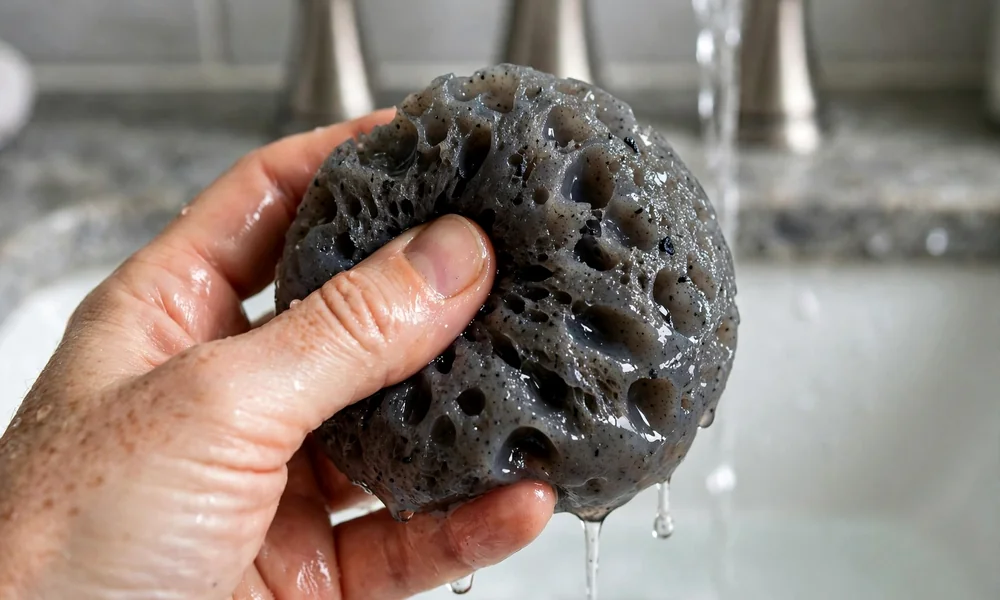
Green tea konjac
The green sponge has green tea extract in the fibre, and it suits combination skin: oily in the T-zone, dry on the cheeks. It gives a balanced clean without stripping the dry areas or leaving the oily areas shiny. It is a good middle option if plain konjac feels too plain and charcoal feels too strong.
Pink clay konjac
The pink sponge has French pink clay mixed in, and it is the gentlest coloured type. Pink clay calms redness, so this sponge suits dry, sensitive, and easily flushed skin. It is also the best type to use on skin recovering from a breakout or from over-exfoliation.
Body konjac sponges
Body konjac sponges are larger versions of the face sponge, made for arms, legs, and the back. They suit anyone whose body skin is dry, itchy, or easily irritated by rough washcloths. Keep one sponge for the face and a separate, larger sponge for the body.
How to Use a Konjac Sponge
Soak the sponge in warm water for a minute or two until it is fully soft and swollen. A dry or half-dry konjac sponge feels hard and can scratch, so this step is not optional: squeeze it gently a few times under the water until it feels like jelly all the way through. Add a pea-sized amount of your usual gentle cleanser to the sponge, or use it with water alone, and work it over the face in small circles, with almost no pressure. Let the sponge do the work.
Spend a little longer on the oily areas, the nose and chin, and go lightly over the cheeks and around the eyes, where the skin is thinnest. The whole cleanse takes about a minute. Rinse with lukewarm water, pat dry, and moisturise while the skin is still slightly damp. Use the sponge once or twice a day; very sensitive skin may prefer once a day.
Drying, Cleaning, and When to Replace It
A konjac sponge that cannot dry out between uses will smell, so hang it where air can reach it. The best sponges come with a string or a suction hook, and a hook on the wall beats a shelf every time. After each use, rinse the sponge well under running water, squeeze it gently without wringing or twisting it, and hang it up. Never wring a konjac sponge like a cloth: twisting tears the fibre and shortens its life.
Once a week, give the sponge a deeper clean by soaking it in warm water for ten minutes, then rinsing it well. Replace the sponge every four to eight weeks, sooner if it tears, thins, smells after rinsing, or starts to fall apart. A konjac sponge is a consumable, not a keepsake, and a fresh sponge cleans better than an old one.

Konjac Sponges and Sensitive Skin
Sensitive skin needs the softest cleanse you can find, used with the lightest touch, and that is exactly what a konjac sponge offers. A plain or pink clay sponge cleans without friction, which matters when skin is dry, red, or prone to eczema. Use it with a fragrance-free cleanser, or with water alone, and skip it on days when the skin is broken or sunburned. Even a soft sponge will irritate skin if you press hard, so keep the touch feather-light.
For acne-prone skin, the charcoal sponge is the usual recommendation, but use it gently: acne is inflammation, and scrubbing inflamed skin makes it worse. Cleanse once or twice a day, never more, and do not use the sponge to attack individual spots. If the skin stings or looks redder after use, switch to the plain sponge and check that your cleanser is not the real culprit.
Konjac Sponges Versus the Alternatives
The bathroom shelf is full of cleansing tools, and a konjac sponge is not the only gentle option. A bath sponge covers the whole body, and our guide to the best bath sponges in 2026 explains the types, from sea sponges to silicone, and names konjac as the kindest choice for faces and sensitive skin. The difference is focus: a bath sponge is a general body tool, while a konjac sponge is a dedicated face tool, smaller, softer, and shaped for the curves of the face.
A washcloth is the cheapest alternative, and it cleans well, but it is rougher than a konjac sponge and needs washing after every use. A konjac sponge is softer, holds more water, and dries faster when hung up. Exfoliating gloves scrub far harder, and our guide to the best exfoliating gloves in 2026 covers them for weekly body exfoliation, not daily face cleansing. The cleanser matters too: a harsh cleanser will undo the gentleness of the sponge, so pair it with a mild formula, and our guide to the best face wash in 2026 explains how to pick one for your skin type.
Choosing the Right Konjac Sponge
Start with your skin type. Sensitive, dry, or reactive skin should choose plain white or pink clay. Oily or acne-prone skin should choose charcoal. Combination skin should choose green tea. If you have never used one, start with plain white: it suits everyone. Buy from a reputable brand, because cheap konjac sponges can be thin and tear quickly.
Check the size and the string. A face sponge should fit comfortably in your palm, about the size of a small egg when dry, and it should come with a string or a hook so you can hang it to dry. A sponge with no way to hang it will sit damp and smell within days. Multipacks are good value, since you will replace the sponge every month or two.

Your Konjac Sponge Checklist
- Pick the type for your skin: plain for sensitive skin, charcoal for oily skin, pink clay for dry skin.
- Soak the sponge until it is fully soft before every use, and never use it dry.
- Use a gentle cleanser, small circles, and almost no pressure, once or twice a day.
- Rinse well after use, squeeze gently without wringing, and hang it where air can reach it.
- Keep a separate sponge for the face and a larger one for the body.
- Replace the sponge every four to eight weeks, sooner if it tears, thins, or smells.
Frequently Asked Questions
Can you use a konjac sponge every day?
Yes, most people use it once or twice a day. Sensitive skin may prefer once a day. If the skin feels tight or looks red, cut back to once a day, switch to the plain sponge, and check that your cleanser is gentle.
Do konjac sponges exfoliate?
Only very mildly. A konjac sponge smooths the skin a little, but it does not scrub away dead skin the way a loofah does. If you want real exfoliation, use a dedicated exfoliant once or twice a week and keep the konjac sponge for daily cleansing.
Can you use a konjac sponge with cleanser?
Yes, and it works best that way: add a pea-sized amount of a gentle cleanser to the wet sponge and work it over the face in small circles. You can also use it with water alone on days when the skin needs a rest.
How do you store a konjac sponge?
Hang it where air can reach it, using the string or a suction hook on the wall. Never leave it sitting in a puddle or in a closed container, because it will stay damp and start to smell.
Are konjac sponges good for acne?
They help, because they clean acne-prone skin without adding irritation, and the charcoal type absorbs excess oil. They will not cure acne on their own. Cleanse gently once or twice a day and do not scrub individual spots.
Can children use konjac sponges?
Yes, the plain white sponge is soft enough for children because it cleans without friction. Use it with water alone or a very mild cleanser, keep the touch light, and give the child their own sponge.
The Bottom Line
The best konjac sponges in 2026 match your skin: plain white for sensitive skin, charcoal for oily skin, green tea for combination skin, and pink clay for dry skin. Soak the sponge until it is fully soft, cleanse gently once or twice a day, hang it to dry, and replace it every four to eight weeks. Done that way, a konjac sponge is the kindest daily cleanse you can buy.


