
Ladder golf is one of those backyard games that looks almost too simple to be fun, and then an hour disappears. Two ladder-shaped frames stand about fifteen feet apart, players take turns tossing bolas — two balls joined by a rope — and the bolas wrap around the rungs for points. It needs no court, no net and no real skill to start, which is why it has become a fixture at barbecues, beach trips, tailgates and family reunions. A good set makes the game feel fair and relaxed, while a bad one wobbles, tips over in a light breeze, or comes with bolas that bounce off instead of wrapping. The best ladder golf sets of 2026 are the ones that stand steady, throw true, and pack away without a fight.
What Makes a Ladder Golf Set Good
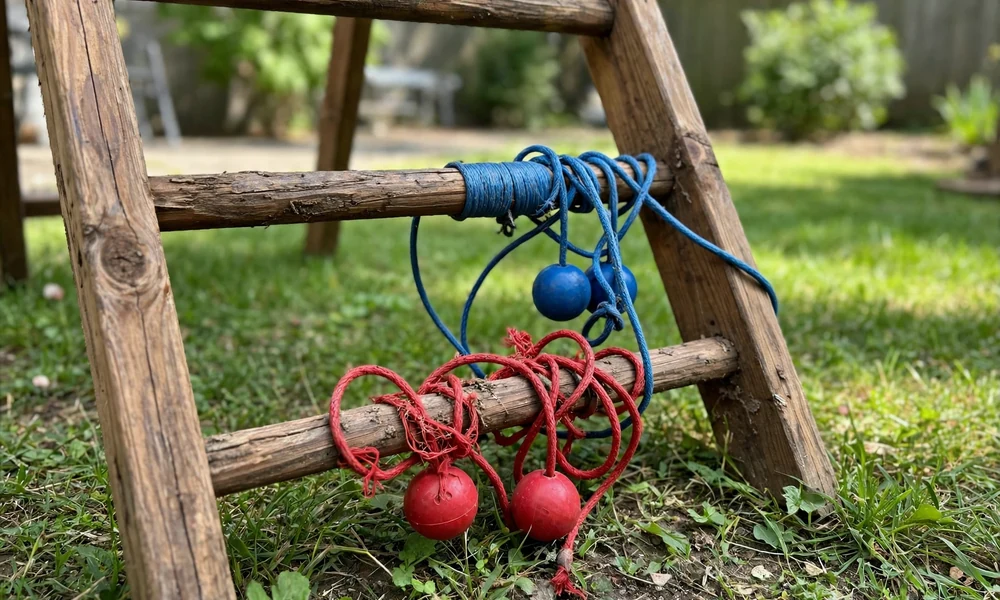
The first thing to judge is the frame, because everything else in the game depends on it. A ladder golf frame takes a beating: bolas thud into it all afternoon, players bump it while walking past, and it sits on grass that is rarely perfectly flat. The best frames are rigid, with joints that lock tight and legs that spread wide enough to resist tipping. A frame that flexes or rocks every time a bola lands makes scoring a lottery, and a frame that falls over mid-game kills the mood entirely. Before you buy, look for thick side rails, solid crossbars, and feet that sit flat on the ground rather than digging in or sliding.
The second thing is the bolas themselves. A bola is two balls joined by a short rope, and its weight and balance decide how it flies. Good bolas are heavy enough to wrap around a rung instead of bouncing off, but light enough that children and older players can throw them comfortably. The rope matters too: it should be short enough to keep the balls close together in flight, and tough enough not to fray after a summer of use. Sets that ship with real golf-ball style bolas tend to feel better than sets with hollow plastic ones, which are light, bouncy, and hard to control in any wind at all.
The Main Types of Ladder Golf Set
Wooden ladder golf sets are the classic choice. They are usually made from pine or another light hardwood, they look good on a lawn, and they have a satisfying solid feel when a bola wraps around a rung. Wood absorbs the impact of the throw, so the bolas settle instead of clattering off, and a well-made wooden set can last for years if it is stored dry. The trade-off is weight and weather: wood is heavier to carry than plastic or metal, and it will warp or split if it is left out in the rain. A wooden set suits a family that plays at home and has a garage or shed to keep it in.
PVC ladder golf sets are the light, budget-friendly option. The frames are made from plastic pipe, so they are cheap, very light, and completely unbothered by rain. They are the easiest sets to carry to a park or a beach, and they are a sensible pick when children will be doing most of the playing, because there are no heavy parts to drop on a foot. The trade-off is sturdiness: a PVC frame can flex under a hard throw, and a strong gust can push a light frame across the grass. Some better PVC sets add sand-filled feet or ground stakes, and those small additions make a real difference.
Metal ladder golf sets are the sturdy, portable middle ground. Aluminium and steel frames fold down flat, often into their own carry bag, and they lock open into a rigid frame that stands up to hard throws and windy afternoons. They are heavier than PVC but lighter than solid wood, and they survive being tossed in the back of a car without a second thought. The trade-off is noise and feel: metal rungs ring when a bola hits them, and a cheap metal frame can rattle at the joints. Look for frames with rubber feet and tight locking hinges, because those two details separate the good metal sets from the rattly ones.
How the Game Actually Works
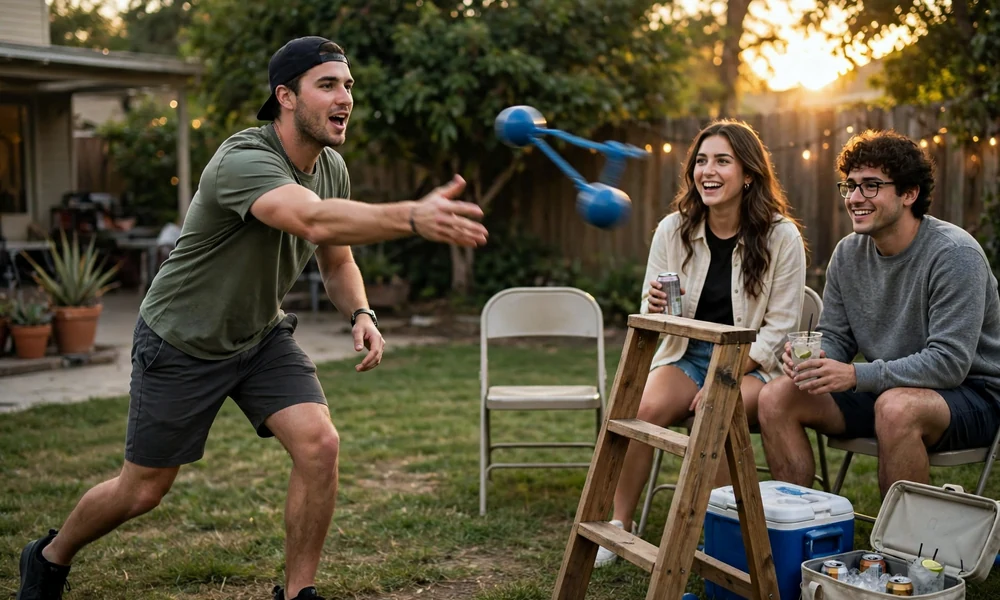
The rules of ladder golf are simple enough to explain in a minute, which is part of its charm. The two frames stand about fifteen feet apart, facing each other. Each player or team has three bolas in their own colour, and players take turns throwing all three from behind the frame, aiming for the other one. A bola that wraps around the bottom rung scores one point, the middle rung scores two, and the top rung scores three. A player who lands all three bolas on the same rung in one round scores a bonus, and the first player or team to reach exactly twenty-one points wins — go over twenty-one, and the score drops back, which keeps the ending tense.
That exact-twenty-one finish is what gives the game its drama. A player sitting on twenty points needs a single bottom-rung wrap to win, and the whole garden goes quiet while they throw. It also means a game can swing late: a player who is behind can catch up with a lucky top-rung wrap, and a player who is ahead can overshoot and fall back. The best sets make this fair by keeping the rungs at standard spacing, so a good throw is rewarded and a wild one is not. If the rungs are too close together or the frame leans, the scoring feels random, and the game loses its edge.
What to Look for When You Buy
Start with the frame joints, because they are where cheap sets fail first. Fold the set up and down a few times if you can: the hinges should move smoothly and lock with a firm click, not a wobble. Push the frame sideways with one hand and see whether it twists. A good frame barely moves. Check the feet as well. Rubber caps or wide flat feet keep the frame steady on grass and stop it sliding on a patio, while bare metal or plastic feet can skate across a hard surface the moment a bola lands.
Then look at the bolas. Count them — a proper set has six, three per colour — and pick one up. It should feel solid and a little heavy in the hand, around the weight of a golf ball or a little more. Squeeze it gently: a hard plastic ball can crack if it hits a patio, while a softer rubberised ball survives drops and is kinder to toes. Check the rope length too. Ropes of about thirteen inches between the balls are standard, and ropes much longer than that tangle easily and fly unpredictably.
Portability is the next question, and it depends on where the set will live. If it will stay in the garden, weight does not matter much, and a wooden set is a fine choice. If it will travel to the beach, the park or a campsite, look for a set that folds flat and comes with a carry bag with a proper handle or shoulder strap. The bag matters more than it sounds: a set without a bag ends up with its bolas scattered across the garage, and a set with a flimsy bag ends up with a torn bag and a lost bola by the end of the first summer.
Setting Up and Looking After Your Set
Setting up a ladder golf set takes about a minute. Unfold the frames, lock the hinges, and stand them fifteen feet apart on the flattest patch of grass you can find. If the ground slopes, turn the frames so the slope runs sideways rather than towards the thrower, because a frame leaning forward changes the angles and makes the top rung almost impossible to hit. Measure the distance with paces if you have no tape: about five long strides is close enough for a casual game, and the exact distance matters less than both players throwing from the same line.
Storage is where most ladder golf sets die. Wooden sets should be kept dry, ideally in a garage or shed, and given a quick wipe if they have been rained on. A coat of outdoor varnish once a year keeps the wood from drying out and cracking. Metal sets should be dried before they are folded away, because trapped moisture rusts the hinges, and the hinges are the first thing to seize. PVC sets are the most forgiving, but even they last longer if the bolas are kept out of direct sun, which makes the rope brittle over time.

Ladder Golf Against Other Backyard Games
Ladder golf sits in the same family as the other classic tossing games, and it is worth knowing how it compares. Cornhole is the closest rival: it is just as social and just as easy to learn, but the boards are bigger, heavier and harder to carry, and the game rewards a flat, accurate throw rather than a looping one. If your garden is small or you want a game that travels well, ladder golf is the lighter, more portable choice, and a good set of cornhole boards is the better pick when you have the space and want the more famous game.
Croquet is the slower, more strategic cousin. It is played on the ground with mallets and balls, it takes longer, and it suits a bigger, flatter lawn. Ladder golf is faster, louder and more forgiving, which makes it better for mixed-age groups and shorter sessions. A set of croquet sets is the right choice for a long, lazy afternoon on a big lawn, while ladder golf is the right choice when the barbecue is on and people keep wandering in and out of the game.
Bocce is the gentlest of the three, a rolling game that anyone can play, including players who cannot throw overarm at all. Ladder golf asks a little more of the arm and the eye, and it rewards a player who can judge a looping throw. A good set of bocce ball sets is the best pick for the widest possible range of players, while ladder golf is the best pick when the group wants a game with a bit more action and a proper contest at the end.
Our Verdict
The best ladder golf set is the one that matches where you play and who plays with you. A wooden set is the classic pick for the backyard, solid and good-looking, as long as it is stored dry. A metal folding set is the best all-rounder, sturdy enough for serious games and portable enough for the beach. A PVC set is the lightest and cheapest way in, and the right choice for children or for a set that will live in the car boot. Whichever type you choose, judge it by the same three tests: a frame that stands steady, bolas that wrap instead of bouncing, and a bag that keeps the whole set together. Get those three right, and the set will be out on the lawn every sunny weekend, which is the only test that really matters.


