Best Loppers 2026
A pair of pruning shears handles the thin stems, and a saw handles the limbs, but the middle ground belongs to the lopper. When a branch is too thick for one hand and too small for a saw, long-handled loppers turn a job that would leave your hands aching into a few clean, easy cuts. The difference between a good pair and a poor one shows up fast: a good lopper cuts through a thumb-thick branch in one smooth squeeze, while a poor one crushes the wood, slips off the branch, or leaves your shoulders doing all the work.
These are the best loppers of 2026, chosen for cutting power, clean cuts, comfort over a long afternoon, and build quality that survives seasons of mud, sap, and being left in the shed. Whether you are clearing an overgrown shrub, shaping a fruit tree, or cutting back roses that have grown wild, there is a pair here that fits the work.
Key Takeaways
- Bypass loppers suit almost every gardener, because the curved blade slides past a flat edge like scissors and cuts living wood cleanly.
- Match the lopper to the thickest branch you cut regularly, not the thickest branch in the garden, since oversized loppers are heavy and tiring to use.
- Longer handles give more leverage, but they also add weight and make tight spaces harder to work in, so very long loppers are not always better.
- Ratchet and geared loppers are the kindest option for weaker hands, because the mechanism multiplies your grip over several small squeezes.
- Clean the blades and oil the pivot after each session, since sap and damp are what dull a good lopper fastest.
Loppers 2026 at a Glance
| Best for | Lopper type | Handle length | Standout strength |
|---|---|---|---|
| Best overall | Bypass loppers | 70 cm | Clean cuts on living wood |
| Best for thick branches | Geared bypass loppers | 80 cm | Extra power without extra effort |
| Best for weak hands | Ratchet anvil loppers | 70 cm | Small squeezes do the work |
| Best for tall shrubs | Telescopic bypass loppers | 65 to 95 cm | Reach without a ladder |
| Best for dead wood | Anvil loppers | 70 cm | Crushes dry stems cleanly |
| Best budget pair | Standard bypass loppers | 60 cm | Light, simple, and sharp |
What Makes a Lopper Different
A lopper is really a pair of shears with leverage. Two long handles, a pivot bolt, and a cutting head work together so that a modest squeeze at the grips becomes a strong force at the blade. That leverage is the whole point: branches between about two and five centimetres thick are too much for hand shears, yet cutting them with a saw is slow and awkward, especially when the branch is tangled inside a shrub. Loppers sit exactly in that gap, and in a mature garden they may be the most-used cutting tool of all.
The length of the handles decides how much power you get and how the tool feels in use. Short loppers around sixty centimetres are light and easy to carry around the garden, and they are a good match for roses, soft fruit, and the yearly tidy of a small shrub border. Longer loppers, around seventy-five to eighty centimetres, give noticeably more cutting force and are better for the thick, woody stems of an overgrown hedge or an old apple tree. The trade-off is weight and reach: long handles bump into neighbouring branches and tire your arms faster, so the right length is the shortest pair that still cuts the branches you actually face.
Weight matters more than most people expect. A pair of loppers spends much of its life carried at your side or held overhead, and a heavy pair turns a pleasant hour of pruning into aching shoulders. Aluminium and fibreglass handles keep the weight down without giving up strength, while solid wooden handles feel warm and traditional but add grams. Whatever the material, the grips should be comfortable without gloves and secure with them, because wet handles and tired hands are a poor combination.
Bypass or Anvil: The First Choice
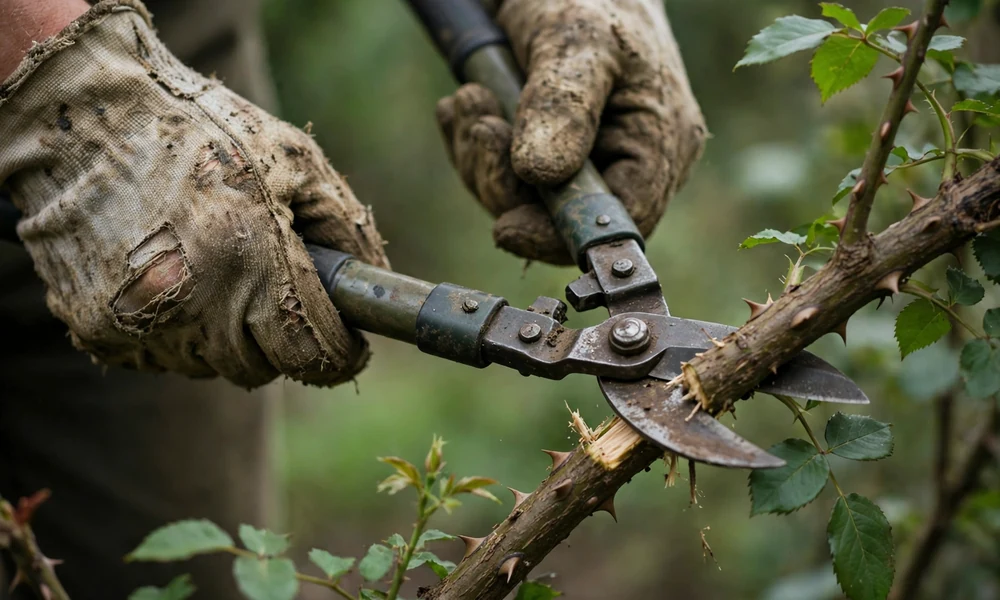
Most gardeners should start with bypass loppers. The design works like scissors: a sharp curved blade sweeps past a flat counter-blade, slicing living wood with a clean edge. A clean cut matters because the wound heals quickly and gives disease little room to enter, which is exactly what you want on roses, fruit trees, and shrubs you care about. A good bypass blade holds its edge through a season of regular use and can be sharpened with a file when it starts to tear rather than slice.
Anvil loppers work differently. A straight blade closes onto a flat metal plate, the anvil, and crushes through the stem. That sounds rough, and on living wood it is: the crushed edge heals slowly and invites trouble. But on dead wood, where healing does not matter, the anvil design is efficient and forgiving. It powers through dry, brittle stems that would chip a fine bypass edge, and it stays useful even when the blade is not razor sharp. If your main job is clearing dead growth from a hedge or cutting back last year’s woody stems, an anvil pair earns its place.
Ratchet and Geared Loppers
A standard lopper asks for one strong squeeze. A ratchet lopper breaks the cut into stages: squeeze once, and the mechanism holds the blade in place while you release and squeeze again, each time biting a little deeper. Three or four easy squeezes cut a branch that would defeat a single hard grip. For gardeners with arthritis, smaller hands, or simply less upper-body strength, that difference is the difference between pruning the shrub and leaving it.
Geared loppers take another approach to the same problem. A gear or a set of levers at the pivot multiplies the force of your hands, so the cut feels easier from the first squeeze. There is no staging and no clicking, just a smoother, lighter action. Geared heads are slightly bulkier than plain ones, which can make them awkward in a dense shrub, but for open work on fruit trees and thick hedge stems they are hard to beat.
Telescopic Handles and Extra Reach
Telescopic loppers extend their handles, usually from around sixty-five centimetres to ninety or more, which puts high branches within reach without a ladder. That sounds like a clear win, and for tall shrubs and the lower branches of a small tree it is. You can stand on the ground, extend the handles, and cut what would otherwise need steps and a stretch.
The compromise is weight and flex. Extended handles bend slightly under load, and the locking collars that hold the extension add weight at the far end of the tool, exactly where you feel it most. A telescopic pair is also a little less solid than a fixed pair of the same length, because the joint is a weak point by design. For occasional high work, that trade is worth it. For heavy daily cutting, a fixed pair is the better tool.

How to Choose the Right Pair
Start with the branches, not the tool. Walk the garden and look at the thickest stems you cut more than once a year. If most of them are thinner than your thumb, a light bypass pair with sixty-centimetre handles will do everything you need. If you regularly cut stems as thick as a broom handle, step up to a longer, geared pair. Buying for the one enormous branch you cut every three years is a mistake; rent a saw for that job and buy loppers for the everyday work.
Then think about your hands. Grip the handles the way you would in the garden, with gloves on if you wear them, and squeeze. The handles should close comfortably without your fingers stretching or your knuckles hitting each other. Shock-absorbing bumpers where the handles meet soften the jolt at the end of a cut, and they are worth having if you prune for more than half an hour at a time. A pair that fits your hands will be used; a pair that fights them will stay in the shed.
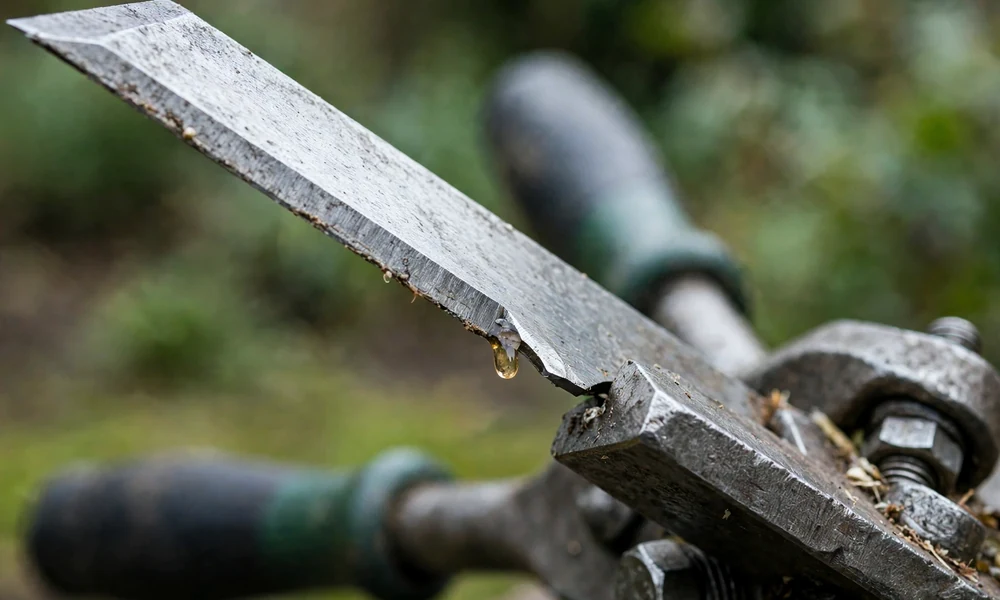
Look closely at the blade. It should be made of hardened steel, thick enough not to flex, and held by a pivot bolt you can tighten. A bolt that cannot be adjusted will work loose over time and leave the blades wobbling, which turns clean cuts into crushed ones. A replaceable blade is a bonus rather than a necessity, but it does extend the life of an expensive pair. Check too that the blades close fully and sit neatly together when shut; a gap at the tip means the pair was never properly aligned.
When Loppers Are the Wrong Tool
Loppers are the middle tool, and like every middle tool they have edges. For stems thinner than a pencil, they are overkill: a one-handed pair of shears is faster, lighter, and far easier to use in a crowded rose bed. Our guide to the best pruning shears of 2026 covers the hand tools that handle that fine work, and most gardeners will reach for shears far more often than for loppers.
At the other end, branches thicker than about five centimetres belong to a saw. Forcing a lopper through a limb it cannot cut cleanly crushes the wood and strains the pivot, and the result is a ragged wound that heals slowly. A folding pruning saw is cheap, light, and faster on thick wood, so there is no reason to push loppers past their limit.
Hedges are a special case. Loppers can shape the woody stems inside a hedge, but trimming the leafy surface with them is slow and leaves an uneven finish. A powered trimmer does that job in minutes and gives a far neater result, as our guide to the best hedge trimmers of 2026 explains. Think of loppers as the tool for the stems a trimmer cannot reach, not as a replacement for it.
Finally, remember that loppers are only one part of a working toolkit. A good pair earns its keep, but it does its best work alongside shears, a saw, and gloves that fit. Our guide to the best garden tools of 2026 looks at the whole set and how the pieces fit together, which is useful if you are building a toolkit from scratch or replacing several tools at once.
The Verdict
For most gardens, the best buy is a well-made bypass pair with handles around seventy centimetres long: light enough to carry all afternoon, strong enough for the thickest stems you cut regularly, and kind to the plants. Add a ratchet or geared mechanism if your hands need the help, and choose telescopic handles if tall shrubs are a regular part of your year. Buy the pair that fits your hands and your garden, keep the blades clean and sharp, and it will be cutting cleanly long after cheaper pairs have gone blunt and loose.
Pruning is one of the quiet pleasures of gardening: a morning spent shaping a tree, a shrub brought back under control, a pile of cuttings at the end of the day. The right loppers make that work easier and the results better, and that is a small price for a tool you will reach for every season.