Machine Screws That Fit Tight in 2026
Machine screws that fit tight in 2026 are the steel fasteners that hold together everything with a thread in it: the hinge on a kitchen cabinet, the bracket inside a washing machine, the case of a laptop, the motor mount in a garden tool. A machine screw does not cut its own thread into wood the way a wood screw does. It turns into a thread that is already there, cut into metal or plastic, or into a nut on the other side,
The difference between a screw that fits tight and one that works loose is rarely the price. It is the match: the right diameter, the right thread pitch, the right length and head. A screw one size out will feel as if it fits, then strip the thread or rattle loose within weeks. This guide explains the types, sizes, materials and fitting habits that make a machine screw hold.
Key Takeaways
- A machine screw turns into a thread that already exists, in a tapped hole or a nut, which is what makes it different from a wood screw that cuts its own thread.
- Diameter and thread pitch must match exactly: a screw that is close but not right will feel tight, then strip the thread or work loose.
- Flat heads sit flush, pan heads suit brackets and covers, and hex and socket heads take the most torque without slipping.
- Stainless steel suits damp places, zinc-plated steel suits dry indoor work, and brass suits light fittings where rust must never show.
- Length matters as much as size: the screw must engage at least its own diameter of thread, with no more than a few millimetres sticking out.
What a Machine Screw Actually Is
A machine screw is a threaded fastener with a blunt end and a uniform thread running along its shaft. The blunt end is the giveaway: unlike a wood screw, which tapers to a sharp point so it can bite into timber, a machine screw is made to be turned into a matching internal thread. That thread may be tapped into metal, moulded into plastic, or provided by a nut. The holding power comes from the two threads working together, spreading the load along the whole length of the engagement.
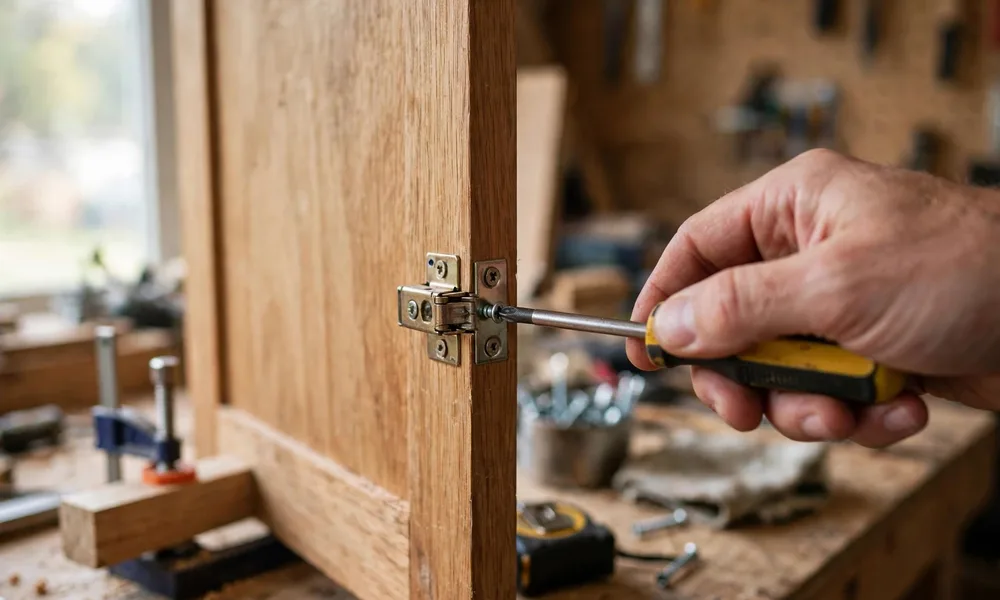
That is why machine screws turn up wherever something must be taken apart and put back together. A hinge screwed into a tapped plate can be removed for painting and refitted with the same screws, and a cover held by machine screws can be opened for servicing and closed again without the holes wearing out.

The Main Types of Machine Screw
Flat Head Screws
A flat head screw has a countersunk head that sits flush with the surface when driven into a countersunk hole. It suits hinges, cover plates and brackets on a flat surface, anywhere something must pass over the screw without catching. The trade-off is grip: the head gives the driver less to hold, so a flat head is easier to cam out than a pan head
Pan Head Screws
A pan head screw has a low, slightly domed head with a flat underside, and it is the all-rounder of the machine screw world. The head sits on top of the surface rather than in it, so it needs no countersink, . Pan heads suit brackets, covers and electrical fittings. They are usually driven with a Phillips or Pozidriv driver, and the right driver matters: our guide to the best versus the worst screwdrivers in 2026 shows how a worn tip chews up a cross-head screw that a good driver would turn cleanly.
Hex Head Screws
A hex head screw has a six-sided head turned with a spanner or a socket. It takes far more torque than any recessed head, because the spanner grips the outside of the head instead of a slot in the top. Hex heads suit machinery, engine mounts and brackets that carry weight.
Button Head Screws
A button head screw has a low, rounded dome, usually with a hex socket in the top. It looks neat, which is why it turns up on guards, covers and furniture where the fixing is on show.
Socket Head Screws
A socket head screw, often called an Allen screw, has a tall cylindrical head with a hexagonal socket. The deep socket takes a great deal of torque without slipping, and the head is compact, so socket heads suit tight spaces in machinery, bicycle parts and model engineering.

Materials and Finishes
Zinc-plated steel is the default for dry indoor work: strong, cheap and widely available, In a damp room, a bathroom or anywhere outdoors, zinc plating eventually gives way to rust. Stainless steel costs more but resists rust in damp and outdoor conditions, and it is the right choice for garden equipment, bathroom fittings and anything near the sea.
Brass machine screws are softer than steel, so they take less torque and are wrong for anything structural, but they never rust and suit light fittings and decorative hardware. Black oxide screws look smart on black metalwork, but the finish is not a rust barrier on its own, so they need to stay dry or be oiled.
Sizes Explained: Diameter, Pitch and Length
Metric machine screws are named by their diameter: M3, M4, M5, M6 and M8 cover most home and workshop work, with M2 and smaller for electronics. The number is the diameter of the thread in millimetres, and the pitch, the gap between threads, is standard for each size: an M4 screw has a 0.7 millimetre pitch, an M5 has 0.8, and an M6 has 1.0. Fine-pitch versions exist, but unless a manual specifies fine pitch, the standard coarse thread is the one to buy.
Length is measured differently depending on the head. For flat head screws, length is measured from the top of the head to the tip, because the head sits inside the material. For every other head style, length is measured from under the head to the tip. How much thread must engage? At least one diameter of thread in the same material: an M6 screw needs at least six millimetres engaged in steel, and more in softer materials.
Machine Screws Compared
| Head style | Best for | Drive | Torque |
|---|---|---|---|
| Flat head | Hinges, cover plates, flush fittings | Phillips, Pozidriv, Torx | Medium |
| Pan head | Brackets, covers, electrical fittings | Phillips, Pozidriv | Medium |
| Hex head | Machinery, brackets carrying weight | Spanner, socket | High |
| Button head | Guards, covers, visible fixings | Hex socket | Low to medium |
| Socket head | Machinery, tight spaces, precision work | Allen key | High |
Choosing the Right Screw for the Job
Start with the hole, not the screw. If the hole is already tapped, its size decides the screw: measure the thread or take the old screw to the shop and match it. If you are making the hole, choose the screw first, then drill the tapping size for it. An M6 thread needs a 5 millimetre tapping drill in steel; an M5 needs 4.2 millimetres.
Screws and nails are often treated as interchangeable, but they are not. A nail is driven in and holds by friction; a screw is turned in and holds by its thread, and it can be removed and refitted. For trim and panelling, where the fixing should almost disappear, a nail is often the better choice, and our guide to nail guns that drive true every time covers the tools that drive those nails cleanly. For anything that carries a load or must come apart again, a machine screw is the right fastener.
How to Fit a Machine Screw So It Stays Tight
Clean the thread first: a tapped hole full of swarf or old threadlocker will make even the right screw feel tight before it has pulled the parts together, and that false tightness is the most common cause of a screw that works loose. If the screw does not turn freely by hand for most of its length, something is wrong: the thread is damaged, the size is wrong, or the screw is cross-threaded. Back it out, check the thread, and start again. A clean tapped hole starts with a straight drilled hole, as our guide to the best versus the worst drills in 2026 explains.
When the screw turns freely, bring the parts together and tighten in stages. A cover held by several screws should be tightened in a criss-cross pattern, a little at a time, so the parts pull together evenly. The right tightness is firm, not forced: overtightening is the fastest way to strip a thread, especially in aluminium or plastic. For screws that must never work loose, a drop of medium-strength threadlocker locks the screw against vibration but still lets it be removed with hand tools.
Mistakes That Make Machine Screws Fail
Forcing a screw that does not turn freely only damages the thread further. The wrong driver will cam out and chew up the head. Overtightening stretches the screw or strips the thread in soft material. A screw too short engages too little thread and pulls out under load, while one too long bottoms out in a blind hole and feels tight while the parts are still loose. A zinc-plated screw in a damp place will rust, and a brass screw in a structural joint will shear.
Checklist: Before You Buy Machine Screws
- Measure the old screw or the tapped hole first, and match diameter and thread pitch exactly rather than guessing.
- Choose the head for the job: flat for flush, pan for general work, hex or socket where torque matters.
- Pick the material for the place: stainless for damp or outdoor work, zinc-plated steel for dry indoor jobs, brass for light decorative fittings.
- Check the length: the screw must engage at least its own diameter of thread, with only a few millimetres past the nut.
- Buy the right driver to match, and check that it seats fully in the head before you start turning.
- Keep spares in the sizes you use most.
Frequently Asked Questions
What is the difference between a machine screw and a wood screw?
A machine screw has a blunt end and a uniform thread, and it turns into a thread that already exists, in a tapped hole or a nut. A wood screw tapers to a sharp point and cuts its own thread into timber.
What does M4 or M6 mean on a machine screw?
The M number is the diameter of the thread in millimetres, so an M4 screw is four millimetres across and an M6 is six.
How do I measure a machine screw I need to replace?
Measure the diameter across the thread with callipers, check the pitch with a thread gauge, and measure the length from under the head, or from the top of the head for a flat head screw.
Why does my machine screw keep working loose?
The usual causes are a thread that does not match, a screw too short to engage enough thread, a tapped hole that is worn or dirty, or vibration.
Can I use a machine screw without a nut?
Yes, if the hole is tapped with a matching thread, the screw turns straight into the part and needs no nut. If the hole is plain and untapped, the screw needs a nut on the other side, or a threaded insert.
Should I use stainless steel machine screws everywhere?
Stainless steel is best in damp, outdoor and coastal places, but it costs more and can seize in a stainless tapped hole without anti-seize compound.
The Bottom Line
Machine screws that fit tight are not a matter of luck or of buying the most expensive box on the shelf. They are a matter of matching: the right diameter and pitch for the thread, the right head for the place, the right material for the conditions, and the right length for the parts. Get those four things right, clean the thread, tighten firmly without forcing it, and the screw will hold for years