A motorcycle glove is not a warm glove with a tougher palm. It is a piece of riding gear with a specific job: to protect your hands in a slide, to keep your grip on the controls in rain and heat, and to let you work the clutch, brake, throttle and indicators without thinking about your hands at all. The best motorcycle gloves of 2026 do all three at once, and the worst ones fail on one of them long before the leather or stitching ever wears out. A glove that is comfortable in the shop but stiff on the bike is not a bargain, and a glove that feels great for ten minutes but leaves your hands numb after an hour is not a good fit.
What Makes a Motorcycle Glove Different
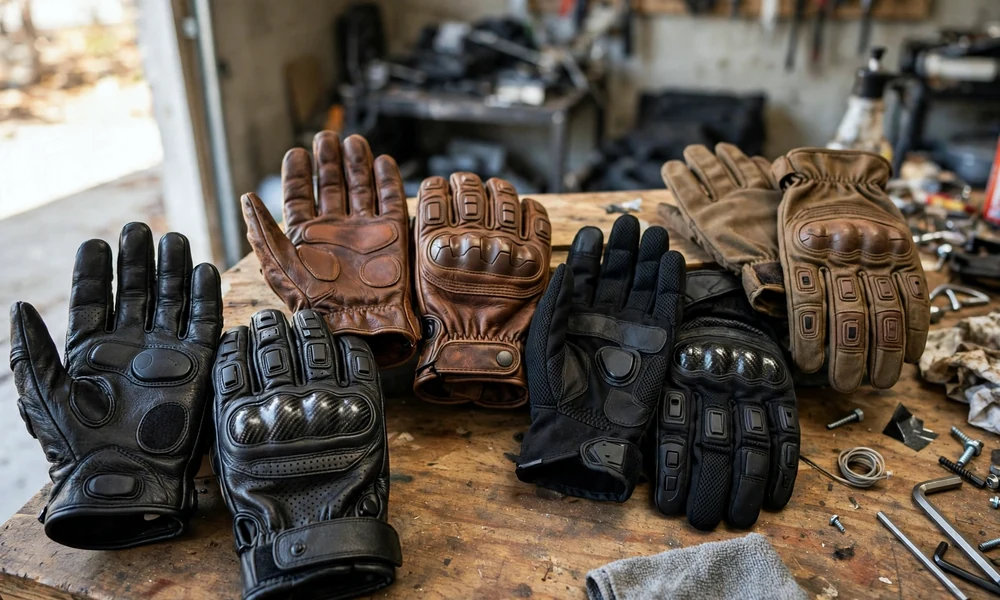
The first difference is armour. A motorcycle glove puts hard or dense foam protection over the knuckles, and often over the fingers and the outside of the hand as well. That armour is there for the moment your hand meets the road, and it needs to stay in place when it happens. A glove with armour that slides around, or with a loose cuff that lets the glove pull off, is not doing its main job. Look for armour that sits squarely over your knuckles when your hand is curled around a grip, not just when it is flat on a table.
The second difference is abrasion resistance. In a fall, your palms are usually the first thing to touch the ground, so the palm is where a motorcycle glove earns its keep. Leather palms, double layers, and palm sliders made from hard-wearing material all serve the same purpose: to give the glove time to slide rather than tear. A thin fashion glove, however soft it feels, will not last long against tarmac. Check the palm and the outside edge of the little finger, because those are the places that take the most wear in a slide.
The third difference is control. A riding glove has to be thin enough in the fingers to feel the levers, with seams placed where they will not press into your fingers on a long ride. Pre-curved fingers help here, because a glove shaped like a hand gripping a bar does not fight you every time you close your fist. If you ride with a helmet and jacket already, our guide to the best motorcycle helmets of 2026 covers the other half of your head-to-hand protection, but the glove is the piece that connects you to the bike itself.
How to Choose: The Five Things That Matter Most
Start with protection, and be honest about how you ride. A commuter who rides in traffic every day needs strong palm protection and knuckle armour more than a weekend rider on quiet country roads needs a racing glove, but both need a glove that will stay on. A wrist strap, a gauntlet cuff that tucks under or over your jacket sleeve, and a fit that does not let the glove twist on your hand all matter. Pull gently at the fingertips and the cuff: if the glove comes off easily, it will come off when you need it most.
Next, look at the material. Leather is still the standard for abrasion resistance, and a well-made leather glove breaks in to fit your hand over a few rides. Textile gloves are lighter, often better ventilated, and easier to wash, and modern textiles with reinforced palms can be very tough. Neither is automatically better. The right choice is the one that matches your weather and your riding: leather for durability and feel, textile for hot days and wet commutes, and a waterproof membrane inside either one if you ride through rain.
Fit comes third, and it matters more with motorcycle gloves than with almost any other riding gear. A glove that is too loose will bunch at the palm and dull your feel for the controls, and loose fingertips make it hard to work small switches. A glove that is too tight will cut off circulation and leave your hands cold and tired. The right fit feels snug across the palm with no loose fabric at the fingertips, and your fingers should reach the ends of the glove without pressing hard against the seams. Try the glove with your hand curled as if you are holding a grip, and work an imaginary clutch lever a few times before you decide.
Weather is fourth. A summer glove with vents and perforated leather keeps your hands cool and dry with sweat, while a waterproof touring glove keeps rain out on a long ride but can feel warm and bulky on a hot day. There is no single glove that is best in every season, which is why many riders own two pairs: a vented pair for summer and a waterproof pair for cold and wet riding. If you can only buy one pair, choose for the weather you ride in most, and accept that it will be a compromise in the other season.
Finally, check dexterity and everyday use. You need to be able to use your indicators, horn, and fuel cap without taking the glove off, and a touchscreen fingertip is genuinely useful at a petrol station or when you stop to check a route. But touchscreen tips only work if they fit snugly, so test them before you buy. A glove that forces you to pull it off every time you stop is a glove you will stop wearing properly, and a glove left in a pocket is no protection at all.
The Best Motorcycle Gloves by Riding Style
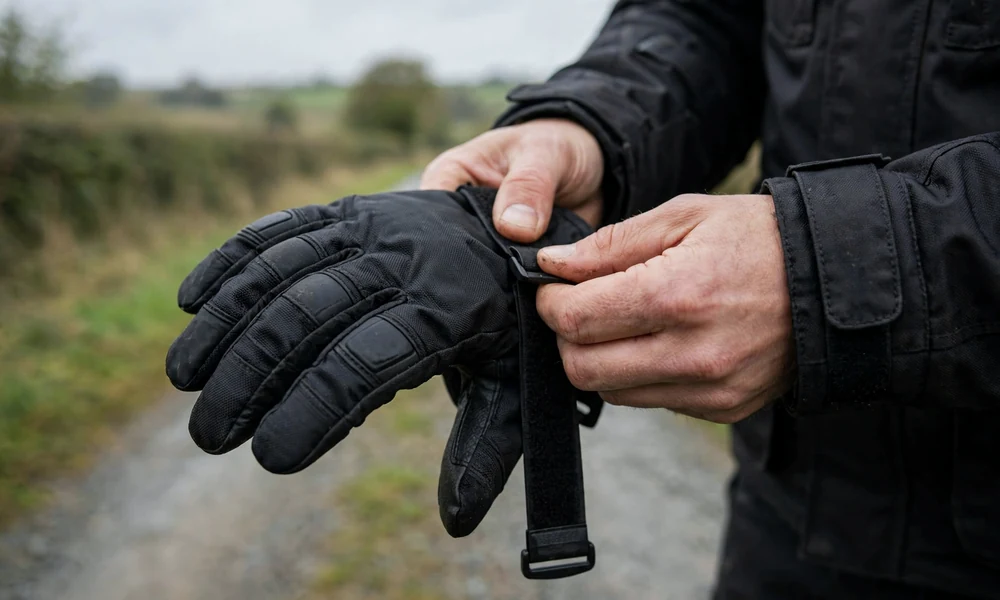
For touring and commuting in all weathers, a waterproof glove is the practical choice. A waterproof membrane keeps rain out, but it also traps heat, so look for a glove with a breathable lining and a cuff long enough to seal against your jacket. The gauntlet style works well here, because it stops rain running down your sleeve and into the glove. Test the glove with your jacket on, because a cuff that is too tight over a thick sleeve will be uncomfortable within an hour.
For sport and track riding, look for a long gauntlet glove with hard knuckle armour, palm sliders, and extra protection on the fingers and the outside of the hand. These gloves are built for higher speeds and harder falls, and they are stiffer at first than a touring glove. That stiffness is normal, and it eases as the glove breaks in, but do not buy a sport glove for a daily commute unless you are happy with that break-in period and the longer cuff.
Fit, Sizing and Breaking In a New Pair
Getting the size right starts with measuring your dominant hand around the palm, just below the knuckles, without the thumb. Compare that measurement with the maker’s size chart, and remember that sizes vary between makers, so a large in one brand can be a medium in another. If you are between sizes, the tighter size is usually the better choice for a leather glove, because leather stretches a little with wear, while a textile glove stretches less and is better bought in the size that fits on the first try.
Riding Safety: Fit, Armour and When to Replace Your Gloves
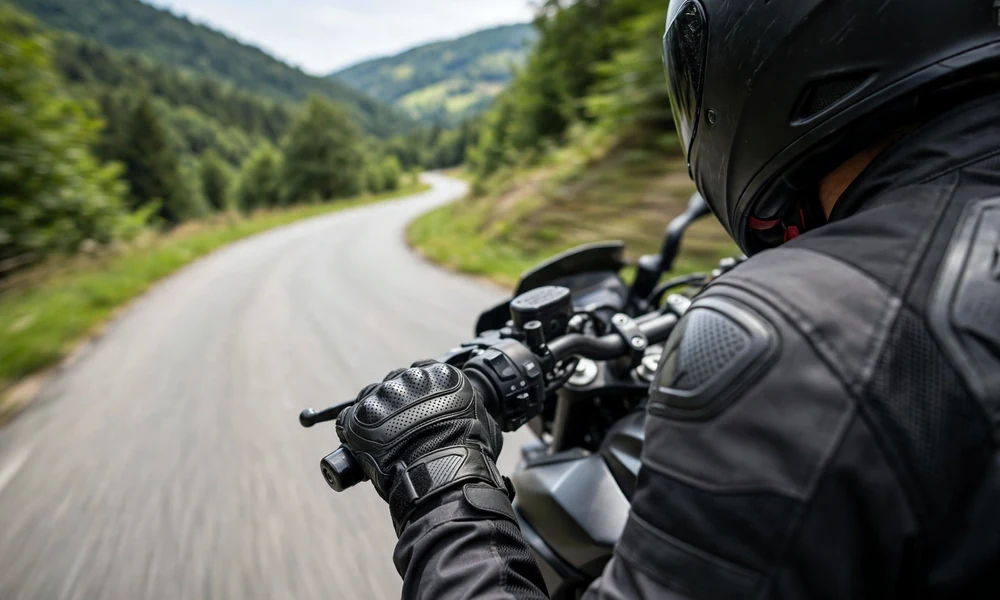
Proper fit is a safety issue, not a comfort luxury. A glove that is too loose can twist on your hand in a fall and leave the palm unprotected, while a glove that is too tight can leave your hands stiff and slow on the controls. Before every ride, pull the gloves on, fasten the wrist straps, and curl your hands around the grips. You should be able to reach the levers easily and feel them through the palm, and the armour should sit over your knuckles without pressing into them.
Armour and abrasion resistance only help if the glove is in good condition. Check your gloves regularly for worn palms, frayed stitching, cracked armour, and cuffs that no longer close firmly. A small hole in the palm or a seam coming apart at the fingers is a sign to retire the pair, because that is where the glove will fail first. Clean leather gloves with a damp cloth and let them dry naturally away from direct heat, and wash textile gloves as the maker advises so the waterproof lining keeps working.
Replace your gloves after any crash in which your hands touched the ground, even if the gloves look fine at a glance. A slide can weaken stitching and wear through layers that are not visible from the outside, and a glove that has already absorbed one impact may not protect you the same way a second time. The same applies after a hard drop onto concrete or a long slide across tarmac: if the palm is scuffed through or the armour is cracked, the gloves have done their job and it is time for a new pair.
Your gloves are also part of a wider riding kit, and they work best when the rest of it fits too. If you are new to riding, our guide to the best motorcycles for beginners in 2026 is a useful place to start, because a bike that suits your height and experience makes it easier to ride with relaxed hands and a light grip, which in turn makes any glove feel better and last longer.
Mistakes to Avoid When Buying Motorcycle Gloves
The most common mistake is buying gloves for how they look in the shop rather than how they feel on the bike. A glove with heavy armour and a thick palm may look protective, but if you cannot feel the clutch, you will ride with tense hands and make more mistakes. The opposite mistake is choosing the thinnest, lightest glove you can find and assuming it will protect you in a fall. The best glove is the one in the middle: protective enough to trust, thin enough to feel the controls, and comfortable enough to wear on every ride.
Finally, do not treat motorcycle gloves as general-purpose winter gloves. They are built for riding, with armour, palm sliders and a grip-shaped fit that ordinary gloves do not have. If you need a warm pair for walking, driving or working outside, our guide to the best gloves of 2026 covers general cold-weather gloves, but for the bike, choose a glove designed for the road and nothing else.
The Verdict
The best motorcycle gloves of 2026 are the ones you will wear on every ride: protective enough to trust in a slide, comfortable enough to forget about on a long day, and made for the weather and the riding you actually do. Start with protection and fit, choose leather or textile for your climate, and make sure the cuff, the armour and the palm all work with the jacket and bike you already own. Spend a little time trying gloves on properly, break them in on short rides, and replace them after a crash or when the palm and stitching start to wear. Your hands are the first thing to meet the road and the last thing you want to ride without, so choose gloves that protect them properly and enjoy the ride.