Why Napkin Dispensers Beat a Loose Pile on a Busy Table in 2026
Why do napkin dispensers work so well on a busy table when a neat pile of napkins falls apart within minutes? Because a dispenser changes the job completely: instead of a stack anyone can knock over, fan out or sneeze on, it hands out one napkin at a time from a protected box, with the next napkin already waiting in the slot. That matters most where napkins get used hardest.
A napkin dispenser is a box, stand or wall unit that stores paper napkins and releases them one at a time through a slot, usually pushed up by a spring or held by a weighted plate. The napkins inside stay folded, flat and untouched until they are needed, and the person taking one only touches the napkin they take. Here is how to choose one.

Key takeaways
- A napkin dispenser hands out one napkin at a time, so the rest of the stack stays clean, dry and untouched until it is needed.
- Spring-loaded dispensers suit busy tables and cafes; simple tabletop slot dispensers suit calm family meals and small kitchens.
- Match the dispenser to your napkins first — interfold, cocktail, dinner and lunch napkins do not swap between dispensers.
- A dispenser that is too full jams and tears napkins; a dispenser that is too empty lets the last napkins sink out of reach.
- Clear or open-front dispensers make it obvious when a refill is due, so an empty box is obvious.
What a napkin dispenser actually does
A napkin dispenser does one job: it stores napkins and presents exactly one of them, ready to pull, while protecting the rest. A loose pile is exposed to hands, spills, wind and elbows, and every person who takes a napkin touches the top of the stack. A dispenser keeps the stack behind a wall, a lid or a slot, so the napkins nobody has touched yet stay clean.
The second job is counting. Because a dispenser feeds napkins one at a time, people take what they need and stop, instead of grabbing a handful just in case. Cafes notice this immediately: a table with a dispenser uses far fewer napkins in a day than a table with a loose pile, and the floor ends up cleaner too.
Dispensers are not the same as the other ways of keeping napkins on a table. A holder keeps a stack upright and in one place, and our guide to the best napkin holders for a neat table covers that quieter job. A dispenser goes a step further: it controls how napkins come out, one at a time, which is what you want when hands are messy or children help themselves.
The main types of napkin dispensers, compared
Napkin dispensers fall into four clear families, and the family decides how they behave on a real table.
Spring-loaded countertop dispensers
The spring-loaded countertop dispenser is the classic cafe box: a metal or plastic case with a spring plate under the stack that pushes the top napkin up into the slot as napkins are taken. It stays reliable whether the box is full or nearly empty. The trade-off is that it only takes the napkin size it was built for, and a strong spring can push two out at once if the slot is worn.
Tabletop slot dispensers
The tabletop slot dispenser is the simplest type: a box with a wide slot in the top or front, and no spring at all. You pull the top napkin through the slot, which pops the next one part-way out behind it. Cheap and easy to refill, it suits a kitchen or picnic table. The weakness is gravity: as the stack gets low, the last napkins sit too deep to reach. Refill it before it drops below a quarter full and it behaves well.
Wall-mounted dispensers
A wall-mounted dispenser fixes to a wall or partition and feeds napkins from a covered case, which keeps the counter completely clear. It suits small cafes, food trucks and kitchens with no spare table space. The best models have a clear front or a level window so you can see when a refill is due, because a wall unit that runs empty is easy to miss. Moving it means filling screw holes.
Interfold dispensers
Interfold dispensers take specially folded napkins that link together like a chain, so pulling one napkin draws the next one part-way out automatically. They are the standard in fast-food restaurants, canteens and offices, where speed matters and nobody wants to fumble. The catch is that they only work with interfold napkins, so you cannot load them with ordinary dinner napkins. Check the pack says interfold before you buy the dispenser, not after.
How the spring and the slot actually work
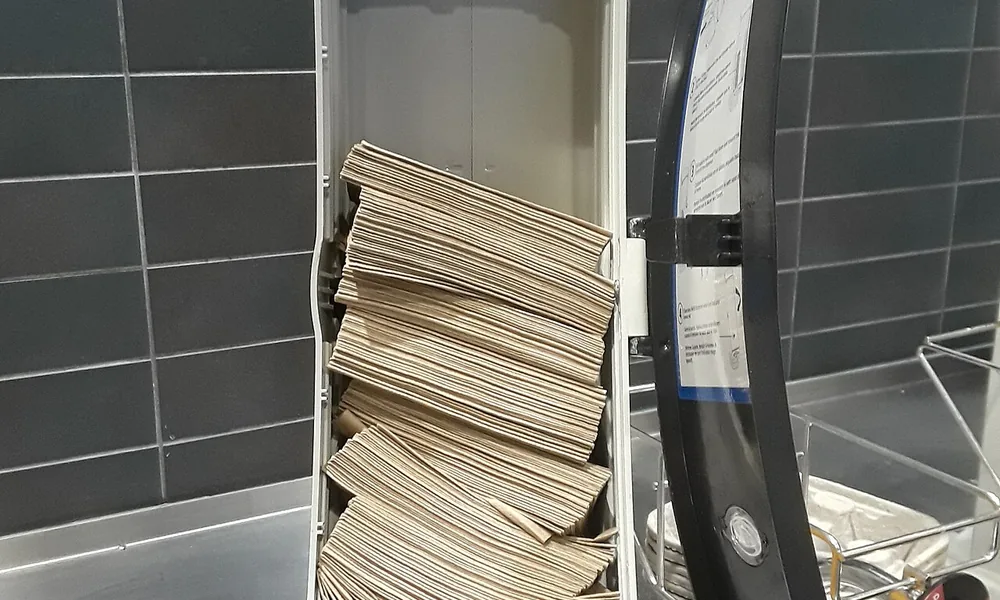
Every dispenser works the same way at heart, and understanding the mechanism explains most failures. Napkins sit in a stack, and something — a spring plate, a weighted follower, or the fold of the napkins themselves — keeps the top of the stack pressed against the slot. You pull the exposed napkin, friction drags the next one part-way out, and the spring pushes the stack back up. A weak spring lets the stack sink, a wide slot double-feeds, and a narrow slot tears.
Napkin thickness matters more than most people realise. Thin, single-ply napkins feed easily but tear if the slot has a rough edge, and they can double-feed because they cling together. Thick napkins need a wider slot and a stronger spring.
Matching the dispenser to your napkins
The napkins decide the dispenser more than most people expect, so start there. Dinner napkins are the largest, need a tall, wide dispenser. Cocktail napkins are small, around 25 centimetres, and they rattle around in a dinner dispenser, feeding crooked and jamming. Measure your folded napkins before buying.
For a full guide to the napkins themselves, see our roundup of napkins that make everyday meals feel finished. Paper napkins are what almost every dispenser is built for, and cloth napkins do not belong in one: they are too thick, too heavy and too slippery to feed through a slot, and they come out creased.
Materials: what lasts and what does not
Stainless steel is the safest choice for a dispenser that will be used hard: heavy, easy to wipe clean, and happy with damp hands and tomato sauce. Plastic is lighter and cheaper, and the best plastic dispensers have a weighted base and a clear front so you can see the level. Wood needs wiping dry; acrylic scratches and soon looks cloudy.
Comparing napkin dispenser types
| Type | Best for | Watch out for | Price |
|---|---|---|---|
| Spring-loaded countertop | Cafes, busy family kitchens | Only fits its own napkin size; strong spring can double-feed | Mid-range |
| Tabletop slot | Calm meals, picnics, small kitchens | Last napkins sink out of reach; no spring | Low |
| Wall-mounted | Small spaces, food trucks, counters | Needs screws; easy to miss when empty | Low to mid |
| Interfold | Fast food, canteens, offices | Only works with interfold napkins | Mid-range |
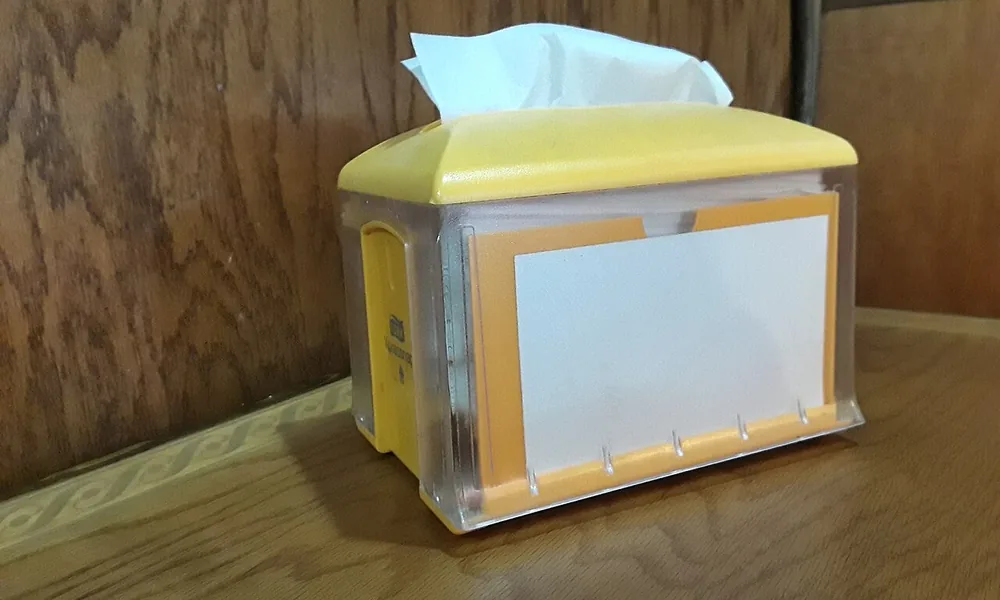
| Pop-up tissue-style box | Occasional use, caravans, desks | Small capacity; tips over easily | Low |
Where each dispenser belongs
At home, a tabletop slot dispenser or a small spring-loaded box on the kitchen table is enough, and it earns its keep at breakfast and at any meal with children. In a cafe, put a spring-loaded dispenser on every table. Outdoors, weight is the answer: a dispenser for the garden needs a base heavy enough that a gust cannot tip it, and a lid that shelters the napkins from a sudden shower. In offices and canteens, interfold dispensers pay for themselves by cutting waste. Keep the dispenser in the middle of the table where everyone can reach it, and consider how it sits with the runner, as in our guide to table runners worth dressing the table with.
Refilling, cleaning and the mistakes that jam them
Refilling is the moment most dispensers go wrong. The common mistake is overfilling: stuffing the box so full that the spring cannot move, the slot pinches, and the first pull tears the napkin in half. Fill to about four-fifths. The second mistake is mixing napkin types in one box — a few thick dinner napkins on top of thin lunch napkins will jam the slot every time.
Cleaning is simple but worth doing properly. Wipe a steel dispenser with a damp cloth and dry it, because dried sauce around the slot is what makes napkins stick and tear. Wash a plastic dispenser in warm soapy water and let it dry completely before refilling, because a damp box makes paper napkins cling together in a solid block. Check the spring every few months: if it feels soft, or the stack sinks after only a few pulls, the spring is tired. Replace a box that jams every meal.
Checklist: before you buy a napkin dispenser
- Measure your folded napkins — height, width and a stack of twenty — and check them against the dispenser, not the photo.
- Pull the slot with your own napkin in mind: a rough or narrow slot tears thin napkins, a wide slot double-feeds them.
- Press the spring plate and let go: it should push back firmly and evenly, not stick halfway or wobble.
- Check the capacity against your household: a box that holds thirty napkins needs refilling twice a day in a busy cafe.
- Pick a clear front or a level window if anyone else will refill it, so an empty box is obvious at a glance.
- Weigh it in your hand: a dispenser that is too light tips over or slides when you pull a napkin out one-handed.
Frequently asked questions
Are napkin dispensers better than napkin holders?
They do different jobs. A holder keeps a stack upright and neat on a dressed table, while a dispenser feeds them one at a time. Busy tables and cafes suit a dispenser; slow, formal meals suit a holder.
What size napkins fit in a standard dispenser?
Most standard countertop dispensers take lunch napkins, roughly 33 centimetres square unfolded. Dinner napkins need a taller box, cocktail napkins need a smaller one, and interfold napkins need an interfold dispenser.
Why does my dispenser pull out two napkins at once?
Usually the slot is too wide for thin napkins, the spring is pushing too hard, or damp napkins are clinging together. Try thicker napkins and a drier, less full box.
Why do the last napkins sink out of reach?
The spring is tired, or the dispenser has no spring at all and relies on gravity. Refill before the stack drops below a quarter full, and replace a box whose spring no longer pushes the stack up to the slot.
Can I put cloth napkins in a dispenser?
No. Cloth napkins are too thick and heavy to feed through a slot, and they come out creased. Use a holder for cloth napkins and keep a dispenser for paper napkins.
How do I clean a napkin dispenser?
Wipe steel with a damp cloth and dry it straight away. Wash plastic in warm soapy water and dry it fully before refilling, because damp napkins cling together and jam.
The bottom line
A napkin dispenser earns its place on any table where napkins are used hard, because it does two simple things a loose pile cannot: it hands out one napkin at a time, and it keeps the rest of the stack clean until it is needed. Match it to your napkins first, pick a spring-loaded box for busy use and a simple slot box for calm meals, and refill it before it runs low. Get those right and the table stays tidy.